How Co-Working Operators Are Shaping Innovation, Sustainability, and Operational Excellence in the Workspace Market
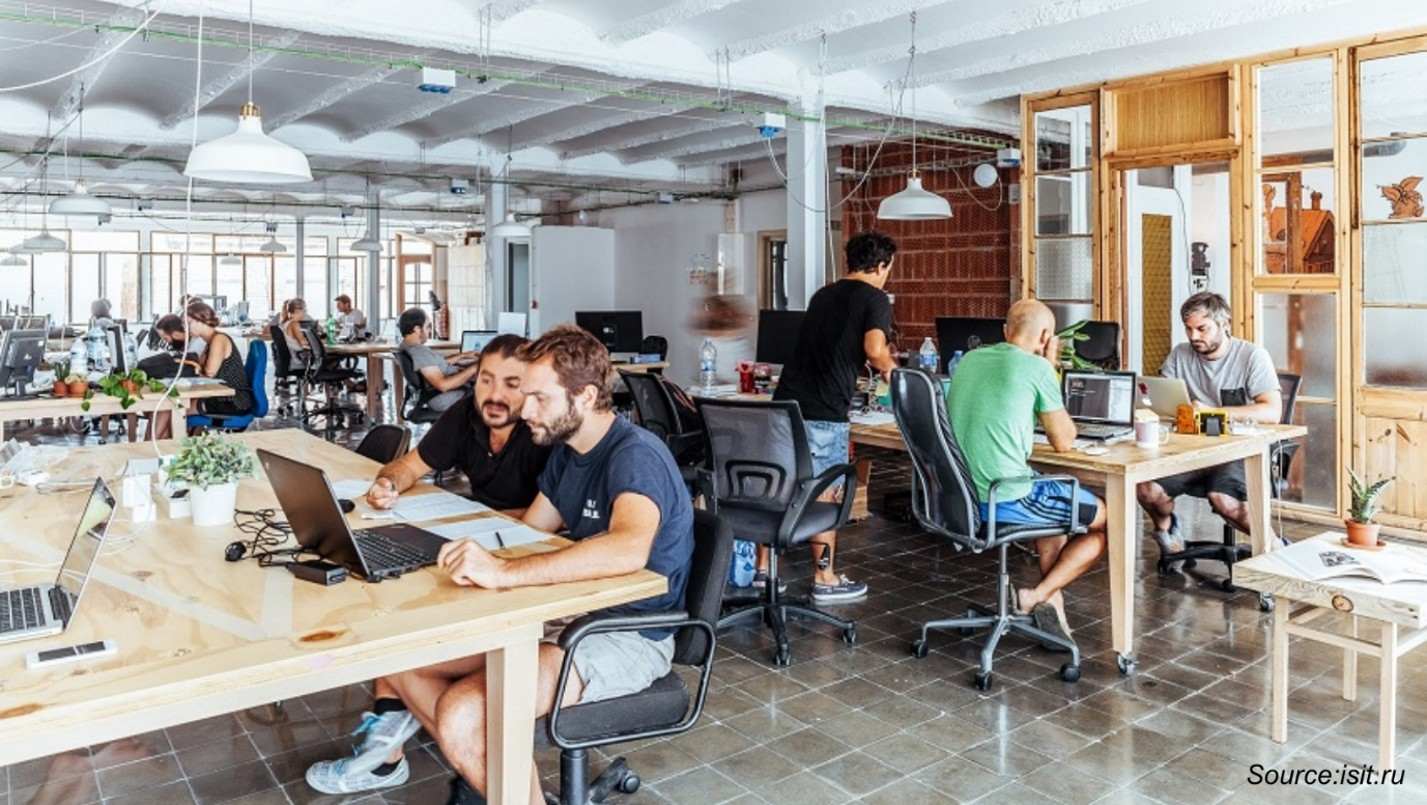
As per NMSC analysis, the Co-Working Space Market size was valued at USD 12.93 billion in 2025, and is expected to be valued at USD 15.39 billion by the end of 2026. The industry is projected to grow, hitting USD 74.28 billion by 2035, with a CAGR of 19.1% between 2026 and 2035. Investment in digital workspace solutions, AI-driven management platforms, and real-time occupancy monitoring is increasingly fuelling growth in the co-working space market, alongside rising demand for flexible, data-informed, and efficiency-optimized work environments.
For an In-depth Analysis of the Co-Working Space Industry, Try a FREE Sample
Based on our observations, operators are adopting AI-enabled scheduling tools, predictive occupancy analytics, digital twin simulations, and integrated booking systems to optimize desk allocation, meeting room usage, and resource deployment. Meanwhile, growing requirements for hybrid work support, personalized member experiences, and scalable facility operations are creating new avenues for technology-led value creation. These trends are positioning co-working ecosystems to be more adaptive, efficient, and aligned with evolving enterprise and freelancer workspace needs.
Co-Working Space Market Overview
From our discussions with co-working operators, we observed that the co-working space market is undergoing structural evolution driven by flexible workspace adoption, technology integration, and member-centric service models. Growing demand for hybrid work solutions, decentralised office footprints, and project-based seating is encouraging operators to adopt digital booking systems, AI-enabled scheduling, real-time occupancy monitoring, and integrated community platforms. At the same time, operational efficiency pressures, space utilisation optimisation, and member experience priorities are accelerating investment in smart office technology, predictive analytics, and workflow management across both enterprise and independent professional segments. We further observed that the transition toward digitally coordinated, flexible work ecosystems is strengthening market resilience and enhancing long-term occupancy continuity. Moreover, intelligent space management, real-time analytics, and technology-enabled engagement tools are enabling operators to improve utilization, ensure consistent service quality, and foster professional collaboration. These advancements support operational confidence, member satisfaction, and the sector’s evolution toward highly adaptable, tech-enabled workspace environments.
Leading participants shaping the co-working space landscape include International Workplace Group Plc (IWG), WeWork Inc., Vast Coworking Group, Mindspace, The Executive Centre, Servcorp Limited, Newmark Group, Inc., Impact Hub, Convene Inc., and others. From our market interactions, we found that these operators strengthen competitiveness through platform innovation, community engagement programs, scalable workspace models, and technology-driven service enhancements. By optimising member experience, operational efficiency, and space customisation, they address evolving enterprise and freelancer requirements across global markets.
Our observations further indicate that these industry participants are guiding the co-working space sector toward its next phase of development, where flexible operations, technology-enabled management, and member-centric intelligence become central to strategic positioning. Therefore, this progression reflects applied market expertise and operational foresight, demonstrating how digitally coordinated, service-driven co-working solutions are increasingly aligned with long-term scalability, resilience, and competitiveness across modern workspace environments.

Highlights of International Workplace Group PLC

From our discussions with co-working operators, we observed that International Workplace Group Plc plays a pivotal role in shaping modern flexible workspace solutions. Stakeholders frequently highlight the company’s focus on reliability, operational scalability, and service consistency, areas where its integrated approach to co-working infrastructure, membership platforms, and technology-enabled workspace management supports seamless operations and member satisfaction. Moreover, access to spaces backed by robust operational processes, standardized service metrics, and responsive support strengthens enterprise confidence in adopting hybrid work models, expanding satellite hubs, and optimizing workspace utilization while maintaining long-term continuity.
Through ongoing market evaluation, we further observed that IWG’s positioning has been reinforced by strategic expansion aligned with hybrid work demand. In January 2026, IWG launched a new Regus centre at 1 Godwin Street, adding approximately 20,000 sq. ft. of co-working and office space in the city centre. Earlier, in August 2025, IWG opened 338 new centres and announced plans for around 1,500 additional locations over the next 18 months through its partner-led, capital-light model. Our assessment suggests that these initiatives enhance network accessibility, enable flexible membership integration, and improve operational transparency, reinforcing IWG’s influence on workspace innovation, hybrid work adoption, and long-term market growth within the global co-working ecosystem.
Highlights of Vast Coworking
Vast Coworking has established a growing presence in the co-working space market through its integrated focus on flexible workspace solutions, technology-enabled management systems, and community-driven service offerings. Leveraging its network of locations and digital platform capabilities, the company supports enterprises, startups, and independent professionals with work environments that enhance collaboration, productivity, and operational convenience. Its strategic emphasis on scalable space design, seamless technology integration, and adaptable membership models enables clients to align workspace usage with evolving hybrid work and team collaboration needs.
Based on our market observations, Vast Coworking’s positioning is strengthened by its focus on operational flexibility, member-centric services, and platform-enabled coordination. Initiatives centred on digital booking systems, community engagement programs, and workspace customisation demonstrate a commitment to enhancing the member experience and supporting long-term occupancy continuity. Furthermore, insights validated through discussions with operators and clients suggest that Vast Coworking’s emphasis on convenience, technology adoption, and scalable location networks reinforces competitiveness in an increasingly dynamic workspace market. By combining operational expertise, innovative service design, and technology-enabled management, Vast Coworking continues to play a meaningful role in shaping flexible, resilient, and future-ready co-working ecosystems.
Highlights of Wework Inc.

Based on our interviews with co-working operators and workspace solution specialists, we observed that WeWork Inc. maintains a strong presence by enabling technology-driven workspace management, flexible seating solutions, and scalable office deployment across enterprise, startup, and independent professional segments. Its operational emphasis on adaptive membership platforms, seamless space utilization, and technology-enabled service integration aligns with the growing enterprise focus on flexibility, productivity, and member experience. Access to spaces designed for dynamic occupancy, hybrid collaboration, and community engagement allows clients to align workforce requirements with real-time booking and operational analytics, strengthening confidence in adopting flexible work solutions across diverse sectors.
Moreover, our analysis indicates that WeWork’s market relevance is reinforced by strategic expansion and enterprise-focused initiatives. In February 2026, WeWork India opened WeWork Atrium Place in Gurugram, adding over 1,200 seats across roughly 90,000 sq. ft. of office space. Earlier, in January 2026, WeWork Inc. strengthened its enterprise leasing momentum after Amazon expanded its Manhattan footprint, leasing approximately 259,000 sq. ft. of flexible office space through the company. Stakeholders frequently cite location accessibility, operational flexibility, and integrated service offerings as key differentiators when choosing co-working solutions. Consequently, our observations suggest that WeWork’s focus on scalable, technology-enabled, and client-centric workspace solutions reinforces adoption, operational continuity, and long-term influence within the evolving co-working space ecosystem.
Highlights of Mindspace
Grounded in our ongoing market assessments and discussions with co-working operators and enterprise clients, we found that Mindspace has established a strong presence in the co-working space market through its specialised focus on flexible workspace solutions, technology-enabled operations, and member-centric service delivery. Operating across key urban and suburban locations, the company provides digitally integrated platforms that support space booking, resource allocation, and operational optimisation for startups, SMEs, and enterprise teams. Its approach emphasises seamless technology integration, data-driven member insights, and scalable workspace design, enabling clients to meet productivity and collaboration objectives while aligning with evolving hybrid work and wellness expectations. Continued investments in digital engagement tools, community programming, and flexible membership models strengthen responsiveness and operational reliability across the Mindspace ecosystem.
Based on our observations, Mindspace’s market positioning is reinforced by recent expansion and technology initiatives. The company consistently enhances its platform capabilities to enable real-time occupancy monitoring, predictive space utilisation analytics, and seamless virtual-physical collaboration across its locations. Furthermore, curated community engagement programs, wellness zones, and digitally supported member services improve retention, engagement, and overall experience. These initiatives demonstrate Mindspace’s commitment to operational adaptability, service excellence, and innovation-driven growth. By combining digitally enabled workspace management, community-focused design, and scalable operational infrastructure, Mindspace continues to advance member satisfaction, collaboration efficiency, and long-term resilience within the modern Co-Working Space market.
Highlights of The Executive Centre
Within the co-working space market, insights gathered through our discussions with operators and enterprise clients indicate that The Executive Centre plays a pivotal role in enabling seamless workspace operations through its technology-enabled and service-focused solutions. Industry participants consistently highlight the importance of reliable space management, flexible seating allocation, and coordinated member services, requirements shaped by growing hybrid work adoption and dynamic occupancy patterns across enterprises, SMEs, and independent professionals. Our analysis further suggests that The Executive Centre’s integrated platform capabilities, including digital booking systems, real-time occupancy tracking, and collaborative workspace management, help clients maintain operational continuity, optimise space utilization, and enhance member experience across increasingly complex co-working environments.
Our observations indicate that the company’s positioning is strengthened by a structured focus on platform integration, service consistency, and operational responsiveness, factors increasingly critical under rising expectations for hybrid work flexibility and personalised workspace solutions. From our assessment, The Executive Centre’s emphasis on interoperability, scalable service delivery, and member-centric design contributes to optimised space utilisation, improved engagement, and sustained operational efficiency, reinforcing its role as a trusted provider within the evolving Co-Working Space ecosystem.
Summary of Co-Working Space Market
The co-working space market is undergoing a phase of structured evolution driven by technology adoption, flexible workspace scaling, and growing demand for hybrid and decentralized work models. Based on our market assessment, we observed that enterprises, startups, and independent professionals are increasingly prioritising real-time space visibility, data-driven occupancy management, and analytics-led operational oversight to optimise efficiency and member satisfaction. Traditional office rental models are progressively being complemented by digital booking platforms, AI-enabled scheduling, and integrated workspace management systems that enhance resource utilisation, collaboration, and service consistency. As operator requirements become more service- and technology-focused, providers are emphasising modular platform designs, seamless system integration, and reliable operational continuity to maintain competitive differentiation.
From our observations, we further noticed that enterprises and co-working operators value scalable solutions, measurable performance transparency, and responsive support when selecting workspace providers. The market thus reflects a balance between operational practicality and innovation, with organisations aligning technology deployment, flexible layouts, and community-focused services to meet evolving hybrid work, wellness, and collaboration expectations. As adoption of AI-driven analytics, smart office tools, and integrated member engagement platforms deepens, co-working spaces are positioned to evolve into intelligence-centric, adaptable work ecosystems, reinforcing their strategic importance in modern workplace strategies.
About the Author
 Tushmi Dutta is a focused researcher specializing in detailed analysis and insight-driven research across diverse business landscapes. She supports strategic initiatives through structured data interpretation, thorough validation, and clear communication of findings that aid informed decision-making. With a strong interest in writing, she enjoys presenting research insights in an engaging and accessible manner. Beyond work, she enjoys traveling, reading, painting, and continuously learning new skills that contribute to her creative and professional growth.
About the Reviewer
 Sikha Haritwal is an assistant manager with strong expertise in market research, data analysis, and cross-functional coordination. She plays a key role in leading complex research initiatives, strengthening analytical rigor, and enabling data-driven decision-making across teams. Known for her leadership mindset and structured problem-solving approach, she supports process improvement, enhances operational efficiency, and contributes to building scalable frameworks that drive long-term strategic outcomes and organizational effectiveness.

















Add Comment