How the 3D Digital Printing Industry Is Reshaping Manufacturing?
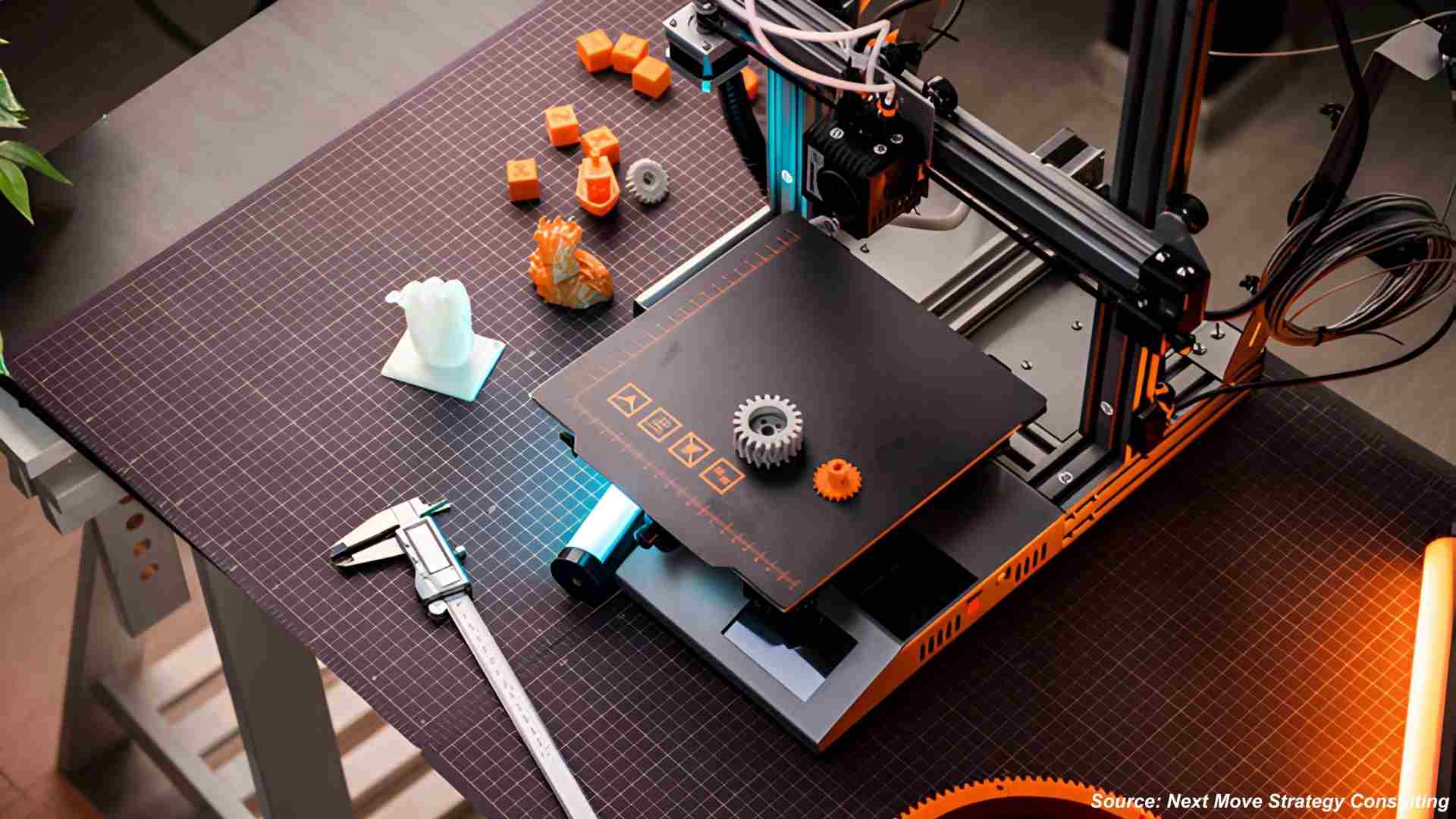
The 3D Digital Printing Market has moved decisively beyond the prototyping laboratory and into the heart of serial, mission-critical production. What was once a tool for rapid concept models is now an industrial backbone for aerospace turbine components, patient-specific medical implants, and high-volume automotive tooling. For C-level executives and institutional investors, the question is no longer whether additive manufacturing will scale, but how quickly capital, regulation, and supply chains will reorganize around it.
This shift is being driven by a maturing competitive landscape, accelerating consolidation, and rising aerospace and defense demand. As the 3D Digital Printing Industry transitions from experimentation to qualified application, understanding the latest globally impactful developments is essential for any stakeholder positioning for the next phase of growth.
From Proof of Concept to Proof of Value: The Defining Shift
The most defining recent event for the industry unfolded at Formnext 2025 in Frankfurt, where Colibrium Additive the GE Aerospace-owned metal additive manufacturing business introduced its most powerful M Line system yet, explicitly engineered for serial production. Colibrium Additive, the GE Aerospace-owned metal AM business, was at Formnext 2025 in Frankfurt to introduce its latest machine upgrade: a 4 × 1 kW version of the M Line, built to let aerospace and defense suppliers print parts faster while keeping the accuracy needed for regulated, safety-critical parts.
Critically, the machine exposes its data streams sensor output, operational metrics, and build parameters via an open OPC UA interface, enabling the traceability that regulated industries require. For companies in aerospace and defense, qualification of parts often requires not only that the parts meet mechanical standards, but also that the process, parameters, machine history, sensor logs, and build environment are documented and traceable.

The industry's commercial maturation is equally visible in capital flows. According to AMT – The Association For Manufacturing Technology, the additive manufacturing market reached a new phase of structural maturity in 2025, shifting from "proof of concept" to "proof of value." Rather than indicating a contracting market, 2025 reflected a shift toward application-driven growth, industrial relevance, and disciplined capital deployment as the industry moves from "proof of concept" to "proof of value."
Key Players Advancing the 3D Digital Printing Industry
Leading companies operating in the 3D digital printing industry include 3D Systems, Xometry Inc., Stratasys Ltd., Protolabs, Velo3D Inc., Desktop Metal Inc., Materialise N.V., Nano Dimension, Markforged Holding Corp., and Shapeways Holdings Inc.. To strengthen their market presence and remain competitive, these companies are actively pursuing strategic initiatives such as acquisitions, new product launches, capacity expansions, and technological advancements across the 3D digital printing ecosystem.

Industry Impact Analysis
The downstream impact of this maturation is most pronounced in aerospace, defense, and medical applications, where large funding rounds underscore investor confidence. According to AMT, major aerospace and defense rounds in 2025 included Divergent Technologies' USD 290 million Series E, Ursa Major's USD 100 million Series E, X-Bow's USD 105 million Series B, and Firehawk Aerospace's USD 60 million Series C.
Investment rounds, including Divergent Technologies' $290 million Series E, X-Bow's $105 million Series B, Firehawk Aerospace's $60 million Series C, and Ursa Major's $100 million Series E, suggested growing investor confidence in AM's ability to deliver scalable, mission-critical components for high-pressure applications. These signals confirm that additive manufacturing is being treated as a strategic resilience asset rather than a mere cost-reduction tool.
Consolidation is the defining structural feature of this phase. Additive-related mergers and acquisitions increased 18% year-over-year, rising from 27 transactions in both 2023 and 2024 to 32 in 2025. Additive-related M&As increased 18% YOY, rising from 27 transactions in both 2023 and 2024 to 32 in 2025.

Pros and Cons of Recent Market Developments
|
Pros |
Cons |
|
Production-grade hardware enabling qualified serial manufacturing |
High maintenance and material costs of industrial 3D printers persist |
|
Disciplined, application-driven capital (USD 1.14 billion VC in 2025) |
Consolidation may reduce competition and pressure niche innovators |
|
Aerospace and defense demand providing high-value, mission-critical pipelines |
Part qualification remains complex and documentation-intensive |
|
Open data interfaces improving traceability and regulatory compliance |
Limited material availability constrains certain end-use applications |
Future Outlook & Forecast
The forward trajectory of the 3D Digital Printing Industry points toward deeper integration into regulated, high-value production rather than broad consumer expansion. According to Next Move Strategy Consulting, the 3D Digital Printing Market was valued at USD 13.60 billion in 2021 and is predicted to reach USD 42.56 billion by 2030, growing at a CAGR of 13.5% from 2022 to 2030.
NMSC's analysis identifies automotive, aerospace and defense, and healthcare as primary demand engines, supported by rising adoption of additive manufacturing for rapid prototyping, part consolidation, and tooling fixtures. Rising demand for 3D digital printing in the aerospace industry is driving market growth, as 3D printing enables rapid prototyping, replacement, consolidation of multiple parts, and building tooling fixtures.
The strategic consensus is clear: companies that treat additive manufacturing as a disciplined production methodology investing in documented, repeatable, traceable workflows will capture disproportionate value, while those treating it as experimental tooling will be marginalized.
Next Steps for Stakeholders
-
Prioritize qualified platforms: Direct investment toward platforms with demonstrated qualification pathways in aerospace, defense, and medical, where regulatory moats protect long-term margins.
-
Treat consolidation as an opportunity: Well-capitalized acquirers can absorb distressed niche innovators to acquire qualified intellectual property and serial-production capability at attractive valuations, as demonstrated by the Stratasys and Arc Impact transactions of 2025.
-
Build production discipline internally: Develop additive strategies around documented, repeatable, and traceable workflows, as this discipline now separates market leaders from laggards.
Conclusion
The 3D Digital Printing Industry has entered a decisive maturation phase, defined by production-grade hardware, disciplined application-driven capital, and accelerating consolidation across aerospace, defense, and medical applications. The developments crystallized at Formnext 2025 and reinforced by an 18% rise in M&A activity confirm that the sector is transitioning from speculative expansion to revenue-backed, end-use-driven growth. With NMSC projecting the market to reach USD 42.56 billion by 2030 at a 13.5% CAGR, stakeholders who align capital and strategy with qualified, production-ready platforms will be best positioned to capture the value this transition is creating.
About the Author
 Tania Dey is a content writer specializing in transformation-led, insight-driven storytelling. She develops research-backed, high-impact content aligned with evolving business priorities, digital behavior, and audience expectations. Her work helps organizations sharpen value propositions, strengthen visibility, and communicate strategic intent with clarity and precision. Grounded in data-informed storytelling, she brings a strong focus on relevance, consistency, and measurable digital impact across platforms.
About the Reviewer
 Sanyukta Deb is Digital Marketing Team Lead at Next Move Strategy Consulting, where she has led content strategy and technical SEO for the firm's B2B market research publications for over 2 years. Her editorial process translates NextMSC's primary and secondary research — spanning technology, industrial, and consumer sectors — into commercial narratives, backed by search-intent, keyword, and competitive analysis. She brings 5 years of overall experience in digital marketing and content strategy.


















Add Comment