The Growing Demand for Skilled Nursing Professionals: Challenges in Building a Sustainable Healthcare Workforce
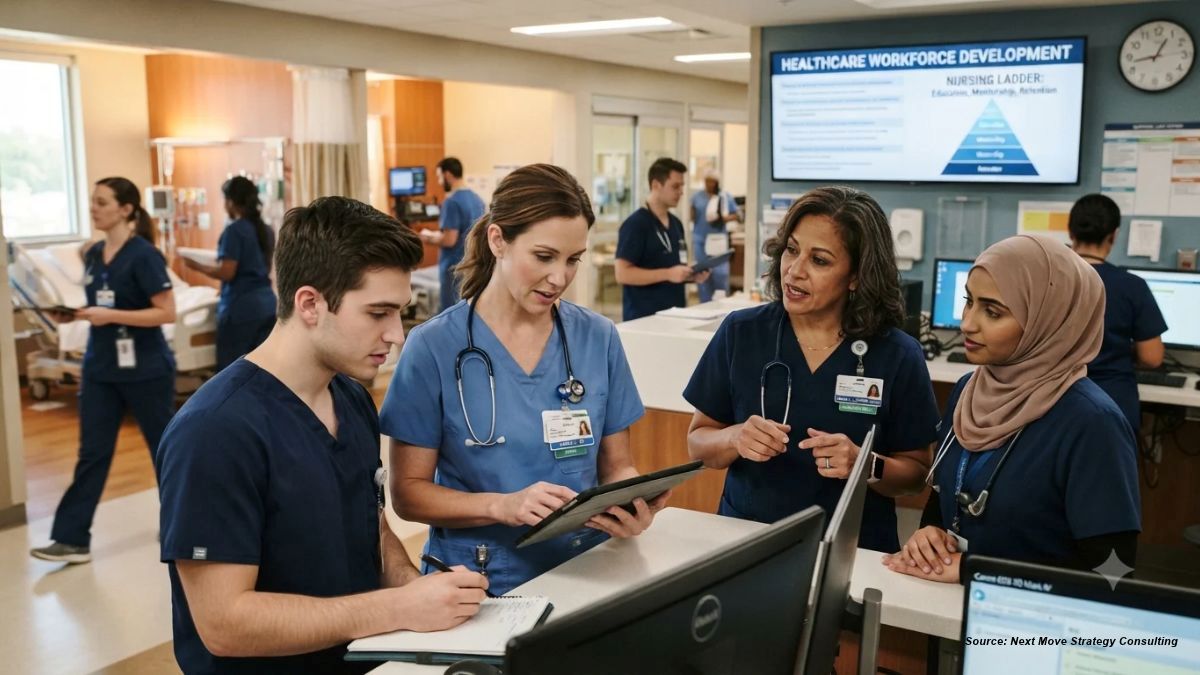
The availability of qualified nursing professionals is becoming a critical factor in the ability of healthcare systems to meet changing patient needs. Population aging, the growing prevalence of chronic conditions, and the expansion of care beyond traditional hospital settings are increasing demand for nurses across the healthcare sector. At the same time, many providers face difficulties recruiting and retaining enough qualified staff.
These pressures have implications beyond individual staffing shortages. A limited supply of nurses can affect patient access, service capacity, operating costs, and the ability of healthcare organizations to introduce new services. Addressing the issue requires more than short-term recruitment. It calls for coordinated investment in nursing education, clinical training, workforce retention, and long-term planning.
Why Demand for Skilled Nursing Professionals Continues to Grow
Changing Patient Demographics and Care Requirements
Population changes are reshaping demand across the healthcare industry. As people live longer, more require ongoing support for chronic illnesses, age-related conditions, rehabilitation, and multiple health concerns. These patients often need regular monitoring and coordinated treatment involving several healthcare professionals.
Demand is therefore growing across different care settings. Hospitals need nurses who can manage acute conditions and complex procedures, while outpatient clinics and primary care providers rely on professionals who can support routine treatment, patient education, and follow-up care. Long-term care facilities and home healthcare services also need qualified staff to support patients whose needs may change over time.
The geographic distribution of this demand presents another challenge. Some communities have access to a larger pool of healthcare professionals, while rural and nonmetropolitan areas may struggle to attract and retain enough staff. The Health Resources and Services Administration (HRSA) projects a national shortage of 108,960 registered nurse full-time equivalents by 2038. Its projections also indicate a larger relative shortage in nonmetropolitan areas than in metropolitan areas. These nursing workforce projections highlight the importance of considering regional differences when planning healthcare capacity.
An Expanding Role Within Healthcare Delivery
Nursing responsibilities have developed alongside changes in medical practice. Nurses contribute to patient assessment, treatment coordination, health education, discharge planning, and the management of long-term conditions. In many settings, they connect patients with physicians, specialists, and other members of the care team.
Technology is also influencing the skills required in these roles. Electronic health records, telehealth services, remote monitoring devices, and digital clinical systems are changing how information is collected and how patients receive support. Nurses increasingly need to combine clinical judgment with the ability to use these tools effectively and communicate information across care teams.
Expanding the supply of qualified professionals also depends on accessible educational pathways. Accelerated Bachelor of Science in Nursing (ABSN) programs, for example, provide an option for individuals who already hold a bachelor's degree and want to enter nursing through an intensive course of study. Applicants may need to complete foundational academic requirements before enrollment. Reviewing ABSN prerequisites helps prospective students understand the preparation involved, including subjects such as human anatomy and physiology, microbiology, and mathematics.
For healthcare employers, these developments mean that workforce planning must account for both the number of professionals entering the field and the competencies required in modern care environments. Clinical knowledge remains fundamental, while communication, adaptability, and digital skills are increasingly relevant to coordinated service delivery.
Challenges in Building a Sustainable Nursing Workforce
Shortages and Uneven Distribution of Professionals
Nursing shortages are not experienced equally across the healthcare system. Large urban centers may have access to a wider pool of applicants, while rural communities and underserved regions can face greater difficulties attracting qualified staff. Smaller facilities may also have fewer resources to compete with larger employers on compensation, professional development, and working conditions.
These disparities can affect the availability of services. When a facility cannot recruit enough nurses, it may struggle to maintain staffing levels, accommodate patient demand, or expand its services. In some communities, a limited local workforce can make it harder for patients to access care without traveling considerable distances.
The American Association of Colleges of Nursing (AACN) identifies factors such as population aging, retirement, and insufficient growth in nursing education capacity as contributors to ongoing workforce pressure. Its nursing shortage analysis also highlights the importance of preparing new professionals to meet projected demand.
A more effective response requires workforce planning at both national and regional levels. Healthcare organizations need to understand where shortages are most severe, which services are under pressure, and what makes recruitment difficult in particular locations. Without this information, recruitment initiatives may not address the areas where additional capacity is most needed.
Retention, Workload, and Loss of Experience
Increasing the number of graduates entering nursing will not resolve workforce shortages if experienced professionals continue to leave the field. Retention is therefore a central part of workforce planning, not simply an internal human resources concern.
Heavy workloads, demanding schedules, emotional pressure, and limited opportunities for advancement can contribute to dissatisfaction. These conditions may be particularly challenging in facilities already operating with insufficient staff. When nurses leave, remaining employees may take on additional responsibilities, increasing pressure on the people who stay.
Turnover also has operational consequences. Healthcare providers lose professionals who understand clinical procedures, patient needs, and internal systems. New employees require onboarding and support before they can perform confidently in their roles. In specialized departments, replacing practical knowledge and experience can take considerable time.
Employers can address some of these challenges through more consistent staffing practices, supportive management, mentorship, and access to continuing education. Clear career-development opportunities may also help nurses see a future within their organizations. These measures cannot eliminate every source of occupational pressure, but they can contribute to a more stable working environment.
Why Nursing Education Capacity Matters to Workforce Development
Constraints on Preparing New Professionals
The future supply of nurses depends partly on the capacity of educational institutions to prepare qualified candidates. However, expanding enrollment is not simply a matter of admitting more students. Nursing programs need sufficient faculty, classroom resources, clinical placements, and experienced professionals who can supervise practical training.
Clinical education is particularly important because students must apply academic knowledge in real healthcare environments under appropriate supervision. If hospitals and other providers cannot accommodate enough students, educational institutions may have limited opportunities to increase enrollment. Similar constraints arise when schools cannot recruit enough qualified instructors.
Faculty availability is a significant concern. Nursing educators need relevant academic qualifications and professional expertise, and educational institutions may compete with healthcare employers for experienced professionals. AACN's nursing faculty shortage research identifies limited faculty numbers, clinical placement availability, and institutional resources as barriers to expanding nursing education.
These limitations show why workforce development cannot be separated from investment in education. Even when interest in nursing careers is strong, the healthcare sector may not see a corresponding increase in graduates unless schools have the resources to educate and train them.
Aligning Education With Clinical Practice
Preparing more graduates is only one part of the challenge. Nursing programs must also ensure that students develop the knowledge and practical abilities required in different healthcare environments. This means connecting classroom instruction with supervised clinical experience and giving students opportunities to understand the responsibilities they will encounter after graduation.
Healthcare providers can contribute by working with educational institutions to identify relevant competencies and support clinical training. Their input can help schools understand how patient needs, treatment procedures, and workplace technologies are changing. Educators can use this feedback to review course content and identify areas where students may need additional preparation.
This connection is particularly important as care moves across a wider range of settings. A graduate entering a hospital may face different demands from someone beginning work in a community clinic or long-term care facility. Exposure to varied clinical environments can help students understand these differences and make more informed career choices.
How Healthcare Providers and Educational Institutions Can Strengthen the Workforce Pipeline
Building Stronger Partnerships
A stronger supply of qualified nurses depends on cooperation between the institutions that provide education and the organizations that employ graduates. Nursing schools develop academic and clinical competencies, while healthcare providers understand the practical demands of different roles and care environments. Regular communication can help align these perspectives.
Partnerships can take several forms. Healthcare organizations may provide supervised clinical placements, contribute to curriculum discussions, or involve experienced nurses in mentoring students. Educational institutions can use feedback from clinical partners to identify areas where students need additional preparation before entering professional practice.
These relationships can also improve the transition from graduation to employment. Structured orientation, mentorship, and graduate support programs give newly qualified nurses an opportunity to develop confidence while adjusting to workplace responsibilities. This is important for employers seeking to build a reliable talent pipeline rather than repeatedly responding to vacancies after they arise.
Collaboration should extend beyond major hospitals. Community clinics, long-term care facilities, rehabilitation centers, and rural providers can offer valuable learning environments. Involving a wider range of organizations can give students a better understanding of available career paths while allowing more providers to contribute to workforce development.
Using Technology to Support Training
Digital tools can support nursing education by providing additional opportunities to develop clinical reasoning and practice responding to different scenarios. Simulation platforms, for example, allow students to work through clinical situations in a controlled environment. Digital learning systems can also support coursework, assessment, and communication between students and instructors.
These approaches can complement traditional teaching, particularly when access to clinical resources is limited. However, technology cannot replace supervised experience with patients. Practical training remains essential for developing the judgment, communication, and hands-on skills required in nursing roles.
Educational providers must therefore balance innovation with established training requirements. Flexible learning options can help accommodate students with different circumstances, but programs still need to ensure that graduates meet the standards expected by employers and licensing authorities.
Healthcare organizations can contribute by sharing their experience with digital clinical systems and identifying the technologies graduates are likely to encounter in practice. This helps ensure that educational innovation remains connected to the operational needs of healthcare delivery.
What Sustainable Nursing Workforce Development Looks Like
A stronger nursing workforce will require planning across the full professional lifecycle: education, clinical preparation, recruitment, career development, and retention. Focusing only on current vacancies may provide short-term relief, but it does not address the factors that create recurring staffing difficulties.
Healthcare providers can make better decisions by monitoring indicators such as retirement trends, employee turnover, regional staffing levels, patient demand, and the availability of specialized skills. This information can help organizations anticipate future requirements and allocate resources more effectively.
Educational institutions also need to consider how healthcare delivery is changing. As more services move into outpatient, home-based, and community settings, nursing programs must prepare graduates for a wider range of responsibilities. This includes developing clinical competence alongside communication, coordination, and the ability to work with digital healthcare systems.
At the sector level, investment in faculty development, clinical training infrastructure, and underserved communities can help address structural barriers to workforce growth. These efforts require cooperation between educational providers, healthcare employers, and policymakers. No single organization can resolve shortages shaped by interconnected challenges across the system.
The broader objective is to ensure that qualified professionals are available in the right locations, prepared for the roles they undertake, and supported throughout their careers. This is essential for healthcare systems seeking to maintain access to services while adapting to changing patient needs and models of care.
Conclusion
Growing demand for skilled nursing professionals reflects significant changes in healthcare delivery, including population aging, more complex patient needs, and the wider use of digital technologies. Meeting this demand requires more than increasing recruitment. It depends on the capacity of educational institutions to prepare new professionals, the ability of employers to retain experienced staff, and better coordination between workforce supply and regional healthcare needs.
Strengthening the nursing pipeline is therefore both an educational and an operational priority for the healthcare sector. By investing in training capacity, supporting cooperation between schools and clinical providers, and improving working conditions, stakeholders can contribute to a more reliable supply of qualified nurses.
A stronger workforce will help healthcare systems respond to future demand, maintain access to essential services, and adapt to changes in how care is delivered.
About the Author
 Sanyukta Deb
— Sanyukta Deb is Digital Marketing Team Lead at Next Move Strategy Consulting, where she has led content strategy and technical SEO for the firm's B2B market research publications for over 2 years. Her editorial process translates NextMSC's primary and secondary research — spanning technology, industrial, and consumer sectors — into commercial narratives, backed by search-intent, keyword, and competitive analysis. She brings 5 years of overall experience in digital marketing and content strategy.
About the Reviewer
 Debashree Dey
— Debashree Dey is Assistant Manager at Next Move Strategy Consulting, where she supports cross-vertical market content and communications across diverse industries for 6 years. Her professional background includes senior content writing, communications, and published manuscript authorship, with experience developing audience-focused business narratives and maintaining clear, consistent messaging. Her role supports research-led content development and editorial quality across NextMSC publications.
















Add Comment