Why Are Undersea Wires and Cables the Backbone of Global Connectivity?
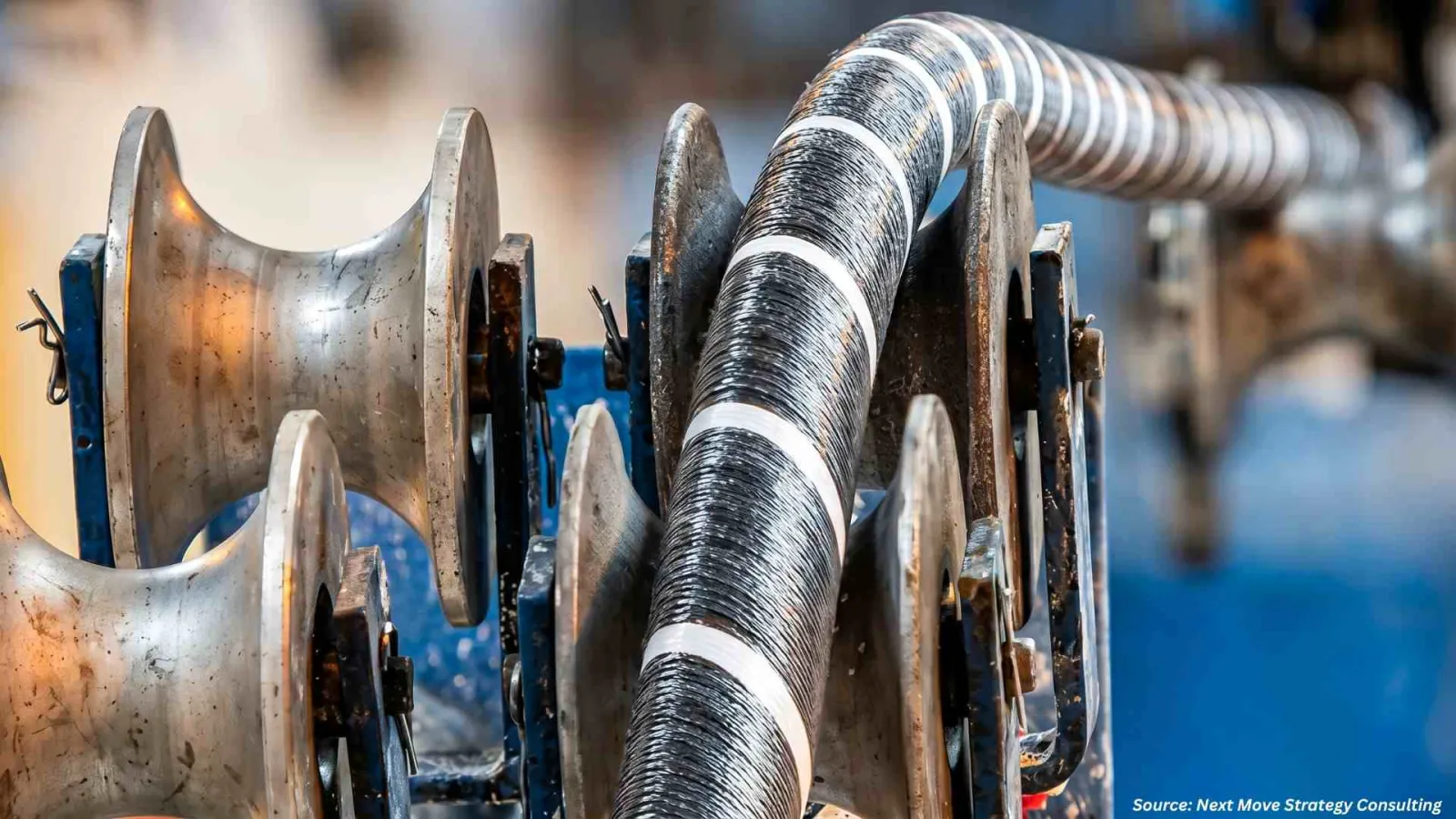
In an era where digital interactions define economies and societies, the infrastructure enabling seamless communication often goes unnoticed. Beneath the oceans lies a vast network of Wires and Cables Market that carry nearly all global data traffic. These systems are not just technical assets; they are essential lifelines of the modern world.
What Makes Undersea Wires and Cables So Essential?
Undersea cables are often described as the invisible highways of the internet because they carry the overwhelming majority of global data traffic. Nearly 99% of international internet communication flows through these cables, enabling everything from online banking and video calls to global financial transactions and real-time communication.
There are more than 500 commercial submarine cables worldwide, stretching roughly 1.7 million kilometres across the ocean floor. These fibre-optic systems transmit data at extremely high speeds, supporting hundreds of terabits per second and ensuring uninterrupted connectivity between continents.
In conclusion, undersea wires and cables are not optional infrastructure; they form the foundation of global digital communication by connecting economies, enabling services, and sustaining real-time interactions.
How Has Cable Technology Evolved Over Time?
The evolution of wires and cables reflects the broader history of communication technology. The first undersea telegraph cable in 1850 connected England and France, marking the beginning of international data exchange. Over time, this technology advanced into telephone networks and eventually into today’s fibre-optic systems that power the internet.
Modern cables are relatively thin, comparable to the width of a garden hose, yet they are capable of carrying massive volumes of data. They are designed for deep-sea deployment and engineered to withstand harsh underwater conditions while maintaining high efficiency.
To summarize, technological advancement has transformed cables from basic communication tools into high-capacity digital infrastructure that supports the modern internet ecosystem.

What Risks Threaten Global Cable Infrastructure?
Despite their critical importance, undersea cables are vulnerable to a wide range of risks. Human activity remains the leading cause of damage, accounting for around 80% of incidents. Ship anchors and fishing operations frequently interfere with cable routes, leading to disruptions.
Natural disasters such as earthquakes, underwater landslides, and volcanic eruptions also pose significant threats. In addition to these physical risks, geopolitical tensions are emerging as a major concern, with increased attention on the security of subsea infrastructure in regions experiencing strategic conflicts.
In 2024, disruptions in the Red Sea region affected approximately 25% of data traffic between Europe and Asia, demonstrating how localized incidents can have far-reaching global consequences. On average, there are between 150 and 200 cable incidents each year, highlighting the persistent vulnerability of this infrastructure.
In summary, undersea cable systems face constant threats from human, natural, and geopolitical factors, making resilience a critical priority.

Why Does Cable Resilience Matter More Than Ever?
As digital dependence increases, even minor disruptions in cable networks can have significant consequences. Entire regions can lose connectivity, affecting essential services such as healthcare, education, and financial systems.
In remote regions, the impact is even more severe. A single cable failure can isolate entire populations for extended periods, limiting access to critical information and services. Furthermore, in high-speed financial markets, even millisecond delays caused by congestion or damage can influence trading outcomes.
To conclude, cable resilience is not merely a technical concern; it is a fundamental requirement for economic stability, public safety, and global communication.
How Are Countries Strengthening Cable Security?
Governments are increasingly recognizing the importance of protecting undersea cable infrastructure. In 2026, the United Kingdom and Ireland announced plans to conduct live exercises to test their readiness for incidents involving subsea cables. These exercises aim to improve response coordination and strengthen communication strategies during disruptions.
Across Europe, countries are enhancing surveillance capabilities, expanding security agreements, and increasing cooperation with allied organizations to address emerging threats. These efforts reflect a growing awareness of the strategic importance of subsea infrastructure in maintaining national and regional stability.
In summary, international collaboration and proactive preparedness are becoming central to safeguarding cable networks against evolving risks.
Layered Design of Electrical Wires and Cables
This diagram presents a detailed breakdown of the layered design used in modern electrical cables. The inner conductive core forms the pathway for electricity, while surrounding semi-conducting layers manage electrical stress and maintain field uniformity.
The insulation plays a vital role in preventing current leakage and ensuring operational safety. Additional screening layers provide electromagnetic shielding and structural reinforcement, while the outer sheath protects the cable from external environmental factors.
The second part of the image, showing the circular cross-section, helps visualize how these layers are arranged concentrically. It also identifies a potential defect zone, demonstrating how flaws within the insulation layer can compromise performance.
Overall, the image highlights the engineering precision behind cable design, where each layer contributes to efficiency, protection, and long-term reliability.

What Challenges Exist in Cable Maintenance and Repair?
Repairing undersea cables involves a complex combination of technical and administrative challenges. While identifying faults and conducting repairs may not always be difficult, obtaining the necessary permits across multiple jurisdictions can significantly delay the process.
The availability of specialized cable repair ships also affects response times, particularly in remote regions where access is limited. Depending on the location and severity of the damage, repairs can take anywhere from a few days to several months.
Another challenge is the aging infrastructure. Many cables installed during the early 2000s are approaching their typical lifespan of 25 years, increasing the likelihood of failures and the need for replacement.
In conclusion, maintenance and repair operations are constrained by logistical, regulatory, and aging infrastructure challenges, making efficiency improvements essential.
Layered Design for Cable Protection and Signal Stability
This diagram illustrates the layered configuration of a modern cable designed for both electrical conduction and interference protection. The inner conducting core serves as the pathway for current flow, while the surrounding insulation ensures safe operation by preventing leakage.
A key feature shown is the braided shielding, which helps block external electromagnetic interference and reduces signal distortion. This is especially important in environments with high electronic noise.
The outer sheath provides mechanical protection, shielding the internal components from environmental stress and extending the cable’s lifespan.
Overall, the image highlights how combining conductive, insulating, and shielding layers results in a reliable and high-performance cable system.

Functional Distribution of Cable Components
The pie chart illustrates how different components contribute to the overall structure and performance of a cable system. The conducting core and insulation each account for 30%, highlighting their primary importance. The conducting core is responsible for transmitting electrical current, while the insulation ensures safety by preventing leakage and protecting against electrical faults.
The remaining 40% is divided equally between braided shielding and the outer sheath, each representing 20%. The braided shielding plays a critical role in minimizing electromagnetic interference, ensuring stable signal transmission. Meanwhile, the outer sheath provides mechanical protection, shielding the cable from environmental damage, moisture, and wear.
In summary, the chart emphasizes that while current transmission and insulation are the most critical functions, protection and signal stability layers are equally essential for ensuring durability and reliable performance.

Competitive Landscape and Industry Dynamics in Wires and Cables
The global wires and cables industry is led by vertically integrated companies such as Prysmian S.p.A., Sumitomo Electric Industries, Ltd., Nexans S.A., Southwire Company, LLC, LS Cable & System Ltd., and Hengtong Group Co., Ltd., among others. These organizations leverage extensive manufacturing capabilities, strong engineering expertise, and end-to-end installation services supported by widespread regional production networks. Their competitive advantage lies in delivering reliable large-scale projects, driving technological innovation, and maintaining the financial capacity required for long-term infrastructure developments.
At the same time, regional and specialized manufacturers, including Polycab, Southwire, Hengtong, and ZTT, emphasize cost efficiency, robust local distribution channels, and faster delivery timelines, particularly for telecom and construction-related applications.
The competitive landscape is gradually shifting as multi-year framework agreements with transmission system operators and telecommunications companies become more prominent. This transition is reducing reliance on short-term, spot-based contracts and placing greater emphasis on long-term partnerships.
Overall, the industry is evolving toward a model focused on sustainability, operational efficiency, and the ability to support complex, long-duration infrastructure projects.

Major Trends Shaping the Present
The undersea cable landscape is undergoing rapid transformation driven by technological and geopolitical factors. One of the most significant trends is the exponential growth in cable capacity, which has been increasing by approximately 40% annually over the past four decades.
At the same time, security concerns are intensifying as geopolitical tensions highlight the vulnerability of critical infrastructure. The demand for connectivity continues to rise, driven by digital services, cloud computing, and global data exchange.
There is also a growing emphasis on resilience and sustainability, with efforts focused on improving repair processes, reducing environmental impact, and ensuring long-term reliability.
To summarize, the industry is evolving to address increasing demand, emerging risks, and the need for sustainable and resilient infrastructure.
Next Steps: What Should Stakeholders Do?
Stakeholders should focus on strengthening international collaboration to ensure coordinated responses to cable incidents. Investment in monitoring and surveillance technologies can help detect and prevent damage more effectively. Streamlining regulatory processes will reduce delays in repair operations, while diversifying cable routes can minimize the risk of widespread outages. Additionally, upgrading aging infrastructure is essential to maintain reliability and support future demand.
-
Strengthen international collaboration to ensure faster and coordinated responses to cable disruptions
-
Invest in advanced monitoring and surveillance technologies to detect and prevent damage
-
Streamline regulatory and permitting processes to reduce repair delays
-
Diversify cable routes to minimize the risk of widespread outages
-
Upgrade aging infrastructure to support long-term reliability and growing data demand
Final Conclusion
Undersea wires and cables are the silent enablers of the global digital economy. Although they remain largely invisible, their role in supporting communication, commerce, and connectivity is indispensable. As risks continue to evolve, building resilient and secure cable infrastructure will be critical to sustaining global progress and ensuring uninterrupted digital connectivity.
About the Author
 Tania Dey
— Tania Dey is a content writer specializing in transformation-led, insight-driven storytelling. She develops research-backed, high-impact content aligned with evolving business priorities, digital behavior, and audience expectations. Her work helps organizations sharpen value propositions, strengthen visibility, and communicate strategic intent with clarity and precision. Grounded in data-informed storytelling, she brings a strong focus on relevance, consistency, and measurable digital impact across platforms.
Tania Dey
— Tania Dey is a content writer specializing in transformation-led, insight-driven storytelling. She develops research-backed, high-impact content aligned with evolving business priorities, digital behavior, and audience expectations. Her work helps organizations sharpen value propositions, strengthen visibility, and communicate strategic intent with clarity and precision. Grounded in data-informed storytelling, she brings a strong focus on relevance, consistency, and measurable digital impact across platforms.
About the Reviewer
 Debashree Dey
— Debashree Dey is Assistant Manager at Next Move Strategy Consulting, where she supports cross-vertical market content and communications across diverse industries for 6 years. Her professional background includes senior content writing, communications, and published manuscript authorship, with experience developing audience-focused business narratives and maintaining clear, consistent messaging. Her role supports research-led content development and editorial quality across NextMSC publications.
Debashree Dey
— Debashree Dey is Assistant Manager at Next Move Strategy Consulting, where she supports cross-vertical market content and communications across diverse industries for 6 years. Her professional background includes senior content writing, communications, and published manuscript authorship, with experience developing audience-focused business narratives and maintaining clear, consistent messaging. Her role supports research-led content development and editorial quality across NextMSC publications.















Add Comment