Accenture and General Robotics Drive a New Era in AI Robots Market
Industry Insights from Next Move Strategy Consulting
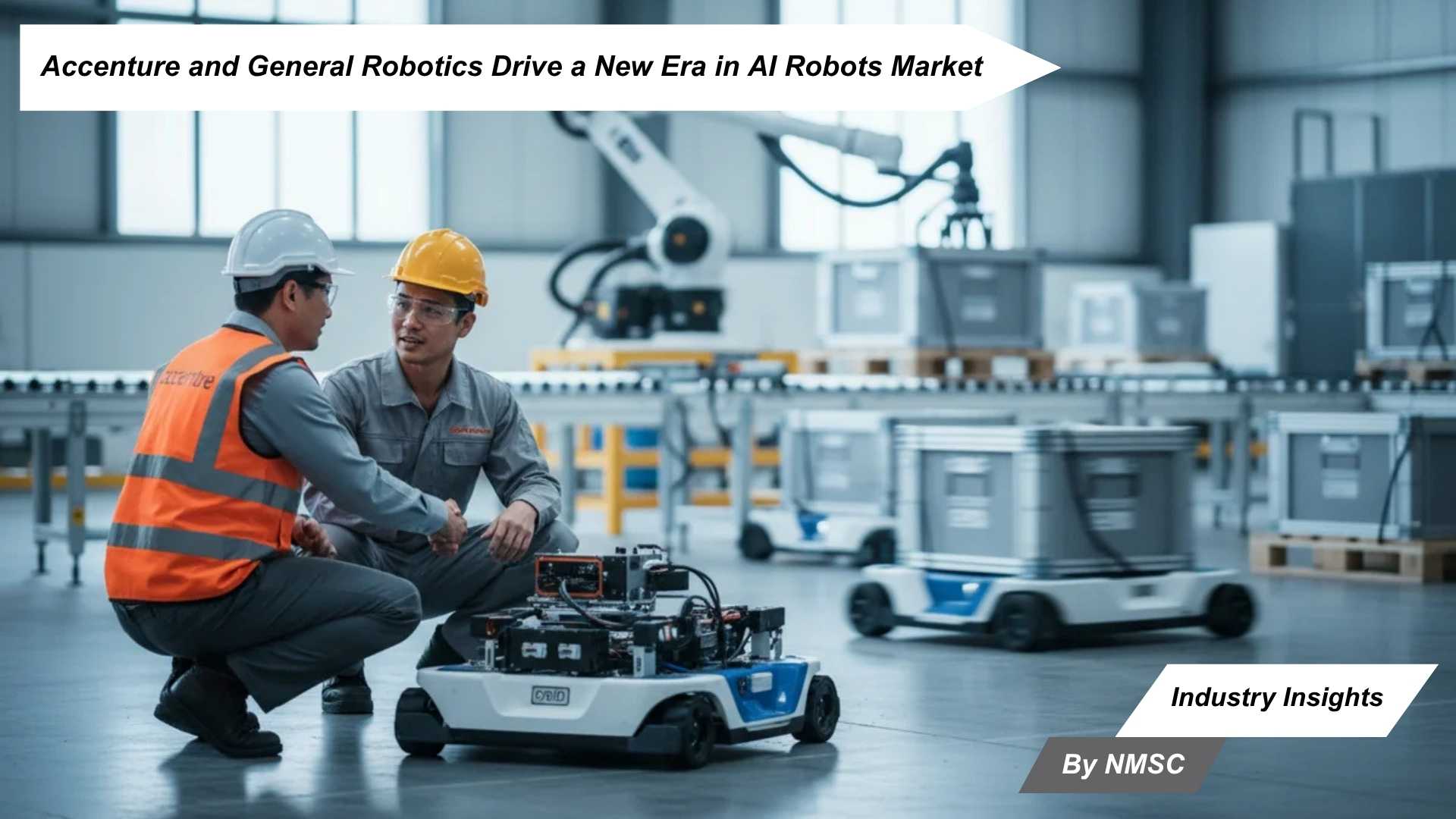
As industries accelerate the adoption of intelligent automation, a new collaboration between Accenture and General Robotics is redefining the trajectory of the physical robots market. Their initiative to develop a “robotics grid” powered by physical AI signals a major advancement in how manufacturing ecosystems integrate robotics, data, and artificial intelligence.
By shifting from isolated robotic systems to interconnected, intelligent networks, this development marks a pivotal step toward scalable and adaptive industrial automation.
A Strategic Shift Toward Physical AI Integration
Traditional robotics in manufacturing has long operated within confined and task-specific environments. However, the introduction of a robotics grid built on physical AI transforms these systems into dynamic, learning-enabled entities capable of real-time decision-making.
This initiative focuses on embedding AI directly into physical systems, allowing robots to perceive, learn, and respond to complex industrial scenarios. Rather than functioning as standalone machines, robots become part of a broader, interconnected infrastructure that enhances coordination and efficiency across operations.
According to Accenture, this shift represents a move beyond conventional automation toward intelligent, responsive manufacturing ecosystems.
Key Capabilities at a Glance:
-
Robotics Grid Architecture enabling interconnected robotic systems to operate collaboratively across manufacturing environments.
-
Physical AI Integration allowing machines to interpret and respond to real-world conditions with enhanced precision.
-
Scalable Deployment Models supporting flexible expansion across industrial facilities.
-
Real-Time Data Utilization improving operational efficiency and decision-making accuracy.
-
Enhanced Manufacturing Intelligence through continuous learning and system-wide optimization.
Building Scalable and Adaptive Manufacturing Systems
At the core of this innovation lies the concept of scalability. The robotics grid enables manufacturers to deploy robotic solutions that can evolve with changing production needs. By leveraging AI-driven insights and interconnected frameworks, companies can optimize workflows, reduce inefficiencies, and improve overall productivity.
This approach also addresses one of the key limitations of traditional robotics—lack of adaptability. With physical AI, robots are no longer restricted to predefined instructions but can adjust to variations in tasks and environments, making them more versatile and valuable in modern manufacturing settings.
Industry Response and Strategic Outlook
The collaboration between Accenture and General Robotics has drawn significant attention from industry stakeholders seeking to modernize production capabilities. As manufacturers face increasing pressure to enhance efficiency and resilience, solutions that combine robotics with advanced AI are gaining momentum.
The robotics grid concept is expected to influence investment trends within the AI Robots’ market, particularly in sectors focused on smart manufacturing and digital transformation. Its ability to unify robotics, AI, and data infrastructure positions it as a foundational element for next-generation industrial systems.
According to Next Move Strategy Consulting, the integration of physical AI into robotics is set to reshape competitive dynamics in the market, driving demand for intelligent, scalable, and interconnected automation solutions.
Redefining the Future of Industrial Robotics
As the boundaries between digital intelligence and physical systems continue to blur, the AI robots’ market is entering a transformative phase. The robotics grid initiative demonstrates how combining AI with physical infrastructure can unlock new levels of efficiency, adaptability, and innovation.
With this development, Accenture and General Robotics reinforce their role in advancing intelligent automation, paving the way for a future where robotics systems are not only automated but truly intelligent and interconnected.
Source: TNW
Prepared by: Next Move Strategy Consulting
About the Author
 Sanyukta Deb
— Sanyukta Deb is Digital Marketing Team Lead at Next Move Strategy Consulting, where she has led content strategy and technical SEO for the firm's B2B market research publications for over 2 years. Her editorial process translates NextMSC's primary and secondary research — spanning technology, industrial, and consumer sectors — into commercial narratives, backed by search-intent, keyword, and competitive analysis. She brings 5 years of overall experience in digital marketing and content strategy.
Sanyukta Deb
— Sanyukta Deb is Digital Marketing Team Lead at Next Move Strategy Consulting, where she has led content strategy and technical SEO for the firm's B2B market research publications for over 2 years. Her editorial process translates NextMSC's primary and secondary research — spanning technology, industrial, and consumer sectors — into commercial narratives, backed by search-intent, keyword, and competitive analysis. She brings 5 years of overall experience in digital marketing and content strategy.
About the Reviewer
 Debashree Dey
— Debashree Dey is Assistant Manager at Next Move Strategy Consulting, where she supports cross-vertical market content and communications across diverse industries for 6 years. Her professional background includes senior content writing, communications, and published manuscript authorship, with experience developing audience-focused business narratives and maintaining clear, consistent messaging. Her role supports research-led content development and editorial quality across NextMSC publications.
Debashree Dey
— Debashree Dey is Assistant Manager at Next Move Strategy Consulting, where she supports cross-vertical market content and communications across diverse industries for 6 years. Her professional background includes senior content writing, communications, and published manuscript authorship, with experience developing audience-focused business narratives and maintaining clear, consistent messaging. Her role supports research-led content development and editorial quality across NextMSC publications.
















Add Comment