AI Robot Restaurant Begins Trial Operations in Hangzhou
Industry Insights from Next Move Strategy Consulting
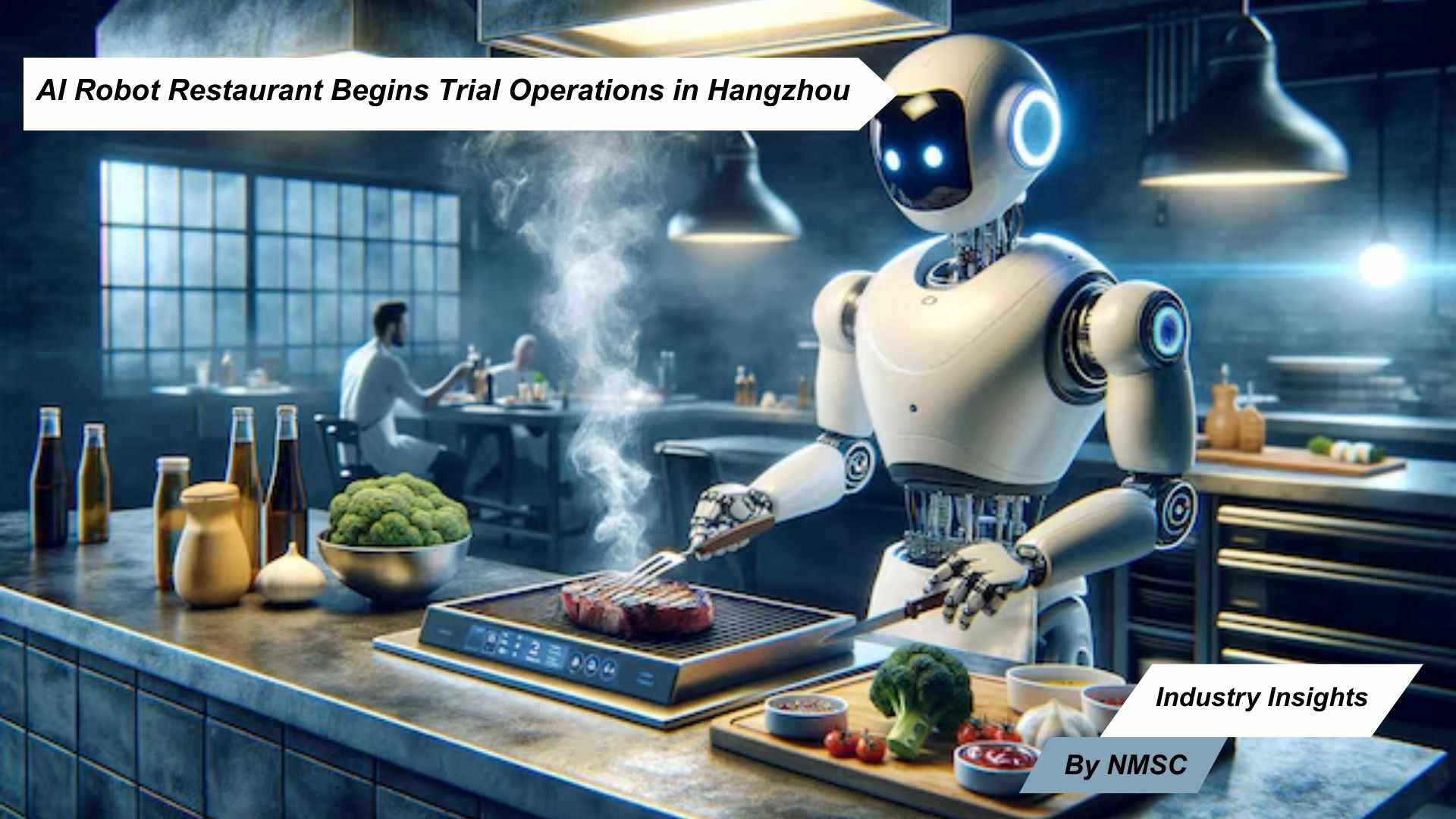
A fully robotic restaurant powered by artificial intelligence has begun trial operations in Hangzhou City, located in east China’s Zhejiang Province, marking a notable development in the evolution of automated food service environments. The facility showcases how AI-driven robotics can be deployed across an end-to-end dining workflow, from food preparation to customer service and cleaning.
Advancing Automation in the Dining Experience
The restaurant operates with more than ten AI-powered robots, each designed to perform specialized tasks. These include cooking robots, noodle-making units, coffee-making systems, and floor-cleaning robots. Together, they cover multiple operational stages such as meal preparation, serving of food and beverages, and post-service cleaning, demonstrating a fully integrated robotic workflow.
By consolidating these functions within a single automated environment, the restaurant highlights the expanding role of AI robots in delivering consistent service while managing complex, multi-step processes typically handled by human staff.
Key Operational Capabilities at a Glance:
-
AI-Powered Cooking Robots managing meal preparation
-
Noodle-Making Robots handling specialized food production
-
Coffee-Making Robots preparing beverages
-
Serving Robots delivering dishes and drinks
-
Floor-Cleaning Robots maintaining hygiene and cleanliness
Trial Operations in Hangzhou
The launch is currently in a trial phase, allowing operators to evaluate performance across real-world dining scenarios. With robots engaged throughout the service cycle, the restaurant offers a live demonstration of how artificial intelligence and robotics can be coordinated to support high-efficiency food service operations.
Next Move Strategy Consulting’s Viewpoint
According to Next Move Strategy Consulting, the trial operation of this AI robot market restaurant reflects a broader shift toward automation-driven service models. The integration of multiple robotic systems within a single commercial setting illustrates how AI technologies are moving beyond isolated tasks to support complete operational ecosystems. This approach signals growing momentum for intelligent automation in service-oriented industries.
Redefining the Future of Smart Restaurants
As AI-powered robotics continue to mature, the Hangzhou trial underscores the potential for fully automated dining environments to reshape traditional restaurant operations. By combining preparation, service, and maintenance through coordinated robotic systems, the project points toward a future where smart restaurants become an increasingly viable model.
Source: CGTN
Prepared by: Next Move Strategy Consulting
About the Author
 Tania Dey is a content writer specializing in transformation-led, insight-driven storytelling. She develops research-backed, high-impact content aligned with evolving business priorities, digital behavior, and audience expectations. Her work helps organizations sharpen value propositions, strengthen visibility, and communicate strategic intent with clarity and precision. Grounded in data-informed storytelling, she brings a strong focus on relevance, consistency, and measurable digital impact across platforms.
About the Reviewer
 Sanyukta Deb is Digital Marketing Team Lead at Next Move Strategy Consulting, where she has led content strategy and technical SEO for the firm's B2B market research publications for over 2 years. Her editorial process translates NextMSC's primary and secondary research — spanning technology, industrial, and consumer sectors — into commercial narratives, backed by search-intent, keyword, and competitive analysis. She brings 5 years of overall experience in digital marketing and content strategy.















Add Comment