California Seals CO2 Cap-and-Invest Overhaul, Effective Sept. 1
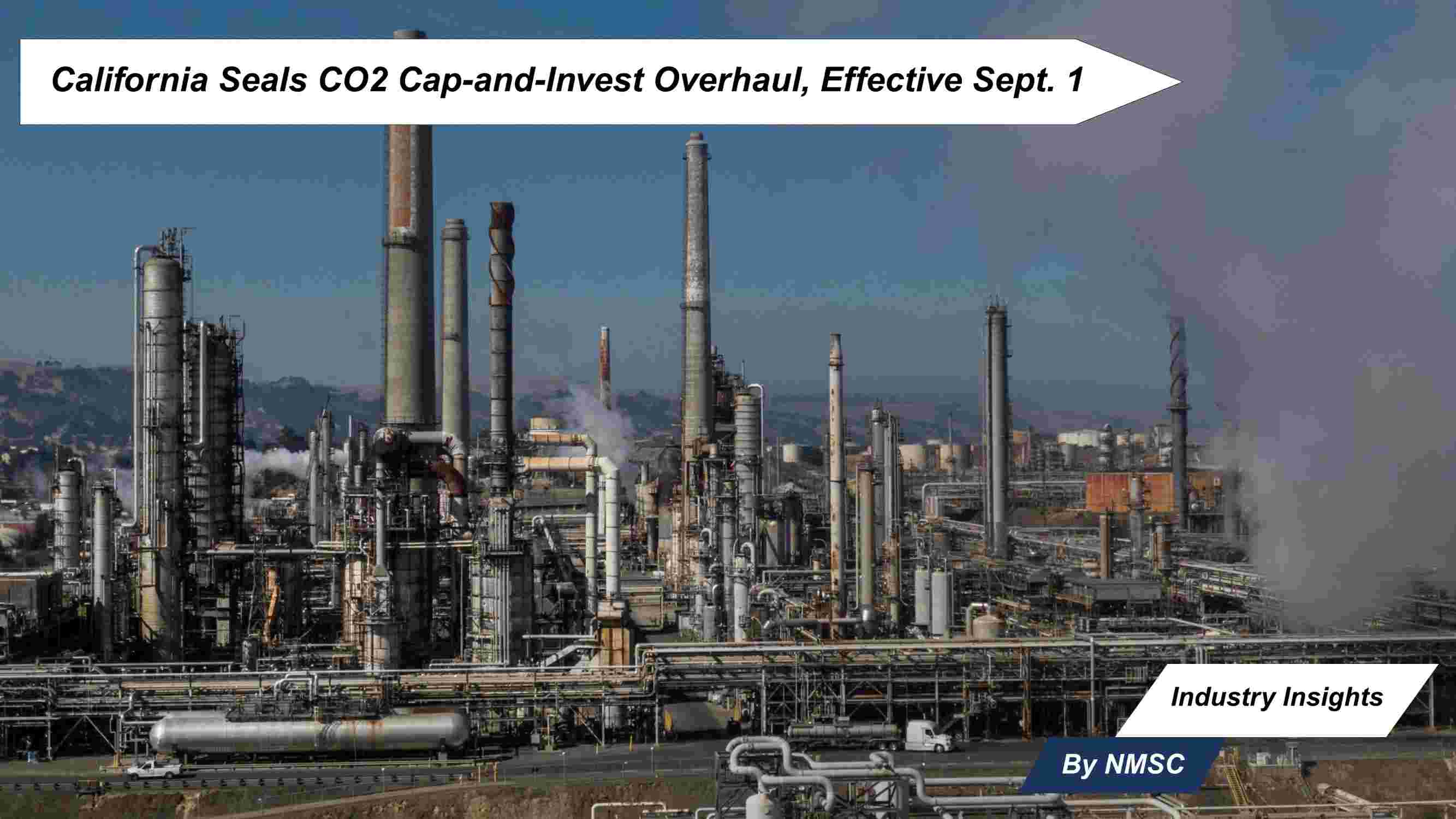
California OAL Approves Final Cap-and-Invest ETS Revamp, Effective September 1, 2026
SACRAMENTO, United States August 31, 2026 - California's Office of Administrative Law (OAL) approved the final update to the state's Cap-and-Invest emissions trading regulation on Monday, sealing a multi-year overhaul of one of the world's most consequential carbon market frameworks. The decision, effective September 1, 2026, carries significant implications for the global Carbon Dioxide Market, which is projected to reach USD 61.26 billion by 2030, at a CAGR of 30.1%, according to Next Move Strategy Consulting.
The OAL's approval finalizes amendments to California's Cap-and-Invest Program formerly known as Cap-and-Trade which has operated for 13 years with nearly 100% compliance and covers approximately 80% of the state's total climate emissions. The revamped regulation extends the program through 2045, aligning long-term allowance budgets with California's carbon neutrality targets and reinforcing market certainty for program participants.
The updated framework introduces several structural changes, including the ongoing removal of allowances from circulation when offsets are used for compliance, a transfer of free allowances from natural gas utilities to electric utilities to address affordability concerns, and the addition of post-2030 allowances to the Allowance Price Containment Reserve to prevent price spikes. The California Air Resources Board (CARB) estimates total statewide benefits of USD 180.7 billion, including USD 123 billion in avoided health costs from improved local air quality, and up to USD 485 billion in global savings from avoided climate damages.
Key Highlights:
-
Program Extended Through 2045: The revamped Cap-and-Invest regulation aligns California's allowance budgets with its 2030 and 2045 climate targets, providing long-term regulatory certainty for CO₂ market participants.
-
Proven Track Record: Since inception, the program has generated USD 34 billion in climate investments, funded over 500,000 projects, supported 30,000 jobs, and directed 70% of investments to disadvantaged and low-income communities.
-
Cost-Effective Compliance: CARB's economic analysis estimates total compliance costs at USD 124 billion over a 20-years period negligible relative to California's USD 4 trillion annual economy and USD 20 billion less costly than scenarios initially analyzed in April 2024.
-
Ratepayer Protections Maintained: The program is projected to generate USD 56 billion in benefits for utility ratepayers, with USD 15 billion already returned in bill credits to household utility customers.
Analyst Insight:
According to analysts at Next Move Strategy Consulting, the finalization of California's Cap-and-Invest overhaul represents a pivotal regulatory milestone for the broader CO₂ market ecosystem. The extension of the program through 2045, combined with structural reforms targeting price stability and allowance supply management, is expected to reinforce investor confidence and accelerate industrial decarbonisation investment across North America. NMSC analysts note that as regulatory frameworks mature and tighten in major economies, demand for CO₂ management technologies spanning carbon capture, utilization, and storage is poised to intensify, further underpinning the market's projected growth trajectory toward USD 61.26 billion by 2030.
Industry Outlook:
The OAL's approval of California's revised Cap-and-Invest regulation marks a defining moment for North American carbon market governance. By locking in post-2030 allowance budgets and strengthening price containment mechanisms, the state has established a durable policy architecture that is likely to influence regulatory design in other jurisdictions. For the global CO₂ market, the development underscores a broader trend of tightening emissions frameworks, rising compliance demand, and expanding industrial applications from enhanced oil recovery and food-grade CO₂ to medical and chemical sector uses. As carbon pricing mechanisms proliferate globally, market participants and investors will be closely monitoring how California's model shapes emerging trading systems in Brazil, South Korea, and the European Union in the months ahead.
Source: Carbon Pulse
For More Information: Download FREE Sample on Carbon Dioxide Market Report
Prepared By: Sanyukta Deb
About the Author
 Sanyukta Deb
— Sanyukta Deb is Digital Marketing Team Lead at Next Move Strategy Consulting, where she has led content strategy and technical SEO for the firm's B2B market research publications for over 2 years. Her editorial process translates NextMSC's primary and secondary research — spanning technology, industrial, and consumer sectors — into commercial narratives, backed by search-intent, keyword, and competitive analysis. She brings 5 years of overall experience in digital marketing and content strategy.
Sanyukta Deb
— Sanyukta Deb is Digital Marketing Team Lead at Next Move Strategy Consulting, where she has led content strategy and technical SEO for the firm's B2B market research publications for over 2 years. Her editorial process translates NextMSC's primary and secondary research — spanning technology, industrial, and consumer sectors — into commercial narratives, backed by search-intent, keyword, and competitive analysis. She brings 5 years of overall experience in digital marketing and content strategy.
About the Reviewer
 Debashree Dey
— Debashree Dey is Assistant Manager at Next Move Strategy Consulting, where she supports cross-vertical market content and communications across diverse industries for 6 years. Her professional background includes senior content writing, communications, and published manuscript authorship, with experience developing audience-focused business narratives and maintaining clear, consistent messaging. Her role supports research-led content development and editorial quality across NextMSC publications.
Debashree Dey
— Debashree Dey is Assistant Manager at Next Move Strategy Consulting, where she supports cross-vertical market content and communications across diverse industries for 6 years. Her professional background includes senior content writing, communications, and published manuscript authorship, with experience developing audience-focused business narratives and maintaining clear, consistent messaging. Her role supports research-led content development and editorial quality across NextMSC publications.


















Add Comment