Can Tempered Glass Innovations Redefine Electronics?
Lede
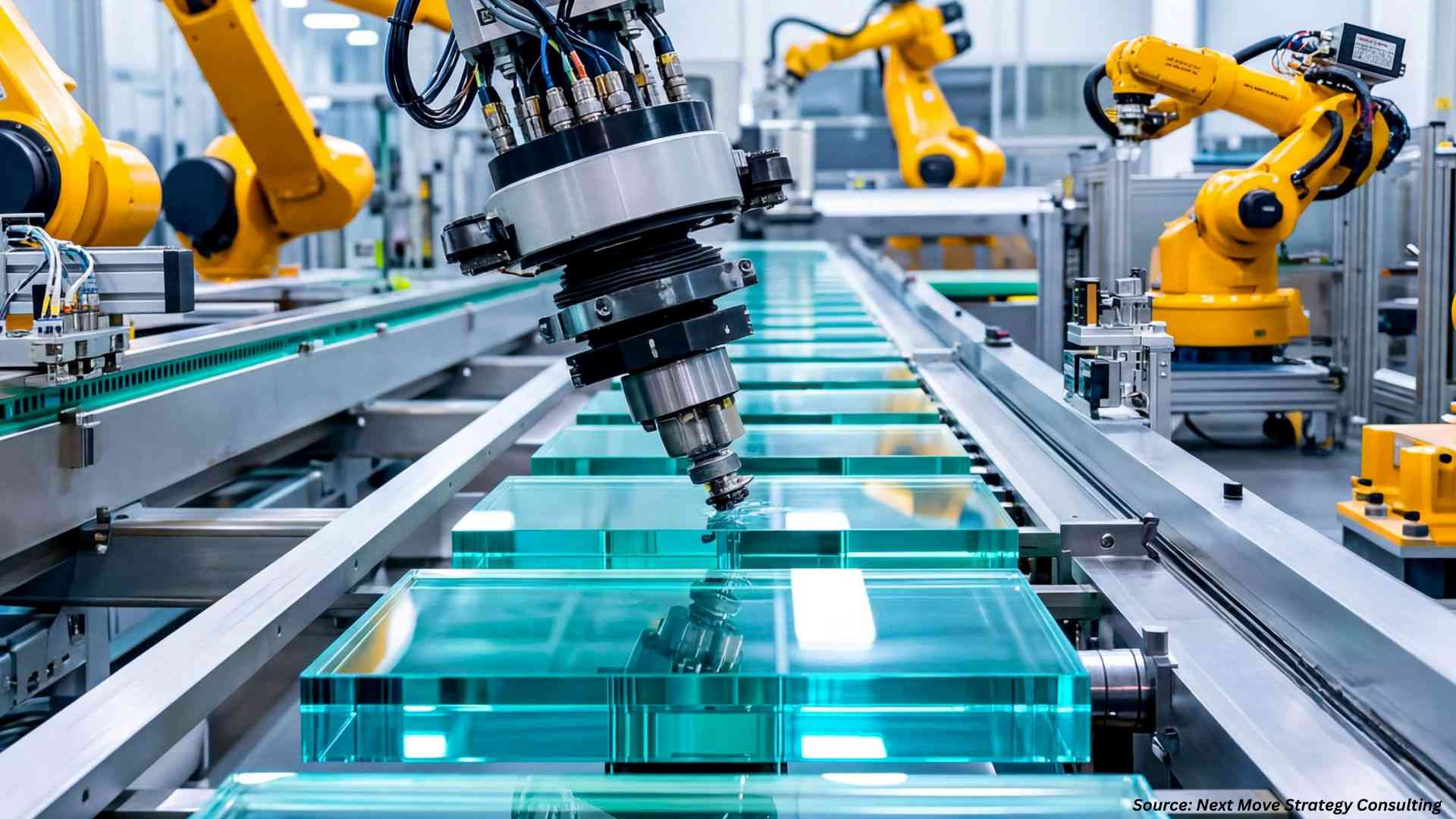
The Tempered Glass Market is rapidly evolving from a supporting material into a strategic component across electronics and advanced manufacturing. Recent developments involving ASUS and Optiemus Infracom highlight how innovation and localization are reshaping this segment.
This shift matters because tempered glass is now directly influencing product design, thermal efficiency, and supply chain resilience across industries ranging from consumer electronics to industrial systems.
ASUS Introduces Prime AP202 with Curved Tempered Glass
ASUS announced the Prime AP202 MicroATX case in Taipei, introducing a single-piece curved tempered glass panel designed to provide panoramic visibility of internal components.
The case integrates a slot-shaped vent to improve airflow efficiency, particularly for graphics cards, and supports 360mm radiators, GPUs up to 420mm, and power supply units up to 200mm. The tempered glass undergoes thermal treatment to ensure durability, while safety features such as an anti-drop mechanism and detachable rail improve usability.
At Next Move Strategy Consulting, we observe that this launch reflects a deeper shift toward design-led engineering, where materials like tempered glass are central to both aesthetics and functionality. Our analysis indicates that manufacturers are increasingly using glass not just for protection, but as a critical differentiator in premium computing systems.
Key Specifications of ASUS Prime AP202
|
Feature Category |
Details |
|
Glass Design |
Curved, single-piece tempered glass |
|
Cooling System |
Slot vent + radiator support |
|
GPU Support |
Up to 420mm |
|
PSU Support |
Up to 200mm |
|
Usability |
Detachable rail, anti-drop mechanism |
Optiemus Infracom Establishes India’s First Tempered Glass Facility
Optiemus Infracom inaugurated India’s first tempered glass manufacturing plant in Noida using technology from Corning Incorporated.
The company invested ₹70 crore in the initial phase, establishing a production capacity of 25 million units annually and generating more than 600 jobs. The next phase outlines a significant scale-up, with an additional ₹800 crore investment planned to increase capacity to 200 million units annually and create over 4,500 jobs.
At Next Move Strategy Consulting, we notice that this facility represents a major milestone in India’s transition toward self-reliant electronics manufacturing. Our analysis indicates that domestic production will reduce import dependence while strengthening India’s position as a future exporter in the global tempered glass ecosystem, which already exceeds $60 billion in value.
Visualizing the Shift: Tempered Glass Innovation Landscape
This infographic illustrates how tempered glass is evolving across the electronics ecosystem, highlighting the dual momentum of product innovation and manufacturing expansion. It maps ASUS’s integration of curved tempered glass for enhanced design and airflow alongside Optiemus Infracom’s large-scale production ramp-up in India, showing capacity growth from 25 million to 200 million units annually. The visual further captures key metrics such as India’s ₹20,000 crore domestic demand, the $60 billion global industry value, and rising adoption across gaming PCs, smartphones, and industrial applications. Together, these elements demonstrate a clear transition toward localized supply chains, advanced material processing, and design-led differentiation driving the next phase of industry growth.

Mapping Growth: From Design Innovation to Manufacturing Scale
This infographic highlights the expanding role of tempered glass by connecting advancements in product engineering with large-scale industrial growth. It showcases how modern electronics are increasingly integrating high-strength glass for durability and visual appeal, while simultaneously tracking India’s emergence as a manufacturing hub with rapidly increasing production capacity and investment. The visual brings together key data points such as rising domestic demand, global industry valuation, and the shift toward self-reliant supply chains, illustrating how innovation, capacity expansion, and market demand are collectively shaping the future trajectory of the electronics ecosystem.

Long-Term Market Impact and NMSC Perspective
I observe that these developments represent two sides of the same transformation. On one hand, companies like ASUS are pushing the boundaries of product design by integrating advanced tempered glass into high-performance systems. On the other, manufacturers like Optiemus Infracom are building the industrial backbone required to support large-scale demand.
At Next Move Strategy Consulting, we believe this convergence will define the next phase of industry evolution. Our analysis indicates that companies investing in both material innovation and localized manufacturing capacity will gain a significant competitive advantage. The growing domestic demand in India, combined with global supply chain diversification, is likely to accelerate investment in this segment over the next decade.
Market Analysis
I observe that the tempered glass segment is expanding across multiple applications, including consumer electronics, automotive displays, and industrial equipment. The growing need for durability, thermal resistance, and visual appeal is driving adoption across these sectors.
Regionally, Asia-Pacific continues to dominate due to manufacturing expansion in countries such as India and Taiwan, while North America focuses on high-performance applications. Europe, meanwhile, is emphasizing sustainability and advanced material engineering.
At Next Move Strategy Consulting, we notice that competition is intensifying across three layers: material innovation led by companies like Corning Incorporated, product integration driven by OEMs such as ASUS, and capacity expansion led by emerging players like Optiemus Infracom.
Industry Trends and Impact
|
Trend |
Impact |
Insight |
|
Localization |
High |
Reduces import dependency |
|
Design Integration |
High |
Enhances product differentiation |
|
Advanced Processing |
Medium |
Improves durability |
|
Export Potential |
High |
Expands global reach |
|
Automation |
Medium |
Increases efficiency |
What to Do Next
I recommend that manufacturers prioritize investments in advanced tempering technologies and localized production facilities to remain competitive. Electronics brands should increasingly treat tempered glass as a design asset rather than a supporting component. Investors may find strong opportunities in regions scaling domestic production, particularly India.
At the same time, supply chain leaders should diversify sourcing strategies to mitigate risk, while technology developers should continue innovating in coatings, strength enhancement, and lightweight materials to meet evolving industry demands.
Conclusion
I conclude that tempered glass is emerging as a critical enabler of next-generation electronics manufacturing. The ASUS product launch demonstrates how innovation at the product level can redefine user experience, while Optiemus Infracom’s facility highlights the importance of domestic manufacturing capabilities.
At Next Move Strategy Consulting, we emphasize that the future of this segment will depend on how effectively companies align innovation, scale, and supply chain strategy to capture emerging opportunities.
About Next Move Strategy Consulting:
Next Move Strategy Consulting is a premier market research and management consulting firm that has been committed to provide strategically analysed well documented latest research reports to its clients. The research industry is flooded with many firms to choose from, what makes NMSC different from the rest is its top-quality research and the obsession of turning data into knowledge by dissecting every bit of it and providing fact-based research recommendation that is supported by information collected from over 500 million websites, paid databases, industry journals and one on one consultations with industry experts across a diverse range of industry sectors. The high-quality customized research reports with actionable insights and excellent end-to-end customer service help our clients to take critical business decisions that enables them to move beyond time and have competitive edge in the industry.
We have been servicing over 1000 customers globally that includes 90% of the Fortune 500 companies over a decade. Our analysts are constantly tracking various high growth markets and identifying hidden opportunities in each sector or the industry. We provide one of the industry’s best quality syndicate as well as custom research reports across 10 different industry verticals. We are committed to deliver high quality research solutions in accordance to your business needs. Our industry standard delivery solutions that ranges from the pre consultation to after-sales services, provide an excellent client experience and ensure right strategic decision making for businesses.
For more information, please contact:
Next Move Strategy Consulting
5th Floor 867
Boylston St, STE 500,
Boston, MA 02116, U.S.
E-Mail: [email protected]
Direct: +1-217-650-7991
Website: www.nextmsc.com
About the Author
 Sanyukta Deb
— Sanyukta Deb is Digital Marketing Team Lead at Next Move Strategy Consulting, where she has led content strategy and technical SEO for the firm's B2B market research publications for over 2 years. Her editorial process translates NextMSC's primary and secondary research — spanning technology, industrial, and consumer sectors — into commercial narratives, backed by search-intent, keyword, and competitive analysis. She brings 5 years of overall experience in digital marketing and content strategy.
Sanyukta Deb
— Sanyukta Deb is Digital Marketing Team Lead at Next Move Strategy Consulting, where she has led content strategy and technical SEO for the firm's B2B market research publications for over 2 years. Her editorial process translates NextMSC's primary and secondary research — spanning technology, industrial, and consumer sectors — into commercial narratives, backed by search-intent, keyword, and competitive analysis. She brings 5 years of overall experience in digital marketing and content strategy.
About the Reviewer
 Debashree Dey
— Debashree Dey is Assistant Manager at Next Move Strategy Consulting, where she supports cross-vertical market content and communications across diverse industries for 6 years. Her professional background includes senior content writing, communications, and published manuscript authorship, with experience developing audience-focused business narratives and maintaining clear, consistent messaging. Her role supports research-led content development and editorial quality across NextMSC publications.
Debashree Dey
— Debashree Dey is Assistant Manager at Next Move Strategy Consulting, where she supports cross-vertical market content and communications across diverse industries for 6 years. Her professional background includes senior content writing, communications, and published manuscript authorship, with experience developing audience-focused business narratives and maintaining clear, consistent messaging. Her role supports research-led content development and editorial quality across NextMSC publications.















Add Comment