Carbon Capture Breakthrough Boosts Carbon Dioxide Market
Industry Insights from Next Move Strategy Consulting
As global industries intensify efforts to address climate change and reduce greenhouse gas emissions, emerging carbon capture technologies are reshaping the outlook of the carbon dioxide market. A newly demonstrated machine capable of extracting carbon dioxide directly from the atmosphere and converting it into usable gasoline highlights a growing shift toward circular carbon solutions that recycle emissions into valuable fuels.
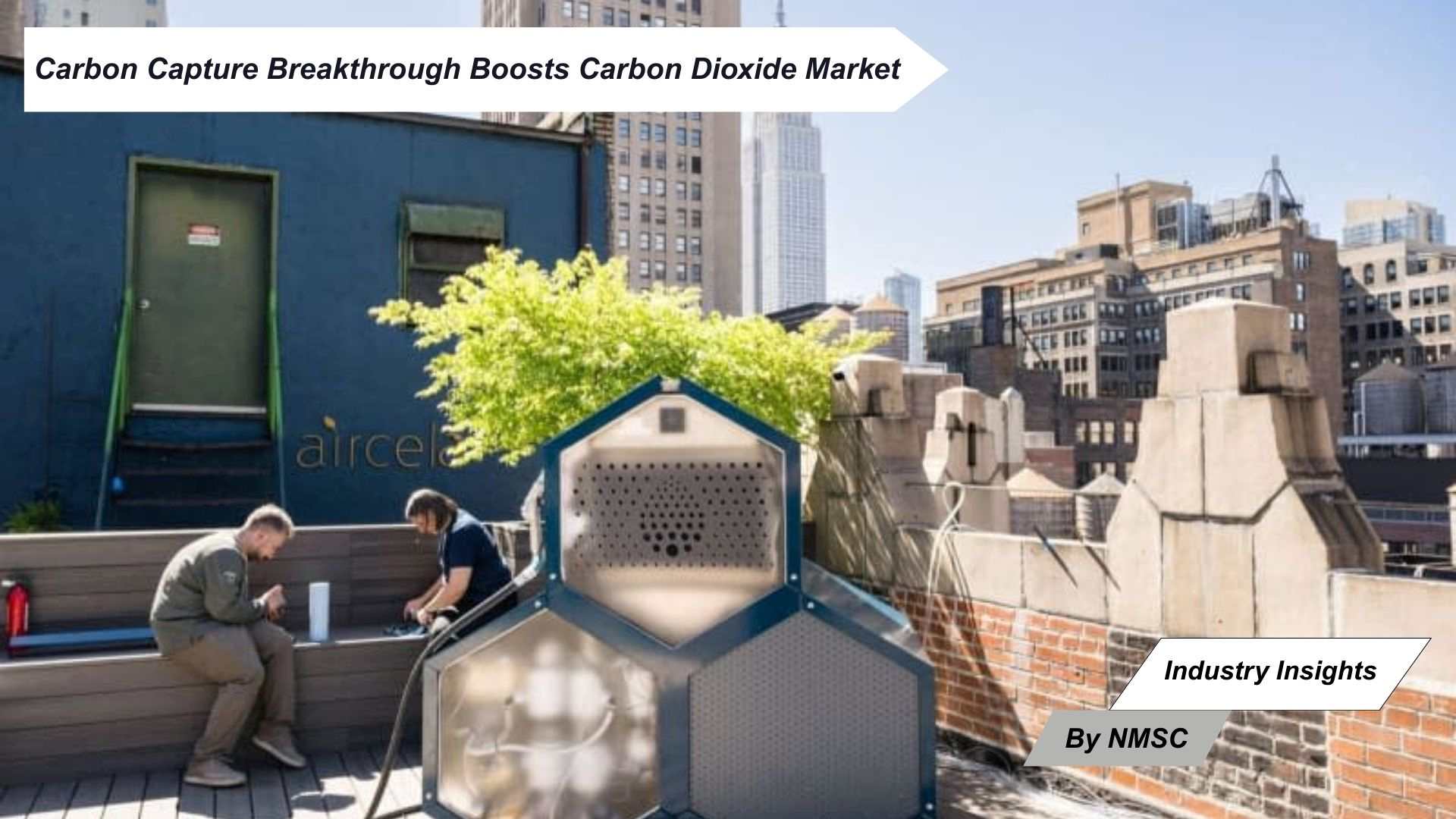
Developed by New York–based startup Aircela, the system demonstrates how carbon dioxide can transition from a climate challenge into a resource. The compact device produces gasoline from captured atmospheric carbon dioxide using water and renewable electricity, presenting a potential alternative pathway for reducing the carbon footprint of existing transportation systems.
A New Approach to Carbon Utilization
The newly introduced machine, roughly the size of a commercial refrigerator, operates by capturing carbon dioxide directly from ambient air. Through a process known as direct air capture, the system removes CO₂ from the atmosphere before converting it into gasoline fuel that can be used in standard vehicles without any engine modifications.
This innovation addresses a critical challenge in global transportation. Vehicles powered by gasoline remain dominant worldwide, and the transition to electric mobility is progressing gradually. Currently, only a small percentage of vehicles on the road are electric, while the majority still rely on traditional fossil fuels.
By producing gasoline from atmospheric carbon dioxide, the technology proposes a different solution: rather than replacing vehicles, the approach focuses on transforming the fuel supply itself.
Integrating Carbon Capture and Fuel Synthesis
The machine integrates two distinct processes into a single unit. First, it captures carbon dioxide from the air using direct air capture technology. Next, the captured carbon is combined with water and renewable electricity to synthesize gasoline.
Unlike conventional carbon capture systems that store captured carbon dioxide underground, this technology recycles the gas into usable fuel. The result is a circular process where atmospheric carbon is repurposed rather than permanently stored.
The system’s design includes multiple connected modules responsible for different stages of capture and synthesis. The gasoline produced can be dispensed through a standard fuel nozzle integrated into the device, enabling on-site fuel generation.
According to the company, the fuel produced through this method does not contain sulfur, ethanol, or heavy metals.
Current Production Capacity and Deployment Potential
While the technology demonstrates a promising concept, production capacity remains modest in its current form. The machine is capable of capturing approximately 10 kilograms of carbon dioxide per day and converting it into about one gallon of gasoline.
Despite the limited output, the compact and modular design suggests potential for distributed deployment. In theory, such machines could be installed outside homes or businesses, producing fuel directly at the point of use. This decentralized model could reshape how carbon dioxide is captured, recycled, and integrated into energy systems.
According to Next Move Strategy Consulting
According to Next Move Strategy Consulting, innovations that combine carbon capture with fuel synthesis represent a significant development for the Carbon Dioxide Market. Technologies capable of converting atmospheric CO₂ into usable fuels could accelerate the emergence of circular carbon economies, where emissions are recycled into energy resources rather than treated solely as waste.
Such advancements may influence future investments in carbon capture infrastructure, sustainable fuel technologies, and decentralized energy systems. As industries pursue practical pathways to reduce emissions while maintaining existing transportation infrastructure, carbon utilization technologies could become a critical driver shaping the future trajectory of the carbon dioxide market.
Source: AOL
Prepared by: Next Move Strategy Consulting
About the Author
 Sanyukta Deb
— Sanyukta Deb is Digital Marketing Team Lead at Next Move Strategy Consulting, where she has led content strategy and technical SEO for the firm's B2B market research publications for over 2 years. Her editorial process translates NextMSC's primary and secondary research — spanning technology, industrial, and consumer sectors — into commercial narratives, backed by search-intent, keyword, and competitive analysis. She brings 5 years of overall experience in digital marketing and content strategy.
Sanyukta Deb
— Sanyukta Deb is Digital Marketing Team Lead at Next Move Strategy Consulting, where she has led content strategy and technical SEO for the firm's B2B market research publications for over 2 years. Her editorial process translates NextMSC's primary and secondary research — spanning technology, industrial, and consumer sectors — into commercial narratives, backed by search-intent, keyword, and competitive analysis. She brings 5 years of overall experience in digital marketing and content strategy.
About the Reviewer
 Debashree Dey
— Debashree Dey is Assistant Manager at Next Move Strategy Consulting, where she supports cross-vertical market content and communications across diverse industries for 6 years. Her professional background includes senior content writing, communications, and published manuscript authorship, with experience developing audience-focused business narratives and maintaining clear, consistent messaging. Her role supports research-led content development and editorial quality across NextMSC publications.
Debashree Dey
— Debashree Dey is Assistant Manager at Next Move Strategy Consulting, where she supports cross-vertical market content and communications across diverse industries for 6 years. Her professional background includes senior content writing, communications, and published manuscript authorship, with experience developing audience-focused business narratives and maintaining clear, consistent messaging. Her role supports research-led content development and editorial quality across NextMSC publications.
















Add Comment