China-India EV Collaboration Key to Transport Decarbonisation
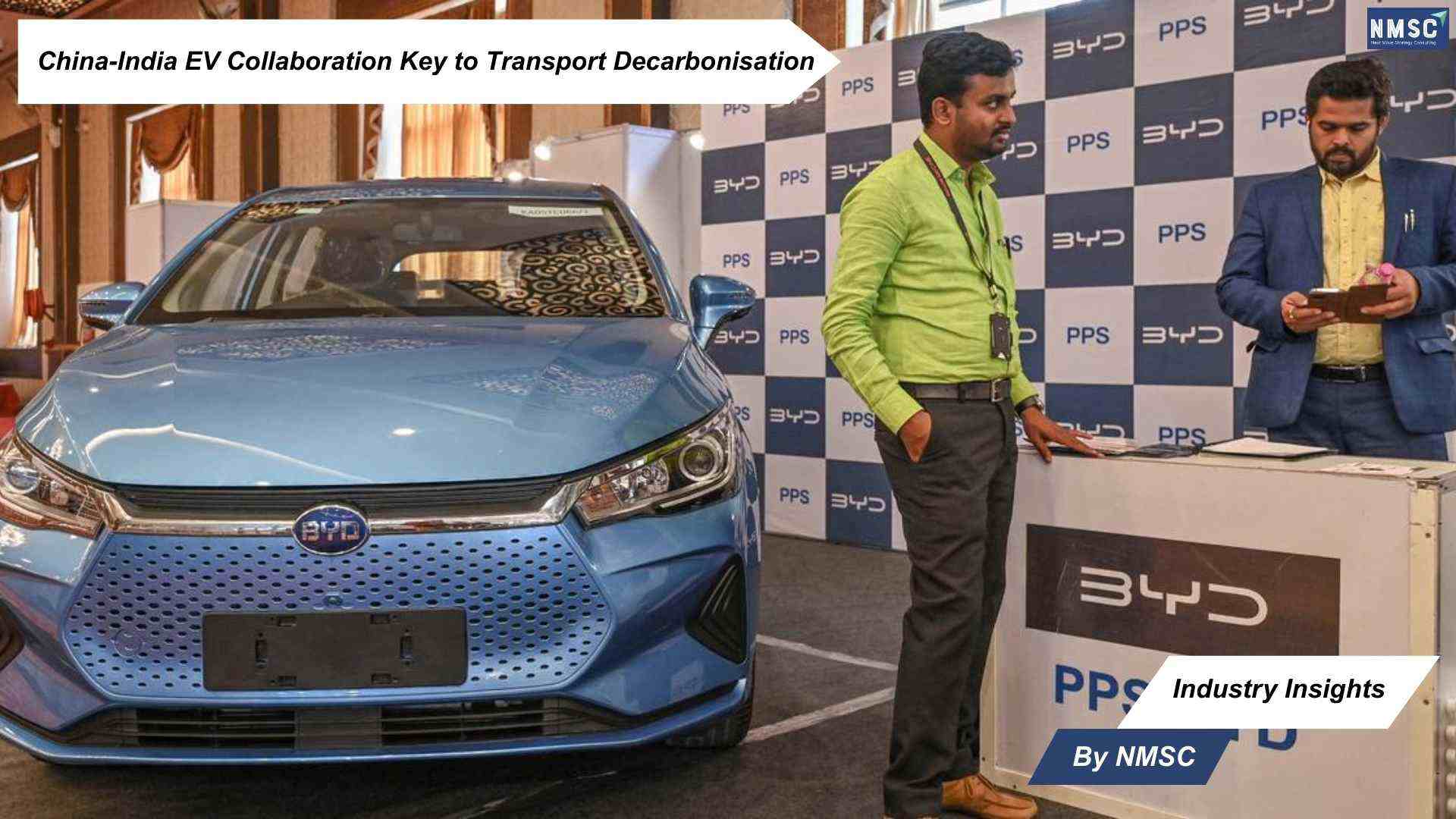
Industry Insights by Next Move Strategy Consulting
As greenhouse-gas emissions from road transport continue to pose a global challenge, the burgeoning electric vehicle (EV) sectors in China and India are emerging as pivotal to cutting carbon outputs and reshaping mobility across Asia and beyond. With both nations among the world’s largest emitters and transportation markets undergoing rapid transformation, cooperative dynamics between their EV industries carry implications for global decarbonisation efforts.
Expanding Electric Mobility Markets
India’s transition to electrified transport has seen remarkable progress in two- and three-wheelers, which form the backbone of everyday mobility. Nearly 60 % of three-wheelers nationwide have shifted to electric power, with West Bengal reporting electrification rates as high as 96 %. Key domestic manufacturers such as Mahindra, Bajaj Auto, and YC Electric — the latter through a joint venture involving Chinese technology transfer - have driven this shift.
In the passenger EV segment, about one in three electric cars sold in India originates from companies with Chinese links, even as local producer Tata Motors maintains strong market share. Notably, vehicles like the MG Windsor - developed through a partnership between China’s SAIC and India’s JSW Group - exemplify how cross-border engagement has accelerated market growth.
Chinese firms have also been instrumental in energising India’s nascent electric commercial vehicle space. Nearly half of the approximately 1 000 battery-powered trucks on Indian roads are tied to Chinese manufacturers such as BYD, Foton, and SANY; several initiatives are underway to deepen local assembly and production.
Balancing National Priorities and Shared Challenges
Despite this interdependence, India and China pursue distinct national strategies. India aims for a 30 % EV penetration by 2030, supported by Production Linked Incentive (PLI) schemes focused on fostering domestic manufacturing of batteries and vehicles. These incentives have bolstered local innovation and stimulated the entry of startups and charging solutions, but the heavy reliance on imported components remains.
China’s EV industry, having rapidly scaled domestic adoption and production capacity, is seeking to expand in overseas markets amid domestic overcapacity. While cooperation offers benefits, it has also led to tensions: China has raised concerns with the World Trade Organization over India’s EV-related industrial policies that favour local production.
Shared Lessons and Global Influence
Despite policy differences, structural parallels between the two markets enable mutual learning. Both countries prioritise EVs not only as a climate solution but as an industrial growth sector. Experiences with urban charging networks, fiscal incentives, and electrification of public-transport fleets in China offer actionable insights for India’s context, especially in densely populated metropolitan areas.
India’s innovations - particularly in electrifying high-volume two- and three-wheel segments - could also inform strategies in other emerging economies where these vehicles dominate.
Strategic Importance of Continued Engagement
Partnerships that combine Chinese technological experience with India’s growing manufacturing capabilities could accelerate the development of resilient EV value chains. Beyond vehicles, expanding accessible charging infrastructure, local policy frameworks, and clean electricity supply are essential components of a broader electric-mobility transition.
The scale of China’s and India’s markets means decisions made today will significantly influence global EV costs, supply-chain structures, and the pace of transport decarbonisation. As diplomatic engagement improves, deeper exchanges among technical experts, researchers, and policymakers could enhance knowledge sharing, joint research, and industrial innovation.
Next Move Strategy Consulting Viewpoint
According to Next Move Strategy Consulting, the evolving dynamics between China and India signal a defining phase for the global EV Market. The interplay of collaboration and competition between these two markets is expected to shape supply-chain resilience, manufacturing localization strategies, and cross-border technology partnerships.
The firm observes that sustained engagement - whether through joint ventures, knowledge exchange, or structured policy dialogue - could accelerate cost efficiencies and market -penetration across emerging economies. As global stakeholders seek scalable clean mobility solutions, the trajectory of China-India EV cooperation will remain a critical indicator of how quickly transport decarbonisation can advance worldwide.
Source: Dialogue Earth
Prepared by: Next Move Strategy Consulting
About the Author
 Sanyukta Deb
— Sanyukta Deb is Digital Marketing Team Lead at Next Move Strategy Consulting, where she has led content strategy and technical SEO for the firm's B2B market research publications for over 2 years. Her editorial process translates NextMSC's primary and secondary research — spanning technology, industrial, and consumer sectors — into commercial narratives, backed by search-intent, keyword, and competitive analysis. She brings 5 years of overall experience in digital marketing and content strategy.
Sanyukta Deb
— Sanyukta Deb is Digital Marketing Team Lead at Next Move Strategy Consulting, where she has led content strategy and technical SEO for the firm's B2B market research publications for over 2 years. Her editorial process translates NextMSC's primary and secondary research — spanning technology, industrial, and consumer sectors — into commercial narratives, backed by search-intent, keyword, and competitive analysis. She brings 5 years of overall experience in digital marketing and content strategy.
About the Reviewer
 Debashree Dey
— Debashree Dey is Assistant Manager at Next Move Strategy Consulting, where she supports cross-vertical market content and communications across diverse industries for 6 years. Her professional background includes senior content writing, communications, and published manuscript authorship, with experience developing audience-focused business narratives and maintaining clear, consistent messaging. Her role supports research-led content development and editorial quality across NextMSC publications.
Debashree Dey
— Debashree Dey is Assistant Manager at Next Move Strategy Consulting, where she supports cross-vertical market content and communications across diverse industries for 6 years. Her professional background includes senior content writing, communications, and published manuscript authorship, with experience developing audience-focused business narratives and maintaining clear, consistent messaging. Her role supports research-led content development and editorial quality across NextMSC publications.


















Add Comment