Distributed Cloud Growth Driven by AI Security
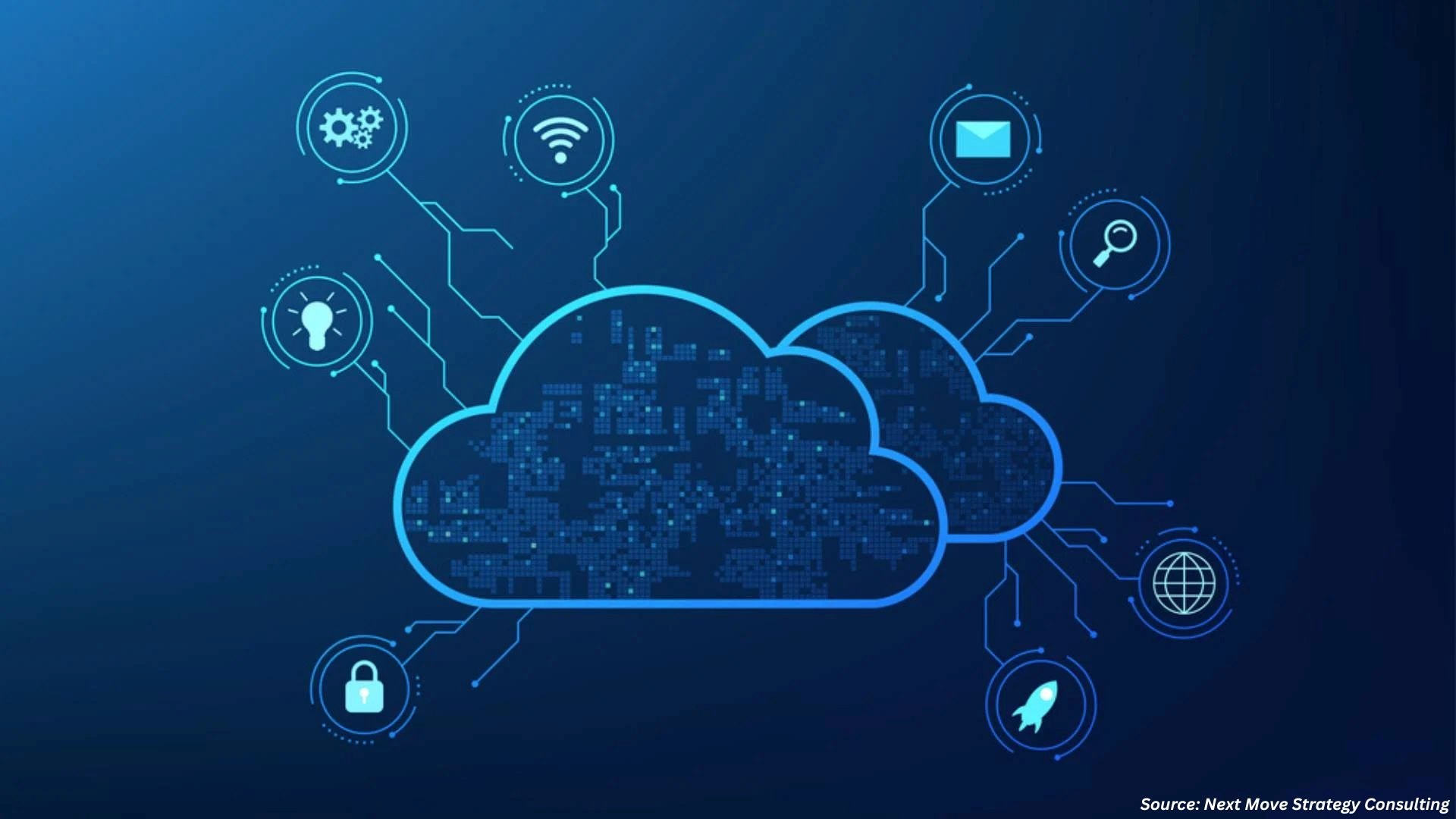
Distributed Cloud Market Size to Hit USD 16.19 Billion by 2030 as Air-Gapped AI Infrastructure Accelerates
The global Distributed Cloud Market is entering a new growth phase after Qumulo launched its Cloud AI Accelerator platform to improve GPU utilization across hybrid environments, while Elastic expanded its partnership with Google Cloud to strengthen security for air-gapped sovereign cloud deployments. The developments are accelerating enterprise investments in decentralized AI infrastructure, with latest NMSC analysis projecting the market to grow from USD 4.44 billion in 2023 to USD 16.19 billion by 2030, at a CAGR of 20.3% from 2024 to 2030.
The latest announcements highlight a broader industry transition toward sovereign cloud architectures, distributed AI computing, and edge-native infrastructure as enterprises seek alternatives to centralized hyperscale cloud dependency. The shift has become particularly critical across defense, healthcare, finance, and government sectors where low-latency computing and data sovereignty compliance are rapidly becoming operational priorities.
According to the latest NMSC proprietary dataset, enterprise demand for distributed AI infrastructure recorded a substantial rise during the first half of 2026 as organizations accelerated deployment of AI workloads in secure and disconnected environments.
Qumulo Targets Enterprise GPU Utilization Bottlenecks
Qumulo’s launch of Cloud AI Accelerator marks a major development in distributed AI infrastructure optimization. The platform enables enterprises to access distributed datasets across cloud, edge, and on-premises environments in real time without requiring replication or data staging delays.
The company stated that enterprise GPU resources often remain significantly underutilized because organizations spend substantial time moving and preparing datasets before AI workloads can begin. Qumulo cited industry analysis indicating average enterprise GPU utilization remains near 5%, leaving expensive compute resources idle for extended periods.
The Cloud AI Accelerator combines Qumulo’s Cloud Data Fabric, Cloud Native Qumulo, and NeuralCache technologies to create what the company describes as “GPU liquidity,” enabling enterprises to run AI workloads wherever GPU capacity exists rather than where data is stored.

Douglas Gourlay, CEO of Qumulo, stated that enterprises are increasingly focused on maximizing GPU utilization rather than simply expanding compute availability. Brandon Whitelaw, Senior Vice President and Head of Product at Qumulo, added that existing tightly coupled GPU-attached storage systems fail to address data staging delays that occur before AI processing begins.
According to company testing conducted alongside cloud AI and machine learning teams, the platform demonstrated less than 0.05% performance degradation when accessing distributed datasets across distances of up to 2,000 miles compared with locally staged data.
The platform supports integration with Microsoft AI Foundry, Amazon Bedrock, and Google Vertex AI without requiring additional data copies. Qumulo stated that the infrastructure is immediately available across AWS, Microsoft Azure, Google Cloud, Oracle Cloud Infrastructure, and Cisco UCS hybrid deployments.
Jayanta Das, Senior Research Analyst at Next Move Strategy Consulting, notes that distributed cloud infrastructure is increasingly being shaped by enterprise demand for AI workload portability and GPU efficiency optimization.
“Organizations are moving toward distributed compute architectures that minimize data gravity constraints and improve AI workload execution across multiple cloud regions,” Das stated.
Elastic and Google Cloud Expand Air-Gapped Security Infrastructure
The distributed cloud market received another major boost after Elastic announced a deep integration with Google Distributed Cloud air-gapped environments. The collaboration embeds Elastic’s agentic security operations platform directly into sovereign cloud infrastructure designed for highly regulated and disconnected environments.
The integration combines Google Distributed Cloud’s air-gapped infrastructure capabilities with Elastic Security’s AI-powered security analytics, automation, SIEM, and Extended Detection and Response (XDR) capabilities.
Google Distributed Cloud air-gapped environments are specifically designed for organizations requiring fully disconnected infrastructure while maintaining access to advanced cloud and AI services.

Rohan Grover, Senior Director of Product at Google Distributed Cloud, stated that the collaboration allows organizations to innovate securely while meeting strict sovereignty and regulatory requirements.
Elastic Security integrates agentic AI capabilities such as Attack Discovery and AI Assistant into air-gapped environments using Google’s large language models. The platform is designed to improve SOC analyst productivity while reducing operational complexity and tool sprawl.
Mike Nichols, General Manager of Security at Elastic, stated that security teams operating in highly regulated environments face growing pressure to defend against AI-driven cyber threats while maintaining strict compliance and sovereignty controls.
The collaboration builds on Elastic’s expanding presence in government cybersecurity infrastructure following its December 2025 partnership with the Cybersecurity and Infrastructure Security Agency (CISA) to standardize cybersecurity monitoring across U.S. federal agencies.
Distributed Cloud Adoption Accelerates Across Sovereign AI Infrastructure
The distributed cloud ecosystem is witnessing accelerated momentum due to three major market shifts:
-
Rapid enterprise AI adoption
-
Expansion of sovereign cloud infrastructure
-
Rising deployment of edge-native cybersecurity systems
Organizations are increasingly prioritizing localized compute infrastructure as governments strengthen data residency and digital sovereignty regulations.
Key Distributed Cloud Market Growth Drivers
|
Growth Driver |
Market Impact |
|
Sovereign cloud regulations |
Accelerating regional cloud deployments |
|
AI inferencing at the edge |
Increasing demand for low-latency infrastructure |
|
Air-gapped cloud environments |
Expanding secure distributed infrastructure investments |
|
GPU optimization technologies |
Improving enterprise AI cost efficiency |
|
Hybrid multi-cloud strategies |
Driving workload orchestration demand |
According to NMSC researchers, enterprises are rapidly transitioning from centralized cloud dependency toward distributed infrastructure models capable of supporting AI workloads closer to the source of data generation.
The emergence of sovereign AI ecosystems is also reshaping investment priorities among hyperscalers and enterprise infrastructure providers. Major cloud vendors are increasingly introducing localized compute zones and air-gapped cloud solutions to address evolving compliance mandates.
Regional Outlook Shows Strong Growth Across North America and Asia-Pacific
North America currently dominates the distributed cloud market due to strong investments in AI infrastructure, defense modernization, and sovereign cloud deployments across federal agencies and regulated industries.
Europe is witnessing strong momentum as governments enforce stricter digital sovereignty frameworks and localized data processing requirements.
Asia-Pacific is projected to emerge as the fastest-growing region due to increasing investments in industrial automation, telecom edge infrastructure, and AI-enabled smart manufacturing systems.
NMSC analysts observed that Asia-Pacific enterprises are increasingly adopting distributed cloud models to support real-time analytics, industrial IoT deployments, and AI-driven automation.
Competitive Landscape Expands Beyond Traditional Hyperscalers
The competitive environment is evolving rapidly as cybersecurity firms, storage providers, and edge infrastructure vendors increasingly compete alongside traditional cloud hyperscalers.
Key market participants include:
-
Google Cloud
-
Elastic
-
Qumulo
-
Microsoft
-
Amazon Web Services
-
Oracle
-
Cisco

Analysts believe future market leadership will increasingly depend on the ability to integrate AI acceleration, data sovereignty controls, cybersecurity analytics, and edge orchestration into unified distributed cloud ecosystems.
What CEOs and Investors Should Do Next
-
Prioritize sovereign cloud readiness as global data regulations tighten.
-
Expand investment in edge AI infrastructure to reduce inference latency.
-
Evaluate air-gapped cybersecurity architectures for critical workloads.
-
Optimize GPU utilization strategies to lower enterprise AI operational costs.
-
Build hybrid multi-cloud partnerships to improve workload flexibility and resilience.
Industry observers expect distributed cloud infrastructure to become a foundational component of enterprise AI deployment strategies during the next five years as organizations accelerate the transition toward decentralized and sovereignty-compliant AI ecosystems.
About Next Move Strategy Consulting:
Next Move Strategy Consulting is a premier market research and management consulting firm that has been committed to provide strategically analysed well documented latest research reports to its clients. The research industry is flooded with many firms to choose from, what makes NMSC different from the rest is its top-quality research and the obsession of turning data into knowledge by dissecting every bit of it and providing fact-based research recommendation that is supported by information collected from over 500 million websites, paid databases, industry journals and one on one consultations with industry experts across a diverse range of industry sectors. The high-quality customized research reports with actionable insights and excellent end-to-end customer service help our clients to take critical business decisions that enables them to move beyond time and have competitive edge in the industry.
We have been servicing over 1000 customers globally that includes 90% of the Fortune 500 companies over a decade. Our analysts are constantly tracking various high growth markets and identifying hidden opportunities in each sector or the industry. We provide one of the industry’s best quality syndicate as well as custom research reports across 10 different industry verticals. We are committed to deliver high quality research solutions in accordance to your business needs. Our industry standard delivery solutions that ranges from the pre consultation to after-sales services, provide an excellent client experience and ensure right strategic decision making for businesses.
For more information, please contact:
Next Move Strategy Consulting
5th Floor 867
Boylston St, STE 500,
Boston, MA 02116, U.S.
E-Mail: [email protected]
Direct: +1-217-650-7991
Website: www.nextmsc.com
About the Author
 Sanyukta Deb
— Sanyukta Deb is Digital Marketing Team Lead at Next Move Strategy Consulting, where she has led content strategy and technical SEO for the firm's B2B market research publications for over 2 years. Her editorial process translates NextMSC's primary and secondary research — spanning technology, industrial, and consumer sectors — into commercial narratives, backed by search-intent, keyword, and competitive analysis. She brings 5 years of overall experience in digital marketing and content strategy.
Sanyukta Deb
— Sanyukta Deb is Digital Marketing Team Lead at Next Move Strategy Consulting, where she has led content strategy and technical SEO for the firm's B2B market research publications for over 2 years. Her editorial process translates NextMSC's primary and secondary research — spanning technology, industrial, and consumer sectors — into commercial narratives, backed by search-intent, keyword, and competitive analysis. She brings 5 years of overall experience in digital marketing and content strategy.
About the Reviewer
 Debashree Dey
— Debashree Dey is Assistant Manager at Next Move Strategy Consulting, where she supports cross-vertical market content and communications across diverse industries for 6 years. Her professional background includes senior content writing, communications, and published manuscript authorship, with experience developing audience-focused business narratives and maintaining clear, consistent messaging. Her role supports research-led content development and editorial quality across NextMSC publications.
Debashree Dey
— Debashree Dey is Assistant Manager at Next Move Strategy Consulting, where she supports cross-vertical market content and communications across diverse industries for 6 years. Her professional background includes senior content writing, communications, and published manuscript authorship, with experience developing audience-focused business narratives and maintaining clear, consistent messaging. Her role supports research-led content development and editorial quality across NextMSC publications.















Add Comment