Europe's Renewables Boom Reshapes Energy Transition
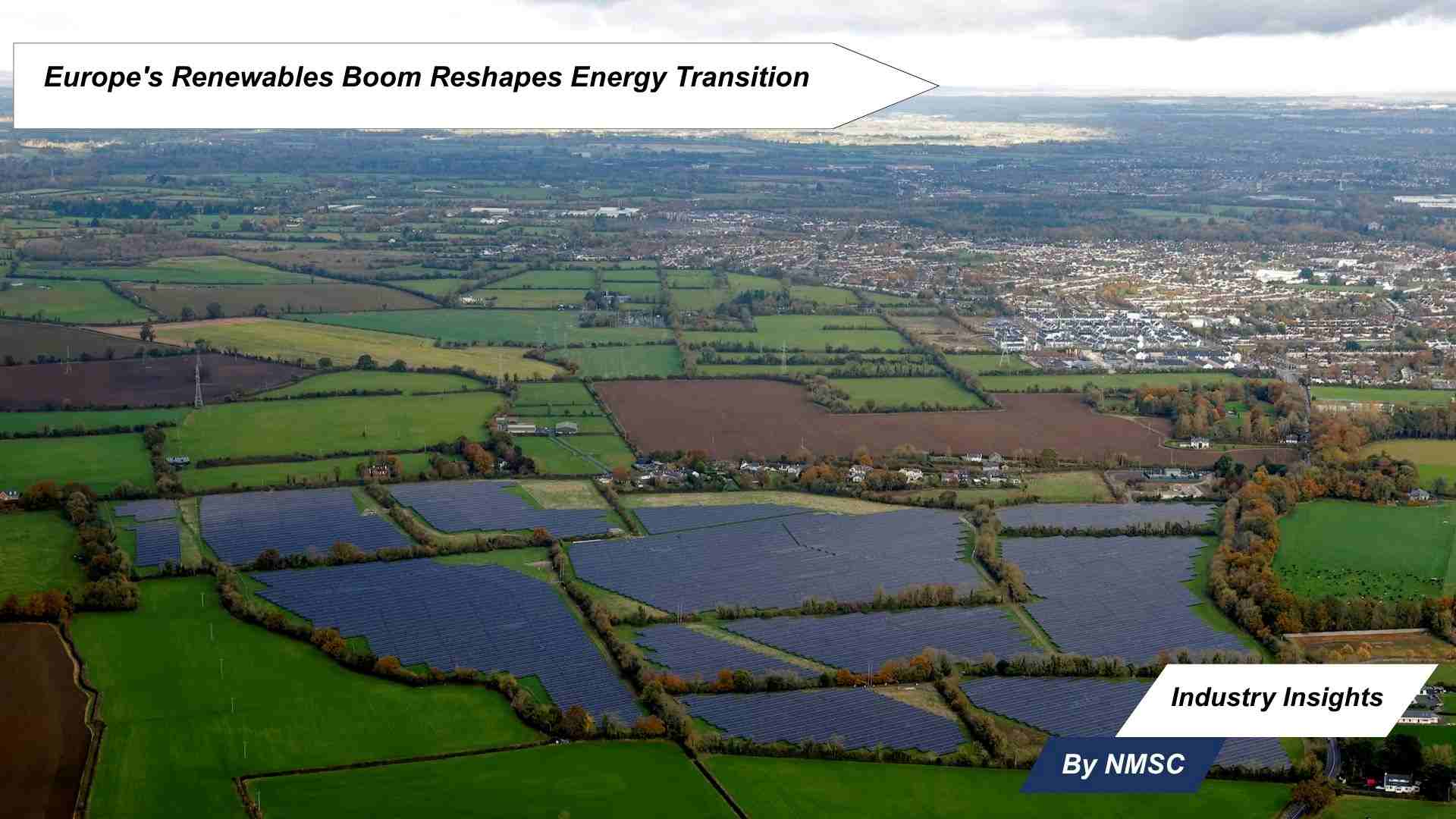
Europe's Wind and Solar Output Surpasses Gas Generation for Record Stretch in 2026
LITTLETON, Colorado, United States — August 13, 2026 — Europe's combined wind and solar electricity generation is on track to exceed output from gas-fired power plants for the longest stretch on record in 2026, marking a structural shift in the continent's power system and reinforcing the accelerating momentum of the global Energy Transition Market. The development signals a fundamental realignment of European energy security priorities, moving the central debate from supply adequacy to demand recalibration.
The analysis, published by Reuters Global Energy Transition Columnist Gavin Maguire, highlights a decade-long transformation in Europe's generation fleet. In 2016, combined monthly solar and wind output generally hovered between 30 and 45 terawatt hours (TWh), while gas-fired generation routinely exceeded 100 TWh. Today, that gap has effectively closed, with combined solar and wind output climbing to approximately 80–110 TWh per month while gas-fired generation has steadily declined to multi-year lows.
The shift is structural, not weather-driven. Europe's installed wind and solar capacity has surged from under 20 gigawatts (GW) to nearly 750 GW over the past quarter century, while gas-fired capacity grew only modestly from 250 GW to approximately 400 GW. The continent now holds nearly twice as much installed renewable capacity as gas-fired capacity — a ratio that is fundamentally reshaping both power generation economics and long-term gas import strategies.
The implications extend to European gas storage policy. Since 2022, storage has served as a critical insurance mechanism against supply disruptions and winter demand surges. However, as power-sector gas demand continues to contract, the continent's underlying need for gas inventories may gradually diminish, transforming the strategic calculus for energy security planning across the region.
Key Highlights:
-
Europe's combined solar and wind output reached 80–110 TWh per month in 2026, compared with 30–45 TWh in 2016, while gas-fired generation fell to multi-year lows.
-
Installed wind and solar capacity in Europe has grown from under 20 GW to nearly 750 GW over 25 years — nearly double the continent's gas-fired capacity of approximately 400 GW.
-
Coal's share of Europe's energy supply has declined from over 50% in 1965 to approximately 10%, while clean energy sources have expanded from 3% to over 25% over the same period.
-
The traditional gas-burn season is becoming progressively shorter, reducing gas import requirements and reshaping European energy storage strategies.
Analyst Insight:
According to analysts at Next Move Strategy Consulting, the structural displacement of gas by renewables in Europe's power sector represents a pivotal inflection point for the global energy transition industry. The Energy Transition Market was valued at USD 2.99 trillion in 2024 and is projected to reach USD 5.15 trillion by 2030, expanding at a CAGR of 9.5% during the forecast period. NMSC analysts note that as renewable capacity continues to outpace fossil fuel generation infrastructure across major economies, long-term demand for gas as a power-sector fuel in Europe is likely to contract further — accelerating capital flows into grid modernization, energy storage systems, and clean fuel technologies through the end of the decade.
Industry Outlook:
Europe's sustained renewable generation dominance over gas in 2026 indicates that the continent may have crossed a structural threshold in its energy transition trajectory. Once sufficient renewable capacity is installed, the displacement of fossil fuels becomes less a policy aspiration and more a mathematical consequence of the generation fleet's composition — a dynamic that is now playing out at scale across European power markets.
For the broader global energy transition sector, Europe's data-driven precedent is expected to intensify investment in clean power generation, grid infrastructure, and energy storage across both developed and emerging markets. As the traditional gas-burn season shortens and storage requirements evolve, industry stakeholders — from utilities and grid operators to policymakers and institutional investors — will need to recalibrate long-term energy planning frameworks to reflect a power system increasingly defined by renewable supply rather than fossil fuel dependency.
Source: Reuters
For More Information: Download FREE Sample on Energy Transition Market Report
Prepared By: Sanyukta Deb
About the Author
 Sanyukta Deb
— Sanyukta Deb is Digital Marketing Team Lead at Next Move Strategy Consulting, where she has led content strategy and technical SEO for the firm's B2B market research publications for over 2 years. Her editorial process translates NextMSC's primary and secondary research — spanning technology, industrial, and consumer sectors — into commercial narratives, backed by search-intent, keyword, and competitive analysis. She brings 5 years of overall experience in digital marketing and content strategy.
Sanyukta Deb
— Sanyukta Deb is Digital Marketing Team Lead at Next Move Strategy Consulting, where she has led content strategy and technical SEO for the firm's B2B market research publications for over 2 years. Her editorial process translates NextMSC's primary and secondary research — spanning technology, industrial, and consumer sectors — into commercial narratives, backed by search-intent, keyword, and competitive analysis. She brings 5 years of overall experience in digital marketing and content strategy.
About the Reviewer
 Debashree Dey
— Debashree Dey is Assistant Manager at Next Move Strategy Consulting, where she supports cross-vertical market content and communications across diverse industries for 6 years. Her professional background includes senior content writing, communications, and published manuscript authorship, with experience developing audience-focused business narratives and maintaining clear, consistent messaging. Her role supports research-led content development and editorial quality across NextMSC publications.
Debashree Dey
— Debashree Dey is Assistant Manager at Next Move Strategy Consulting, where she supports cross-vertical market content and communications across diverse industries for 6 years. Her professional background includes senior content writing, communications, and published manuscript authorship, with experience developing audience-focused business narratives and maintaining clear, consistent messaging. Her role supports research-led content development and editorial quality across NextMSC publications.
















Add Comment