Fiber Laser Industry Surges With AI Automation
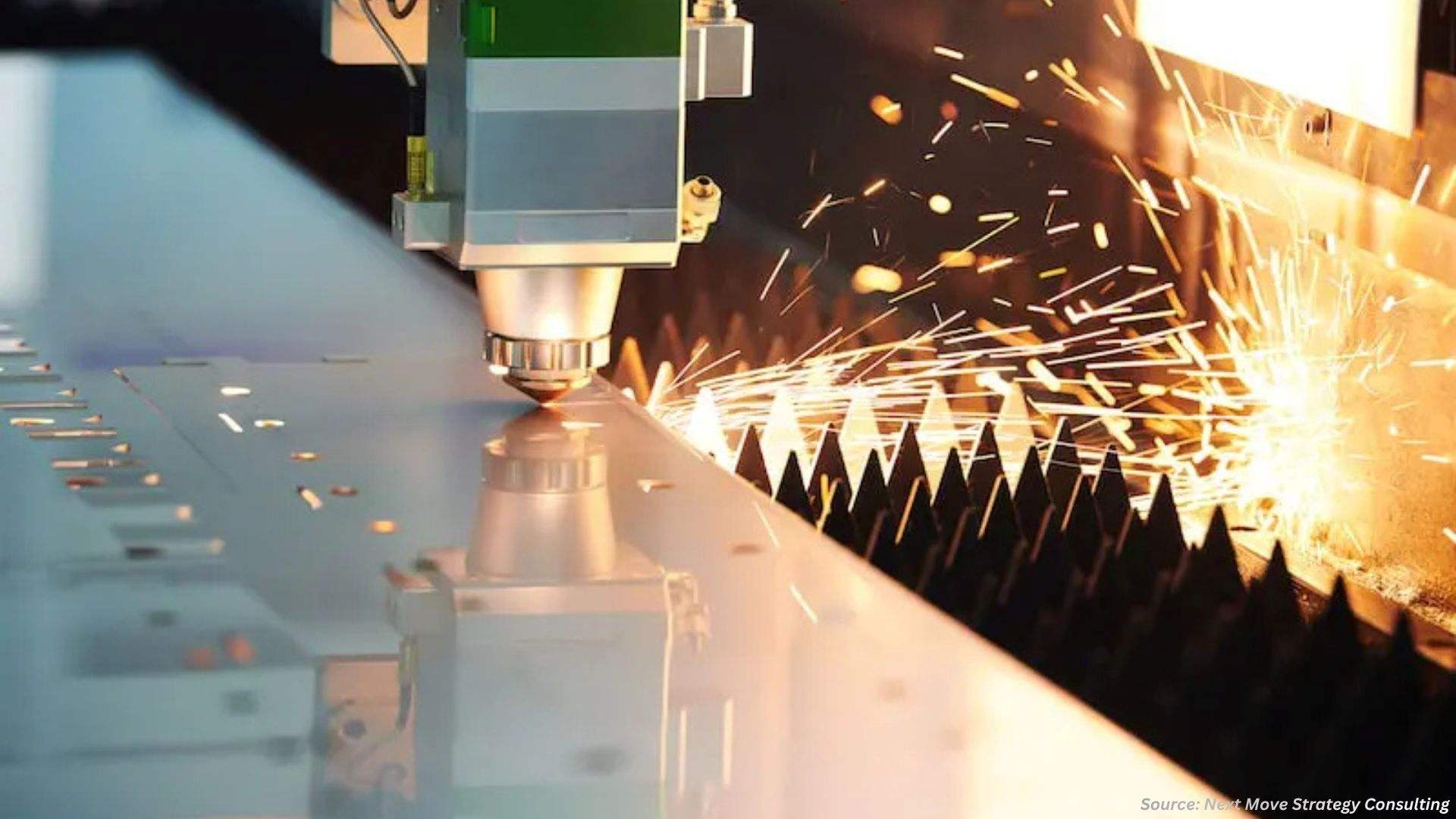
Fiber Laser Market Size to Hit USD 8.42 Billion by 2030 as AI-Driven Fabrication and High-Speed Metal Engraving Accelerate
The global fiber laser industry is entering a new expansion cycle following major advancements in industrial laser automation and precision metal engraving technologies announced across the manufacturing sector in May 2026. New high-speed MOPA fiber laser launches from Monport Laser and increasing adoption of automated laser fabrication systems for data center infrastructure production have intensified investment activity, with latest NMSC analysis projecting the Fiber Laser Market to reach USD 8.42 billion by 2030, growing at a CAGR of 14.51%.
The latest developments reflect a broader transformation underway across industrial manufacturing, where enterprises are rapidly replacing conventional cutting and engraving systems with AI-compatible, high-throughput fiber laser platforms capable of delivering micron-level precision and scalable automation.
According to the latest NMSC proprietary dataset, enterprise demand for fiber laser systems surged during the first half of 2026 as manufacturers accelerated investments in semiconductor infrastructure, EV component production, aerospace fabrication, and automated data center manufacturing.
A major industry catalyst emerged on May 29, 2026, when Monport Laser unveiled upgraded GA Series and GT Series MOPA fiber laser systems engineered for high-speed color metal engraving, deep relief carving, and industrial-grade marking applications.
The enhanced lineup introduced engraving speeds reaching up to 20,000 mm/s, advanced galvo scanning systems, autofocus technology, and precision control features designed for large-scale industrial workflows. The upgraded systems also support color marking on stainless steel and titanium, black marking on anodized aluminum, and precision deep engraving across multiple industrial materials.
Industry analysts indicate the launch reflects a growing shift toward multi-functional MOPA fiber laser systems capable of combining speed, customization, and automation within compact manufacturing environments.
Jayanta Das, Senior Research Analyst at Next Move Strategy Consulting, notes that industrial laser processing technologies are becoming increasingly central to next-generation smart manufacturing infrastructure.
“Manufacturers are no longer evaluating fiber lasers purely on cutting speed. The industry is now prioritizing precision consistency, automation compatibility, thermal efficiency, and AI-assisted workflow integration. NMSC researchers identified a substantial increase in enterprise adoption tied to semiconductor packaging, EV battery assembly, and hyperscale data center fabrication projects during the past two quarters.”
Data Center Manufacturing Boom Expands Fiber Laser Adoption
The market received another boost after industrial fabrication specialists highlighted the growing role of automated fiber laser systems in large-scale data center infrastructure production.
In May 2026, Goshen Engineering disclosed how its transition from waterjet cutting systems to Salvagnini automated fiber laser technology significantly improved production throughput and fabrication consistency for engineered power distribution equipment and modular data center applications.
The company reported that fabrication workloads previously requiring 50 to 60 weekly production hours could now be completed within one to two days using automated fiber laser systems equipped with loading and sorting automation.
The shift enabled Goshen Engineering to scale enclosure manufacturing capacity while maintaining workforce efficiency and reducing operational complexity.

Industry observers note that the rapid global expansion of AI data centers has sharply increased demand for precision-fabricated enclosures, thermal management systems, rack infrastructure, and semiconductor-compatible components — all of which increasingly rely on automated fiber laser cutting technologies.
According to NMSC analysis, hyperscale data center infrastructure has emerged as one of the fastest-growing application segments for industrial laser systems in 2026.
Industrial Automation Reshapes Precision Manufacturing
Manufacturers across automotive, electronics, aerospace, and industrial machinery sectors are increasingly integrating fiber laser systems into automated production lines to improve throughput, reduce material waste, and enhance operational scalability.
Unlike traditional CO2 laser systems, fiber lasers provide higher energy efficiency, lower maintenance requirements, improved beam quality, and faster processing speeds for reflective metals including aluminum, copper, and brass.
The latest generation of MOPA fiber laser systems further expands processing capabilities through adjustable pulse width and frequency controls, enabling manufacturers to achieve refined surface finishes, high-contrast markings, and detailed relief carving across complex industrial materials.

High-Speed Engraving and Smart Manufacturing Gain Momentum
The upgraded Monport GA and GT Series systems demonstrate how manufacturers are increasingly prioritizing high-speed engraving precision alongside automation flexibility.
The GA Series supports engraving speeds up to 10,000 mm/s with 0.01 mm engraving precision, while the industrial-grade GT Series delivers speeds reaching 20,000 mm/s for large-scale production environments.
Analysts believe these capabilities are becoming increasingly important as manufacturers pursue shorter production cycles, customized industrial marking, and lights-out manufacturing operations.
NMSC researchers also identified growing enterprise demand for laser systems compatible with predictive maintenance platforms, AI-assisted calibration software, and automated production analytics.
Competitive Landscape Intensifies Amid Automation Race
The fiber laser industry is becoming increasingly competitive as manufacturers invest heavily in automation-compatible laser systems capable of supporting advanced industrial workflows.
Companies are prioritizing:
-
AI-assisted beam optimization
-
High-frequency pulse control technologies
-
Automated material recognition systems
-
Enhanced cooling architectures
-
Robotic integration compatibility
Industry analysts expect strategic partnerships between laser manufacturers, robotics providers, and semiconductor equipment companies to accelerate through 2027 as industrial automation spending rises globally.

According to NMSC analysis, enterprises that integrate scalable laser automation platforms early are likely to secure long-term production efficiency advantages as manufacturing shifts toward digitally connected smart factory ecosystems.
What CEOs and Investors Should Do Next
-
Expand investments in AI-integrated fiber laser production systems to improve throughput and operational scalability.
-
Prioritize partnerships with semiconductor, EV battery, and hyperscale data center manufacturers.
-
Modernize fabrication facilities with automation-compatible laser platforms capable of unattended operations.
-
Monitor developments in MOPA pulse control technologies for advanced engraving and precision marking applications.
-
Strengthen supply chain resilience for optical components, industrial scanners, and semiconductor-grade laser modules.
Outlook
Industry analysts expect fiber laser technologies to remain central to the next phase of industrial automation as manufacturers increasingly prioritize speed, consistency, energy efficiency, and smart production capabilities.
The convergence of AI infrastructure expansion, advanced semiconductor manufacturing, precision engraving demand, and automated fabrication workflows is expected to sustain strong long-term growth across the global fiber laser ecosystem through 2030.
As enterprises continue transitioning toward digitally connected manufacturing environments, fiber laser systems are likely to become a foundational technology supporting next-generation industrial production infrastructure.
About Next Move Strategy Consulting:
Next Move Strategy Consulting is a premier market research and management consulting firm that has been committed to provide strategically analysed well documented latest research reports to its clients. The research industry is flooded with many firms to choose from, what makes NMSC different from the rest is its top-quality research and the obsession of turning data into knowledge by dissecting every bit of it and providing fact-based research recommendation that is supported by information collected from over 500 million websites, paid databases, industry journals and one on one consultations with industry experts across a diverse range of industry sectors. The high-quality customized research reports with actionable insights and excellent end-to-end customer service help our clients to take critical business decisions that enables them to move beyond time and have competitive edge in the industry.
We have been servicing over 1000 customers globally that includes 90% of the Fortune 500 companies over a decade. Our analysts are constantly tracking various high growth markets and identifying hidden opportunities in each sector or the industry. We provide one of the industry’s best quality syndicate as well as custom research reports across 10 different industry verticals. We are committed to deliver high quality research solutions in accordance to your business needs. Our industry standard delivery solutions that ranges from the pre consultation to after-sales services, provide an excellent client experience and ensure right strategic decision making for businesses.
For more information, please contact:
Next Move Strategy Consulting
5th Floor 867
Boylston St, STE 500,
Boston, MA 02116, U.S.
E-Mail: [email protected]
Direct: +1-217-650-7991
Website: www.nextmsc.com
About the Author
 Sanyukta Deb
— Sanyukta Deb is Digital Marketing Team Lead at Next Move Strategy Consulting, where she has led content strategy and technical SEO for the firm's B2B market research publications for over 2 years. Her editorial process translates NextMSC's primary and secondary research — spanning technology, industrial, and consumer sectors — into commercial narratives, backed by search-intent, keyword, and competitive analysis. She brings 5 years of overall experience in digital marketing and content strategy.
Sanyukta Deb
— Sanyukta Deb is Digital Marketing Team Lead at Next Move Strategy Consulting, where she has led content strategy and technical SEO for the firm's B2B market research publications for over 2 years. Her editorial process translates NextMSC's primary and secondary research — spanning technology, industrial, and consumer sectors — into commercial narratives, backed by search-intent, keyword, and competitive analysis. She brings 5 years of overall experience in digital marketing and content strategy.
About the Reviewer
 Debashree Dey
— Debashree Dey is Assistant Manager at Next Move Strategy Consulting, where she supports cross-vertical market content and communications across diverse industries for 6 years. Her professional background includes senior content writing, communications, and published manuscript authorship, with experience developing audience-focused business narratives and maintaining clear, consistent messaging. Her role supports research-led content development and editorial quality across NextMSC publications.
Debashree Dey
— Debashree Dey is Assistant Manager at Next Move Strategy Consulting, where she supports cross-vertical market content and communications across diverse industries for 6 years. Her professional background includes senior content writing, communications, and published manuscript authorship, with experience developing audience-focused business narratives and maintaining clear, consistent messaging. Her role supports research-led content development and editorial quality across NextMSC publications.

















Add Comment