LiDAR Market: Infrastructure Sensors and Autonomous Growth
Lede
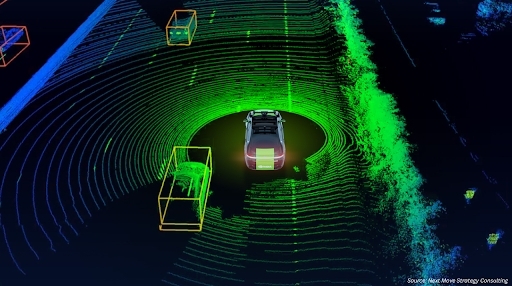
Three recent developments—the launch of InnovizSMART LiDAR for smart infrastructure, a higher competing bid for Luminar’s LiDAR assets, and DJI’s firmware upgrades for enterprise drone platforms—collectively illustrate how the LiDAR Market is shifting from experimental deployments toward infrastructure-grade, commercially rational, and operationally reliable systems. Together, these stories reflect deeper trends shaping the market: growing demand for application-ready LiDAR, industry consolidation driven by capital discipline, and tighter integration of sensors with autonomous platforms. The result is a LiDAR Market increasingly defined by scalability, reliability, and ecosystem alignment rather than raw technical novelty alone.
1. Infrastructure-Grade LiDAR Moves from Pilot to Production
Innoviz’s launch of InnovizSMART, a ready-to-deploy LiDAR solution for smart infrastructure applications, marks a meaningful step in the commercialization of non-automotive LiDAR. Unlike earlier systems that were often custom-built or project-specific, InnovizSMART is positioned as a standardized, off-the-shelf product designed for traffic monitoring, perimeter security, smart cities, robotics, and aerial platforms.
The system leverages automotive-grade LiDAR architecture—originally developed for advanced driver-assistance systems—and adapts it for fixed and semi-fixed infrastructure use. Its long-range detection capability, environmental robustness, and simplified Ethernet-based integration address long-standing barriers that limited LiDAR adoption outside controlled pilots. Importantly, Innoviz has emphasized production readiness and lead-time availability, signaling confidence in demand beyond experimental deployments.
This move reflects a broader market transition: LiDAR is no longer confined to proof-of-concept smart city trials. Instead, infrastructure operators are increasingly seeking durable, standardized sensing systems that can be deployed at scale and maintained over long operational lifecycles.
2. Luminar’s Asset Sale Highlights Capital Discipline in the LiDAR Market
In parallel, the competitive bid for Luminar’s LiDAR business assets, which rose to USD 33 million, underscores a different but equally important dynamic within the LiDAR Market—strategic consolidation. While Luminar played a visible role in advancing LiDAR adoption, particularly in automotive markets, the bidding process reflects a recalibration of valuations as investors prioritize balance-sheet sustainability and near-term commercialization over long-horizon bets.
The interest from competing bidders indicates that LiDAR intellectual property, engineering talent, and manufacturing assets remain strategically valuable, even as standalone business models face scrutiny. Rather than signaling a decline in LiDAR relevance, the transaction suggests that value is shifting toward firms able to integrate LiDAR into broader sensing, autonomy, or perception stacks.
For the market as a whole, this episode reinforces that LiDAR innovation alone is no longer sufficient. Commercial success increasingly depends on cost structure, integration capability, and alignment with end-market demand, particularly in infrastructure, industrial automation, and defense applications.
3. Smarter Drones Strengthen the LiDAR–Autonomy Link
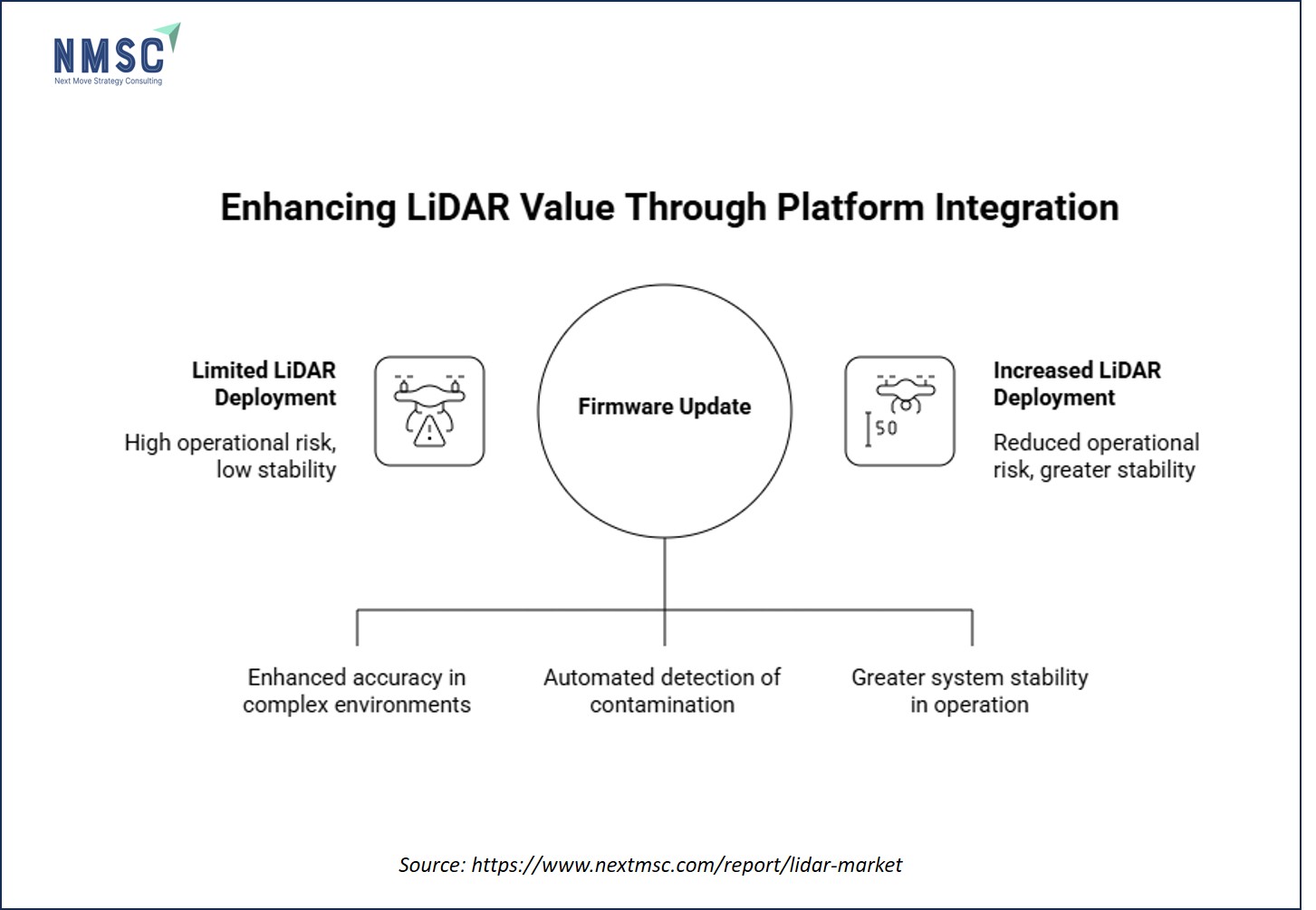
DJI’s latest firmware update for its Matrice 400 enterprise drone platform further highlights how LiDAR value is increasingly realized through platform integration. The update improves positioning accuracy, enhances LiDAR sensor health monitoring, and addresses reliability issues in complex operating environments.
While firmware updates may appear incremental, they are critical for real-world LiDAR operations. Automated detection of LiDAR contamination, improved navigation in GNSS-challenged areas, and greater system stability all reduce operational risk—one of the key inhibitors to large-scale autonomous deployment.
As drones continue to play a central role in surveying, mapping, inspection, and security applications, such upgrades demonstrate how LiDAR performance is inseparable from the software and autonomy layers surrounding it. The LiDAR Market, therefore, is increasingly shaped not just by sensor specifications, but by how effectively those sensors are embedded into autonomous platforms.
4. Next Move Strategy Consulting: Opinion, Impact, and Near-Term Prospects
Next Move Strategy Consulting interprets these developments as signals of a maturing LiDAR Market, where competitive advantage is shifting away from pure hardware innovation toward deployment readiness, ecosystem fit, and economic sustainability.
Key interpretations include:
-
Commercial readiness over experimentation: Infrastructure-grade products like InnovizSMART indicate rising demand for LiDAR systems that can be deployed, serviced, and scaled without bespoke engineering.
-
Consolidation as a growth catalyst: Asset sales and acquisitions are likely to concentrate LiDAR capabilities within firms that can integrate sensing into broader autonomy or analytics platforms.
-
Platform-centric value creation: The strongest growth opportunities lie where LiDAR is tightly coupled with drones, robotics, and smart infrastructure software, rather than sold as a standalone sensor.
-
Operational reliability as a differentiator: Firmware stability, environmental resilience, and sensor health monitoring are becoming decisive factors in purchasing decisions.
-
Shift toward service and solution models: Beyond hardware, value is increasingly generated through system integration, data processing, and long-term maintenance contracts.
5. Practical Suggestions for Stakeholders
-
LiDAR manufacturers should prioritize standardized product lines and focus on lowering total cost of ownership rather than maximizing sensor performance alone.
-
Autonomous platform developers should deepen sensor-software integration to improve reliability and reduce field-level complexity.
-
Investors should favor companies with diversified end-market exposure and clear pathways to recurring revenue through services or long-term contracts.
-
Infrastructure operators and governments should evaluate LiDAR not as a pilot technology, but as a long-term sensing asset requiring lifecycle planning and vendor stability.
Conclusion
The launch of infrastructure-ready LiDAR systems, strategic consolidation of LiDAR assets, and tighter integration with autonomous platforms collectively signal a turning point for the LiDAR Market. The industry is moving beyond early experimentation toward commercially disciplined, application-driven deployment. As LiDAR becomes embedded within smart infrastructure and autonomous ecosystems, success will hinge on scalability, reliability, and integration rather than novelty alone. Companies that align technological capability with operational and economic realities are best positioned to capture value as the LiDAR Market enters its next phase.
About Next Move Strategy Consulting:
Next Move Strategy Consulting is a premier market research and management consulting firm that has been committed to providing strategically analysed well documented latest research reports to its clients. The research industry is flooded with many firms to choose from, what makes Next Move different from the rest is its top-quality research and the obsession of turning data into knowledge by dissecting every bit of it and providing fact-based research recommendation that is supported by information collected from over 500 million websites, paid databases, industry journals and one on one consultations with industry experts across a diverse range of industry sectors. The high-quality customized research reports with actionable insights and excellent end-to-end customer service help our clients to take critical business decisions that enables them to move beyond time and have competitive edge in the industry.
We have been servicing over 1000 customers globally that includes 90% of the Fortune 500 companies over a decade. Our analysts are constantly tracking various high growth markets and identifying hidden opportunities in each sector or the industry. We provide one of the industry’s best quality syndicate as well as custom research reports across 10 different industry verticals. We are committed to deliver high quality research solutions in accordance to your business needs. Our industry standard delivery solutions that ranges from the pre consultation to after-sales services, provide an excellent client experience and ensure right strategic decision making for businesses.
For more information please contact:
Next Move Strategy Consulting
5th Floor 867
Boylston St, STE 500,
Boston, MA 02116, U.S.
E-Mail: [email protected]
Direct: +1-857-758-5017
Website: www.nextmsc.com
About the Author
 Sanyukta Deb
— Sanyukta Deb is Digital Marketing Team Lead at Next Move Strategy Consulting, where she has led content strategy and technical SEO for the firm's B2B market research publications for over 2 years. Her editorial process translates NextMSC's primary and secondary research — spanning technology, industrial, and consumer sectors — into commercial narratives, backed by search-intent, keyword, and competitive analysis. She brings 5 years of overall experience in digital marketing and content strategy.
Sanyukta Deb
— Sanyukta Deb is Digital Marketing Team Lead at Next Move Strategy Consulting, where she has led content strategy and technical SEO for the firm's B2B market research publications for over 2 years. Her editorial process translates NextMSC's primary and secondary research — spanning technology, industrial, and consumer sectors — into commercial narratives, backed by search-intent, keyword, and competitive analysis. She brings 5 years of overall experience in digital marketing and content strategy.
About the Reviewer
 Debashree Dey
— Debashree Dey is Assistant Manager at Next Move Strategy Consulting, where she supports cross-vertical market content and communications across diverse industries for 6 years. Her professional background includes senior content writing, communications, and published manuscript authorship, with experience developing audience-focused business narratives and maintaining clear, consistent messaging. Her role supports research-led content development and editorial quality across NextMSC publications.
Debashree Dey
— Debashree Dey is Assistant Manager at Next Move Strategy Consulting, where she supports cross-vertical market content and communications across diverse industries for 6 years. Her professional background includes senior content writing, communications, and published manuscript authorship, with experience developing audience-focused business narratives and maintaining clear, consistent messaging. Her role supports research-led content development and editorial quality across NextMSC publications.

















Add Comment