NSF Commits $90M to Human-Robot Co-Adaptation Research Center
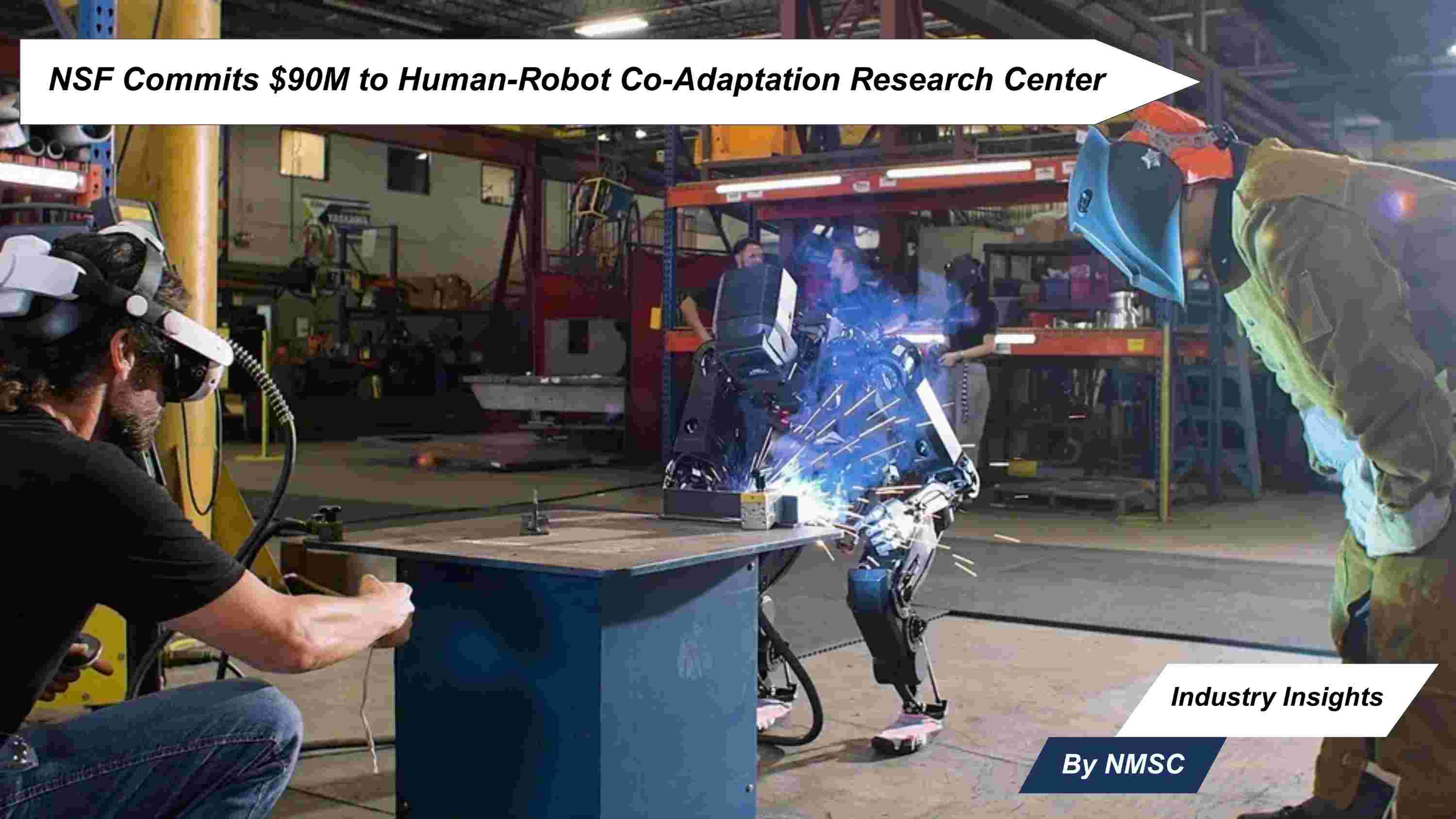
NSF Invests $90M in New Tech Centers, Including Human-Robot Collaboration Hub at UT Austin
ALEXANDRIA, United States September 1, 2026 - The U.S. National Science Foundation (NSF) has announced a USD 90 million, five-year investment to establish three new Science and Technology Centers (STCs), including one dedicated exclusively to human-robot co-adaptation a development with direct implications for the global Collaborative Robot Market, which is projected to reach USD 12.71 billion by 2030, at a CAGR of 32.6%, according to Next Move Strategy Consulting.
The NSF will allocate USD 6 million annually over an initial five-year period to each of the three centers, with the option to compete for up to five additional years of support. Among the three, the Center for Human and Robot Co-Adaptation led by The University of Texas at Austin will focus on how people and robots can securely and effectively adapt to one another as service and assistive robots become increasingly prevalent in homes, hospitals, workplaces, and public spaces.
Researchers at the Austin center will integrate robotics, artificial intelligence, and human factors engineering to develop new methodologies enabling robots with embodied intelligence to learn from people, understand their needs and preferences, and adapt physically and cognitively to changing environments. The initiative is designed to advance secure, practical robotic technologies capable of supporting independent living, healthcare delivery, and other human-centered services precisely the application domains driving cobot adoption globally.
Key Highlights:
-
USD 90 Million Federal Commitment: The NSF will invest USD 6 million annually per center over five years, with a competitive renewal pathway for an additional five years, underscoring sustained government support for robotics and AI research infrastructure.
-
Human-Robot Co-Adaptation Focus: The UT Austin center will develop methods enabling collaborative robots to learn from human behavior, adapt to individual preferences, and operate safely in unstructured, shared environments directly advancing cobot capability frontiers.
-
Multi-Disciplinary Research Architecture: The center will combine robotics, AI, and human factors disciplines, targeting applications in healthcare, assistive living, and workplace automation sectors identified as primary growth drivers for the collaborative robot industry.
-
Workforce and Innovation Pipeline: The NSF STC program, active since 1987, has historically catalyzed new fields of discovery, launched numerous start-up companies, and trained generations of researchers outcomes expected to accelerate cobot technology commercialization.
Analyst Insight:
According to analysts at Next Move Strategy Consulting, the NSF's USD 90 million commitment to human-robot co-adaptation research represents a significant inflection point for the Collaborative Robot Market's long-term trajectory. Federal investment of this scale in foundational human-robot interaction research is expected to accelerate the development of next-generation cobots capable of operating in complex, unstructured environments expanding addressable markets well beyond current manufacturing and logistics applications. NMSC analysts note that as government-backed research institutions deepen their focus on embodied AI and adaptive robotics, the pipeline of commercially deployable cobot technologies is likely to broaden considerably, reinforcing the market's projected growth toward USD 12.71 billion by 2030.
Industry Outlook:
The NSF's establishment of a dedicated Center for Human and Robot Co-Adaptation signals a maturing policy environment in which government institutions are actively investing in the foundational science underpinning collaborative robotics. For the Collaborative Robot Market, this development is expected to yield tangible downstream benefits: improved human-robot interaction frameworks, safer cobot deployment protocols, and a stronger pipeline of AI-trained robotics talent entering the workforce. As cobots expand from controlled manufacturing environments into healthcare, elder care, and public-facing service roles, the research priorities of the UT Austin center align closely with the industry's most pressing technical challenges. The convergence of federal funding, academic research, and commercial deployment activity positions the collaborative robot sector for sustained, broad-based growth through the end of the decade.
Source: The Robot Report
For More Information: Download FREE Sample on Collaborative Robot Market Report
Prepared By: Sanyukta Deb
About the Author
 Sanyukta Deb
— Sanyukta Deb is Digital Marketing Team Lead at Next Move Strategy Consulting, where she has led content strategy and technical SEO for the firm's B2B market research publications for over 2 years. Her editorial process translates NextMSC's primary and secondary research — spanning technology, industrial, and consumer sectors — into commercial narratives, backed by search-intent, keyword, and competitive analysis. She brings 5 years of overall experience in digital marketing and content strategy.
Sanyukta Deb
— Sanyukta Deb is Digital Marketing Team Lead at Next Move Strategy Consulting, where she has led content strategy and technical SEO for the firm's B2B market research publications for over 2 years. Her editorial process translates NextMSC's primary and secondary research — spanning technology, industrial, and consumer sectors — into commercial narratives, backed by search-intent, keyword, and competitive analysis. She brings 5 years of overall experience in digital marketing and content strategy.
About the Reviewer
 Debashree Dey
— Debashree Dey is Assistant Manager at Next Move Strategy Consulting, where she supports cross-vertical market content and communications across diverse industries for 6 years. Her professional background includes senior content writing, communications, and published manuscript authorship, with experience developing audience-focused business narratives and maintaining clear, consistent messaging. Her role supports research-led content development and editorial quality across NextMSC publications.
Debashree Dey
— Debashree Dey is Assistant Manager at Next Move Strategy Consulting, where she supports cross-vertical market content and communications across diverse industries for 6 years. Her professional background includes senior content writing, communications, and published manuscript authorship, with experience developing audience-focused business narratives and maintaining clear, consistent messaging. Her role supports research-led content development and editorial quality across NextMSC publications.















Add Comment