OpenAI Introduces GPT Rosalind to Accelerate Life Sciences Research
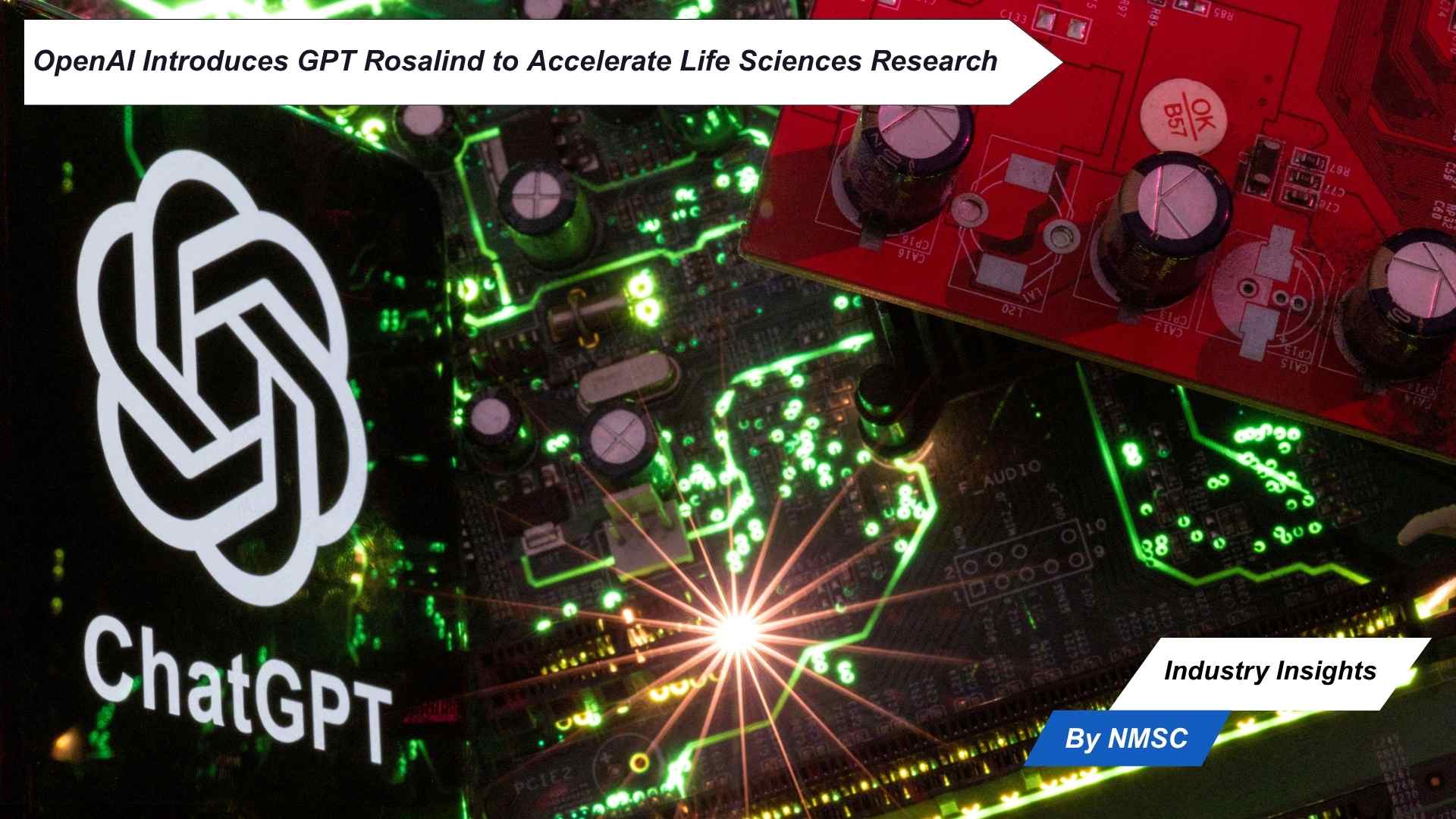
Industry Insights from Next Move Strategy Consulting
In a significant development for the artificial intelligence landscape, OpenAI has unveiled a new AI model, GPT Rosalind, specifically designed to support research in the life sciences sector. The launch underscores the growing role of advanced AI systems in transforming scientific discovery, particularly in areas such as pharmaceuticals and healthcare innovation.
Advancing AI Capabilities for Scientific Discovery
GPT Rosalind represents a focused effort to tailor artificial intelligence toward complex research environments. Unlike general-purpose AI models, this solution is engineered to assist scientists in analyzing vast datasets, generating insights, and accelerating workflows critical to life sciences research.
The introduction of GPT Rosalind highlights OpenAI’s strategy to expand beyond conventional AI applications and address specialized industry needs. By targeting life sciences, the company aims to enhance research efficiency and enable faster breakthroughs in areas that demand precision and depth of analysis.
Bridging AI and Life Sciences Innovation
The life sciences sector often faces challenges related to data complexity, lengthy research cycles, and the need for high accuracy. GPT Rosalind is positioned to support researchers by streamlining data interpretation and facilitating more informed decision-making.
This move aligns with a broader industry trend where AI is increasingly integrated into scientific research processes. By leveraging advanced modeling capabilities, GPT Rosalind is expected to contribute to improved research outcomes and reduced time-to-discovery.
Strategic Implications for the AI Ecosystem
The launch reflects a growing emphasis on domain-specific AI solutions, where models are optimized for particular industries rather than broad applications. For OpenAI, GPT Rosalind represents a step toward strengthening its presence in high-impact sectors such as healthcare and pharmaceuticals.
Industry observers note that such innovations could reshape how research institutions and companies approach scientific challenges, with AI becoming a core component of experimental and analytical workflows.
Next Move Strategy Consulting Viewpoint
According to Next Move Strategy Consulting, the introduction of specialized AI models like GPT Rosalind signals a pivotal shift in artificial intelligence adoption. The focus is moving toward precision-driven applications that deliver measurable value in complex domains.
As organizations increasingly invest in AI to enhance research capabilities, solutions tailored for life sciences are expected to gain traction. This trend will likely drive innovation, improve efficiency, and redefine competitive dynamics across the global research ecosystem.
A New Chapter in AI-Driven Research
With the launch of GPT Rosalind, OpenAI reinforces its commitment to advancing artificial intelligence in meaningful and impactful ways. By addressing the unique demands of life sciences research, the company is contributing to a future where AI plays a central role in accelerating scientific progress and innovation.
Source: Reuters
Prepared by: Next Move Strategy Consulting
About the Author
 Sanyukta Deb
— Sanyukta Deb is Digital Marketing Team Lead at Next Move Strategy Consulting, where she has led content strategy and technical SEO for the firm's B2B market research publications for over 2 years. Her editorial process translates NextMSC's primary and secondary research — spanning technology, industrial, and consumer sectors — into commercial narratives, backed by search-intent, keyword, and competitive analysis. She brings 5 years of overall experience in digital marketing and content strategy.
Sanyukta Deb
— Sanyukta Deb is Digital Marketing Team Lead at Next Move Strategy Consulting, where she has led content strategy and technical SEO for the firm's B2B market research publications for over 2 years. Her editorial process translates NextMSC's primary and secondary research — spanning technology, industrial, and consumer sectors — into commercial narratives, backed by search-intent, keyword, and competitive analysis. She brings 5 years of overall experience in digital marketing and content strategy.
About the Reviewer
 Debashree Dey
— Debashree Dey is Assistant Manager at Next Move Strategy Consulting, where she supports cross-vertical market content and communications across diverse industries for 6 years. Her professional background includes senior content writing, communications, and published manuscript authorship, with experience developing audience-focused business narratives and maintaining clear, consistent messaging. Her role supports research-led content development and editorial quality across NextMSC publications.
Debashree Dey
— Debashree Dey is Assistant Manager at Next Move Strategy Consulting, where she supports cross-vertical market content and communications across diverse industries for 6 years. Her professional background includes senior content writing, communications, and published manuscript authorship, with experience developing audience-focused business narratives and maintaining clear, consistent messaging. Her role supports research-led content development and editorial quality across NextMSC publications.

















Add Comment