Organ Transplantation Market: Record Volumes and New Frontiers

WHO Launches Global Transplantation Strategy as Xenotransplantation Milestone and Regulatory Reforms Accelerate Market Transformation
In May 2026, a landmark clinical milestone reshaped the global discourse on organ supply. For the first time in medical history, a human patient received a simultaneous transplant of two kidneys and a whole liver sourced from a genetically modified pig. The procedure, performed on a 53-year-old clinically deceased man and reported in the peer-reviewed journal Med on May 29, 2026, demonstrated sustained organ function for nearly five days with no immunological rejection observed within the first 24 hours, according to a report published in Nature. The development, involving genetically engineered porcine organs in concurrent clinical trials in both China and the United States, marks a pivotal inflection point in xenotransplantation research and signals a potential structural shift in how the global transplant community addresses the chronic shortage of donor organs.
The clinical advance arrived against a backdrop of intensifying institutional action. On June 26, 2026, the World Health Organization released the first draft of its Global Strategy on Donation and Transplantation—a 17-page policy framework developed in response to World Health Assembly Resolution 77.4 (2024), which formally recognized transplantation as an essential component of achieving United Nations Sustainable Development Goal 3.4 on reducing premature mortality from noncommunicable diseases. The strategy aims to address the escalating burden of diseases treatable by transplantation and the profound disparities in access to these life-saving therapies across WHO member states.
These developments are unfolding within a market undergoing sustained structural expansion. The global Organ Transplantation Market is projected to reach USD 13.09 billion by 2030, advancing at a compound annual growth rate of 8.9% over the 2024–2030 forecast period, according to analysis by Next Move Strategy Consulting (NMSC).
For More Information: Download FREE Sample on Organ Transplantation Market Report
Record Global Transplant Activity Underscores Structural Demand
The scale of unmet clinical need driving this market is documented with precision in the Global Observatory on Donation and Transplantation (GODT) 2024 Annual Report, published in the journal Transplantation in February 2026. The report, a collaborative initiative of the World Health Organization and Spain's Organización Nacional de Trasplantes (ONT), recorded a total of 173,727 solid organ transplants performed across 91 countries in 2024—the highest annual volume ever reported to the GODT since systematic data collection commenced in 2007, representing a 2% increase over 2023 activity levels.
Kidney transplantation remained the dominant procedure, accounting for 110,467 procedures (63.6% of total global volume) across 90 countries, followed by liver transplantation at 42,497 procedures (24.5%) across 71 countries. Heart transplantation recorded 10,287 procedures (5.9%) across 59 countries, while lung transplantation reached 8,236 procedures (4.7%) across 48 countries—a 6% year-on-year increase, the highest growth rate among all organ categories in 2024.
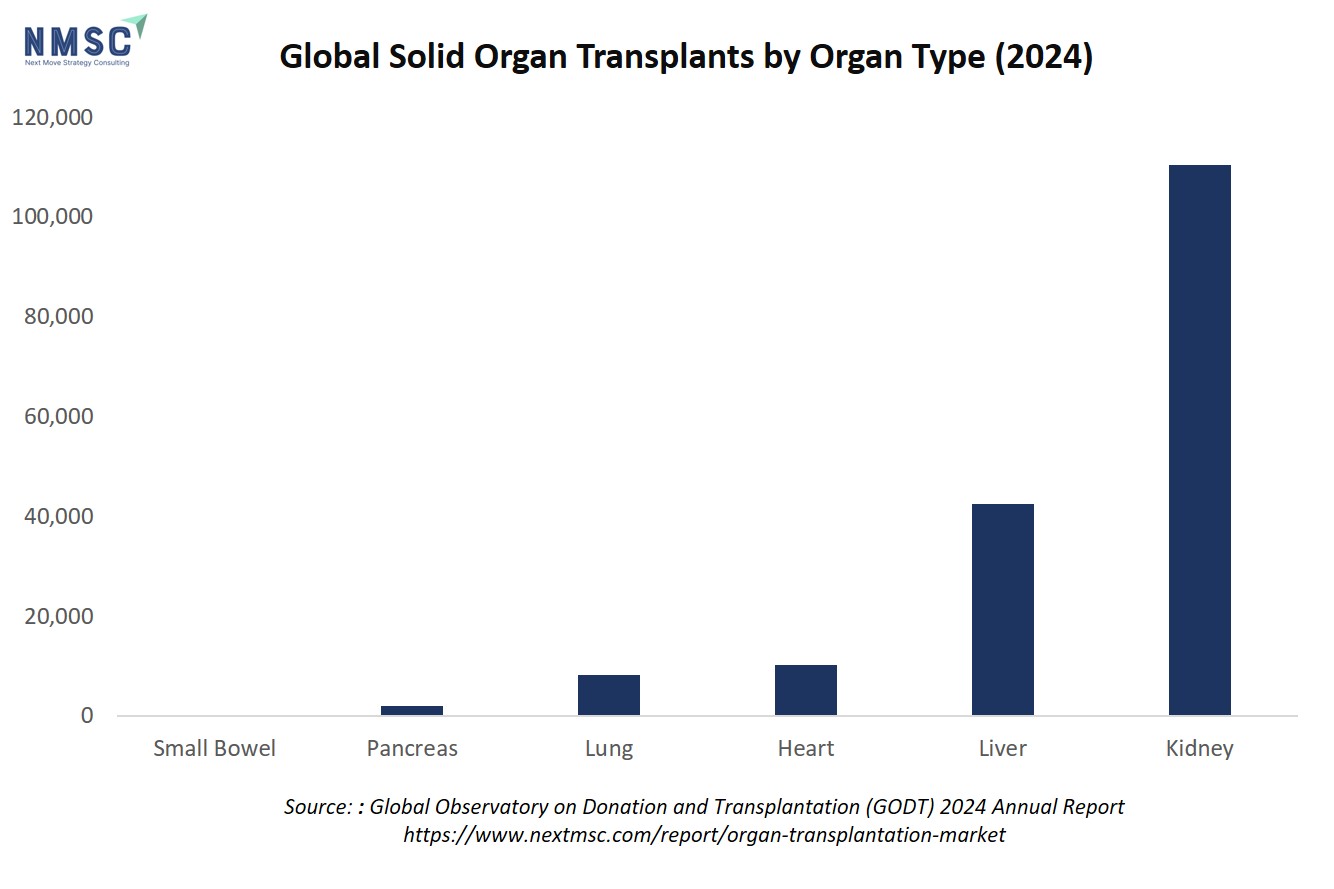
Global Solid Organ Transplant Activity by Organ Type (2024)
|
Organ Type |
Transplants Performed |
Share of Total (%) |
Countries Reporting |
Year-on-Year Change |
|
Kidney |
110,467 |
63.6% |
90 |
+0.7% |
|
Liver |
42,497 |
24.5% |
71 |
+5.0% |
|
Heart |
10,287 |
5.9% |
59 |
+2.0% |
|
Lung |
8,236 |
4.7% |
48 |
+6.0% |
|
Pancreas |
2,066 |
1.2% |
39 |
+1.5% |
|
Small Bowel |
174 |
0.1% |
20 |
0.0% |
|
Total |
173,727 |
100% |
91 |
+2.0% |
Regional Disparities and the United States' Dominant Position
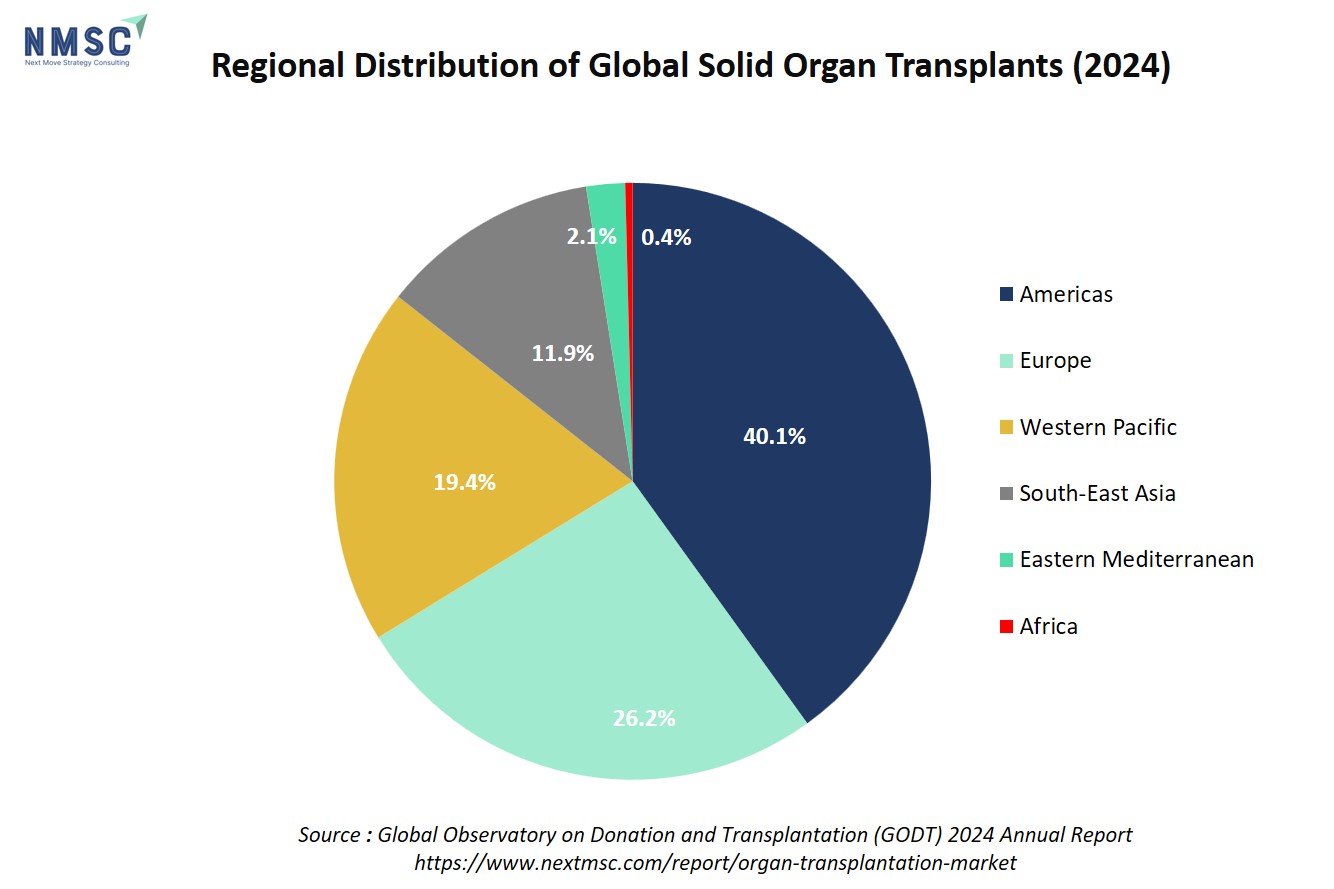
The geographic concentration of transplant activity remains pronounced. The WHO Region of the Americas accounted for 40% of all global solid organ transplants in 2024 (69,631 procedures), followed by Europe at 26% (45,439), the Western Pacific at 19% (33,634), and South-East Asia at 12% (20,677). The Eastern Mediterranean and Africa collectively contributed less than 3% of global volume, reflecting the severe infrastructure and resource constraints that limit transplant access across lower-income regions.
U.S. Organ Transplant Activity Trends (2023–2025)
|
Year |
Total Transplants |
Deceased Donors |
Living Donors |
Daily Average |
|
2023 |
46,632 |
N/A |
N/A |
~128 |
|
2024 |
48,149 |
16,988 |
7,030 |
132 |
|
2025 |
>49,000 |
N/A |
N/A |
~134 |
Regulatory Landscape: CMS Tightens OPO Oversight
On March 11, 2026, the Centers for Medicare & Medicaid Services (CMS) issued new guidance to strengthen accountability within the U.S. organ procurement system. The guidance, directed at Organ Procurement Organizations (OPOs) and donor hospitals, reinforces requirements that medical care must be provided to all patients without regard to potential donor status, that families must be afforded adequate time to make informed donation decisions free from coercion, and that OPOs are prohibited from influencing the timing of life support withdrawal or death declarations. CMS simultaneously announced a multi-year oversight schedule extending through 2027, including the anticipated issuance of a final OPO Conditions for Coverage rule in late 2026.
The regulatory action follows a proposed rule published in the Federal Register on January 30, 2026, which would revise Conditions for Coverage for OPOs to clarify outstanding compliance requirements. CMS Administrator Dr. Mehmet Oz stated that the guidance is intended to restore public trust in the organ donation system, noting that American trust in physicians and hospitals declined more than 40% between 2020 and 2024. The regulatory tightening carries direct market implications: enhanced OPO performance standards and recertification requirements are expected to accelerate consolidation among procurement organizations and drive investment in compliance infrastructure and data management systems.
UNOS has simultaneously advanced a legislative agenda before the U.S. Congress that includes mandating automated donor referrals, requiring in-cabin airline transportation for organs to reduce transit losses, implementing a national centralized organ tracking system, and incentivizing transplant hospitals to accept medically complex kidneys through differentiated Medicare reimbursement—a reform UNOS estimates could prevent approximately 4,000 additional deaths annually.
Xenotransplantation: From Research to Clinical Reality
The May 2026 xenotransplantation milestone builds on a rapidly accelerating clinical trajectory. As of April 2026, nine patients had received pig kidney grafts in clinical trials, according to a peer-reviewed analysis published in Xenotransplantation (Wiley). The concurrent trials in China and the United States reflect a broadening of the xenotransplantation research base, with genetically modified porcine organs increasingly viewed as a viable near-term strategy to address the structural organ shortage that currently leaves more than 668,000 patients waitlisted globally.
The field, however, faces regulatory headwinds. A June 2026 analysis published by STAT News noted that proposed changes to federal animal testing policies in the United States could delay xenotransplantation research timelines, introducing uncertainty into the development pathway for what many transplant specialists regard as the most promising structural solution to the global organ deficit. The WHO's newly released Global Strategy on Donation and Transplantation explicitly acknowledges xenotransplantation and bioengineered alternatives as areas of active research, while cautioning that high costs may limit access even as these technologies mature.
Market Drivers: Chronic Disease Burden, Aging Demographics, and Technological Innovation
The organ transplantation market's growth trajectory is anchored in several converging structural forces. The rising global prevalence of chronic noncommunicable diseases—including cardiovascular disease, diabetes, and chronic kidney disease—continues to expand the pool of patients requiring organ replacement therapy. According to the United Nations, the proportion of the global population aged 65 and above is projected to rise from 10% in 2022 to 16% by 2050, a demographic shift that will materially increase the incidence of age-related organ failure and, consequently, transplant demand.
Technological innovation is simultaneously expanding the boundaries of what is clinically achievable. Advances in organ preservation technology—including hypothermic and normothermic machine perfusion—are extending the viability window for donor organs, reducing discard rates, and enabling transplantation of organs previously considered unsuitable. Three-dimensional bioprinting, decellularization, and recellularization techniques represent longer-horizon opportunities that could fundamentally alter the supply dynamics of the transplant market, according to NMSC's market analysis.
In the immunosuppression segment, Veloxis Pharmaceuticals presented new research on VEL-101, an investigational immunosuppressive agent, at the American Transplant Congress in May 2024, highlighting its potential to improve post-transplant outcomes. Novartis AG expanded its portfolio through the acquisition of MorphoSys AG in May 2024. Medtronic's April 2023 launch of Mozarc Medical, a dedicated kidney health company, reflects the strategic importance that major medical device manufacturers are placing on the renal care and transplantation continuum. The U.S. Health Resources and Services Administration (HRSA) secured USD 23 million in Congressional funding to advance the modernization of the Organ Procurement and Transplantation Network (OPTN), aimed at improving data infrastructure, organ matching algorithms, and system-wide efficiency.
Competitive Landscape
The organ transplantation market encompasses a diverse competitive landscape spanning pharmaceutical manufacturers, medical device companies, and organ preservation technology providers. Key participants identified in NMSC's analysis include AbbVie Inc., BioLife Solutions Inc., Medtronic plc, Arthrex Inc., Zimmer Biomet Holdings Inc., 21st Century Medicine, Novartis AG, Stryker Corporation, Teva Pharmaceutical Industries Ltd., and Veloxis Pharmaceuticals, Inc. These companies are pursuing growth through product launches, strategic acquisitions, and collaborative research partnerships, with immunosuppressive drug development and organ preservation technology representing the most active areas of competitive investment.
The market's segmentation by product type—spanning organ preservation products, tissue products, immunosuppressive drugs, and ancillary products—reflects the breadth of the commercial ecosystem supporting transplantation. By application, kidney and liver transplantation collectively account for the largest share of procedural volume and, correspondingly, the greatest commercial opportunity. North America maintains regional market leadership, driven by the United States' unparalleled transplant infrastructure, favorable reimbursement environment, and high chronic disease burden. The Asia-Pacific region is identified as the fastest-growing market, supported by expanding donor registration programs, improving surgical capabilities, and rising healthcare investment across China, India, and South Korea.
Bottom Line
The global organ transplantation market is entering a period of accelerated transformation, driven by the convergence of record clinical volumes, landmark xenotransplantation breakthroughs, and a strengthening institutional policy framework. The WHO's June 2026 Global Strategy on Donation and Transplantation and the CMS's March 2026 regulatory guidance collectively signal a more structured and accountable operating environment for market participants. The first simultaneous pig liver and kidney transplant into a human patient, reported in May 2026, represents a potential inflection point in addressing the structural organ shortage that currently claims more than 31,000 lives annually among waitlisted patients worldwide.
For investors and industry participants, the market's projected expansion from USD 7.20 billion in 2023 to USD 13.09 billion by 2030 at an 8.9% CAGR reflects durable demand fundamentals rooted in aging demographics and rising chronic disease prevalence. Key opportunities lie in organ preservation technology, immunosuppressive drug innovation, and xenotransplantation infrastructure. Principal risks include regulatory uncertainty surrounding animal testing policy, persistent geographic disparities in transplant access, and the high procedural costs that constrain market penetration in lower-income regions. Strategic positioning in technology-enabled procurement, preservation, and matching solutions will be critical to capturing value in this evolving market.
About Next Move Strategy Consulting
Next Move Strategy Consulting is a premier market research and management consulting firm that has been committed to provide strategically analysed well documented latest research reports to its clients. The research industry is flooded with many firms to choose from, what makes NMSC different from the rest is its top-quality research and the obsession of turning data into knowledge by dissecting every bit of it and providing fact-based research recommendation that is supported by information collected from over 500 million websites, paid databases, industry journals and one on one consultations with industry experts across a diverse range of industry sectors. The high-quality customized research reports with actionable insights and excellent end-to-end customer service help our clients to take critical business decisions that enables them to move beyond time and have competitive edge in the industry.
We have been servicing over 1000 customers globally that includes 90% of the Fortune 500 companies over a decade. Our analysts are constantly tracking various high growth markets and identifying hidden opportunities in each sector or the industry. We provide one of the industry's best quality syndicate as well as custom research reports across 10 different industry verticals. We are committed to deliver high quality research solutions in accordance to your business needs. Our industry standard delivery solutions that ranges from the pre consultation to after-sales services, provide an excellent client experience and ensure right strategic decision making for businesses.
For more information, please contact:
Next Move Strategy Consulting
5th Floor 867 Boylston St, STE 500,
Boston, MA 02116, U.S.
E-Mail: [email protected]
Direct: +1-217-650-7991
Website: www.nextmsc.com
About the Author
 Sanyukta Deb
— Sanyukta Deb is Digital Marketing Team Lead at Next Move Strategy Consulting, where she has led content strategy and technical SEO for the firm's B2B market research publications for over 2 years. Her editorial process translates NextMSC's primary and secondary research — spanning technology, industrial, and consumer sectors — into commercial narratives, backed by search-intent, keyword, and competitive analysis. She brings 5 years of overall experience in digital marketing and content strategy.
Sanyukta Deb
— Sanyukta Deb is Digital Marketing Team Lead at Next Move Strategy Consulting, where she has led content strategy and technical SEO for the firm's B2B market research publications for over 2 years. Her editorial process translates NextMSC's primary and secondary research — spanning technology, industrial, and consumer sectors — into commercial narratives, backed by search-intent, keyword, and competitive analysis. She brings 5 years of overall experience in digital marketing and content strategy.
About the Reviewer
 Debashree Dey
— Debashree Dey is Assistant Manager at Next Move Strategy Consulting, where she supports cross-vertical market content and communications across diverse industries for 6 years. Her professional background includes senior content writing, communications, and published manuscript authorship, with experience developing audience-focused business narratives and maintaining clear, consistent messaging. Her role supports research-led content development and editorial quality across NextMSC publications.
Debashree Dey
— Debashree Dey is Assistant Manager at Next Move Strategy Consulting, where she supports cross-vertical market content and communications across diverse industries for 6 years. Her professional background includes senior content writing, communications, and published manuscript authorship, with experience developing audience-focused business narratives and maintaining clear, consistent messaging. Her role supports research-led content development and editorial quality across NextMSC publications.
















Add Comment