Panasonic Shifts EV Plant to AI Data Center Market
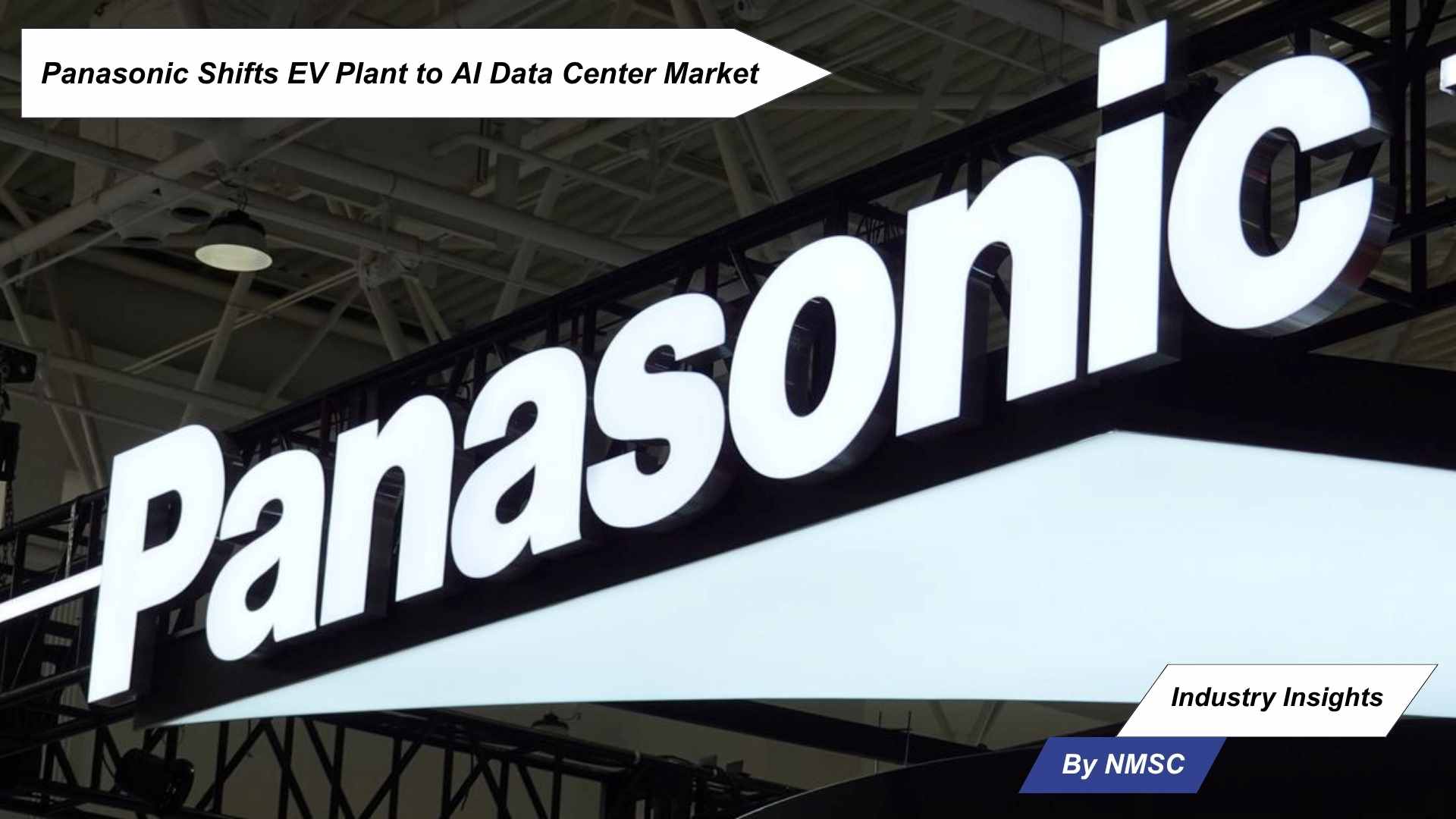
Panasonic Pivots Kansas Factory to AI Data Center Batteries; Market Size Projections Surge on Tech Super-Cycle
DES MOINES, USA — June 9, 2026 — In a major strategic realignment matching the rapid evolution of global technology infrastructure, Panasonic has announced the conversion of its multi-billion-dollar Kansas manufacturing facility. Originally slated for electric vehicle (EV) production, the plant will now manufacture specialized high-capacity batteries for artificial intelligence (AI) data centers.
A Pivotal Shift Toward the Cloud Super-Cycle
The decision represents a major restructuring of Panasonic’s capital allocation. Out of a 500-billion-yen ($3.12 billion) AI infrastructure budget spanning fiscal 2026 to 2028, the conglomerate has earmarked roughly 350 billion yen ($2.18 billion) directly for its Energy segment. Production at the converted Kansas site is officially targeted to begin by fiscal 2028.
Panasonic Energy CEO Kazuo Tadanobu outlined an aggressive roadmap, establishing a baseline sales target of 950 billion yen ($5.92 billion) for data center energy storage by fiscal 2028. Tadanobu emphasized that this massive figure is viewed internally as a floor rather than a ceiling, with revenues confidently expected to surpass the 1 trillion-yen milestone shortly thereafter.
Behind the Numbers: The Megawatt Data Center Boom
The pivot highlights an urgent demand for specialized grid stabilization and backup power systems as massive "gigawatt-scale" data centers begin coming online. Traditional energy infrastructure is failing to keep pace with demand; current delivery timelines for large power transformers now stretch past 128 weeks, while heavy gas turbines require up to seven years to procure.
Key operational capabilities driving Panasonic's data center focus include:
-
Grid Independent Redundancy: Continuous battery backup to protect sensitive AI training models from standard grid fluctuations.
-
Massive Industrial Scalability: High-density cell configurations engineered specifically to handle the extreme power draws of next-generation hardware.
-
Diversified Manufacturing Footprint: Production scaling across the converted Kansas hub alongside a newly announced facility in Mexico.
Industry Analytics and Market Impact
This structural shift aligns with massive capital expenditures from hyper-scale cloud operators. The world's largest digital infrastructure spenders—Amazon, Google, Meta, and Microsoft—are projected to lift their collective capital expenditures to between $600 billion and $700 billion this year alone.
"Panasonic’s pivot is a pragmatic response to clear structural shifts in global manufacturing demand," notes a senior market analyst at Next Move Strategy Consulting (NMSC). "While the EV landscape experiences a period of stabilization, the AI data center segment is entering an unprecedented capital cycle. Our proprietary data indicates that the global Data Center Market size is expanding exponentially, making energy storage the definitive bottleneck—and the highest-margin opportunity—for component manufacturers over the next decade."
As data center builders race to secure energy storage solutions amid lengthening supply chain delays, Panasonic’s repositioning positions it at the forefront of the infrastructure economy, capitalizing on the immense power demands of the artificial intelligence boom.
Source: Quartz Media Network
Prepared By: Prakhyat Chowdhury
About the Author
 Sanyukta Deb
— Sanyukta Deb is Digital Marketing Team Lead at Next Move Strategy Consulting, where she has led content strategy and technical SEO for the firm's B2B market research publications for over 2 years. Her editorial process translates NextMSC's primary and secondary research — spanning technology, industrial, and consumer sectors — into commercial narratives, backed by search-intent, keyword, and competitive analysis. She brings 5 years of overall experience in digital marketing and content strategy.
About the Reviewer
 Debashree Dey
— Debashree Dey is Assistant Manager at Next Move Strategy Consulting, where she supports cross-vertical market content and communications across diverse industries for 6 years. Her professional background includes senior content writing, communications, and published manuscript authorship, with experience developing audience-focused business narratives and maintaining clear, consistent messaging. Her role supports research-led content development and editorial quality across NextMSC publications.














Add Comment