RECOVER Releases First Aid Guidelines for Dogs and Cats
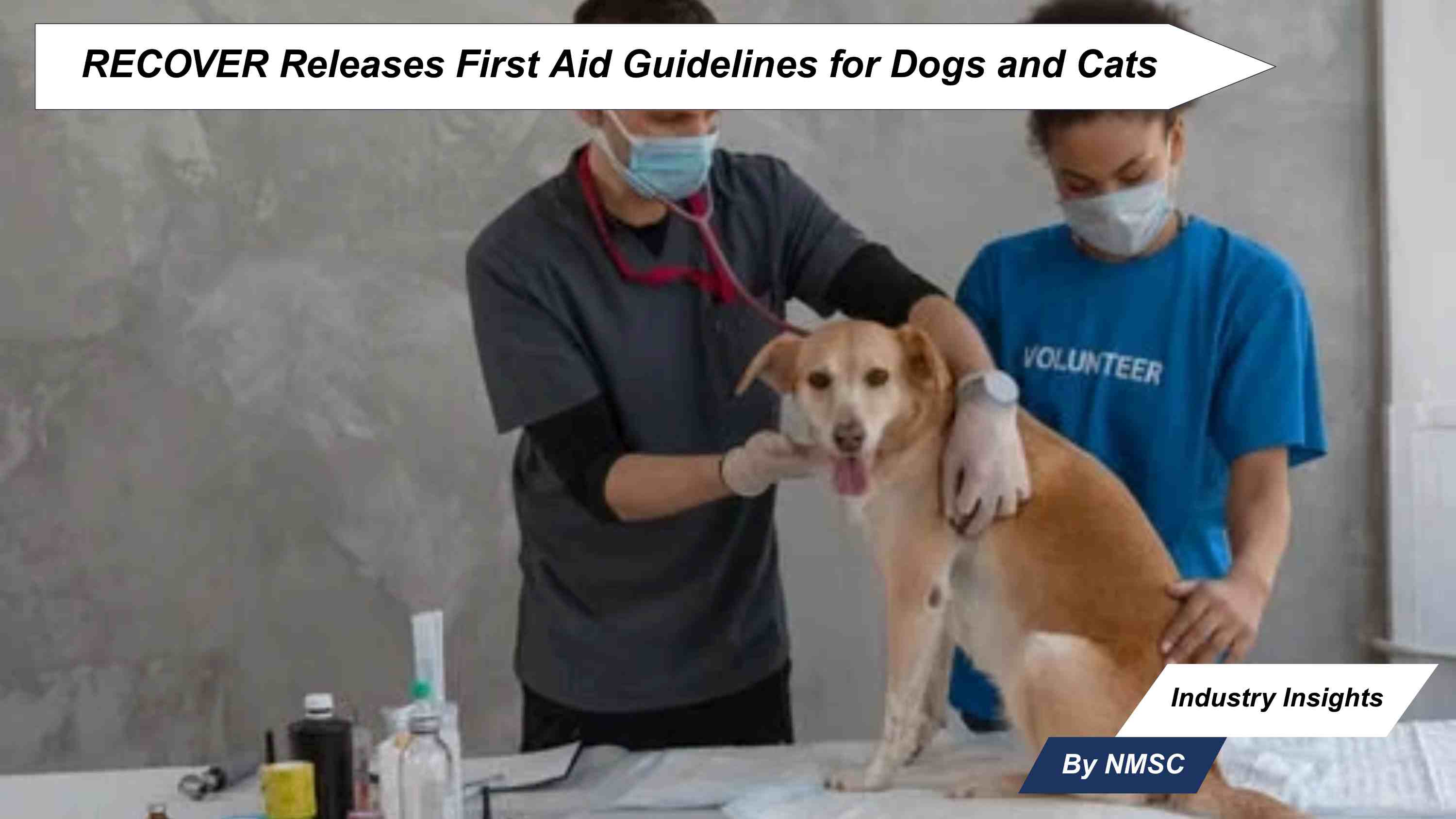
RECOVER Initiative Publishes First Evidence-Based First Aid Guidelines for Dogs and Cats
SCHAUMBURG, Illinois, United States October 6, 2026 The Reassessment Campaign on Veterinary Resuscitation (RECOVER) Initiative has published the first evidence- and consensus-based first aid guidelines for dogs and cats, providing veterinary professionals with a rigorous clinical framework to guide pet owners and first responders during life-threatening animal emergencies. The milestone carries significant implications for the veterinary market, which was valued at USD 118.73 billion in 2024 and is projected to reach USD 172.76 billion by 2030, according to Next Move Strategy Consulting.
The "2026 RECOVER First Aid Guidelines for Dogs and Cats," published in the August 2026 issue of the Journal of Veterinary Emergency and Critical Care, provide treatment recommendations for urgent conditions including burns, choking, heatstroke, noncaustic toxin ingestion, severe extremity bleeding, and hypoglycemia. The guidelines are specifically designed to address the critical prehospital period the interval between when an emergency is recognized and when professional veterinary care becomes available.
"Animal emergencies often begin before a patient reaches a veterinary hospital," said Dr. Jamie Burkitt, guidelines co-chair of RECOVER and professor of clinical small animal emergency and critical care at the University of California-Davis Weill School of Veterinary Medicine. The guidelines are not intended to replace veterinary diagnosis or treatment; rather, they are structured to help individuals recognize emergencies, provide appropriate immediate support, and transport animals to veterinary professionals with the best chance for recovery.
The RECOVER Initiative an independent nonprofit founded in 2010 as a joint collaboration of the Veterinary Emergency and Critical Care Society and the American College of Veterinary Emergency and Critical Care developed the guidelines using systematic literature reviews, evidence synthesis, and expert consensus, applying the same rigorous methodology used for the 2024 RECOVER CPR Guidelines for dogs and cats. The resulting document spans three peer-reviewed papers, including a dedicated paper on acute allergy and anaphylaxis.
Key Highlights:
-
The guidelines cover dozens of urgent conditions including burns, choking, heatstroke, hypoglycemia, severe extremity bleeding, and noncaustic toxin ingestion where timely action may meaningfully impact patient outcomes.
-
A "Recognize and Act" Algorithm is included to guide bystanders in identifying critical warning signs and taking appropriate immediate action before veterinary care is accessible.
-
The guidelines are structured across three peer-reviewed papers published in the Journal of Veterinary Emergency and Critical Care, including a dedicated paper on acute allergy and anaphylaxis in dogs and cats.
-
Veterinary professionals can apply the guidelines during phone triage to improve outcomes and provide structured guidance to pet owners before animals reach a clinic.
Analyst Insight:
According to analysts at Next Move Strategy Consulting, the release of standardized, evidence-based first aid guidelines for companion animals reflects the broader professionalization of veterinary emergency care and is expected to drive increased demand for veterinary services, training programs, and emergency care products. NMSC analysts note that as global pet ownership continues to rise with 4.8 million animals adopted in 2023 alone, according to the World Animal Foundation the need for structured prehospital protocols will become an increasingly important component of the veterinary care continuum, reinforcing long-term market expansion across companion animal segments.
Industry Outlook:
The publication of the 2026 RECOVER First Aid Guidelines represents a meaningful step toward standardizing emergency animal care at the community level. As the veterinary market continues to expand driven by rising pet adoption rates, growing awareness of animal health, and increasing consumer expenditure on companion animal care the integration of evidence-based prehospital protocols is expected to strengthen the overall veterinary care ecosystem. Regulatory bodies, veterinary schools, and professional associations are anticipated to incorporate these guidelines into training curricula and client education programs in the coming years, further elevating the standard of care across the sector.
Source: American Veterinary Medical Association (AVMA)
For More Information – Download FREE Sample on Veterinary Market Report
Prepared By: Sanyukta Deb
About the Author
 Sanyukta Deb
— Sanyukta Deb is Digital Marketing Team Lead at Next Move Strategy Consulting, where she has led content strategy and technical SEO for the firm's B2B market research publications for over 2 years. Her editorial process translates NextMSC's primary and secondary research — spanning technology, industrial, and consumer sectors — into commercial narratives, backed by search-intent, keyword, and competitive analysis. She brings 5 years of overall experience in digital marketing and content strategy.
Sanyukta Deb
— Sanyukta Deb is Digital Marketing Team Lead at Next Move Strategy Consulting, where she has led content strategy and technical SEO for the firm's B2B market research publications for over 2 years. Her editorial process translates NextMSC's primary and secondary research — spanning technology, industrial, and consumer sectors — into commercial narratives, backed by search-intent, keyword, and competitive analysis. She brings 5 years of overall experience in digital marketing and content strategy.
About the Reviewer
 Debashree Dey
— Debashree Dey is Assistant Manager at Next Move Strategy Consulting, where she supports cross-vertical market content and communications across diverse industries for 6 years. Her professional background includes senior content writing, communications, and published manuscript authorship, with experience developing audience-focused business narratives and maintaining clear, consistent messaging. Her role supports research-led content development and editorial quality across NextMSC publications.
Debashree Dey
— Debashree Dey is Assistant Manager at Next Move Strategy Consulting, where she supports cross-vertical market content and communications across diverse industries for 6 years. Her professional background includes senior content writing, communications, and published manuscript authorship, with experience developing audience-focused business narratives and maintaining clear, consistent messaging. Her role supports research-led content development and editorial quality across NextMSC publications.
















Add Comment