Tokenized RWA Market Hits $60B as U.S. Regulators Set Legal Rails

Tokenized RWA Market Breaks $60B Barrier as U.S. Regulatory Clarity and Institutional Adoption Signal a New Era for On-Chain Finance
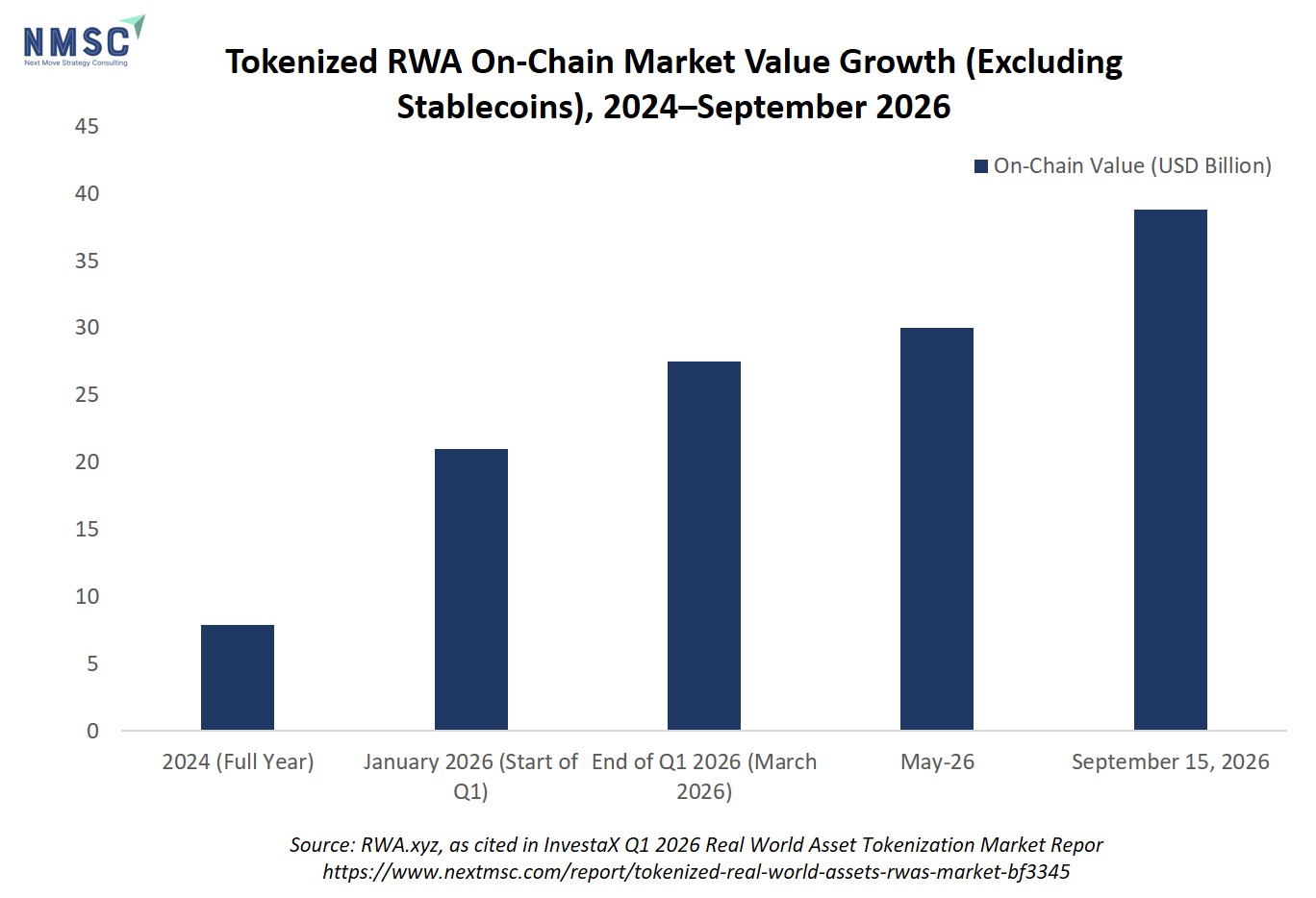
The global market for tokenized real-world assets crossed a landmark threshold in mid-2026, with a new BeInCrypto research report tracking more than 7,000 tokenized products across 12 asset classes and placing the total market value at approximately $60 billion — a figure that would have been considered speculative just three years ago. Yet the headline number conceals a structural paradox: of the 1,289 surveyed tokenized assets above $100,000 in value, 910 of them — representing $32.9 billion — showed zero weekly transfer activity, exposing a market that has scaled in issuance far faster than it has scaled in access and liquidity. That tension — between the pace of asset creation and the depth of functional markets — now defines the central strategic challenge for every institution operating in this space.
According to Next Move Strategy Consulting's Tokenized Real-World Assets (RWAs) Market report, the global tokenized RWA market was valued at USD 297.71 billion in 2024 and is projected to reach USD 9.43 trillion by 2030, growing at a compound annual growth rate of 72.8% from 2025 to 2030. NMSC's proprietary research and analysis identifies blockchain and smart contract maturity, regulatory framework development in key jurisdictions, and the democratization of fractional ownership as the three primary structural forces compressing what was once a decade-long institutional adoption curve into a five-year sprint.
For More Information: Download FREE Sample on Tokenized Real-World Assets (RWAs) Market Report
The Regulatory Inflection: A Sequential U.S. Framework Takes Shape
The most consequential development of the first half of 2026 was not a single product launch or funding round — it was a sequence of U.S. regulatory decisions that, taken together, removed the legal ambiguity that had kept institutional capital on the sidelines of tokenized securities markets.
On January 28, 2026, the U.S. Securities and Exchange Commission's Division of Corporation Finance issued its first formal statement on tokenized securities, clarifying that tokenized securities are subject to the same regulatory framework as traditional instruments, with applicability determined by the economic function of the asset rather than its technological format. On February 23, the SEC approved intraday trading for WisdomTree's Treasury Money Market Digital Fund (WTGXX), making it the first tokenized mutual fund in the United States approved for T-instant settlement — allowing investors to trade at a fixed $1 intraday price with continuous dividend accrual based on wallet holding timestamps and USDC settlement on Ethereum.
In early March, the Federal Reserve, the Federal Deposit Insurance Corporation (FDIC), and the Office of the Comptroller of the Currency (OCC) issued joint guidance confirming that tokenized securities receive the same capital treatment as their traditional equivalents, regardless of whether they operate on permissioned or permissionless blockchains. The practical effect was immediate: banks that had been deferring tokenization pilots pending capital clarity now had a technology-neutral regulatory baseline from which to build. The SEC and CFTC subsequently issued joint guidance in March separating digital assets into five distinct categories — digital commodities, digital collectibles, digital tools, stablecoins, and digital securities — providing the classification architecture that compliance teams had been waiting for before committing to product development.
Underpinning all of these developments is the GENIUS Act, signed into law on July 18, 2025, which established the first federal framework for payment stablecoins in the United States, including reserve, disclosure, and oversight standards. The OCC proposed its GENIUS Act implementing regulations in March 2026, with the Federal Register publishing the full regulatory text in August 2026, setting an effective date of January 18, 2027. The World Economic Forum, in its analysis published ahead of the 2026 Annual Meeting, identified the GENIUS Act as "a trigger prompting more jurisdictions globally to be accelerating regulation in this space," with the proposed U.S. Digital Asset Market Clarity Act expected to further define the market structure for digital assets.
In Europe, the European Central Bank confirmed in January 2026 that distributed ledger technology (DLT) assets issued in central securities depositories would be accepted as eligible collateral for Eurosystem credit operations as of March 30, 2026 — a decision that directly expands the utility of tokenized bonds and gilts within the eurozone's core monetary infrastructure.
Institutional Adoption Moves from Pilot to Production
The regulatory clarity of Q1 2026 did not merely validate existing pilots — it triggered a wave of production-scale commitments from the largest institutions in global capital markets.
BlackRock's USD Institutional Digital Liquidity Fund (BUIDL), which crossed $1 billion in assets under management within weeks of its launch and $2 billion by late 2025, reached approximately $2.5 billion in AUM by May 2026 across eight or more blockchain networks. In Q1 2026, BlackRock integrated BUIDL with Uniswap's UniswapX technology, making it the first time a major asset manager connected a regulated tokenized fund to a decentralised exchange — a structural move that transforms BUIDL from a closed institutional product into a composable DeFi building block.
JPMorgan's Kinexys platform filed to launch a new tokenized money market fund in May 2026, the latest in a series of moves that have positioned Kinexys as the institutional blockchain infrastructure layer for programmable payments, asset tokenization, and near-real-time settlement. Franklin Templeton, in partnership with Ondo Finance, launched tokenized versions of five ETFs accessible 24/7 through crypto wallets, initially targeting investors in Europe, Asia-Pacific, the Middle East, and Latin America.
The New York Stock Exchange announced it is building a dedicated 24/7 tokenized securities venue with on-chain settlement and stablecoin support, while Nasdaq received SEC approval to allow certain Russell 1000 stocks and major index ETFs to settle in tokenized form on a trade-by-trade basis — with tokenization occurring as a post-trade step that preserves existing orderbook price-time priority. Nasdaq also partnered with Kraken to develop an "equities transformation gateway" enabling tokenized equities to move between Nasdaq's regulated environment and broader digital asset ecosystems.
BNP Paribas Asset Management — with 612 billion EUR in AUM as of June 30, 2025 — issued a tokenized money market fund share class on Ethereum via its AssetFoundry™ platform, moving from private rails to public blockchain infrastructure. Morgan Stanley revealed plans to support tokenized stock and ETF trading on its internal alternative trading system in the second half of 2026, alongside development of a dedicated digital asset wallet.
A landmark cross-border milestone was achieved in Q1 when DTCC, LSEG, Euroclear, Tradeweb, Citadel Securities, and Societe Generale completed the first cross-border intraday repo using tokenized UK gilts on the Canton Network — a transaction that demonstrated the operational viability of tokenized collateral across multiple regulated jurisdictions simultaneously.
Institutional Sentiment: Interest Converts to Implementation Planning
The 2026 Institutional Digital Assets Survey, conducted by EY-Parthenon and Coinbase in January 2026 and polling more than 350 institutional investors globally — including asset managers, asset owners, family offices, private banks, hedge funds, and venture capital firms — provides the most comprehensive quantitative picture of where institutional intent now stands.
Sixty-three percent of respondents reported their firm is very interested in tokenized assets, up from 57% in 2025. More significantly, 64% of asset managers reported being very interested in tokenizing their own assets — a figure that had stood at just 40% twelve months earlier. Asset tokenization ranked as the third-highest capability priority for institutions over the next two years, cited by 67% of respondents, behind only trading capabilities (69%) and custody (68%).
The survey also identified the specific bottlenecks preventing faster scaling: regulatory uncertainty (67%), integration challenges with existing systems (59%), and insufficient secondary market liquidity (38%) were the most cited hurdles. The EY-Parthenon analysis framed this shift precisely: "tokenization is no longer waiting on belief; it is waiting on rails and rules."
Key Tokenized Asset Class Metrics — Q1 2026
|
Asset Class |
On-Chain Value (Q1 2026) |
Key Developments |
|
U.S. Treasuries |
USD 13.4 billion |
Surpassed $10B in late February; BUIDL ($2.4B), Circle USYC ($2.7B), Ondo ($2.6B) lead |
|
Private Credit |
Largest single category |
Continued institutional inflows; Maple Finance, Centrifuge active |
|
Tokenized Commodities |
USD 7.3 billion |
Gold-backed tokens dominate; HSBC Hang Seng gold ETF tokenization announced |
|
Tokenized Equities |
~USD 960 million |
Up from ~$424M at mid-2025; Ondo Finance holds ~60% market share |
|
Tokenized Real Estate |
Growing |
Hong Kong SFC approved first products; Dubai DLD launched Phase 2 secondary market |
|
Corporate Bonds |
Passed USD 1 billion |
Six asset classes now exceed $1B threshold |
The Access Paradox: Scale Without Liquidity
The $60 billion headline figure demands a structural qualification that any institutional participant must understand before deploying capital. Andrew O'Neill, digital assets lead analyst at S&P Global Ratings, who contributed to the BeInCrypto 2026 tokenization report, identified the core risk: "Tokenized funds still carry familiar off-chain risks around fund management, asset quality, and redemption. What changes is the technology layer. On-chain markets move faster than traditional ones, which raises the bar for how quickly risk has to be tracked."
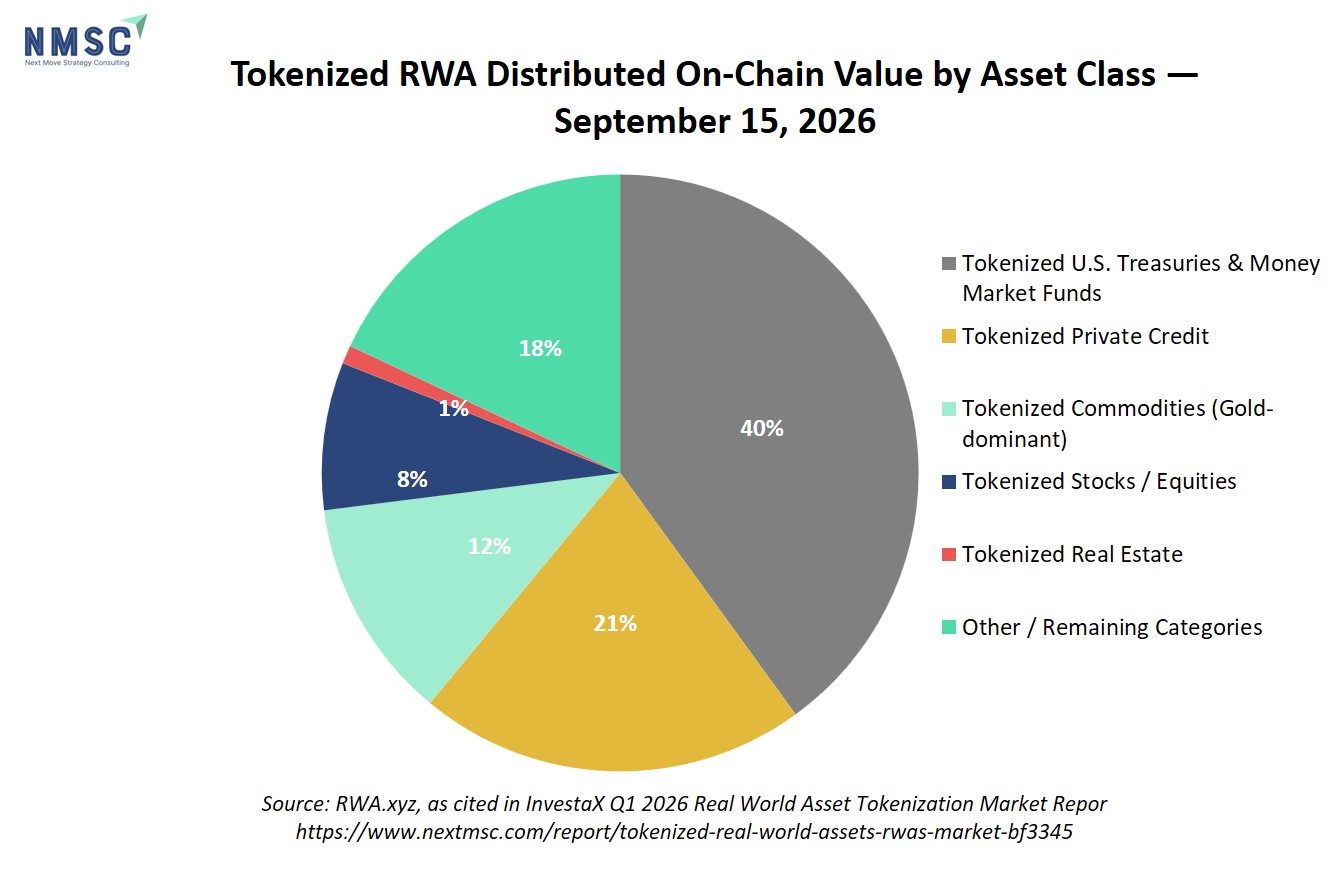
The concentration of active capital is striking: just 62 assets hold 88% of total market value, and the top five products — Figure's HELOC product, Circle's USYC, Tether Gold, BlackRock's BUIDL, and Justoken's JMWH — account for roughly half of the total on their own. Approximately $27 billion of the core market consists of "Represented" tokens — digital receipts on closed, permissioned ledgers that were never designed to transfer publicly, a structural feature that explains much of the apparent inactivity.
David Taylor, co-founder and CEO of EtherFuse — which tokenizes sovereign debt instruments from Brazil and Mexico — articulated the distribution challenge directly: "A $60 billion market that 97% of people can't touch, where half the assets never move, isn't a market yet. It's a waiting room." Chandler Fang, founder of t54, which builds trust and verification infrastructure for AI-driven finance, identified the distribution architecture as the next critical build: "If you look at a new asset class such as muni bonds, those assets are still tradable under traditional mainstream trading platforms. I think RWAs need to gradually get into our mainstream trading channels."
The only tokenized asset class that the BeInCrypto report rates as genuinely production-grade is U.S. Treasuries — the segment that has attracted the deepest institutional capital precisely because it provides the on-chain risk-free rate benchmark against which all other tokenized yield products are priced.
Market Segmentation: Asset Types, Technologies, and End Users
NMSC's proprietary research and analysis segments the tokenized RWA market across asset types, technologies, components, applications, end users, and regions.
-
By Asset Type: Debt instruments — led by U.S. Treasury debt — represent the most institutionally mature segment, with tokenized U.S. Treasuries reaching $13.4 billion in Q1 2026 and serving as the foundational yield benchmark for on-chain finance. Private credit is the largest single tokenized asset category by on-chain value, driven by platforms such as Centrifuge and Maple Finance connecting institutional lenders with real-economy borrowers. Tokenized commodities, at $7.3 billion, are expanding beyond gold into silver and energy-linked instruments. Tokenized equities, at approximately $960 million, represent the fastest-growing segment by percentage, having more than doubled from $424 million at mid-2025.
-
By Technology: Public blockchains — principally Ethereum — dominate the institutional tokenization landscape, with BlackRock's BUIDL, Circle's USYC, and Ondo's suite all operating on Ethereum rails. Private networks (Hyperledger Fabric) remain relevant for permissioned institutional use cases where regulatory constraints require controlled participant sets.
-
By Component: Issuance platforms (Securitize, Tokeny Solutions, ADDX) form the primary infrastructure layer. Custodial services are emerging as a critical differentiator, with the EY-Parthenon survey finding that custody security rose sharply as a gating factor for institutional participation in 2026, with 61% of investors employing a multi-custodian model. Secondary trading venues — including Nasdaq's newly approved tokenized securities framework and NYSE's forthcoming 24/7 on-chain venue — represent the infrastructure gap whose closure will determine whether the $60 billion market becomes genuinely liquid.
Institutional Interest in Tokenized Assets — EY-Parthenon & Coinbase 2026 Survey (n=351)
|
Metric |
January 2025 |
January 2026 |
Change |
|
Firms "very interested" in investing in tokenized assets |
57% |
63% |
+6 pp |
|
Asset managers "very interested" in tokenizing own assets |
40% |
64% |
+24 pp |
|
Firms planning to increase digital asset allocations |
62% |
73% |
+11 pp |
|
Asset tokenization as a top-2-year capability priority |
— |
67% |
— |
|
Regulatory uncertainty cited as top tokenization hurdle |
— |
67% |
— |
|
Firms preferring multi-custodian model |
— |
61% |
— |
Regional Analysis: Parallel Regulatory Architectures
-
North America leads in institutional product deployment, anchored by the sequential U.S. regulatory framework of Q1 2026. The GENIUS Act's stablecoin framework, the SEC's tokenized securities statement, and the joint bank capital guidance together constitute the most comprehensive federal digital asset regulatory architecture in U.S. history. The Senate Banking Committee's expected markup of the Digital Asset Market Clarity Act signals further definitional clarity on the horizon.
-
Europe is advancing on two parallel tracks: the ECB's March 2026 decision to accept DLT-issued assets as Eurosystem collateral provides a central bank endorsement of tokenized securities that no other major central bank has yet matched. Switzerland (FINMA), Liechtenstein, and Malta continue to operate as the continent's most active regulated token offering jurisdictions.
-
Asia-Pacific is developing the most diverse regulatory landscape. Singapore's Monetary Authority continues to advance Project Guardian and BLOOM for tokenized securities infrastructure. Hong Kong's Securities and Futures Commission approved its first real estate tokenization products from Derlin Holdings in Q1 2026, and the Hong Kong Monetary Authority granted its first two stablecoin issuer licenses — to a Standard Chartered joint venture and HSBC — in April 2026. Malaysia's Bank Negara Malaysia launched three tokenized deposit initiatives in 2026, onboarding Standard Chartered, Maybank, and CIMB to test ringgit-linked stablecoins and tokenized deposits.
-
Middle East: Dubai's Land Department launched the second phase of its real estate tokenization project in February 2026, opening secondary market resale of tokenized property units — a phased regulatory model that other jurisdictions are studying as a template for sequencing the introduction of tokenized real assets.
Competitive Landscape: TradFi-DeFi Convergence Defines the Field
The tokenized RWA competitive landscape is defined by a two-tier structure: incumbent financial institutions building institutional-grade infrastructure at scale, and specialist fintech platforms innovating on compliance architecture and fractional ownership mechanics.
Among incumbents, BlackRock's BUIDL fund — now at $2.5 billion AUM across eight chains and integrated with Uniswap's DeFi rails — represents the most advanced convergence of regulated fund management with decentralised market infrastructure. JPMorgan's Kinexys platform, processing institutional-scale tokenized transactions and now filing for a dedicated tokenized money market fund, is building the bank-led blockchain settlement layer that could become the institutional standard for programmable payments.
Among specialist platforms, Securitize — which holds SEC registration as a transfer agent — leads in institutional issuance infrastructure. Ondo Finance, holding approximately 60% of the tokenized equity market through its Global Markets platform and partnering with both Franklin Templeton and Binance for distribution, has established the broadest distribution reach of any specialist RWA platform. Centrifuge and Maple Finance lead in private credit tokenization, while ADDX has demonstrated the fractional ownership model at retail scale — enabling investors to own fractions of Singapore office towers with minimum ticket sizes of USD 5,000.
The World Economic Forum's Sandra Waliczek, writing on blockchain and digital assets for the WEF's 2026 Annual Meeting analysis, noted that "financial services companies across the value chain — including asset managers, financial market infrastructures, payment providers, fintechs and investors — are incorporating blockchain-enabled solutions," with JP Morgan's issuance of its USD deposit token (JPM Coin) on a public blockchain and Citi's integration of Citi Token Services with 24/7 USD Clearing for real-time cross-border payments representing the clearest signals of TradFi's structural commitment to on-chain infrastructure.
NMSC Strategic Perspective: The Infrastructure Gap Is the Market Opportunity
Next Move Strategy Consulting's analysis of the tokenized RWA market identifies a critical strategic inflection point that the $60 billion headline figure alone does not capture.
NMSC's proprietary research and analysis indicates that the market's 72.8% CAGR trajectory to USD 9.43 trillion by 2030 is not primarily a function of new asset creation — it is a function of infrastructure maturation. The current market structure, in which 62 assets hold 88% of active value and the addressable institutional market is effectively 250 products rather than 7,000, reflects a market in the final stages of its infrastructure build-out phase, not a market that has reached its structural ceiling.
Three specific infrastructure developments will determine whether the NMSC forecast trajectory is achieved or exceeded:
-
First, secondary market depth. The simultaneous build-out of NYSE's 24/7 on-chain venue, Nasdaq's approved tokenized securities framework, Deutsche Börse's 360X platform, and Binance's Ondo partnership creates, for the first time, a multi-venue secondary market architecture for tokenized equities. NMSC's analysis indicates that secondary market liquidity — not primary issuance volume — is the rate-limiting factor for institutional capital deployment at scale. The WisdomTree WTGXX intraday trading approval provides the regulatory template; the question is how quickly other tokenized fund managers replicate it.
-
Second, cross-chain interoperability. The first cross-border intraday repo using tokenized UK gilts on the Canton Network — executed by DTCC, LSEG, Euroclear, Tradeweb, Citadel Securities, and Societe Generale — demonstrated that multi-jurisdictional tokenized collateral mobility is operationally achievable. NMSC's research identifies the Inter-Blockchain Communication (IBC) protocol and similar cross-chain standards as the technical infrastructure whose adoption will determine whether the private credit and real estate segments can scale beyond their current permissioned-ledger constraints.
-
Third, the AI-RWA convergence. The emergence of AI agent platforms designed to hold, manage, and transact tokenized real-world assets programmatically — including IXS's RWA agent layer and Ant Group's Anvita platform — represents a demand vector that existing market size models do not yet fully price in. Tokenized RWAs are structurally superior to traditional financial instruments for AI-driven capital allocation: they are programmable, composable, and instantly transferable. NMSC's analysis suggests this convergence will become a material demand driver within the 2027–2029 window of the current forecast period.
The custody security dimension also warrants specific strategic attention. The EY-Parthenon survey found that custody security rose to tie with regulatory uncertainty as the top concern for institutional investors in 2026, with 61% of institutions now employing multi-custodian models. NMSC's research indicates that the institutions that establish multi-party computation (MPC) key management, SOC 2 and ISO 27001 certification, and smart contract audit protocols as standard operating procedure in 2026 will hold a durable competitive advantage as the market scales — because custody infrastructure, once embedded in institutional workflows, creates switching costs that are difficult to overcome.
Bottom Line
The tokenized real-world assets market has reached a structural turning point in 2026. The $60 billion on-chain market, while concentrated and partially illiquid, is now supported by the most comprehensive regulatory architecture in the asset class's history — spanning the U.S. GENIUS Act, the SEC's tokenized securities framework, the joint bank capital guidance from the Federal Reserve, FDIC, and OCC, and the ECB's acceptance of DLT assets as Eurosystem collateral. Institutional intent has converted from exploratory interest to implementation planning, with 64% of asset managers now very interested in tokenizing their own assets — up from 40% just twelve months ago. The production-scale commitments of BlackRock, JPMorgan, Franklin Templeton, BNP Paribas, NYSE, and Nasdaq signal that the market's infrastructure build-out phase is entering its final stage. According to NMSC's proprietary research and analysis, the market is projected to reach USD 9.43 trillion by 2030 at a 72.8% CAGR — a trajectory that will be determined not by the pace of asset issuance, which is already rapid, but by the speed at which secondary market liquidity, cross-chain interoperability, and institutional-grade custody infrastructure close the access gap that currently keeps 97% of potential participants on the sidelines.
About Next Move Strategy Consulting
Next Move Strategy Consulting is a premier market research and management consulting firm that has been committed to provide strategically analysed well documented latest research reports to its clients. The research industry is flooded with many firms to choose from, what makes NMSC different from the rest is its top-quality research and the obsession of turning data into knowledge by dissecting every bit of it and providing fact-based research recommendation that is supported by information collected from over 500 million websites, paid databases, industry journals and one on one consultations with industry experts across a diverse range of industry sectors. The high-quality customized research reports with actionable insights and excellent end-to-end customer service help our clients to take critical business decisions that enables them to move beyond time and have competitive edge in the industry.
We have been servicing over 1000 customers globally that includes 90% of the Fortune 500 companies over a decade. Our analysts are constantly tracking various high growth markets and identifying hidden opportunities in each sector or the industry. We provide one of the industry's best quality syndicate as well as custom research reports across 10 different industry verticals. We are committed to deliver high quality research solutions in accordance to your business needs. Our industry standard delivery solutions that ranges from the pre consultation to after-sales services, provide an excellent client experience and ensure right strategic decision making for businesses.
For more information, please contact:
Next Move Strategy Consulting
5th Floor 867 Boylston St, STE 500,
Boston, MA 02116, U.S.
E-Mail: [email protected]
Direct: +1-217-650-7991
Website: www.nextmsc.com
About the Author
 Sanyukta Deb
— Sanyukta Deb is Digital Marketing Team Lead at Next Move Strategy Consulting, where she has led content strategy and technical SEO for the firm's B2B market research publications for over 2 years. Her editorial process translates NextMSC's primary and secondary research — spanning technology, industrial, and consumer sectors — into commercial narratives, backed by search-intent, keyword, and competitive analysis. She brings 5 years of overall experience in digital marketing and content strategy.
Sanyukta Deb
— Sanyukta Deb is Digital Marketing Team Lead at Next Move Strategy Consulting, where she has led content strategy and technical SEO for the firm's B2B market research publications for over 2 years. Her editorial process translates NextMSC's primary and secondary research — spanning technology, industrial, and consumer sectors — into commercial narratives, backed by search-intent, keyword, and competitive analysis. She brings 5 years of overall experience in digital marketing and content strategy.
About the Reviewer
 Debashree Dey
— Debashree Dey is Assistant Manager at Next Move Strategy Consulting, where she supports cross-vertical market content and communications across diverse industries for 6 years. Her professional background includes senior content writing, communications, and published manuscript authorship, with experience developing audience-focused business narratives and maintaining clear, consistent messaging. Her role supports research-led content development and editorial quality across NextMSC publications.
Debashree Dey
— Debashree Dey is Assistant Manager at Next Move Strategy Consulting, where she supports cross-vertical market content and communications across diverse industries for 6 years. Her professional background includes senior content writing, communications, and published manuscript authorship, with experience developing audience-focused business narratives and maintaining clear, consistent messaging. Her role supports research-led content development and editorial quality across NextMSC publications.

















Add Comment