U.S. Data Center Market Faces First Federal Regulation
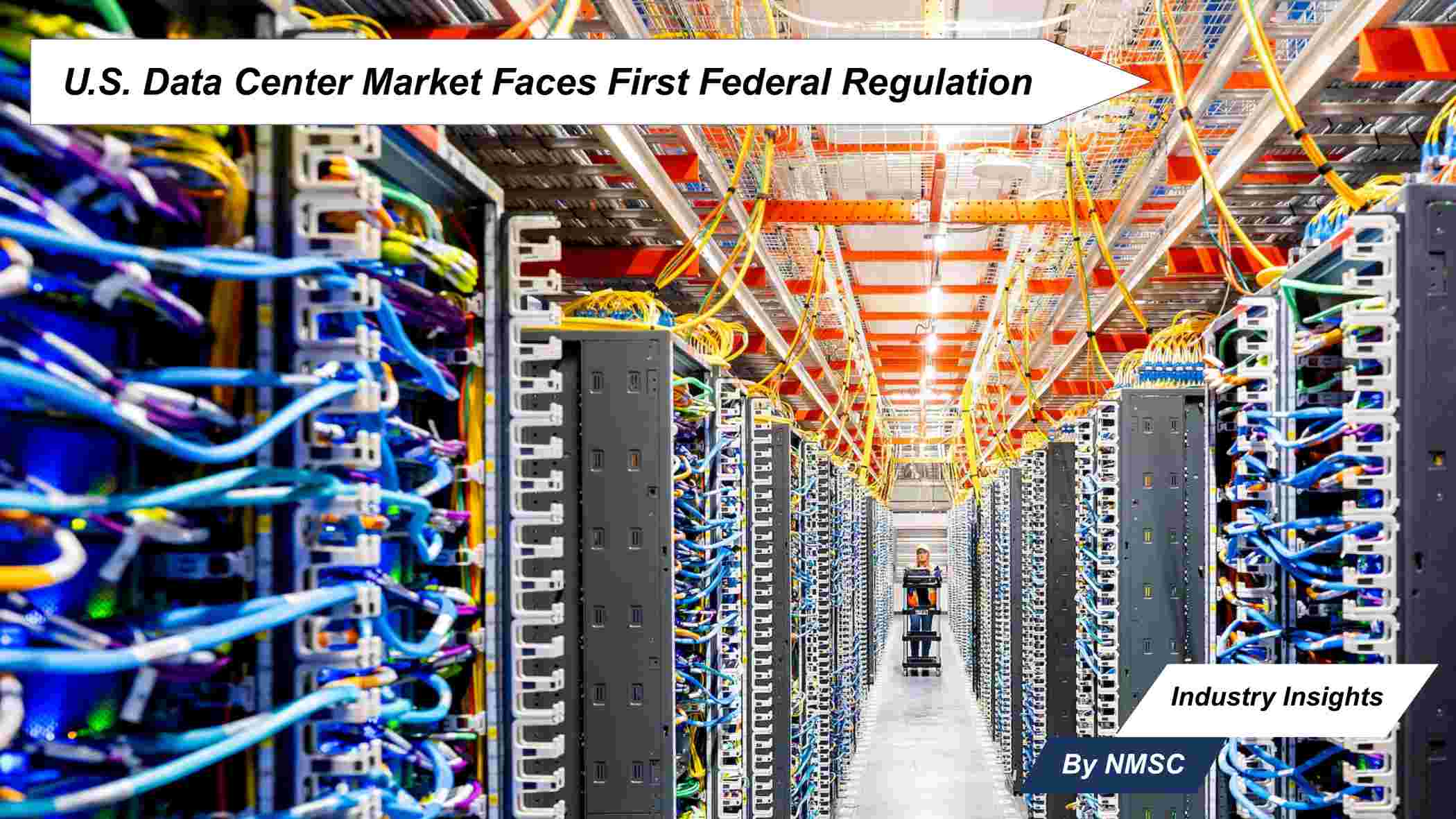
US House Passes Ratepayer Protection Act to Curb Data Center Power Cost Burden
WASHINGTON, United States September 16, 2026, the U.S. House of Representatives passed the Ratepayer Protection Act on Wednesday in a landmark 417-to-3 bipartisan vote, marking the first time the chamber has advanced legislation directly addressing the economic impact of the data center boom on household electricity bills. The historic vote signals a pivotal regulatory shift for the data center market, which is valued at USD 364.59 billion in 2025 and is projected to reach USD 646.16 billion by 2030, registering a compound annual growth rate (CAGR) of 12.13% from 2025 to 2030.
The bill would require state utility regulators to consider whether large electricity users including data centers should bear the incremental costs of power infrastructure built to serve them, rather than passing those costs on to residential ratepayers. The legislation comes as lawmakers from both parties face mounting constituent pressure over rising electricity bills linked to the industry's surging power demand.
President Donald Trump has strongly backed data center development as critical to U.S. leadership in artificial intelligence, calling data centers the "oil of the next 20, 25 years." However, a poll by the University of Massachusetts Amherst published this week found that just 11% of Americans would support construction of an AI data center in their community, underscoring the widening gap between federal policy priorities and public sentiment.
Consumer rights non-profit Public Citizen criticized the bill as insufficient, noting that the legislation "simply asks states to 'consider' requiring data centers to pay for certain grid interconnection costs," leaving a range of other consumer and community impacts unaddressed. House Republican leaders moved the bill before lawmakers leave Washington ahead of the November 3 midterm elections.
Key Highlights:
-
The Ratepayer Protection Act passed the U.S. House 417-to-3, representing the first federal legislation directly addressing data center-driven electricity cost concerns for residential consumers.
-
The bill mandates that state utility regulators evaluate whether data centers should bear incremental power infrastructure costs rather than passing them on to residential ratepayers.
-
Only 11% of Americans support AI data center construction in their communities, according to a University of Massachusetts Amherst poll published this week, reflecting significant public opposition.
-
The legislation advances amid a broader national debate over data center siting, energy consumption, and community impact, with parallel regulatory activity underway in California and New York.
Analyst Insight:
According to analysts at Next Move Strategy Consulting, the passage of the Ratepayer Protection Act represents a structural inflection point for the data center market. While the bill's immediate regulatory scope is limited requiring states to "consider" rather than mandate cost allocation it establishes a federal precedent that could accelerate state-level rulemaking and reshape the cost economics of new data center deployments across the United States.
NMSC analysts note that operators with secured power purchase agreements (PPAs), proactive community engagement strategies, and transparent energy and water reporting are better positioned to navigate the evolving regulatory landscape. As energy cost accountability becomes a central factor in site selection and permitting decisions, the competitive advantage will increasingly favor operators who embed regulatory compliance and sustainability commitments into their infrastructure planning from the outset.
Industry Outlook:
The passage of the Ratepayer Protection Act signals that the era of largely unregulated data center expansion in the United States is drawing to a close. As AI-driven infrastructure demand continues to accelerate with the global data center market valued at USD 364.59 billion in 2025 and forecast to reach USD 646.16 billion by 2030 at a CAGR of 12.13% policymakers at the federal, state, and local levels are increasingly scrutinizing the industry's energy, water, and community footprint.
Operators that proactively address cost-sharing, transparency, and sustainability commitments are likely to face fewer regulatory headwinds and shorter permitting timelines in the years ahead. The bill now moves to the U.S. Senate, where its prospects remain uncertain ahead of the November midterm elections. The outcome will have significant implications for how data center operators structure energy agreements, engage with local communities, and plan capital expenditure across the United States.
Source: Reuters
For More Information: Download FREE Sample on Data Center Market Report
Prepared By: Sanyukta Deb
About the Author
 Sanyukta Deb
— Sanyukta Deb is Digital Marketing Team Lead at Next Move Strategy Consulting, where she has led content strategy and technical SEO for the firm's B2B market research publications for over 2 years. Her editorial process translates NextMSC's primary and secondary research — spanning technology, industrial, and consumer sectors — into commercial narratives, backed by search-intent, keyword, and competitive analysis. She brings 5 years of overall experience in digital marketing and content strategy.
Sanyukta Deb
— Sanyukta Deb is Digital Marketing Team Lead at Next Move Strategy Consulting, where she has led content strategy and technical SEO for the firm's B2B market research publications for over 2 years. Her editorial process translates NextMSC's primary and secondary research — spanning technology, industrial, and consumer sectors — into commercial narratives, backed by search-intent, keyword, and competitive analysis. She brings 5 years of overall experience in digital marketing and content strategy.
About the Reviewer
 Debashree Dey
— Debashree Dey is Assistant Manager at Next Move Strategy Consulting, where she supports cross-vertical market content and communications across diverse industries for 6 years. Her professional background includes senior content writing, communications, and published manuscript authorship, with experience developing audience-focused business narratives and maintaining clear, consistent messaging. Her role supports research-led content development and editorial quality across NextMSC publications.
Debashree Dey
— Debashree Dey is Assistant Manager at Next Move Strategy Consulting, where she supports cross-vertical market content and communications across diverse industries for 6 years. Her professional background includes senior content writing, communications, and published manuscript authorship, with experience developing audience-focused business narratives and maintaining clear, consistent messaging. Her role supports research-led content development and editorial quality across NextMSC publications.

















Add Comment