High-Performance Coatings (HPC) Market by Coating Type (Epoxy, Polyurethane, Polyester, Acrylic, Alkyd, Fluoropolymer, Silicon, Ceramic, Other Coatings), by Application Mode (Solvent-Based, Water-Based, Powder Coatings, UV-Cured, Thermal Spray), and by End User (Building & Construction, Automotive & Transportation, Aerospace & Defence, Marine & Offshore, Heavy Industry, Metal Fabrication, Flooring, Other End-Use) – Global Opportunity Analysis and Industry Forecast, 2025–2030
Industry: Materials and Chemical | Publishing Date: June 19, 2026 | Last Updated: October 16, 2026 | No of Pages: N/A | No. of Tables: N/A | No. of Figures: N/A | Format: PDF | Report Code: MC3851
Industry Outlook
The global High-Performance Coatings (HPC) Market size was valued at USD 72.53 billion in 2024 and is expected to reach USD 76.58 billion by 2025. Looking ahead, the industry is projected to expand significantly, reaching USD 100.46 billion by 2030, registering a CAGR of 5.58% from 2025 to 2030.
The market is witnessing robust growth, driven by increasing demand for durable, protective, and functional coatings across industries such as automotive, aerospace, construction, and industrial machinery. These coatings offer enhanced resistance to corrosion, wear, UV radiation, chemicals, and extreme temperatures, extending asset life and reducing maintenance costs.
Rising environmental regulations and sustainability initiatives are encouraging the adoption of low-VOC, waterborne, and eco-friendly formulations. Technological advancements, including nanocoatings, powder coatings, and smart/self-healing surfaces, are further expanding application possibilities.
Manufacturers are focusing on lightweight materials, advanced polymers, and multifunctional additives to meet evolving performance requirements. By combining protection, aesthetics, and innovation, the high-performance coatings market is addressing industrial and consumer demands while driving global industry expansion and technological progress.
What Are the Key Trends in the High-Performance Coatings (HPC) Industry?
How is the High-Performance Coatings (HPC) Market Transforming Under Sustainability and Low-VOC Demands?
Manufacturers are rapidly shifting toward low VOC, water borne or powder systems in response to regulatory and customer demands. For example, the global industrial coatings market report noted that regulatory pressures favouring VOC-free systems are fuelling growth. This means specialized coatings must now deliver the same or better durability while meeting emissions and environmental mandates.
From a strategic viewpoint, companies should accelerate reformulation programmes and highlight sustainability credentials as a differentiator in tenders. Prioritising the development of high-performance, low VOC chemistries and repositioning these as premium offerings in industrial tenders.
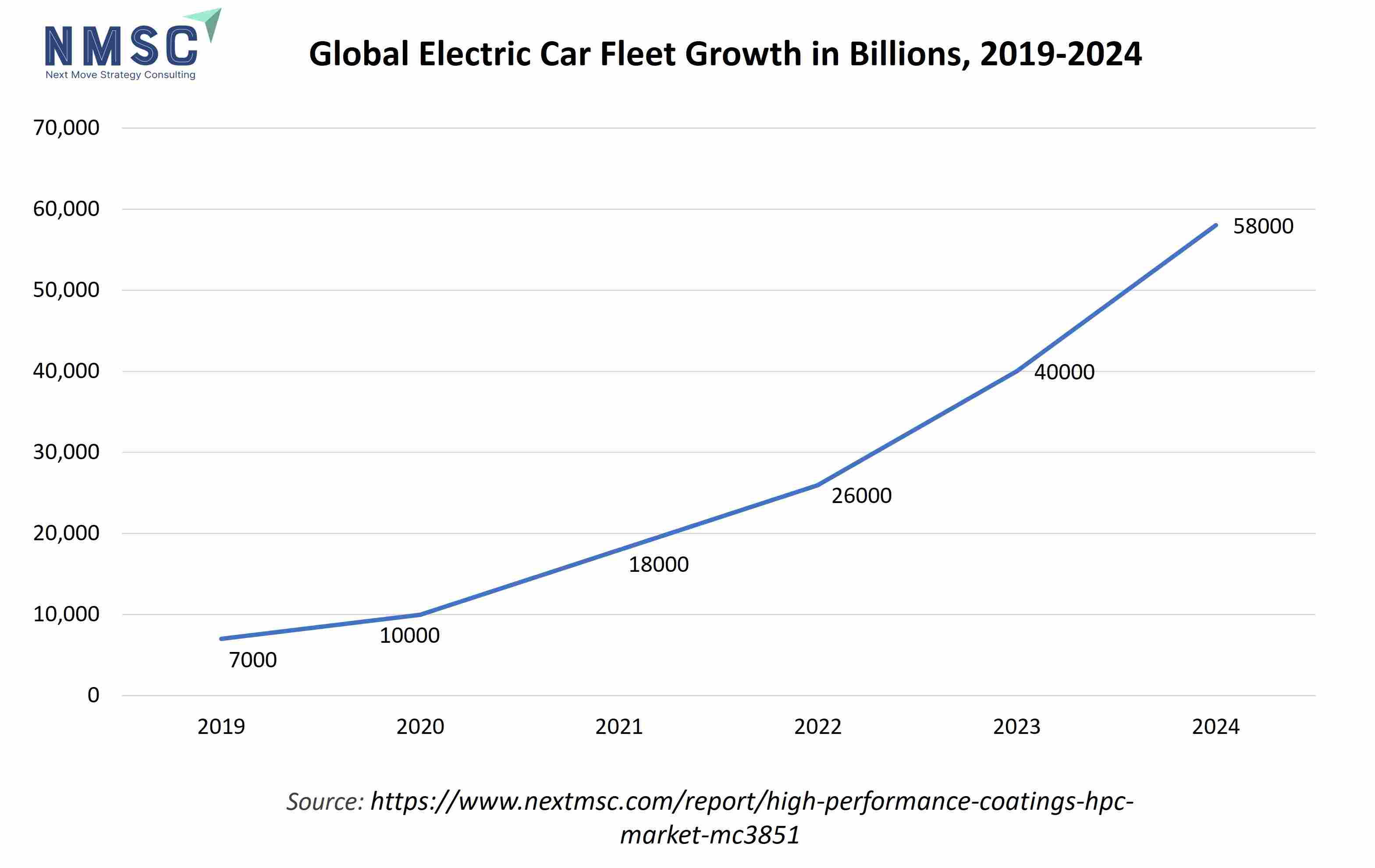
This chart illustrates an exponential increase in the global electric car fleet from 7,000 units in 2019 to 58,000 units in 2024. This surge underscores the rapid electrification of mobility as adoption accelerates globally due to sustainability mandates and advancing technology. As electric vehicles (EV) numbers grow, demand intensifies for high-performance coating solutions that offer protection against harsh weather, battery heat, corrosion, and everyday road wear; such coatings are crucial to maintaining the durability, efficiency, and aesthetic appeal of EVs. The trend pushes manufacturers and suppliers to innovate advanced, eco-friendly coatings tailored to meet the evolving needs of the competitive, high-growth EV market.
How is the High-Performance Coatings (HPC) Market Being Driven by the Rise of Lightweighting and Advanced Substrates in Automotive & Aerospace?
There is a pronounced shift in key end-use industries, particularly automotive and aerospace, towards lighter substrates such as aluminum and composites, coupled with increasingly stringent asset-life and maintenance requirements. This trend is driving demand for HPC coatings that not only adhere effectively to these advanced substrates but also deliver superior corrosion, UV, and wear resistance, enabling longer service intervals.
While detailed market data specific to high-performance coatings (HPC) remains limited, broader industrial coatings growth is clearly underpinned by these dynamics. Strengthening collaboration with OEMs to co-develop coatings specifically optimised for composites and light-metal substrates, and incorporate bundled performance assurances, such as extended maintenance cycles, into the overall value proposition.
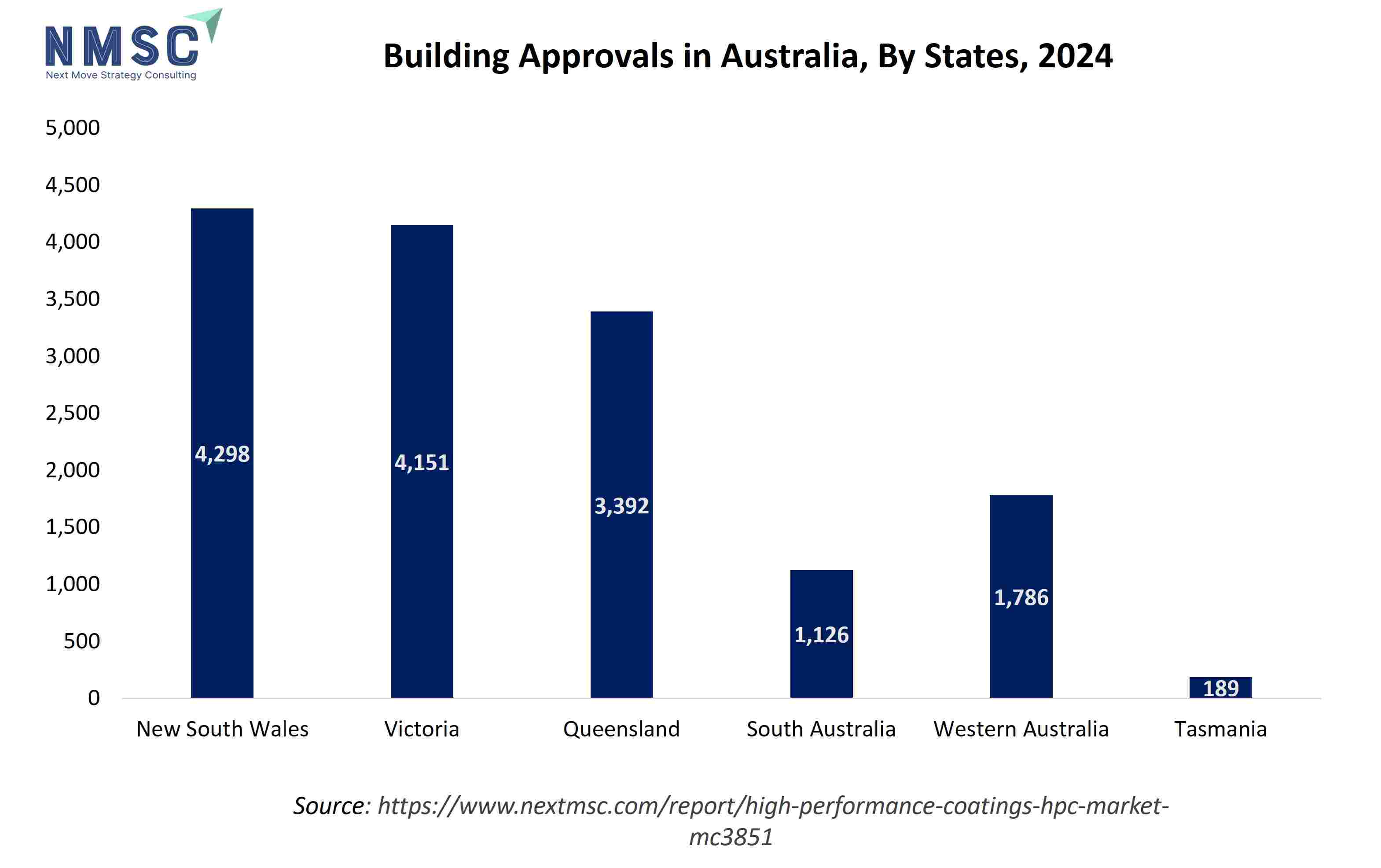
The chart presents the number of building approvals in Australia by state for 2024, highlighting New South Wales and Victoria as leading regions with over 4,000 approvals each. High construction activity in these states directly fuels demand for advanced building materials and protective solutions. This surge in construction drives growth in the high-performance coatings market, as builders and developers increasingly require durable coatings that provide resistance to weathering, abrasion, chemicals, and UV radiation. With more buildings being developed, there is greater opportunity for suppliers of silicon-based coatings to deliver specialized products that ensure long-term durability and sustainability of new infrastructure across Australia.
How is the High-Performance Coatings (HPC) Market Capitalising on Emerging Market Infrastructure Build-Out in APAC and MEA?
Emerging markets are experiencing accelerated infrastructure investment, industrialisation, and localisation of manufacturing, particularly in regions such as India and Southeast Asia. For instance, commentary on the Indian industrial coatings sector highlights government-driven industrialisation initiatives alongside rising demand in the automotive and heavy machinery sectors.
These trends present a significant growth opportunity for the high-performance coatings market dynamics, which have historically been more prevalent in mature industries. Global coatings players should prioritise expanding their regional footprint, through local manufacturing or distribution, in APAC and MEA, forge partnerships with regional contractors, and adapt product portfolios to meet cost-sensitive emerging-market requirements while preserving high-performance standards.
What are the Key Market Drivers, Breakthroughs, and Investment Opportunities that will Shape the High-Performance Coatings (HPC) Industry in the Next Decade?
The high-performance coatings market growth is being driven by growing infrastructure development and maintenance cycles, as the replacement and upkeep of ageing bridges, pipelines, and offshore platforms create strong demand for durable, long-life coatings that extend asset life and reduce maintenance downtime. Simultaneously, the push for lightweight substrates in automotive and aerospace sectors is fueling demand for coatings compatible with aluminium, composites, and mixed-material builds, requiring enhanced durability under harsh conditions.
However, adoption is constrained by raw-material volatility and complex application processes, which disproportionately affect smaller players and cost-sensitive end-users, highlighting the need for supply-chain resilience and lifecycle cost-focused value propositions. A key emerging opportunity lies in green and sustainable HPC solutions, low-VOC, bio-based, recyclable, or energy-efficient coatings that align with regulatory pressures and premium market trends, offering high-growth, high-margin investment potential.
Growth Drivers:
Is Growing Infrastructure Build Out and Maintenance Cycles Driving the HPC Market Expansion?
The expansion and upkeep of critical infrastructure, such as bridges, pipelines, and offshore platforms, are major drivers of the high-performance coatings market demand. Ageing assets require refurbishment or replacement, creating demand for coatings that offer extended service life, superior durability, and resistance to corrosion, UV, and wear.
Additionally, industrial operators increasingly prioritise minimising maintenance downtime and total lifecycle costs, further favouring HPC solutions. The market’s growth is thus tied not only to new infrastructure projects but also to proactive maintenance programs. Companies capture this opportunity by targeting large industrial contracts and positioning their offerings around lifecycle cost savings, long maintenance intervals, and enhanced asset protection.
Aligning technical capabilities with client needs and bundling performance guarantees provides a competitive edge in securing high-value contracts and fostering long-term partnerships in the industrial sector.
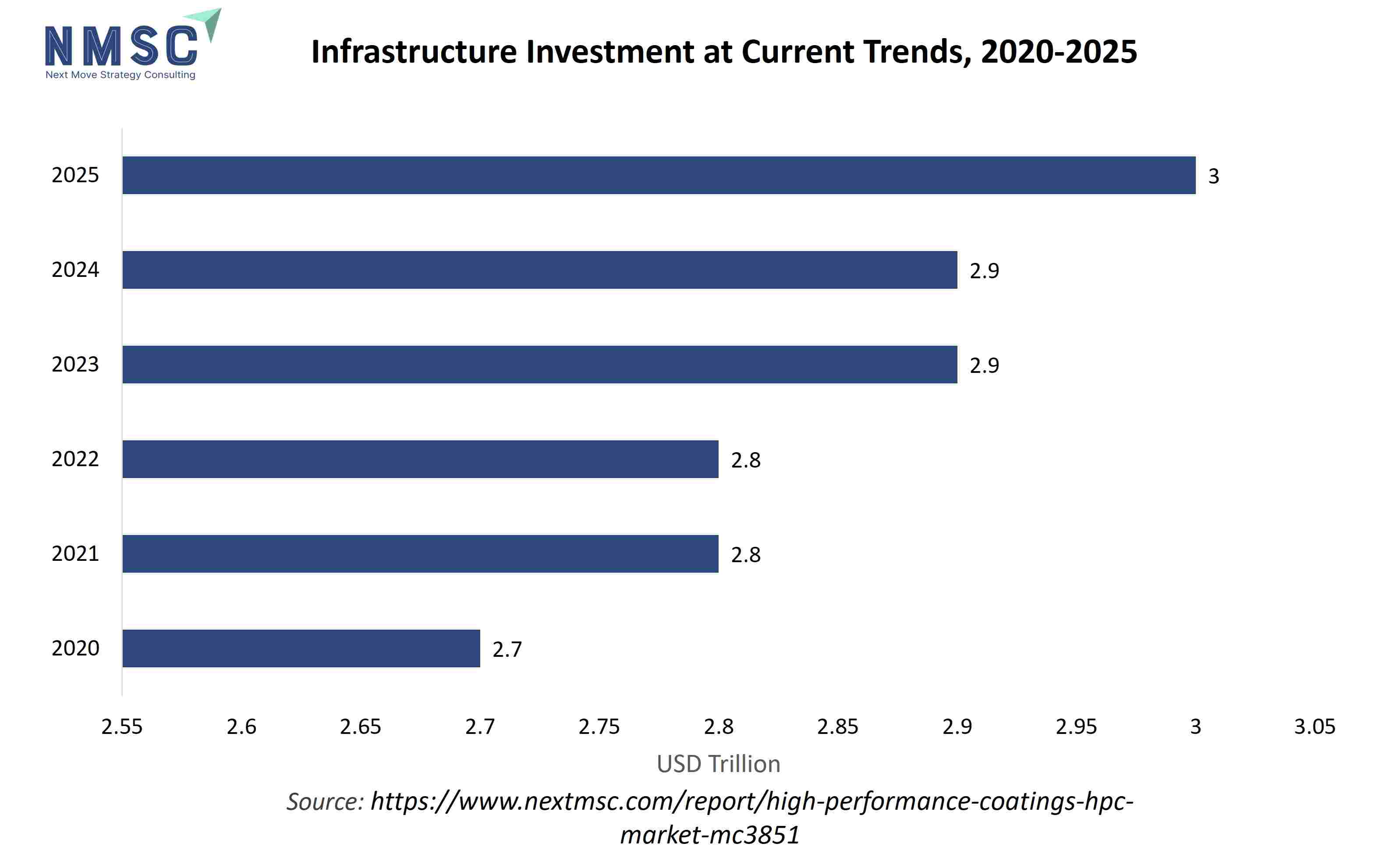
The chart tracks global infrastructure investment from 2020 to 2025, displaying a steady rise from USD 2.7 trillion in 2020 to USD 3 trillion in 2025. This sustained increase reflects robust spending on transport, utilities, and building projects worldwide, underpinned by urbanisation and economic recovery efforts.
Rising infrastructure budgets directly benefit the high-performance coatings market, as new assets require advanced coatings for protection against corrosion, weather, heavy usage, and chemical exposure, driving greater adoption of innovative, durable coatings solutions across construction, industrial, and infrastructure applications.
Are the Push for Lightweight Substrates and Specialised End Uses Fuelling Demand?
Automotive and aerospace sectors are undergoing a fundamental transformation with widespread adoption of lightweight substrates such as aluminum, composites, and mixed-material builds. This shift is driven by the need to improve fuel efficiency, reduce emissions, and meet increasingly stringent environmental standards.
Consequently, the demand for coatings that adhere effectively to these substrates while delivering exceptional durability, corrosion resistance, and UV protection is rising sharply. The acrylic coatings segment tailored to these advanced materials allow manufacturers to extend asset life and maintain safety and performance standards under challenging operating conditions.
Firms should align closely with OEMs, co-develop substrate-specific coatings, and clearly communicate performance credentials, such as resistance to composite corrosion or enhanced UV stability, as value differentiators. Strategic collaborations with OEMs and packaging of product performance into a clear value proposition are essential to capturing this growing market segment.
Growth Inhibitors:
Is High Raw Material Volatility and Cost Complexity Limiting Adoption?
Despite robust demand drivers, the high-performance coatings market adoption faces significant challenges stemming from raw-material volatility and application complexity. Key ingredients such as resins, pigments, and speciality additives experience frequent price fluctuations, which disrupt supply chains and impact margins.
Moreover, advanced coatings require multi-component systems, specialised curing processes, and skilled application techniques, making them less accessible for smaller manufacturers or cost-sensitive end-users. These factors constrain adoption, particularly in emerging markets or segments with tight budgets.
To mitigate these risks, coatings companies must enhance supply-chain resilience, secure long-term contracts or alternative chemistries, and communicate the total cost of ownership to clients. Emphasising long-term durability and maintenance savings, rather than upfront costs, helps justify premium pricing while maintaining competitiveness in complex industrial environments.
What is the Emerging Investment Opportunity?
Sustainability is emerging as a key strategic driver in the high-performance coatings market, presenting both a growth opportunity and a differentiator for industry players. There is increasing demand for coatings that combine high performance with environmentally friendly attributes, such as low-VOC formulations, bio-based materials, recyclability, and energy-efficiency features, including reflective coatings.
Regulatory pressures, including VOC limits, REACH compliance, and stricter environmental standards, further accelerate the adoption of sustainable solutions. These coatings command premium pricing, making them a high-margin niche within the broader industry. Companies and investors capitalise on this trend by prioritising R&D in green technologies, forming partnerships or acquisitions to strengthen their sustainable offerings, and clearly communicating environmental benefits alongside technical performance. Strategically, sustainable powder coatings not only unlock growth but also reinforce brand reputation and long-term market relevance.
How Is the High-Performance Coatings (HPC) Market Report Segmented, and What are the Key Insights from the Segmentation Analysis?
By Coating Type Insights
Are Epoxies/ Polyurethanes Dominating the Market in 2025?
Based on coating type, the market is segmented into epoxy, polyurethane, polyester, acrylic, alkyd, fluoropolymer, silicon, ceramic, and other coatings.
Based on coating type, segmentation includes epoxy, polyurethane, polyester, acrylic, alkyd, fluoropolymer, silicon, ceramic and other coatings. Among these, epoxy and polyurethane systems have traditionally dominated due to their excellent corrosion and wear resistance in industrial and infrastructure applications. For example, general industrial coatings reports show epoxy/polyurethane remain key resin types. Providers are maintaining strong epoxy/PU portfolios while exploring growth in fluoropolymer/ceramic coatings as emerging niches of high performance.
By Formulation Insights
Is Powder/Water-Borne High-Performance Coatings (HPC) Growing Fastest?
Based on formulation, the market includes solvent-based coatings, water-based coatings, powder coatings, UV-cured coatings, and thermal spray coatings.
By application mode, the market includes solvent-based coatings, water-based coatings, powder coatings, UV-cured coatings and thermal spray coatings. The transition toward water-based and powder coatings is especially relevant in the high-performance segment because of environmental mandates and cost pressures. The industrial coatings market report identifies water borne and powder systems as growth vectors. Firms are accelerating formulation conversion programs and highlighting powder/UV cure options in high-performance contexts.
By End User Insights
Are Heavy Industry and Automotive the Largest End Users?
Based on end user, the market is categorised into building & construction, automotive & transportation, aerospace & defence, marine & offshore, heavy industry, metal fabrication, flooring, and other end-use sectors.
By end user, segmentation covers building & construction, automotive & transportation, aerospace & defence, marine & offshore, heavy industry, metal fabrication, flooring and other end-use sectors. Among these, heavy industry (oil & gas, power generation, pipelines) and automotive/transportation are major consumers of High-Performance Coatings (HPC) due to demanding service conditions. For example, industrial coatings demand in manufacturing equipment is listed as a major use case. Companies are prioritising end-user specific portfolio development and tailoring marketing accordingly.
Regional Outlook
The high-performance coatings market share is geographically studied across North America, Europe, Asia Pacific, Middle East & Africa, and Latin America and each region is further studied across countries.
High-Performance Coatings (HPC) Market in North America
The market in North America benefits from a combination of mature industrial infrastructure, a well-established automotive and aerospace industry, and strong regulatory emphasis on durability and sustainability. Stringent environmental regulations, particularly on VOC emissions, incentivize adoption of advanced coatings that extend asset life while minimizing environmental impact. Industrial refurbishments, aerospace OEM production, and long-standing maintenance programs further drive demand for corrosion-resistant, UV-stable, and wear-resistant solutions. HPC suppliers capitalize on these trends by partnering with OEMs, offering performance guarantees, and emphasizing lifecycle cost benefits. The market’s growth is supported not only by new construction projects but also by ongoing maintenance and asset renewal programs, particularly in energy, manufacturing, and transportation sectors, which require coatings capable of enduring demanding operating conditions.
High-Performance Coatings (HPC) Market in the United States
The United States represents the largest market, underpinned by its expansive manufacturing base and highly regulated industrial environment. Stringent EPA VOC regulations, sustainability mandates, and performance requirements across automotive, aerospace, oil & gas, and heavy industry sectors create strong demand for HPC coatings. Growth is particularly notable in maintenance and refurbishment of aging infrastructure, as well as in high-value industrial contracts requiring extended service intervals and minimal downtime.
Suppliers benefit from co-development opportunities with OEMs, targeted innovation for advanced substrates, and packaging lifecycle performance as a key differentiator. Furthermore, the U.S. market’s size and technological sophistication provide a platform for introducing green, sustainable HPC formulations, positioning companies to capture both compliance-driven and premium-market demand.
High-Performance Coatings (HPC) Market in Canada
Canada’s market is smaller than the U.S. but exhibits notable growth potential, driven by infrastructure rebuilding, energy, oil & gas, and marine sectors. The market sees demand for durable, corrosion- and weather-resistant coatings capable of performing under harsh environmental conditions, including cold climates and coastal exposure. Government-backed infrastructure projects, including transportation and energy networks, create long-term demand for industrial coatings.
Additionally, mining, heavy machinery, and oil & gas operations necessitate protective coatings for extended asset life. HPC companies entering Canada must balance high-performance technical requirements with cost efficiency, given the smaller market scale relative to the U.S., while emphasizing service, technical support, and compliance with Canadian environmental and safety standards.
High-Performance Coatings (HPC) Market in Europe
Europe’s market is characterized by high regulatory stringency, particularly under REACH and VOC limits, alongside mature infrastructure and a diversified industrial base. Demand is concentrated in sectors requiring durable, long-life coatings, including automotive, aerospace, energy, marine, and heavy industry. The region’s strong focus on sustainability, refurbishment, and energy-efficient solutions supports adoption of high-performance and environmentally friendly coatings.
Companies must navigate varying national regulations and leverage technical innovation to meet sector-specific requirements. Strategic collaborations with OEMs, integration of lifecycle cost advantages, and development of green, low-VOC formulations are critical for competitive positioning in Europe’s fragmented yet high-value industry.
High-Performance Coatings (HPC) Market in the United Kingdom
The U.K. market is driven by industrial refurbishments, offshore wind energy, and marine sectors. Aging infrastructure and renewable energy projects require coatings that offer long-term durability, corrosion resistance, and minimal maintenance downtime. The industrial and transportation sectors also demand coatings for both protective and functional applications, including anti-corrosion, UV protection, and wear resistance.
HPC suppliers benefit from providing solutions tailored to offshore and maritime environments, as well as industrial facilities undergoing modernization. Emphasizing lifecycle cost savings, environmental compliance, and technical support is key to securing contracts, while collaboration with local OEMs and contractors strengthen market presence and drive adoption of High-Performance Coatings (HPC).
High-Performance Coatings (HPC) Market in Germany
Germany represents a leading market in Europe due to its strong manufacturing base, particularly in automotive, machinery, renewable energy, and heavy industry. High-Performance Coatings (HPC) are sought for applications that demand long-term durability, corrosion resistance, and precision in industrial environments. The automotive and aerospace sectors, in particular, require coatings for lightweight and composite substrates, while renewable energy systems, such as wind turbines, require coatings with long-term UV and weather resistance.
Germany’s regulatory framework promotes sustainable and low-VOC solutions, further driving adoption of green HPC technologies. Companies capitalize on opportunities through OEM partnerships, advanced R&D, and emphasizing coatings that reduce maintenance intervals while maintaining compliance with strict European environmental standards.
High-Performance Coatings (HPC) Market in France
In France, the market is strongly influenced by sustainability mandates and the need to renovate ageing infrastructure. Industrial coatings demand spans automotive, aerospace, energy, and public infrastructure sectors, where corrosion resistance, durability, and environmental compliance are critical.
Government-backed infrastructure initiatives and urban development projects are driving refurbishment and maintenance activity, while environmental regulations encourage low-VOC and energy-efficient coatings. HPC coatings are increasingly seen as solutions that extend asset life, reduce downtime, and lower total cost of ownership.
Companies operating in France should emphasize sustainable formulations, technical support, and tailored performance guarantees for infrastructure and industrial applications to differentiate themselves in this highly regulated market.
High-Performance Coatings (HPC) Market in Italy
Italy’s market is emerging, driven by increasing infrastructure investment, industrial modernization, and refurbishment of ageing assets. Urban development projects, transportation infrastructure upgrades, and expansion in manufacturing sectors such as automotive and machinery create demand for durable, corrosion-resistant, and UV-stable coatings.
Although the market is less mature than Northern European markets, opportunities exist for HPC that offer extended service life and reduced maintenance requirements. Companies differentiate by offering solutions tailored to local specifications, emphasising lifecycle cost savings, and providing technical support to contractors and end-users.
Sustainability is also gaining attention, with low-VOC and energy-efficient coatings gradually being adopted. Strategic partnerships with local OEMs and infrastructure players help international HPC suppliers navigate regulatory nuances and accelerate penetration in this evolving market.
High-Performance Coatings (HPC) Market in Spain
Spain presents a growing market for HPC, fueled by infrastructure modernisation, industrial expansion, and maintenance of public and private assets. Urbanisation, transport upgrades, renewable energy installations, and industrial refurbishments create demand for High-Performance Coatings (HPC) that offer durability, corrosion resistance, and long-term protection.
While the market is relatively smaller and less mature than Northern European countries, the opportunity lies in infrastructure projects and industrial applications that require technically advanced coatings. HPC suppliers focus on cost-efficient solutions that maintain high performance, providing extended asset life while minimising downtime.
Partnerships with regional contractors, OEMs, and distributors are critical for market entry, while sustainable coatings, including low-VOC and energy-efficient solutions, offer differentiation in line with evolving environmental regulations.
High-Performance Coatings (HPC) Market in the Nordics
The Nordic market is specialized, with strong demand in marine, offshore wind, and industrial sectors exposed to harsh environmental conditions. Coastal infrastructure, shipping, renewable energy installations, and energy-intensive industries require coatings that offer long-life corrosion resistance, UV stability, and chemical protection.
The industry emphasizes premium, technically advanced solutions tailored for extreme climates and operational conditions, making durability and performance key differentiators. Environmental regulations and sustainability considerations drive adoption of low-VOC and energy-efficient coatings.
HPC companies capture opportunities by offering high-quality, long-lasting solutions, partnering with local OEMs and contractors, and emphasizing technical support and lifecycle cost benefits. Despite smaller volumes compared to Southern Europe, the Nordic region provides high-margin opportunities for specialized coatings.
High-Performance Coatings (HPC) Market in the Asia-Pacific
APAC is forecast to be the fastest-growing HPC region, driven by rapid industrialization, infrastructure development, and rising OEM production in automotive and aerospace sectors. Expanding urbanization and government-led industrial initiatives, such as manufacturing localization, increase demand for High-Performance Coatings (HPC) in construction, transportation, and heavy industry.
HPC solutions that offer durability, corrosion and UV resistance, and low maintenance are particularly valued. Companies capture growth by establishing regional manufacturing and distribution networks, partnering with local contractors, and adapting product portfolios to cost-sensitive emerging-market requirements without compromising technical performance. Sustainability and energy efficiency are also gaining importance in this region, further influencing product development and market positioning.
High-Performance Coatings (HPC) Market in China
China, the largest market for HPC in the APAC, benefits from its robust manufacturing, automotive, and infrastructure sectors, alongside major offshore and industrial projects. Government-driven infrastructure expansion, industrial modernization, and renewable energy initiatives increase demand for durable, coatings.
Automotive and aerospace OEMs in China also require coatings that adhere to lightweight and composite materials while providing corrosion and wear resistance. Companies entering the Chinese market must navigate local regulatory requirements, competitive pricing pressures, and rapid technological adoption. Strategic partnerships with local OEMs, localized production, and tailored solutions for both industrial and infrastructural applications are critical for capturing growth in this dynamic and highly competitive sector.
High-Performance Coatings (HPC) Market in Japan
Japan’s market is driven by advanced automotive, electronics, and industrial manufacturing sectors. The country’s focus on technological innovation demands high-end coatings with exceptional durability, corrosion resistance, UV stability, and compatibility with advanced materials and electronics components.
Regulatory stringency around VOC emissions and sustainability encourages low-VOC and energy-efficient formulations. Companies targeting Japan must emphasize product quality, technical support, and innovative formulations capable of meeting stringent industrial standards. Collaboration with OEMs and suppliers, as well as customization for specialized high-tech applications, is critical to success in this mature and technologically sophisticated market.
High-Performance Coatings (HPC) Market in India
India’s market is rapidly expanding, supported by infrastructure development, the “Make in India” initiative, and growth in automotive and heavy machinery production. Industrial coatings are in demand for transportation, construction, energy, and manufacturing sectors, where durability, corrosion resistance, and long service life are critical. Government-led industrialization initiatives, public infrastructure projects, and increasing OEM activity drive adoption of high-performance solutions.
HPC companies leverage these opportunities by investing in local production, partnering with regional contractors, and tailoring product portfolios to cost-sensitive requirements while maintaining technical excellence. Sustainability and low-VOC formulations are also gaining importance, aligning with evolving regulatory frameworks and end-user preferences.
High-Performance Coatings (HPC) Market in South Korea
South Korea’s market is driven by its advanced manufacturing and electronics sectors, alongside automotive and heavy industry. High-Performance Coatings (HPC) are required for durable, corrosion- and wear-resistant protection, as well as for specialized applications in electronics, precision manufacturing, and automotive OEMs.
Technological sophistication in these sectors demands advanced formulations with excellent adhesion, UV and chemical resistance, and compatibility with lightweight and composite materials. Sustainability and regulatory compliance are also increasingly important, driving adoption of low-VOC and energy-efficient coatings.
Companies targeting South Korea leverage local partnerships, technical support, and customized product portfolios to meet specific industrial and manufacturing requirements. The combination of high industrial standards and advanced applications makes the market attractive for premium HPC solutions.
High-Performance Coatings (HPC) Market in Taiwan
Taiwan’s market is concentrated in electronics manufacturing, automotive production, and industrial machinery sectors. The demand for High-Performance Coatings (HPC) is driven by the need for durability, chemical and UV resistance, and precise application on advanced materials and components. Electronics and semiconductor industries, in particular, require coatings that meet stringent performance and environmental standards, including low VOC content and energy efficiency.
Industrial infrastructure refurbishment and OEM production further support market growth. HPC suppliers succeed by providing technically advanced solutions, partnering with local manufacturers and contractors, and emphasizing lifecycle cost and performance guarantees. Sustainability considerations are increasingly relevant, positioning low-VOC and eco-friendly coatings as a growing segment within the Taiwanese market.
High-Performance Coatings (HPC) Market in Indonesia
Indonesia’s market is emerging, driven primarily by infrastructure expansion, marine and shipbuilding sectors, and industrial development. Ports, shipping facilities, oil & gas installations, and urban infrastructure projects create demand for HPC capable of withstanding harsh marine and tropical environmental conditions, including corrosion, UV, and humidity. Growth is supported by government-led infrastructure projects and industrialization initiatives, although cost sensitivity remains high.
HPC companies differentiate by offering technically advanced, durable solutions that extend maintenance intervals, reduce asset lifecycle costs, and comply with local environmental regulations. Partnerships with regional contractors and OEMs, along with localized distribution networks, are key strategies to capture market share in this evolving Indonesian industry.
High-Performance Coatings (HPC) Market in Australia
Australia’s market is defined by its exposure to harsh environmental conditions, including UV intensity, coastal saltwater corrosion, and industrial wear. Mining, heavy industry, energy, and infrastructure sectors are primary end-users, requiring coatings that provide durability, corrosion and chemical resistance, and long service life. Infrastructure maintenance and industrial asset protection are significant drivers for high-performance solutions, while sustainability and regulatory compliance, including VOC limits, are increasingly influencing product adoption.
Companies entering the Australian market benefit from local partnerships, technical support offerings, and customized HPC solutions tailored to extreme environments. Despite moderate market size, demand for premium, long-life coatings positions Australia as an attractive high-margin opportunity for specialized HPC suppliers.
High-Performance Coatings (HPC) Market in Latin America
The market in Latin America is smaller compared to North America and Europe but holds growth potential driven by infrastructure renewal, oil & gas, mining, and industrial sectors. Aging bridges, pipelines, and industrial assets create demand for high-durability coatings, while industrial modernization programs encourage adoption of advanced solutions. Cost sensitivity remains high, requiring suppliers to balance performance with affordability.
Regional differences in regulatory enforcement and infrastructure investment further shape the high-performance coatings market dynamics. Companies capture growth by leveraging long-term contracts, providing technical support, and offering solutions that optimize asset lifecycle and maintenance costs. Strategic local partnerships and supply-chain presence enhance competitiveness in this diverse sector.
High-Performance Coatings (HPC) Market in the Middle East & Africa
MEA represents a niche but strategically important market, characterized by harsh operating environments such as deserts, offshore oil & gas fields, and marine conditions. Protective coatings with superior corrosion, UV, and chemical resistance are critical in these markets. While market size is smaller and adoption is influenced by cost sensitivity, demand is high for specialized, long-life coatings that reduce maintenance requirements in challenging conditions.
Regulatory environments vary widely across countries, requiring suppliers to adapt offerings regionally. Companies capture MEA opportunities through targeted solutions for oil & gas, marine, and industrial applications, emphasizing technical support, lifecycle cost advantages, and localized production or distribution capabilities.
Competitive Landscape
Which Companies Dominate the High-Performance Coatings (HPC) Industry and How do they Compete?
The market is dominated by global chemical and coatings giants, such as AkzoNobel, PPG, and Sherwin-Williams, complemented by niche specialists serving extreme-service applications like aerospace composites and offshore infrastructure. Market success is driven by innovation, adaptability, and sustainability, with leading firms investing in advanced formulations, digital services, and customised solutions for demanding end-use sectors.
Strategic mergers and acquisitions further enable players to expand geographic reach, consolidate technologies, and strengthen portfolios, highlighting the dual importance of scale and technical expertise in capturing both high-volume and high-margin segments of the market.
Market Dominated by High-Performance Coatings (HPC) Giants and Specialists
The high-performance coatings (HPC) industry is largely dominated by global chemical and coatings conglomerates, such as AkzoNobel, PPG, and Sherwin-Williams, alongside specialist niche players focusing on extreme-service applications. These incumbents leverage their scale, global footprint, extensive R&D capabilities, and strong brand reputation to maintain competitive advantage. Large players invest in advanced formulations, sustain technological leadership, and service global industrial and infrastructure projects efficiently.
Meanwhile, niche specialists address highly technical or demanding applications, such as aerospace composites, offshore wind, and extreme-environment industrial coatings, where performance requirements exceed standard industrial specifications. This combination of scale and specialisation defines the competitive landscape, with large conglomerates dominating volume and reach, and smaller players capturing high-margin, technical segments.
Innovation and Adaptability Drive the Market Success
Success in the market is closely tied to innovation and adaptability. Leading firms invest heavily in formulation innovation, sustainable technologies, and digital services, including monitoring, predictive maintenance, and lifecycle warranties. Customised solutions for demanding end-use sectors, such as aerospace composites, offshore wind, or automotive speciality coatings, differentiate market leaders from competitors.
For example, AkzoNobel highlighted its focus on automotive and specialty coatings in its 2024 annual report, underscoring the importance of targeted, high-performance solutions. Companies that combine technical innovation with sustainability and digital service offerings are better positioned to meet evolving customer needs, regulatory pressures, and operational challenges, driving adoption of high-value HPC solutions across industrial, infrastructure, and transport sectors.
Market Players to Opt for Merger & Acquisition Strategies to Expand their Presence
Mergers and acquisitions remain a core strategy for the high-performance coatings market growth, portfolio optimisation, and geographic expansion in the market. In 2024–25, several major players pursued strategic divestitures and acquisitions to strengthen their offerings.
For instance, BASF SE reportedly initiated a sale process for its coatings business in 2025, with a valuation of approximately USD 6.8 billion, as part of portfolio rationalisation. Such moves highlight the importance of scale, breadth of capabilities, and regional reach in remaining competitive. By leveraging M&A, companies access new markets, consolidate technologies, expand customer bases, and enhance their capacity to deliver innovative, high-performance solutions in a complex, globalized coatings landscape.
Key Players
-
Evonik Industries AG
-
KRATON CORPORATION
-
Cargill Incorporated
-
PPG Industries Inc.
-
Akzo Nobel NV
-
Daikin Industries Ltd
-
Sherwin-Williams Company
-
Endura Coatings
-
Kansai Nerolac Paints
-
Nippon Paint
-
Toefco Engineered Coating Systems
-
AFT Fluorotech
-
The Chemours Company
What Are the Latest Key Industry Developments?
-
June 2025 - Evonik launched mass-balanced coating additives and the TEGO Foamex 8051 siloxane defoamer, improving both sustainability and performance for coatings and inks globally.
-
March 2025 - BASF announced a strategic partnership with NIO to supply next-generation automotive coatings for electric vehicles, focusing on color innovation and sustainability.
-
October 2025 - BASF Coatings partners with Xiaomi to co-create 100 car colors and redefine automotive aesthetics.
-
August 2024 - PPG launches PPG PITT-THERM 909 spray-on insulation coating for oil and gas, infrastructure industries.
What Are the Key Factors Influencing Investment Analysis & Opportunities in the High-Performance Coatings (HPC) Market?
Investment analysis in the high-performance coatings market revolves around several critical factors. R&D intensity is paramount, as firms must develop advanced, sustainable, and niche formulations, such as low-VOC, bio-based, or smart coatings, to remain competitive. Raw material cost volatility and supply-chain risks directly impact margins, highlighting the importance of resilient procurement strategies.
Geographic expansion, particularly into high-growth emerging markets in APAC and MEA, presents opportunities to capture rising industrialisation, infrastructure build-out, and automotive/aerospace production. Strategic portfolio actions, including acquisitions or divestitures, as exemplified by BASF’s 2025 interest in selling its coatings business, underscore the sector’s perceived strategic value.
While cost pressures and regulatory compliance constrain profitability, premium niche coatings offer higher returns. For both investors and corporates, focusing on green and sustainable HPC technologies in high-growth regions represents a compelling investment hotspot with long-term upside.
Key Benefits for Stakeholders:
Next Move Strategy Consulting (NMSC) presents a comprehensive analysis of the High-Performance Coatings (HPC) Market, covering historical trends from 2020 through 2024 and offering detailed forecasts through 2030. Our study examines the market at regional and country levels, providing quantitative projections and insights into key growth drivers, challenges, and investment opportunities across all major industry segments.
The market presents compelling opportunities for investors, customers, and coatings providers alike. For investors, the market offers exposure to industrial growth, sustainability transitions, and premium pricing potential through innovation, enhanced durability, and performance-based service agreements. End-users, including infrastructure operators, automotive OEMs, and heavy industry, benefit from extended asset lifetimes, reduced total maintenance costs, improved operational performance, and regulatory compliance enabled by advanced coatings.
Coatings providers differentiate themselves by offering integrated service models, such as coating lifecycle management, which embed value-added, higher-margin services into their offerings. By coupling technical excellence with predictive maintenance, warranty programs, and customised solutions, providers strengthen customer relationships and capture recurring revenue streams. Overall, the industry enables a value-driven ecosystem where innovation, sustainability, and service orientation translate into financial returns, operational efficiency, and long-term strategic advantage for all stakeholders.
Report Scope
|
Parameters |
Details |
|
Market Size in 2025 |
USD 76.58 Billion |
|
Revenue Forecast in 2030 |
USD 100.46 Billion |
|
Growth Rate |
CAGR of 5.58% from 2025 to 2030 |
|
Analysis Period |
2024–2030 |
|
Base Year Considered |
2024 |
|
Forecast Period |
2025–2030 |
|
Market Size Estimation |
Billion (USD) |
|
Growth Factors |
|
|
Companies Profiled |
15 |
|
Countries Covered |
33 |
|
Market Share |
Available for 10 companies |
|
Customization Scope |
Free customization (equivalent to up to 80 analyst-working hours) after purchase. Addition or alteration to country, regional & segment scope. |
|
Pricing and Purchase Options |
Avail customized purchase options to meet your exact research needs. |
|
Approach |
In-depth primary and secondary research; proprietary databases; rigorous quality control and validation measures. |
|
Analytical Tools |
Porter's Five Forces, SWOT, value chain, and Harvey ball analysis to assess competitive intensity, stakeholder roles, and relative impact of key factors. |
High-Performance Coatings (HPC) Market Key Segments
By Coating Type
-
Epoxy
-
Polyurethane
-
Polyester
-
Acrylic
-
Alkyd
-
Fluoropolymer
-
Silicon
-
Ceramic
-
Other Coatings
By Formulation
-
Solvent Based Coatings
-
Water Based Coatings
-
Powder Coatings
-
UV Cured
-
Thermal Spray
By End-User
-
Building & Construction
-
Automotive & Transportation
-
Aerospace & Defence
-
Marine & Offshore
-
Heavy Industry
-
Metal Fabrication
-
Flooring
-
Other End-Use
Geographical Breakdown
-
North America: U.S., Canada, and Mexico.
-
Europe: U.K., Germany, France, Italy, Spain, Sweden, Denmark, Finland, Netherlands, and rest of Europe.
-
Asia Pacific: China, India, Japan, South Korea, Taiwan, Indonesia, Vietnam, Australia, Philippines, Malaysia and rest of APAC.
-
Middle East & Africa (MEA): Saudi Arabia, UAE, Egypt, Israel, Turkey, Nigeria, South Africa, and rest of MEA.
-
Latin America: Brazil, Argentina, Chile, Colombia, and rest of LATAM.
Conclusion & Recommendations
Our report equips stakeholders, industry participants, investors, and consultants with actionable intelligence to capitalise on the transformative high-performance coatings market potential. By combining robust data-driven analysis with strategic frameworks, NMSC’s Market Report serves as an indispensable resource for navigating the evolving landscape.
In conclusion, the sector presents a strong growth trajectory, underpinned by industrialisation, infrastructure renewal, sustainability mandates and substrate evolution. Companies that excel will combine advanced formulation capability, supply chain resilience, regional footprint expansion, and service-oriented models.


About the Author
 Ridip Gogoi
— Ridip Gogoi is a Research Associate at Next Move Strategy Consulting, where he supports cross-vertical market research and analysis across multiple industry sectors, with four years of experience. His work includes market analysis, data validation, secondary research, and insight development, helping structure evidence into clear findings for business and strategy decisions. He contributes to research quality checks and reporting, with a focus on consistency, source review, and clarity accuracy.
Ridip Gogoi
— Ridip Gogoi is a Research Associate at Next Move Strategy Consulting, where he supports cross-vertical market research and analysis across multiple industry sectors, with four years of experience. His work includes market analysis, data validation, secondary research, and insight development, helping structure evidence into clear findings for business and strategy decisions. He contributes to research quality checks and reporting, with a focus on consistency, source review, and clarity accuracy.
About the Reviewer
 Supradip Baul
— Supradip Baul is an accomplished business consultant and strategist with over a decade of rich experience in market intelligence, strategy, technology, and business transformation. His work has included rigorous qualitative and quantitative analysis across multiple industries, helping clients shape investment decisions and long-term roadmaps. Earlier in his career, he was associated with Gartner, where he contributed to industry-leading reports and market share analyses. He has worked with leading global companies and holds an MBA with a dual specialization in Marketing and Finance.
Supradip Baul
— Supradip Baul is an accomplished business consultant and strategist with over a decade of rich experience in market intelligence, strategy, technology, and business transformation. His work has included rigorous qualitative and quantitative analysis across multiple industries, helping clients shape investment decisions and long-term roadmaps. Earlier in his career, he was associated with Gartner, where he contributed to industry-leading reports and market share analyses. He has worked with leading global companies and holds an MBA with a dual specialization in Marketing and Finance.
At Next Move Strategy Consulting, we understand that insightful market research is the cornerstone of successful business decisions. That's why we employ a robust and multifaceted approach, combining various methodologies to deliver the most accurate and actionable data for our clients.

Research Landscape
We navigate the world of research with two primary approaches:
Qualitative Approach
Our qualitative research methodologies involve immersive techniques such as in-depth interviews, focus groups, and observational studies. By engaging directly with individuals and stakeholders, we uncover valuable insights that quantitative data alone may overlook.

Quantitative Research
In tandem with qualitative methodologies, NMSC leverages the power of Quantitative Research to provide a robust foundation of numerical insights. Through systematic data collection and analysis, we quantify patterns, preferences, and market trends, offering a comprehensive view of the business landscape.
Our quantitative research approach employs diverse tools, including surveys, experiments, and statistical modelling. These methodologies enable us to gather data from a large and representative sample, ensuring the statistical significance of our findings. By employing structured questionnaires and standardized data collection methods, we guarantee the reliability and validity of the information we present to our clients.
Quantitative research is particularly effective in measuring the prevalence of trends, assessing market size, and gauging the impact of various factors on consumer behavior. The numerical precision attained through this approach equips our clients with actionable insights, facilitating data-driven decision-making and strategy formulation.


Our Specialized Toolbox for Industry-Specific Market Research
We deploy a specialized arsenal of techniques tailored to meet your unique requirements. Here's a glimpse into our comprehensive toolbox:

Information Procurement
The stage entails acquiring market data or relevant information through various sources and methodologies.


Market Research Approach
We utilize both top-down and bottom-up approaches in market research analysis to achieve a comprehensive understanding of the market dynamics, leveraging the broad perspective of industry trends and macroeconomic factors alongside detailed insights from specific segments and individual companies.

Porters Five Forces Analysis
We conduct Porter's Five Forces analysis to evaluate the competitive landscape of an industry, providing us with insights into factors that affect profitability and strategic positioning.

SWOT Analysis

Forecasting
We utilize a forecasting model to predict future consumption by considering parameters like population, economics, regulations, market competition, drivers, constraints, technology, and pricing. We also employ statistical techniques such as multilinear regression, exponential smoothing, moving average, ARIMA, and Monte Carlo simulations for accurate predictions. In econometric forecasting, we analyzed short-term and long-term event impacts, attributing values based on regulatory frameworks, economic factors, and market events.





 Speak to Our Analyst