Aerial Work Platform Lifts vs. Traditional Scaffolding: A Data-Driven ROI Analysis
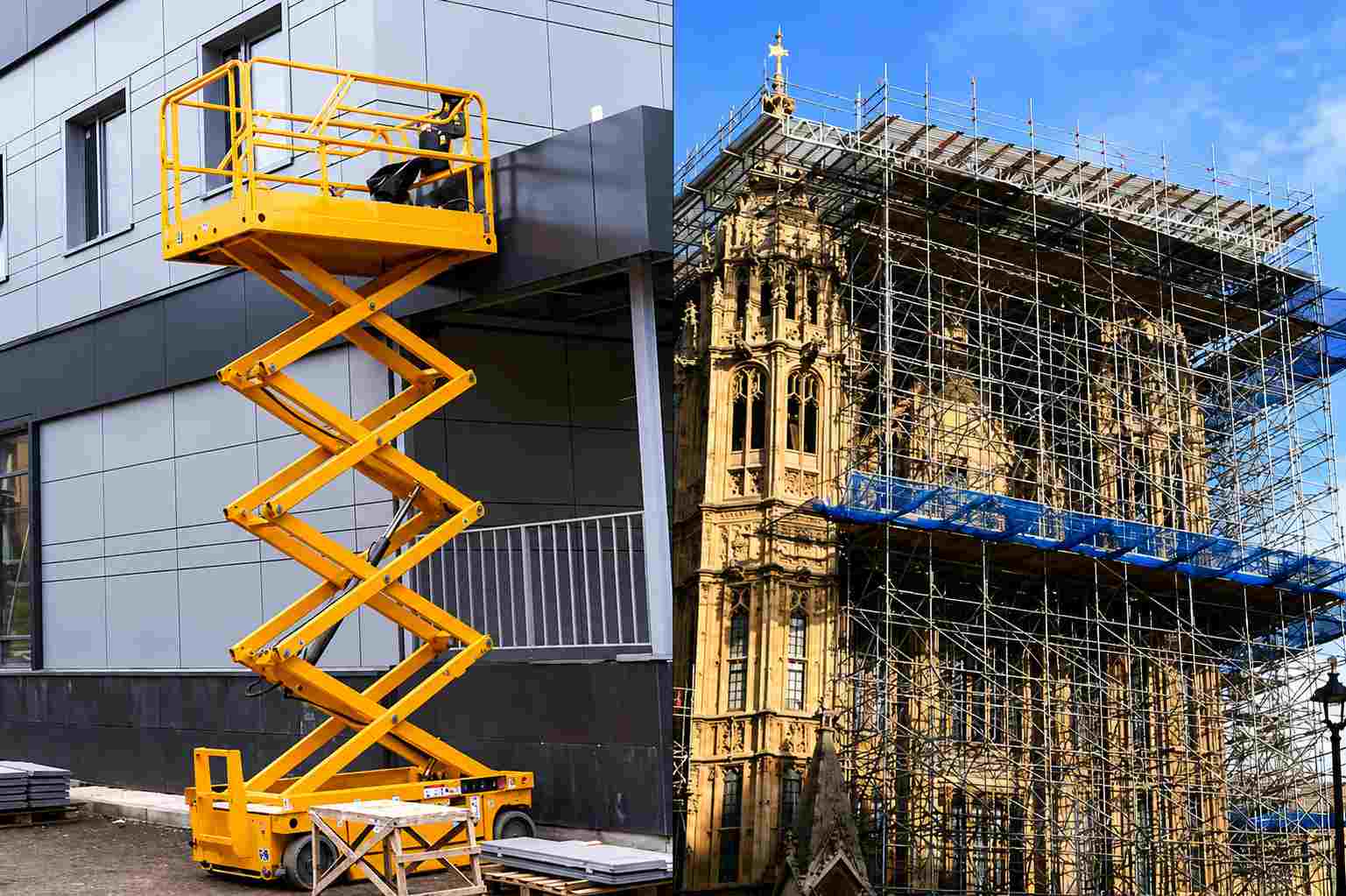
Construction and maintenance projects require safe, efficient, and cost-effective solutions for working at height. Conventional scaffolding has served industries for decades; however, it often requires significant time, labor, and logistical coordination before productive work can begin. As project schedules become tighter and labor costs continue to rise, contractors are increasingly evaluating powered access solutions that can improve operational efficiency while maintaining high safety standards.
Assessing the financial return on investment (ROI) of these two approaches requires more than comparing rental costs. A comprehensive lifecycle analysis should consider setup time, labor requirements, productivity, maintenance, safety performance, and project completion timelines. According to the Occupational Safety and Health Administration (OSHA), falls remain one of the leading causes of fatalities in the construction industry, making the selection of appropriate access equipment a critical business and safety decision (OSHA, 2025).
Speeding Up Project Timelines and Labor Efficiency
Traditional scaffolding can require several hours—or even days for larger projects—to assemble and dismantle, often consuming hundreds of labor hours before primary construction activities begin. These preparation stages increase indirect project costs while delaying productive work.
Mechanical lifting solutions significantly reduce setup time by allowing operators to reach elevated work areas almost immediately after deployment. Eliminating lengthy installation processes enables crews to begin productive tasks sooner, improving schedule performance and workforce utilization.
Reduced preparation time also allows contractors to complete more work within the same project duration. In industries where labor represents one of the largest operational expenses, improving workforce productivity can have a measurable impact on overall profitability.
Assessing the ROI for Elevated Work Lifts
When evaluating equipment costs, fleet managers should look beyond basic rental fees and estimate total operational expenses throughout the project lifecycle. These include labor costs, setup time, maintenance, inspections, transportation, downtime, and safety-related expenses.
While powered access equipment may have a higher rental cost than traditional scaffolding, it often delivers stronger long-term financial returns by reducing labor requirements and improving productivity.
Illustrative ROI Comparison
Consider a project requiring elevated access over several working days.
Traditional scaffolding
-
Installation crew: 6 workers
-
Assembly and dismantling time: 16 hours
-
Average labor rate: $60/hour
Estimated labor cost:
6 × $60 × 16 = $5,760
Powered access equipment
-
Operators required: 2
-
Setup time: Approximately 2 hours
Estimated labor cost:
2 × $60 × 2 = $240
Although equipment rental costs vary depending on project scope and equipment type, this example demonstrates how significant labor savings can offset higher rental expenses. Actual project costs will differ based on location, equipment selection, and project complexity.
Risk Reduction and Safety Economics
Workplace injuries create both human and financial consequences. Falls from height remain one of the construction industry's most significant safety risks.
According to OSHA, fall protection continues to rank among the agency's most frequently cited workplace safety standards. Beyond protecting workers, reducing fall-related incidents helps organizations minimize project delays, insurance claims, regulatory penalties, equipment damage, and productivity losses.
Mechanical access platforms incorporate engineered safety features such as:
-
Guardrail systems
-
Emergency lowering controls
-
Platform stability monitoring
-
Load sensing technology
-
Operator safety interlocks
These features create safer working environments while supporting compliance with established workplace safety regulations.
Long-Term Business Value
Lifecycle cost analysis extends beyond individual projects. Modern access equipment can often be redeployed across multiple construction, maintenance, warehouse, manufacturing, and infrastructure projects, improving equipment utilization and increasing return on investment.
Traditional scaffolding, by comparison, frequently requires project-specific assembly and modification whenever work locations change. This limits operational flexibility while increasing indirect labor costs.
According to the U.S. Bureau of Labor Statistics (BLS), ongoing labor shortages continue to affect the construction sector, making workforce efficiency a growing priority for contractors. Equipment that enables crews to accomplish more work with fewer labor hours can therefore provide measurable long-term business value.
Conclusion
Selecting the most appropriate elevated access solution depends on project duration, working height, site conditions, labor availability, and total lifecycle costs rather than initial rental price alone. As construction companies increasingly focus on productivity, safety, and operational efficiency, lifecycle cost analysis provides a more reliable framework for evaluating access equipment investments. Organizations seeking additional technical specifications and product information about aerial work platform lift solutions can also review manufacturer resources as part of their overall equipment evaluation process.
References
-
Occupational Safety and Health Administration (OSHA). (2025). Fall Protection.
-
U.S. Bureau of Labor Statistics (BLS). Injuries, Illnesses, and Fatalities (IIF) Program.
-
CPWR – The Center for Construction Research and Training. Construction Safety Research.
-
International Powered Access Federation (IPAF). Safety & Good Practice Resources.
About the Author
 Sanyukta Deb is Digital Marketing Team Lead at Next Move Strategy Consulting, where she has led content strategy and technical SEO for the firm's B2B market research publications for over 2 years. Her editorial process translates NextMSC's primary and secondary research — spanning technology, industrial, and consumer sectors — into commercial narratives, backed by search-intent, keyword, and competitive analysis. She brings 5 years of overall experience in digital marketing and content strategy.
About the Reviewer
 Debashree Dey is Assistant Manager at Next Move Strategy Consulting, where she supports cross-vertical market content and communications across diverse industries for 6 years. Her professional background includes senior content writing, communications, and published manuscript authorship, with experience developing audience-focused business narratives and maintaining clear, consistent messaging. Her role supports research-led content development and editorial quality across NextMSC publications.
















Add Comment