Analysis Of Top 5 Companies Driving Digital Transformation In The U.S. Health Insurance TPA Market

As per NMSC analysis, the U.S. Health Insurance TPA Industry is set to maintain strong growth momentum, with the market size is expected to be valued at USD 111.97 billion by the end of 2026. The industry is projected to grow, hitting USD 156.22 billion by 2035, with a CAGR of 3.89% between 2026 and 2035.
Want Insights on the U.S Health Insurance TPA Market? Access a FREE Sample Instantly
The U.S. health insurance TPA market is undergoing structural transformation as employers intensify oversight of healthcare spending under ERISA and ACA governance frameworks. Based on our analysis of self-funded plan administration trends, AI-driven claims automation, predictive cost analytics, and interoperable reporting platforms are materially improving adjudication accuracy, fraud detection, and financial visibility. As medical inflation and catastrophic claim volatility rise, TPAs are evolving into compliance-centric, data-governed administrative partners rather than transactional processors. This technology-led modernization is strengthening cost discipline, audit readiness, and operational transparency across the U.S. employer-sponsored healthcare ecosystem.
Health Insurance TPA Market Overview
The U.S. health insurance TPA market plays a critical role in administering self-funded and administrative services-only (ASO) health plans, acting as the operational bridge between employers, provider networks, pharmacy benefit managers, and stop-loss carriers. Based on our primary consultations and plan-level analysis, the industry’s growth is being driven by persistent medical inflation, increasing specialty drug expenditures, and heightened employer demand for funding discipline and fiduciary accountability under ERISA frameworks. Large multi-state employers are prioritizing scalable digital infrastructure, transparent fee models, and measurable cost-containment outcomes. At the same time, regulatory complexity under ACA mandates and evolving state-level data privacy requirements continues to elevate compliance standards, reinforcing the importance of audit-ready reporting systems and interoperable claims platforms.
Technological innovation is redefining administrative precision and financial predictability across the U.S. TPA landscape. Our assessment of active claims environments indicates that AI-enabled adjudication systems, predictive analytics engines, and automated prior-authorization workflows are materially reducing claims leakage and processing errors. Cloud-based data architectures are improving integration between TPAs, provider networks, and pharmacy benefit managers, while strengthening cybersecurity and HIPAA compliance alignment. Additionally, employers are increasingly demanding real-time dashboards that translate utilization trends into actionable cost insights. This integration of analytics, automation, and compliance-centric governance is positioning digitally advanced TPAs as intelligence-driven partners capable of stabilizing long-term employer healthcare expenditures.
Prominent organizations including United Healthcare Group, WebTPA, Personify Health, Allied Benefit Systems, Meritain Health, Lucent Health, Health EZ, Point C, Flores & Associates, LLC, Health Plans Inc. (HPI), Imagine360, Alight Solutions, Collective Health, Inc., First Enroll, LLC, Health Now, HMA (Health Management Administrators), Sedgwick Claims Management Services, Inc., Health Comp, Benesys, and Med Ben are at the forefront of administrative innovation and digital transformation in the U.S. TPA market.
These companies are investing aggressively in AI-powered claims adjudication, predictive cost analytics, integrated care navigation, compliance automation, and interoperable data platforms that connect employers, provider networks, and pharmacy benefit managers. Independent and mid-sized TPAs are differentiating through transparent pricing structures, union and public-sector specialization, and personalized account management, while large insurance-affiliated administrators leverage capital depth, nationwide provider networks, and advanced analytics capabilities to scale multi-state employer portfolios.
Collectively, these players are redefining U.S. health plan administration through technology-enabled efficiency, compliance rigor, and outcome-driven service models. As regulatory oversight intensifies and employer expectations evolve toward real-time reporting and cost governance transparency, competitive advantage will increasingly depend on scalable digital infrastructure, AI governance maturity, and demonstrable return-on-investment outcomes within self-funded healthcare programs.
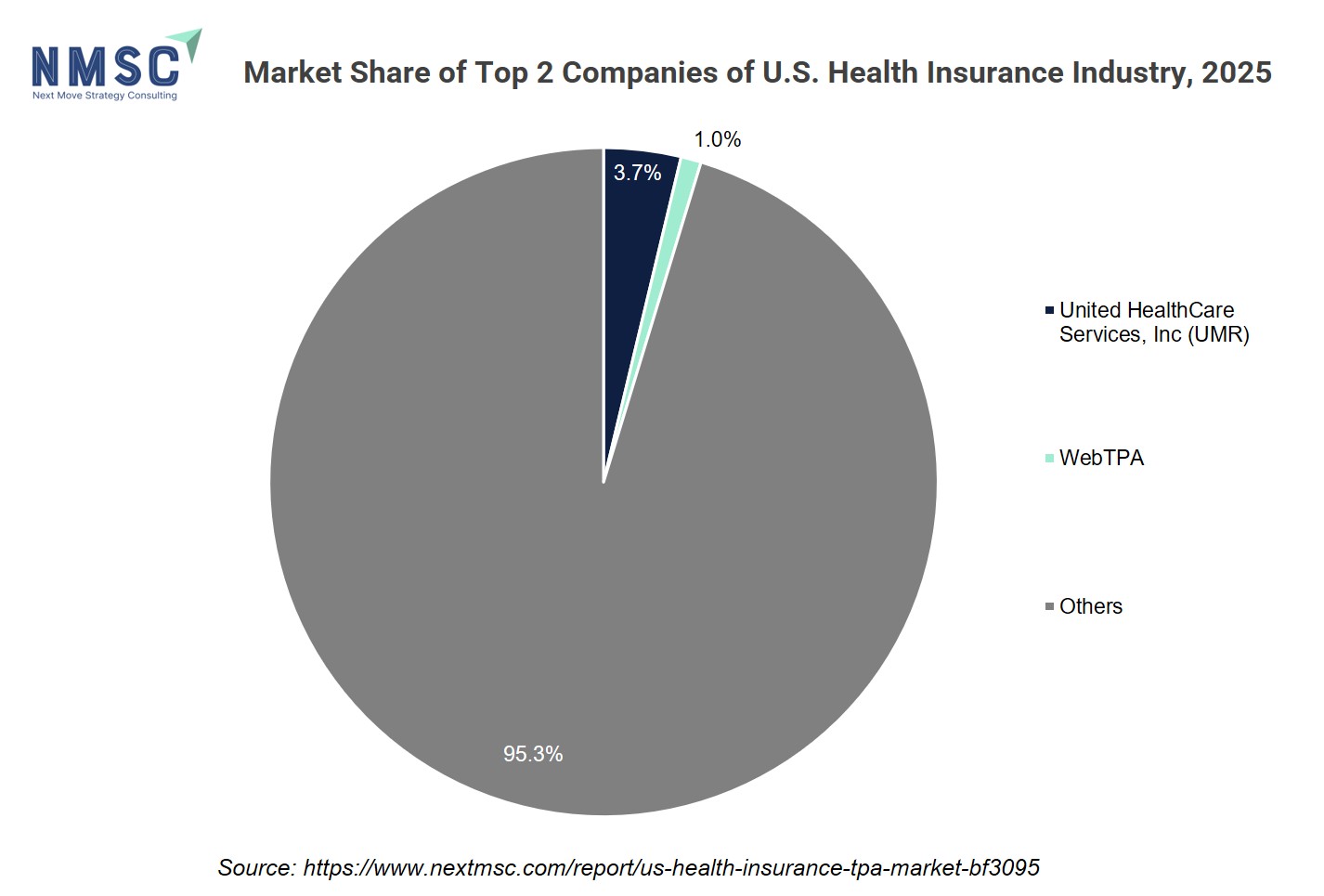
For the latest market share of top 10 players, order the full report at: https://www.nextmsc.com/report/us-health-insurance-tpa-market-bf3095
Highlights of United Healthcare Services, Inc (UMR)
United HealthCare Services, Inc. (UMR), headquartered in Wausau, Wisconsin, operates as a national third-party administrator within UnitedHealthcare, part of UnitedHealth Group. From our analysis of self-funded employer plan structures, we recognize UMR as one of the most operationally scaled administrators in the U.S., supporting millions of members through claims adjudication, benefit customization, regulatory compliance oversight, and advanced reporting systems. Within the U.S. Health Insurance TPA market, we observe that UMR’s administrative model is directly influenced by rising employer demand for ERISA governance discipline, ACA compliance alignment, and real-time cost transparency across multi-state benefit programs.
In reviewing UnitedHealth Group’s 2025 enterprise strategy disclosures, we noted continued investment in responsible artificial intelligence, automation, and predictive analytics across employer service platforms, including UMR-supported plans. From our assessment, these technology enhancements strengthen claims accuracy, reporting precision, and operational scalability factors that are increasingly critical as regulatory scrutiny around data governance and algorithm transparency intensifies. In the context of the U.S. Health Insurance TPA market, we believe this positions UMR to maintain competitive resilience through compliance-centric digital infrastructure and disciplined cost management capabilities. Source:
Highlights of WebTPA
WebTPA is a U.S.-based third-party administrator headquartered in Irving, Texas, providing customized health plan administration, claims processing, and member support solutions for self-funded employers, hospital health systems, and insurance carriers. Founded in 1993 and operating as part of the GuideWell enterprise, the company specializes in flexible, employer-directed benefit plan administration, scalable claims management, and integrated vendor solutions that assist clients in controlling healthcare costs and enhancing data transparency. In the context of the U.S. Health Insurance TPA market, WebTPA’s services are shaped by employer demand for administrative efficiency, compliance with ERISA and ACA requirements, and the need for real-time reporting and cost governance.
In October 2024, WebTPA announced a strategic collaboration with AccessHope, a cancer-support services company, to expand virtual oncology support for its self-insured employer clients and plan members. Through this partnership, eligible members gain remote access to subspecialists from National Cancer Institute-Designated Comprehensive Cancer Centers who review diagnoses, provide precision-medicine guidance, and advise treating oncologists. This development strengthens WebTPA’s value-based care capabilities within the U.S. Health Insurance TPA market, where employers increasingly demand specialized clinical support and measurable health outcomes. The collaboration enhances WebTPA’s service differentiation strategy by integrating advanced cancer-care expertise into its administrative platform.
Highlights of the Personify Health
Personify Health, headquartered in Providence, Rhode Island, operates as an integrated health platform and third-party administrator serving self-funded employers and health plans across the United States. Formed through the combination of Virgin Pulse and HealthComp, the company delivers claims administration, wellbeing engagement, care navigation, and analytics-driven health management solutions. From our assessment of employer-sponsored benefit strategies, Personify Health’s model reflects the growing convergence of administrative services and personalized health engagement. Within the U.S. Health Insurance TPA market, we observe that rising demand for cost containment, member activation, and interoperable digital twin ecosystems directly shapes the company’s platform-centric growth strategy.
In August 2025, Personify Health announced the expansion of its partner ecosystem through the launch of a Partner Marketplace and Developer Portal designed to accelerate third-party solution integration across its platform. Based on our review of the company’s official release, this initiative enables digital health vendors, virtual care providers, and specialty solution partners to integrate more seamlessly with Personify’s administrative and engagement infrastructure. In the context of the U.S. Health Insurance TPA market, we believe this strengthens the company’s competitive positioning by enhancing interoperability, expanding client customization capabilities, and reinforcing its strategy of delivering technology-enabled, data-driven benefit administration at scale.
Highlights of Allied Benefit Systems, LLC
Allied Benefit Systems, LLC, headquartered in Chicago, Illinois, is an independent third-party administrator specializing in customized self-funded health plan administration for employers across the United States. Established in 1980, the company provides claims adjudication, utilization management, medical cost containment, and advanced reporting solutions designed to support employer-sponsored benefit programs. Based on our evaluation of the U.S. self-funded employer landscape, Allied’s long-standing focus on data-driven cost governance and regulatory compliance reflects the structural demands of the U.S. Health Insurance TPA market, where ERISA oversight, medical inflation pressures, and employer expectations for transparency directly influence administrative operating models.
In June 2025, Allied Benefit Systems divested certain assets of its Medxoom mobile member engagement platform to Zelis Healthcare, while retaining a customized version to support its proprietary Allied Digital platform. From our assessment, this transaction signals a strategic recalibration toward platform control and digital scalability within the U.S. Health Insurance TPA market. As employers increasingly prioritize mobile transparency tools, real-time cost comparison capabilities, and enhanced member navigation, the move allows Allied to maintain technological differentiation while leveraging broader ecosystem innovation. This development aligns with market-wide emphasis on digital interoperability and member-centric administration.
Highlights of Meritain Health
Meritain Health, headquartered in Buffalo, New York, is a prominent U.S. third-party administrator operating as part of the Aetna and CVS Health family, serving self-funded employers with scalable health plan administration, claims processing, utilization review, and cost-containment solutions. From our evaluation of industry dynamics, Meritain Health’s model emphasizes customizable benefit design, transparent reporting, and data-driven member engagement to help employers manage medical costs and improve plan performance. Within the U.S. Health Insurance TPA market, rising demand for regulatory compliance, real-time analytics, and interoperable administrative platforms directly shapes the company’s operational strategy and technology investments.
In early 2026, Meritain Health announced that it surpassed a significant milestone by now supporting more than two million members across its TPA-administered plans, reflecting accelerated adoption and client growth in a competitive U.S. Health Insurance TPA market where scale, service quality, and technological integration are increasingly critical for employers seeking cost transparency and administrative resilience. From our assessment, this membership milestone underscores Meritain Health’s strengthened market position and reinforces its capability to deliver broad-based, large-employer solutions supported by Aetna and CVS Health infrastructure.
Summary of Health Insurance TPA Market
The U.S. Health Insurance TPA market is undergoing significant transformation as self-funded employers intensify focus on cost control, compliance, and financial transparency. Rising medical inflation and regulatory oversight under ERISA and ACA frameworks are accelerating the shift toward technology-enabled administration. AI-driven claims automation, predictive analytics, and cloud-based reporting platforms are strengthening adjudication accuracy and cost governance. Strategic collaborations and digital investments among leading TPAs are enhancing competitive differentiation. As employers demand scalable, compliance-centric solutions, the market is positioned for sustained growth, reinforcing TPAs as critical enablers of efficient, data-driven employer-sponsored healthcare administration.
About the Author
 Saista Faiyaz
— Saista Faiyaz is Research Associate at Next Move Strategy Consulting, where she has covered consumer markets and healthcare technologies for 3 years. Her work includes primary interview review, secondary-source validation, market sizing, and structured analysis of company and industry data. She supports research by comparing evidence across sources, organizing findings into market narratives, and documenting assumptions used in analysis. Her scope includes cross-market benchmarking, and reports.
Saista Faiyaz
— Saista Faiyaz is Research Associate at Next Move Strategy Consulting, where she has covered consumer markets and healthcare technologies for 3 years. Her work includes primary interview review, secondary-source validation, market sizing, and structured analysis of company and industry data. She supports research by comparing evidence across sources, organizing findings into market narratives, and documenting assumptions used in analysis. Her scope includes cross-market benchmarking, and reports.
About the Reviewer
 Sikha Haritwal
— Sikha Haritwal is an assistant manager with strong expertise in market research, data analysis, and cross-functional coordination. She plays a key role in leading complex research initiatives, strengthening analytical rigor, and enabling data-driven decision-making across teams. Known for her leadership mindset and structured problem-solving approach, she supports process improvement, enhances operational efficiency, and contributes to building scalable frameworks that drive long-term strategic outcomes and organizational effectiveness.
Sikha Haritwal
— Sikha Haritwal is an assistant manager with strong expertise in market research, data analysis, and cross-functional coordination. She plays a key role in leading complex research initiatives, strengthening analytical rigor, and enabling data-driven decision-making across teams. Known for her leadership mindset and structured problem-solving approach, she supports process improvement, enhances operational efficiency, and contributes to building scalable frameworks that drive long-term strategic outcomes and organizational effectiveness.


















Add Comment