Biliary Stent Market Shifts as Biodegradable Designs Gain Ground | NextMSC
Introduction
Bile duct obstruction — whether caused by pancreatic malignancy, gallstones, or post-surgical strictures — is a clinical emergency that demands immediate, precision-engineered intervention. Biliary stents, deployed endoscopically or percutaneously, have become the standard-of-care device for restoring biliary drainage, and the global market for these devices is expanding in direct proportion to the rising burden of hepatobiliary and pancreatic disease worldwide.
According to Next Move Strategy Consulting's Biliary Stent Market report, the global biliary stent market was valued at USD 284.5 million in 2021 and is projected to reach USD 433.8 million by 2030, growing at a CAGR of 4.8% from 2022 to 2030. This trajectory is underpinned by a convergence of oncological, procedural, and materials-science forces — from the accelerating incidence of pancreatic and bile duct cancers to the clinical validation of next-generation biodegradable stent platforms that eliminate the need for secondary retrieval procedures.
For More Information: Download FREE Sample on Biliary Stent Market Report
Oncological Demand Meets Engineering Innovation: The Forces Reshaping the Biliary Stent Landscape
A Regulatory Milestone That Expands the Addressable Market
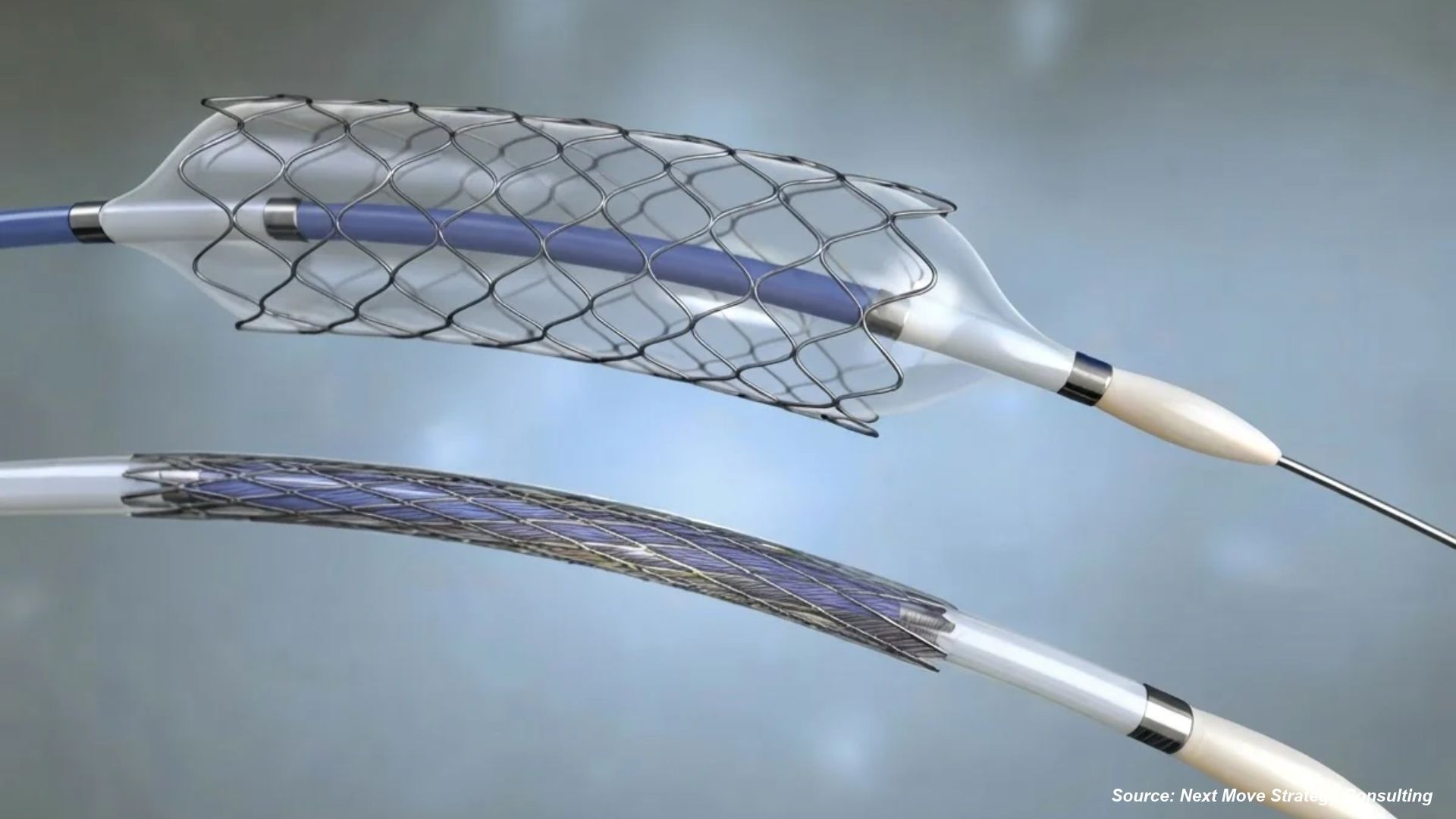
On December 29, 2025, the U.S. Food and Drug Administration granted 510(k) clearance to Taewoong Medical's Niti-S Biliary Stent and Niti-S Biliary Slim M Stent for use in the bile duct — a regulatory decision documented in FDA submission K251123. On December 29, 2025, the FDA cleared Taewoong Medical's Niti-S Biliary Stent and Niti-S Biliary Slim M Stent under 510(k) K251123 for palliation of malignant strictures in the biliary tree. The devices use self-expanding nitinol construction, with the manufacturer highlighting unfixed-cell weaving, conformability, and minimal foreshortening. This clearance directly expands the commercially available metal stent portfolio in the world's largest medical device market, creating a new competitive reference point for procurement decisions at U.S. hospital systems managing high volumes of pancreatic and biliary malignancy.
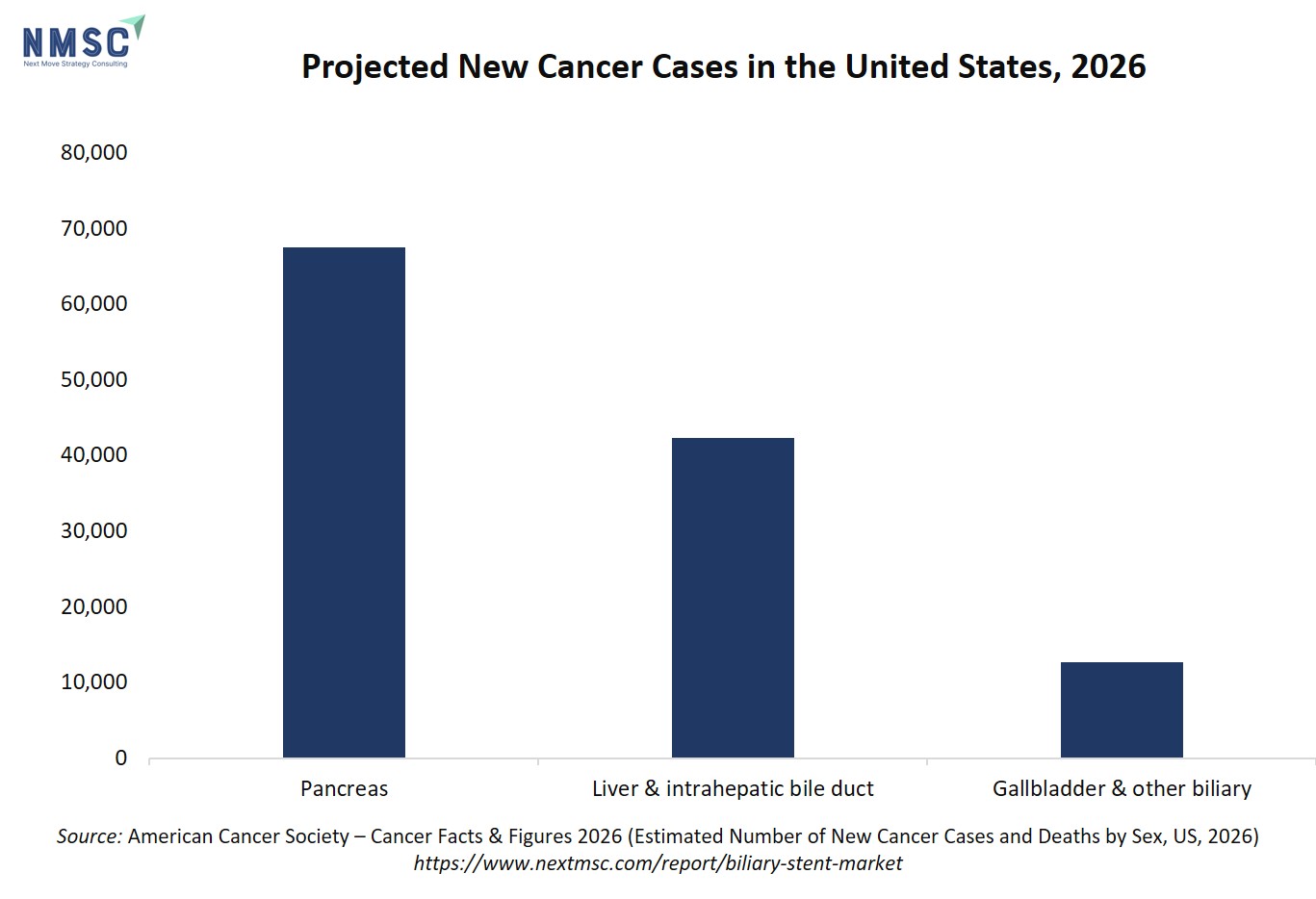
The clinical urgency behind this regulatory activity is quantifiable. According to the American Cancer Society's Cancer Facts & Figures 2026, an estimated 67,530 Americans will be diagnosed with pancreatic cancer in 2026, with approximately 52,740 expected to die from the disease — making it the third-leading cause of cancer-related mortality in the United States. The Pancreatic Cancer Action Network confirms this figure, noting that the five-year survival rate remains stalled at 13%, a statistic that underscores the palliative — rather than curative — role that biliary stents play in the majority of pancreatic cancer cases. Because biliary obstruction affects the majority of patients with advanced pancreatic cancer, each new diagnosis represents a probable future stent procedure — a direct, disease-specific demand signal that is structurally different from the general population-growth arguments applied to most medical device markets.
Beyond pancreatic malignancy, the National Cancer Institute's SEER database projects 42,340 new cases of liver and intrahepatic bile duct cancer in the United States in 2026, representing 2.0% of all new cancer cases nationally. GLOBOCAN data recorded approximately 510,992 new pancreatic cancer cases and 467,409 deaths worldwide in 2022. With a mortality-to-incidence ratio of roughly 0.91—one of the highest among all solid tumour types—pancreatic malignancy ensures that biliary drainage management remains a frontline clinical priority for global healthcare systems.
Biodegradable Stents: From Experimental to Clinically Validated
The most structurally significant materials innovation in the biliary stent market is the transition of biodegradable stent platforms from early-phase feasibility studies to peer-reviewed clinical validation. A 2025 study published in the Journal of Vascular and Interventional Radiology demonstrated that bile duct patency rates following percutaneous biodegradable stent placement reached 94% at the three-month mark — a result that positions biodegradable devices as a clinically credible alternative to conventional plastic stents in benign biliary stricture management, where repeated exchange procedures currently impose significant procedural burden and infection risk on patients. A concurrent systematic review published in PMC (NIH) by Zhang et al. (2025) reported that biodegradable biliary stents achieved a clinical success rate ranging from 85% to 95% across reviewed studies — a performance band that overlaps with conventional plastic stent outcomes while eliminating the need for endoscopic retrieval.
The ARCHIMEDES biodegradable biliary and pancreatic stent is currently under active clinical evaluation, with a registered safety and performance registry study (ClinicalTrials.gov identifier NCT04708288) tracking real-world outcomes across multiple centres. A 2025 study published in Advances in Liver Transplantation further demonstrated the safety of paclitaxel-eluting biodegradable biliary stents and their positive effects on fibrotic stricture resolution — a finding with direct implications for post-transplant biliary complication management, a patient population that currently relies heavily on repeated plastic stent exchanges.
NMSC Strategic Perspective: What These Developments Mean for Market Structure
NextMSC primary research and analysis identifies two structural shifts that will determine competitive positioning in the biliary stent market through 2030. First, the FDA clearance of the Niti-S platform in December 2025 signals that the U.S. regulatory pathway for next-generation metal stent designs has become more navigable — a development that will accelerate the submission timelines of competing manufacturers currently holding CE Mark approvals in Europe but lacking U.S. market access. Second, the clinical validation of biodegradable stents is not simply a product-category addition; it represents a potential reclassification of the benign biliary stricture segment, which currently generates recurring revenue through repeated plastic stent exchanges. If biodegradable stents achieve broad reimbursement coverage, the per-patient revenue model for this segment will shift from a multi-procedure annuity to a single-procedure event — compressing volume but potentially expanding margin per unit. Manufacturers that build biodegradable platforms into their portfolios now will be positioned to capture this structural transition rather than be disrupted by it.
Section Summary:
The biliary stent market's near-term growth is anchored in two verifiable, concurrent forces: a rising oncological patient population that generates structurally non-discretionary demand for biliary drainage devices, and a materials-science transition toward biodegradable platforms that is moving from clinical trial to commercial validation.
-
The FDA's December 2025 clearance of the Niti-S Biliary Stent expands the commercially available metal stent portfolio in the U.S. market, intensifying competition in the malignant obstruction segment.
-
An estimated 67,530 new pancreatic cancer diagnoses are projected in the U.S. in 2026 alone, each representing a probable future biliary stent procedure (ACS, 2026).
-
Biodegradable biliary stents have demonstrated 85–95% clinical success rates in peer-reviewed studies (Zhang et al., PMC/NIH, 2025), establishing a credible clinical case for reimbursement expansion.
-
The shift to biodegradable platforms will structurally alter the revenue model for the benign biliary stricture segment, requiring manufacturers to recalibrate their commercial strategies.
Industry Impact Analysis
Endoscopic Procedure Volume as a Market Multiplier
The biliary stent market does not operate in isolation from the broader endoscopy ecosystem. Endoscopic retrograde cholangiopancreatography (ERCP) and percutaneous transhepatic cholangiography (PTC) are the two primary procedural pathways through which biliary stents are deployed, and the adoption trajectory of both procedures directly determines stent utilisation rates. ERCP, in particular, has become the preferred first-line approach for biliary obstruction management due to its diagnostic and therapeutic dual capability — it allows simultaneous visualisation, tissue sampling, and stent placement in a single session, reducing the number of separate interventional episodes a patient must undergo.
The European Association for the Study of the Liver (EASL) has documented that approximately 300,000 people in Europe die prematurely from liver-related conditions each year — a mortality burden that reflects the scale of the underlying hepatobiliary disease population that generates demand for biliary intervention. In the United States, the Centers for Disease Control and Prevention (CDC) has recorded that 4.5 million adults carry a diagnosis of chronic liver disease — a population that, as it progresses to advanced hepatic or biliary complications, represents a sustained procedural pipeline for ERCP-guided stent placement.
Robotic-Assisted Biliary Surgery and Its Stent Implications
The integration of robotic surgical platforms into hepatobiliary procedures is creating a secondary demand channel for biliary stents that is distinct from the endoscopic pathway. Robotic-assisted bile duct surgery offers shorter hospital stays, reduced post-operative infection rates, and faster patient recovery compared to open surgical approaches — outcomes that have accelerated its adoption in high-volume hepatobiliary centres. However, robotic bile duct reconstruction procedures carry a documented risk of post-anastomotic biliary stricture, and biliary stents — particularly biodegradable variants — are increasingly being deployed prophylactically or therapeutically in the post-operative period to maintain ductal patency during healing. This creates a procedural demand channel that is additive to the oncological and gallstone-related stent volumes that currently dominate the market.
Reimbursement and Cost Dynamics: The Plastic-Metal Divide
The cost differential between plastic and metal biliary stents remains one of the most consequential structural factors in the market. Plastic stents carry a lower unit cost but require exchange every three to six months due to occlusion from bacterial biofilm formation — a characteristic that generates recurring procedural revenue but also imposes cumulative cost and infection risk on the healthcare system. Self-expanding metal stents (SEMS) carry a higher upfront cost but maintain patency for significantly longer periods, making them the preferred choice for patients with malignant obstruction and a life expectancy exceeding three months. The reimbursement frameworks in North America and Western Europe have increasingly recognised this cost-effectiveness argument, supporting the gradual shift toward metal stent adoption in appropriate clinical settings.
Section Summary:
The biliary stent market's industry impact extends across oncology, hepatology, surgical robotics, and health economics — each domain generating a distinct and measurable demand signal.
-
ERCP procedure adoption is the primary procedural multiplier for biliary stent utilisation, with its dual diagnostic-therapeutic capability reducing total episode-of-care costs.
-
The CDC's figure of 4.5 million U.S. adults with chronic liver disease represents a sustained procedural pipeline for biliary intervention beyond the oncological patient population.
-
Robotic-assisted biliary surgery is creating a new, additive demand channel for prophylactic and post-operative stent deployment.
-
The plastic-metal cost-effectiveness argument is progressively shifting reimbursement frameworks toward SEMS adoption in malignant obstruction cases, compressing plastic stent volume in high-income markets.
Key Oncological and Clinical Data Points Driving Biliary Stent Demand
|
Indicator |
Figure |
Source |
Relevance to Biliary Stent Market |
|
Estimated U.S. pancreatic cancer new cases (2026) |
67,530 |
ACS Cancer Facts & Figures 2026 |
Majority of advanced cases develop biliary obstruction requiring stent placement |
|
Estimated U.S. pancreatic cancer deaths (2026) |
52,740 |
Pancreatic Cancer Action Network, 2026 |
Confirms palliative stent demand as primary clinical use case |
|
Estimated U.S. liver & intrahepatic bile duct cancer new cases (2026) |
42,340 |
NCI SEER, 2026 |
Secondary oncological demand driver for biliary drainage devices |
|
Biodegradable stent bile duct patency rate (3-month) |
94% |
JVIR, 2025 |
Clinical validation supporting commercial expansion of biodegradable segment |
|
Biodegradable stent clinical success rate range |
85%–95% |
Zhang et al., PMC/NIH, 2025 |
Establishes reimbursement case for biodegradable platforms |
|
Premature liver disease deaths in Europe (annual) |
~300,000 |
European Association for the Study of the Liver (EASL) |
Quantifies European hepatobiliary disease burden driving stent demand |
|
U.S. adults with chronic liver disease |
4.5 million |
U.S. Centers for Disease Control and Prevention (CDC) |
Sustained procedural pipeline for biliary intervention beyond oncological cases |
|
Niti-S Biliary Stent FDA 510(k) Clearance |
December 29, 2025 |
U.S. FDA (K251123) |
Expands metal stent commercial access in the U.S. market |
Future Outlook & Forecast
NMSC Forecast: USD 433.8 Million by 2030
NextMSC primary research and analysis projects the global biliary stent market to reach USD 433.8 million by 2030, advancing at a CAGR of 4.8% from 2022. This growth trajectory reflects a market that is expanding at a measured, clinically-anchored pace — not a speculative technology cycle — driven by the compounding effect of an ageing global population, rising hepatobiliary cancer incidence, and the procedural infrastructure buildout underway in Asia-Pacific healthcare systems.
North America: Structural Dominance Through Oncological Volume
North America holds the dominant share of the global biliary stent market, a position reinforced by the scale of its pancreatic and bile duct cancer patient population, the density of its ERCP-capable endoscopy centres, and the reimbursement frameworks that support metal stent adoption in malignant obstruction cases. The FDA's December 2025 clearance of the Niti-S platform adds a new competitive variable to the U.S. market, and NMSC analysis indicates that procurement decisions at major academic medical centres will increasingly be influenced by comparative patency data between competing metal stent designs — shifting the competitive battleground from price to clinical evidence.
Asia-Pacific: Infrastructure-Led Volume Growth
Asia-Pacific represents the market's most significant volume growth opportunity through 2030. The region's combination of a large and ageing population, rising rates of gallstone disease linked to dietary transitions, and accelerating investment in endoscopy infrastructure — particularly in China, India, and South Korea — is generating a procedural volume base that did not exist at scale a decade ago. South Korea, in particular, has emerged as a centre of biliary stent manufacturing excellence, with Taewoong Medical's Niti-S platform having achieved regulatory clearance across Japan, the U.S., China, Canada, and Russia — a multi-market commercial footprint that reflects the global competitiveness of Korean medical device manufacturing.
The Biodegradable Segment: A Structural Inflection Point
NMSC analysis identifies the biodegradable biliary stent segment as the most consequential structural development in the market through 2030. The clinical evidence base — anchored by the 94% three-month patency rate documented in the Journal of Vascular and Interventional Radiology (2025) and the 85–95% clinical success rates reported by Zhang et al. (PMC/NIH, 2025) — has crossed the threshold required to support reimbursement applications in major markets. The ongoing ARCHIMEDES registry (NCT04708288) will generate the real-world, multi-centre outcome data that payers require before extending coverage — and its results, expected within the forecast period, will be a pivotal commercial catalyst for the segment.
Section Summary:
The biliary stent market's growth through 2030 is structurally supported by oncological demand, procedural infrastructure expansion in Asia-Pacific, and the commercial maturation of biodegradable stent technology.
-
NMSC projects the global biliary stent market to reach USD 433.8 million by 2030 at a 4.8% CAGR, driven by hepatobiliary cancer incidence and minimally invasive procedure adoption.
-
North America's dominance will be sustained by oncological volume and the expanding metal stent portfolio following the Niti-S FDA clearance.
-
Asia-Pacific's procedural infrastructure buildout — particularly in China, India, and South Korea — represents the market's primary volume growth engine through 2030.
-
The ARCHIMEDES biodegradable stent registry results will serve as a pivotal reimbursement catalyst, potentially reclassifying the benign biliary stricture segment's commercial model within the forecast period.
Next Steps for Stakeholders
For Medical Device Manufacturers:
Manufacturers currently holding CE Mark approvals for next-generation metal or biodegradable biliary stent designs should prioritise U.S. 510(k) submission strategies, given that the FDA's December 2025 clearance of the Niti-S platform has demonstrated a navigable regulatory pathway for nitinol-based biliary devices. Portfolio diversification into biodegradable platforms is no longer a long-term R&D consideration — it is a near-term commercial imperative, given the clinical evidence base now available to support reimbursement applications.
For Hospital Procurement and Clinical Leadership:
Procurement committees at high-volume hepatobiliary centres should initiate comparative clinical evaluations of newly cleared metal stent platforms against incumbent devices, using patency duration and re-intervention rate as the primary cost-effectiveness metrics. For centres managing significant post-transplant or post-surgical biliary stricture volumes, the biodegradable stent evidence base — particularly the 94% three-month patency rate documented in JVIR (2025) — warrants formal clinical protocol review.
For Investors and Private Equity:
The biliary stent market's 4.8% CAGR, as projected by NMSC, reflects a medically essential device category with structurally non-discretionary demand — a risk profile that is materially different from elective device markets. The biodegradable stent segment represents the highest-conviction growth sub-category within the forecast period, with the ARCHIMEDES registry results serving as a near-term value inflection point. Investors should monitor reimbursement decisions in the U.S. and Germany — the two markets where coverage expansion will have the greatest commercial multiplier effect — as leading indicators of segment acceleration.
For Healthcare Policymakers:
The EASL's documentation of 300,000 premature liver disease deaths annually in Europe, combined with the CDC's figure of 4.5 million U.S. adults with chronic liver disease, underscores the public health imperative of ensuring equitable access to biliary stent procedures. Reimbursement frameworks that continue to favour repeated plastic stent exchanges over single-procedure biodegradable alternatives impose avoidable procedural burden and infection risk on patients — a cost-effectiveness argument that health technology assessment bodies in the EU and U.S. should formally evaluate within the current evidence cycle.
Conclusion
The global biliary stent market is advancing along a trajectory defined by clinical necessity rather than discretionary adoption. With NMSC projecting market value to reach USD 433.8 million by 2030 at a 4.8% CAGR, the market's growth is anchored in the compounding incidence of pancreatic and bile duct malignancies — 67,530 new pancreatic cancer cases projected in the U.S. alone in 2026 — and the procedural infrastructure expansion underway across Asia-Pacific healthcare systems. The FDA's December 2025 clearance of the Niti-S Biliary Stent has expanded the competitive landscape in the world's largest medical device market, while the peer-reviewed clinical validation of biodegradable stent platforms — with documented patency rates of 94% at three months — signals a structural transition in how benign biliary strictures will be managed commercially through 2030. Manufacturers, investors, and clinical decision-makers who align their strategies with these specific, evidence-grounded forces will be best positioned to capture value in a market where the demand signal is as durable as the disease burden that generates it.
About the Author
 Sanyukta Deb
— Sanyukta Deb is Digital Marketing Team Lead at Next Move Strategy Consulting, where she has led content strategy and technical SEO for the firm's B2B market research publications for over 2 years. Her editorial process translates NextMSC's primary and secondary research — spanning technology, industrial, and consumer sectors — into commercial narratives, backed by search-intent, keyword, and competitive analysis. She brings 5 years of overall experience in digital marketing and content strategy.
Sanyukta Deb
— Sanyukta Deb is Digital Marketing Team Lead at Next Move Strategy Consulting, where she has led content strategy and technical SEO for the firm's B2B market research publications for over 2 years. Her editorial process translates NextMSC's primary and secondary research — spanning technology, industrial, and consumer sectors — into commercial narratives, backed by search-intent, keyword, and competitive analysis. She brings 5 years of overall experience in digital marketing and content strategy.
About the Reviewer
 Debashree Dey
— Debashree Dey is Assistant Manager at Next Move Strategy Consulting, where she supports cross-vertical market content and communications across diverse industries for 6 years. Her professional background includes senior content writing, communications, and published manuscript authorship, with experience developing audience-focused business narratives and maintaining clear, consistent messaging. Her role supports research-led content development and editorial quality across NextMSC publications.
Debashree Dey
— Debashree Dey is Assistant Manager at Next Move Strategy Consulting, where she supports cross-vertical market content and communications across diverse industries for 6 years. Her professional background includes senior content writing, communications, and published manuscript authorship, with experience developing audience-focused business narratives and maintaining clear, consistent messaging. Her role supports research-led content development and editorial quality across NextMSC publications.
















Add Comment