Campus Payment Technology Market: How Digital Student IDs Are Changing Transactions
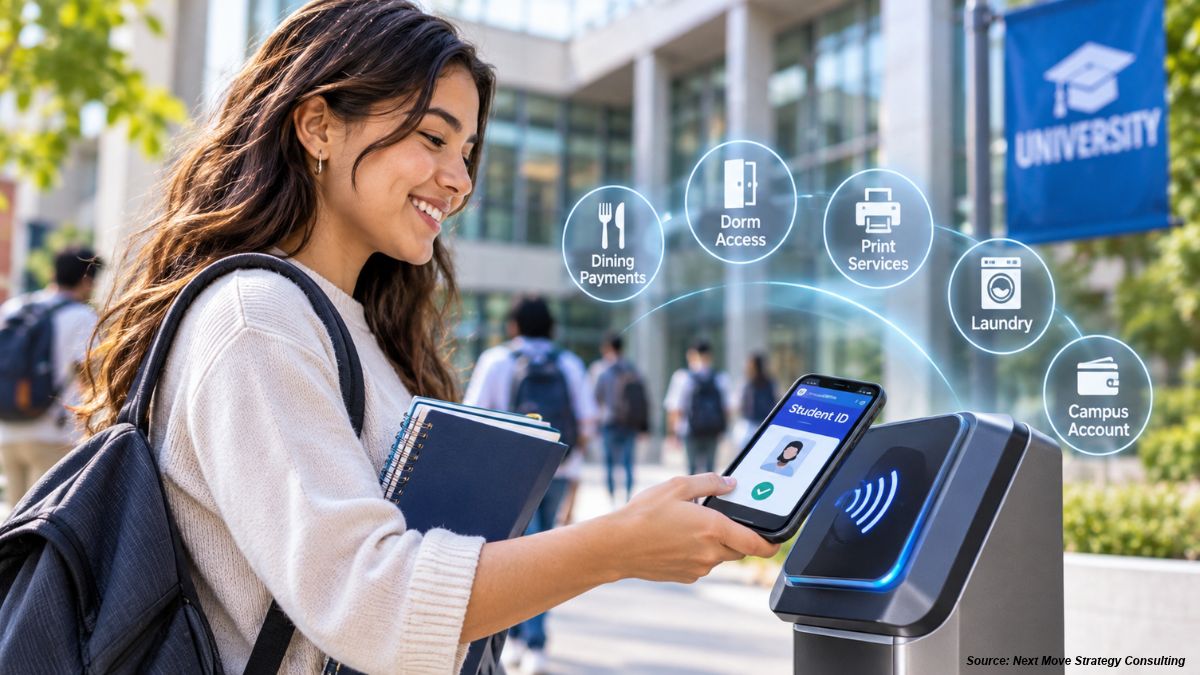
Imagine buying lunch, entering your dorm, and printing class notes without taking a card out of your wallet. You simply tap your phone, and you're done! That's already possible at many colleges using digital student IDs. What started as a way to replace plastic cards is becoming an increasingly important part of how campuses manage payments and student services.
For students, the biggest benefit is convenience. For universities and technology companies, the change creates a growing market for payment systems, mobile apps, and digital security. But how quickly is this technology spreading, and is it worth the cost? Recent research offers some interesting answers.
What Is a Digital Student ID, and How Does It Work?
A digital student ID card is a virtual version of the ID card you receive on campus. Rather than carrying a plastic ID card, you simply load it into a compatible mobile wallet app or a university-specific app. Most digital student IDs use near-field communication, or NFC, which enables them to share data by placing the phone next to a reader. This technology is used in several contactless payment systems.
The ID card can be linked to a meal plan or prepaid spending account on campus. The moment you pay for lunch, the system deducts the appropriate amount from the account balance. A digital student ID may also be used to access laundry facilities, vending machines, and other campus services.
Balancing Technology Studies With Everyday College Work
If you're studying business, finance, or information technology, campus payment systems can make an interesting research topic. You might want to explore how mobile payments work or compare the costs of digital and plastic IDs. But when regular homework and exams fill your schedule, finding time for that extra research gets difficult. You may even catch yourself searching for affordable help with assignments!
If you've been looking for ways to do my homework for me cheap, you can explore EssayPro for academic guidance with understanding difficult tasks, organizing research, and reviewing your own work.
With your coursework better organized, you can spend more time examining real campus payment systems. You might compare how universities use digital IDs, study payment security, or explore the technology companies behind these services. These activities can help you build useful research skills while learning about a changing market.
What the Research Reveals About the Campus Payment Market
Campus digital technology seems to be gaining traction among university administrators. According to the 2025 Higher Ed Innovation Index, conducted on behalf of Transact + CBORD by Hanover Research and based on surveys of 270 U.S. higher education decision-makers, 49% say their institutions are accelerating technological investments. Yet 44% identify implementation as their main issue.
The market is also expanding beyond a small number of large universities. As Transact + CBORD reported in October 2025, their mobile credential platforms have issued over 3 million credentials at around 150 institutions. This is self-reported data for Transact + CBORD only, not an estimate of the total market. However, it demonstrates the growth of digital IDs beyond pilots.
Where Are Universities Spending Money on Digital IDs?
A digital student ID needs more than a mobile app. Colleges may need new card readers, software, account systems, and staff training. They also need technology that connects several campus departments. That creates demand for businesses offering payment and identity services.
|
Market Segment |
What Universities Need |
Business Opportunity |
|
Mobile credentials |
Digital IDs for phones and watches |
Credential software |
|
Payment technology |
Contactless readers and account connections |
Payment processing systems |
|
Campus software |
Apps for managing balances and transactions |
Software subscriptions |
|
Security systems |
Digital access and account protection |
Security services |
|
System integration |
Connections between campus departments |
IT support and integration |
These services can involve both setup costs and ongoing fees. A university might buy new readers once but continue paying for software and maintenance. Technology providers can earn revenue from several parts of the same campus system. That makes long-term service contracts an important part of the business.
How Digital IDs Are Influencing Student Spending
Using digital IDs can make small purchases easier. You don't need to rummage through your bag for a card in the dining hall. Simply tap your smartphone and head back to class. Some systems can even show how much is left in your meal account or top up the account using an app on your campus.
According to Google's official guide on its website about the use of student IDs, universities and colleges that have partnered with Google can use Google Wallet to make purchases at meal services, laundromats, vending machines, and to buy textbooks. However, this does not imply that all the campuses accept digital IDs everywhere.
The Example of Actual Usage of Mobile Credentials by a University
A good example is given by the University of Texas at Tyler. According to the National Association of Campus Card Users, 68% of the students had used mobile credentials in the 2024-25 academic year. The introduction of mobile credentials at this university took place in 2021. The system includes student ID and services such as dining and building access.
Mobile credentials affect the workflow on campus too. Instead of printing out new plastic cards for each student, some universities may distribute credentials through apps. Students may be able to activate their digital IDs without visiting the campus card office in person. However, universities still need to provide support for students who lose their phones, experience technical problems, or cannot use mobile credentials.
Hidden Costs of Going Cashless
While digital payments may seem like an easy choice, university administrators should consider several issues before transitioning to this payment method. For instance, there might be hundreds of card readers on campus in places such as dining halls and dormitories. Their upgrade will require time and money, and various departments might operate incompatible software.
There is also an issue related to security and access control. Universities need to protect students' account information and enable the deactivation of digital credentials if a phone is lost or stolen. There is also the question of providing alternative means of access and purchases for those who do not have compatible smartphones.
The Future of Campus Payments
Digital student IDs are changing how colleges handle everyday transactions. They can make buying food, accessing buildings, and managing campus accounts more convenient. This shift creates demand for software, payment systems, and ongoing support from technology companies. The industry has room to grow, but universities still need to weigh the costs.
The most interesting question isn't how quickly plastic cards will disappear. It's whether digital systems can make campus life easier without creating new costs and problems. Universities that solve those challenges may have the strongest reasons to invest. And for students studying business or technology, this market offers plenty of real-world lessons!
About the Author
 Sanyukta Deb
— Sanyukta Deb is Digital Marketing Team Lead at Next Move Strategy Consulting, where she has led content strategy and technical SEO for the firm's B2B market research publications for over 2 years. Her editorial process translates NextMSC's primary and secondary research — spanning technology, industrial, and consumer sectors — into commercial narratives, backed by search-intent, keyword, and competitive analysis. She brings 5 years of overall experience in digital marketing and content strategy.
About the Reviewer
 Debashree Dey
— Debashree Dey is Assistant Manager at Next Move Strategy Consulting, where she supports cross-vertical market content and communications across diverse industries for 6 years. Her professional background includes senior content writing, communications, and published manuscript authorship, with experience developing audience-focused business narratives and maintaining clear, consistent messaging. Her role supports research-led content development and editorial quality across NextMSC publications.


















Add Comment