Digital Twins in Healthcare Market: Driving Clinical Transformation with Virtual Intelligence
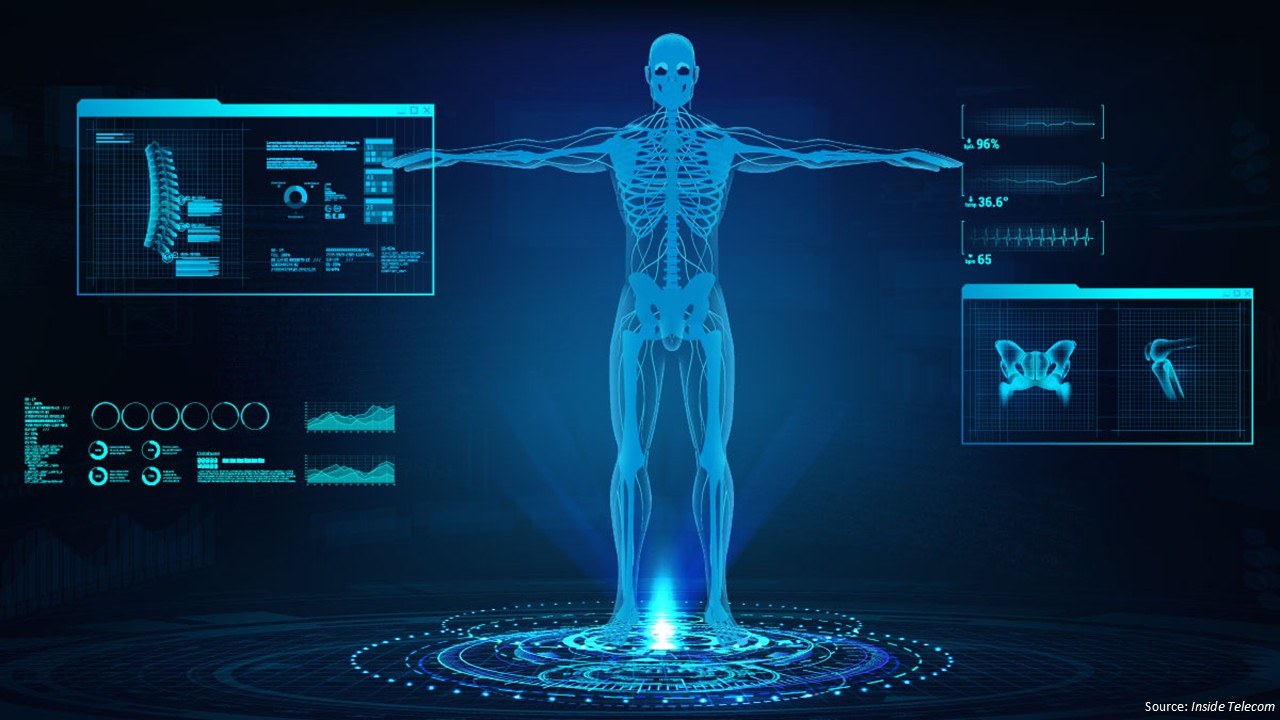
The Digital Twins in Healthcare Market is rapidly transforming how medical professionals simulate, monitor, and optimize patient care. A digital twin refers to a virtual representation of a physical system that continuously updates using real-time data. In healthcare, this technology is enabling simulation-based clinical planning, personalized treatments, and predictive healthcare management.
Recent advancements in artificial intelligence (AI), simulation platforms, and industrial virtual twin ecosystems are accelerating adoption across hospitals, research institutions, and medical device development. Partnerships between technology providers are also expanding the functional scope of digital twins, driving healthcare transformation.
How Digital Twins in Healthcare Market Improves Clinical Simulation and Patient Outcomes
Digital twins are reshaping healthcare by enabling simulation-driven clinical decision-making. These virtual models replicate biological systems, hospital workflows, and medical equipment behavior, providing clinicians with advanced predictive insights.
According to the Association for Advancing Automation, digital twins allow healthcare professionals to simulate patient responses before implementing treatments. This supports personalized therapy development and enhances clinical precision.
Digital twins also assist in surgical planning by allowing clinicians to model procedures virtually. Simulation-driven surgical rehearsal improves procedural accuracy and reduces risks associated with complex medical interventions.
Additionally, hospitals are using digital twins to simulate infrastructure workflows, such as patient flow management and equipment optimization. This enhances operational efficiency and supports improved healthcare delivery outcomes.
Virtual Twin Platforms and Industrial AI Integration Driving Healthcare Market Growth
The expansion of industrial artificial intelligence ecosystems is strengthening digital twin adoption in healthcare. Virtual twin platforms integrate simulation technologies, data analytics, and AI-powered modeling to create advanced healthcare simulations.
In 2025, Dassault Systèmes partnered with NVIDIA to develop an industrial AI platform supporting virtual twin experiences. The collaboration integrates NVIDIA AI technologies with Dassault Systèmes' virtual twin platform, enabling real-time simulation and advanced analytics capabilities.
The partnership enhances simulation accuracy by combining AI-driven data modeling with physics-based simulation environments. This integration supports healthcare applications such as medical device testing, biological system simulation, and digital healthcare infrastructure planning.
Industrial AI-driven digital twins also allow researchers to test new treatment methodologies in controlled virtual environments. This accelerates innovation cycles and improves treatment validation processes.
Key Applications of Digital Twins in Healthcare Market
Digital twins are being implemented across multiple healthcare segments to improve clinical efficiency and patient care.
Personalized Medicine and Patient Monitoring
Digital twins create patient-specific virtual models that enable physicians to predict disease progression and tailor treatment plans. Continuous data integration improves real-time patient monitoring and supports early diagnosis.
Surgical Planning and Medical Training
Healthcare professionals use digital twins to simulate surgical procedures and medical training scenarios. Virtual simulation reduces medical errors and improves surgical preparedness.
Medical Device Development and Testing
Digital twins enable manufacturers to test medical devices in virtual environments before physical production. This reduces development time and supports regulatory compliance validation.
Healthcare Infrastructure Optimization
Hospitals are using digital twin technology to model infrastructure performance and patient flow management. Simulation helps healthcare providers optimize resource allocation and operational efficiency.
Table: Digital Twins in Healthcare Market Technology Impact
|
Technology Component |
Healthcare Application |
Key Benefit |
|
Virtual Twin Simulation |
Surgical Planning |
Improved procedural accuracy |
|
Artificial Intelligence Integration |
Predictive Healthcare Modeling |
Enhanced treatment planning |
|
Real-Time Data Analytics |
Patient Monitoring |
Early disease detection |
|
Simulation Platforms |
Medical Device Testing |
Reduced development costs |
Challenges Influencing Digital Twins in Healthcare Market Adoption
Despite strong growth potential, several challenges influence adoption. Integration of complex simulation platforms requires advanced computational infrastructure. Healthcare organizations must also ensure data privacy and security compliance when using real-time patient data for virtual modeling.
Additionally, large-scale implementation requires collaboration between healthcare providers, technology vendors, and regulatory authorities to ensure reliability and standardization.
Future Outlook of Digital Twins in Healthcare Market
The future of digital twins in healthcare is strongly linked to advancements in AI, industrial simulation platforms, and virtual twin ecosystems. Increasing integration of real-time analytics and AI-powered modeling is expected to enhance clinical decision-making capabilities.
Collaborations between technology leaders and healthcare providers are likely to expand digital twin use cases across personalized medicine, hospital management, and advanced research environments.
The continued evolution of simulation-driven healthcare infrastructure is expected to strengthen predictive healthcare models and support global healthcare transformation initiatives.
Key Insights of Leading Companies in the Digital Twins in Healthcare Market
Strategic partnerships are playing a crucial role in expanding capabilities within the digital twins in healthcare market. Companies are collaborating to integrate simulation, Internet of Things, and artificial intelligence technologies to improve healthcare efficiency and patient care outcomes.
For example, Koninklijke Philips N.V. partnered with ST Engineering to combine command center solutions with Internet of Things healthcare platforms, enabling unified real-time patient data and improved hospital management. Similarly, ANSYS, Inc. collaborated with NVIDIA to support in-silico cardiovascular research using artificial intelligence-driven frameworks and patient-specific heart models. Dassault Systèmes SE is also strengthening its position through virtual twin platforms integrated with advanced industrial artificial intelligence technologies.
Other prominent companies shaping the competitive landscape include Siemens Healthineers AG, GE Healthcare Technologies, Inc., and Microsoft Corporation, all of which are actively investing in digital healthcare platforms, cloud-based analytics, and simulation technologies. These collaborations and investments highlight the growing trend of joint innovation to accelerate digital twin adoption and deliver scalable healthcare solutions.

NMSC Viewpoint – Industry Analysis
According to Next Move Strategy Analysis, the digital twins in healthcare market is steadily moving from pilot applications to real-world clinical and operational use. The integration of artificial intelligence with virtual twin platforms is enabling more accurate simulations, predictive patient insights, and improved healthcare planning. These capabilities are supporting better clinical decision-making and more efficient hospital operations.
From a market standpoint, adoption is expected to increase as healthcare providers seek data-driven, simulation-based care models. However, successful scaling will depend on robust data infrastructure, interoperability across systems, and strong cybersecurity measures. As technology ecosystems mature, digital twins are likely to become a core component of next-generation healthcare delivery.
Next Steps: Actionable Strategies for Healthcare Stakeholders
-
Healthcare providers should evaluate simulation platforms to improve patient treatment planning.
-
Technology vendors should focus on AI-driven virtual twin integration for healthcare applications.
-
Hospitals should invest in digital infrastructure to support real-time data analytics.
-
Medical researchers should use virtual twins to accelerate treatment innovation.
About the Author
 Prakhyat Chowdhury
— Prakhyat Chowdhury is a results-driven Market Analyst and data strategist specializing in business intelligence, trend forecasting, and performance-focused market growth. His competitive intelligence frameworks, and data-driven insights enhances strategic planning, operational efficiency, and organizational authority. Known for strong communication, analytical thinking, and multilingual proficiency, he delivers rigorous, objective-led solutions that support scalable business outcomes across industries with professionalism. He consistently aligns quantitative and qualitative analysis with global business goals.
Prakhyat Chowdhury
— Prakhyat Chowdhury is a results-driven Market Analyst and data strategist specializing in business intelligence, trend forecasting, and performance-focused market growth. His competitive intelligence frameworks, and data-driven insights enhances strategic planning, operational efficiency, and organizational authority. Known for strong communication, analytical thinking, and multilingual proficiency, he delivers rigorous, objective-led solutions that support scalable business outcomes across industries with professionalism. He consistently aligns quantitative and qualitative analysis with global business goals.
About the Reviewer
 Sanyukta Deb
— Sanyukta Deb is Digital Marketing Team Lead at Next Move Strategy Consulting, where she has led content strategy and technical SEO for the firm's B2B market research publications for over 2 years. Her editorial process translates NextMSC's primary and secondary research — spanning technology, industrial, and consumer sectors — into commercial narratives, backed by search-intent, keyword, and competitive analysis. She brings 5 years of overall experience in digital marketing and content strategy.
Sanyukta Deb
— Sanyukta Deb is Digital Marketing Team Lead at Next Move Strategy Consulting, where she has led content strategy and technical SEO for the firm's B2B market research publications for over 2 years. Her editorial process translates NextMSC's primary and secondary research — spanning technology, industrial, and consumer sectors — into commercial narratives, backed by search-intent, keyword, and competitive analysis. She brings 5 years of overall experience in digital marketing and content strategy.















Add Comment