How Text Appointment Reminders Are Reshaping No-Show Management In Healthcare

A smartphone notification on a clinic front desk, representing automated reminders ahead of a scheduled visit
Walk past a busy clinic at mid-morning and you can usually tell how the day is going by the waiting room. What you can’t see are the empty exam rooms down the hall. A patient who doesn’t turn up leaves behind a clinician with nothing to do, a slot another patient could have used, and a gap in the continuity of that person’s care.
The size of the problem varies a great deal by setting. In a 2016 pediatric clinic trial published in the International Journal of Pediatrics, Lin and colleagues recorded an overall no-show rate of 30.8% across 170 patients. That is one visit in three, in a setting where families generally want to attend.
For years, the answer was a phone call from a front-desk employee, squeezed between check-ins and insurance questions. Text messaging changed that equation. Reminders are cheap to send, easy to ignore politely, and easy to answer. As digital health spending grows, they’re moving from a convenience to a piece of ordinary operational infrastructure.
The Hidden Cost Of Missed Appointments
A missed appointment is rarely a single lost event. The direct hit is obvious: a clinician is paid, a room is staffed, and no visit is billed. The indirect effects are harder to see. Other patients wait longer for the same slot because it was never released in time. Chronic conditions drift when follow-ups slip. Staff spend part of the next day chasing people to rebook.
Most practices already know which patients are likely to miss. Long lead times are one driver, since a visit booked eight weeks ago is easy to forget. A history of earlier no-shows is another.
Transport, childcare and work schedules matter too, and none of those can be solved by a message alone. A reminder can’t fix a missing bus route. What it can do is catch the large share of misses that come from plain forgetfulness or confusion about the date and time.
That’s where a well-timed appointment reminder text earns its place. It asks almost nothing of the patient, arrives on a device they already carry, and can offer a one-tap way to confirm or reschedule. Compared with a voicemail that goes unplayed or a letter that sits on a counter, it fits how people actually handle small obligations: quickly, between other tasks, and usually on a phone.
There’s also a scheduling benefit that gets less attention. When patients cancel through a reply instead of silently not showing up, the practice learns about the opening early enough to fill it. A cancellation made two days ahead is a manageable event. A no-show discovered at the appointment time is a loss. Much of the value of reminders comes from converting the second kind into the first.
What The Research Says About Text Reminders
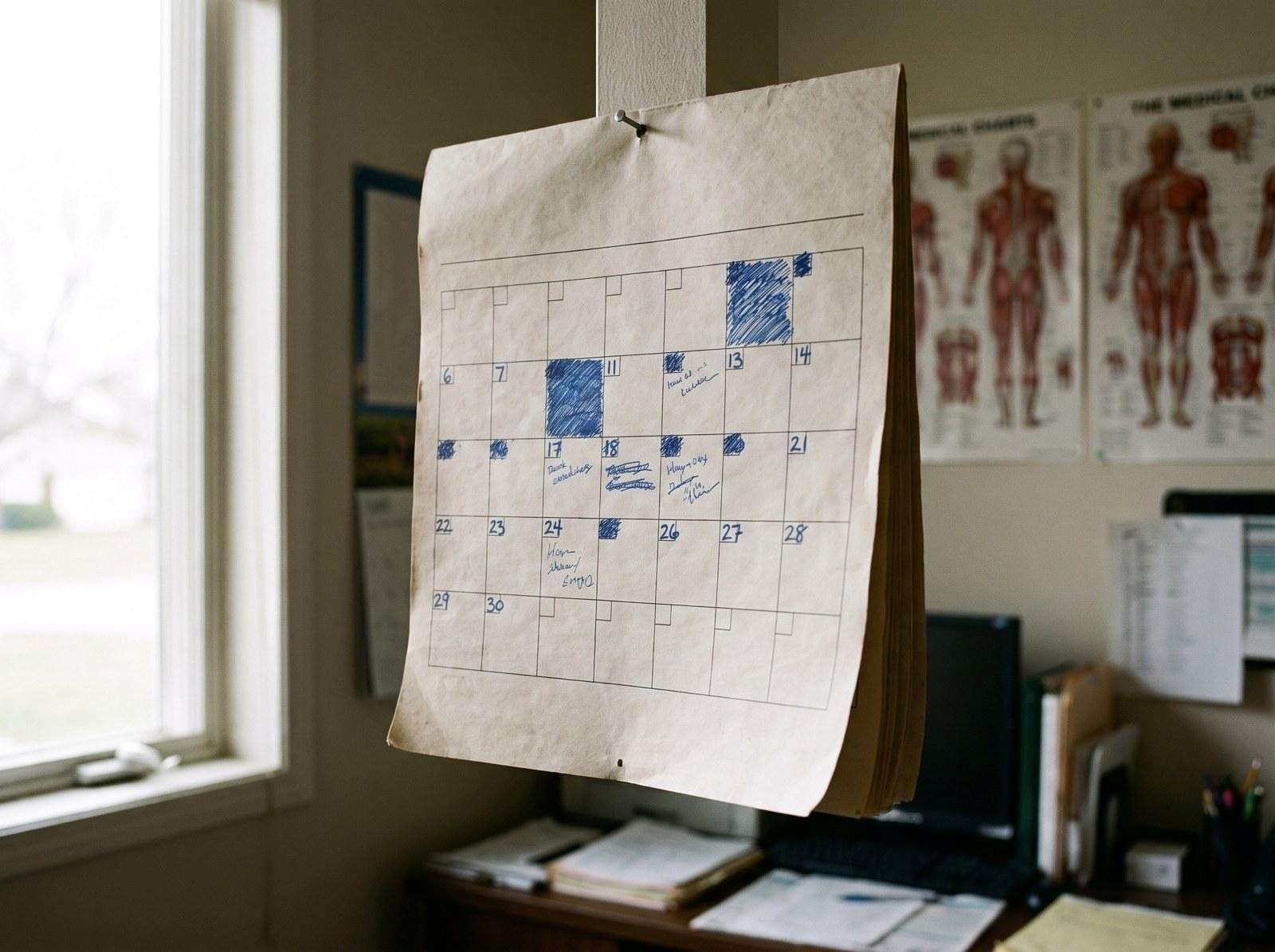
Open appointment slots represent revenue and care capacity lost to no-shows
Vendor marketing often quotes very large reductions. Peer-reviewed work paints a more modest but still meaningful picture, and the two shouldn’t be confused.
The most cited synthesis is a 2016 meta-analysis by Boksmati and colleagues in the Journal of Medical Systems. Pooling 13 randomized controlled trials from a review of 28 studies, the authors found that patients who received SMS reminders had an odds ratio of 1.62 of attending (95% confidence interval 1.35 to 1.94). That works out to meaningfully higher odds of showing up, though not a guarantee. You can read the pooled analysis of randomized trials for the full methodology and the limits the authors themselves note.
Single-site trials add texture. In the Lin pediatric study mentioned earlier, the no-show rate was 23.5% when families received text messages plus voice calls, compared with 38.1% when they received voice calls alone (p = 0.04). The sample was small and came from one clinic over roughly six months, so it shouldn’t be treated as a universal benchmark. It does show a gap large enough to matter operationally.
A trial at Kaiser Permanente Washington, published in The Permanente Journal, tested an additional targeted text for patients flagged as high risk of missing a visit. The extra message lowered no-show risk in both primary care and mental health settings, with a larger reduction in mental health. The point is the design: instead of messaging everyone identically, the health system concentrated effort on the patients most likely to miss.
-
Taken together, the evidence supports three conclusions.
-
Text reminders raise attendance, and the effect is consistent across trials.
-
The effect is moderate. Anyone promising to eliminate no-shows is selling something.
Context shapes results. Baseline rates, patient populations and reminder design all change what’s achievable.
One more caution. Many studies compare texts with no reminder at all, while a modern clinic is often comparing texts with an existing phone-call process. The gain from replacing a call with a text is likely smaller than the gain from adding a reminder where none existed. Practices should set expectations accordingly.
Why Message Design And Timing Matter
Two clinics can send reminders through the same system and see very different results. The difference usually lies in the message itself and in when it lands.
Sequencing. A single reminder is better than none, but a short sequence tends to work better in practice: one notice about a week ahead, another the day before, and sometimes a same-day prompt for early appointments. The first message lets people rearrange their week. The last one catches the person who simply lost track of the morning.
Two-way replies. A message that only informs leaves the patient to phone the office if plans change, and many won’t bother. Letting them reply to confirm, cancel or request a new time makes the honest response the easy response. It also hands the clinic structured data it can act on.
Brevity and specifics. Good reminders state who, when and where, and little else. Practical details help: where to park, whether to arrive early, whether fasting is needed. Overloaded messages get skimmed, and skimmed messages get forgotten.
Tone. Wording that makes the cost of a missed visit explicit can help. Framing a no-show as a loss to someone, rather than a neutral scheduling event, gives people a reason to cancel politely when they can’t attend. A short line saying that another patient can use the slot is enough.
Send times. Messages arriving late in the evening or very early in the morning feel intrusive and are more likely to be dismissed. Most programs settle on a daytime window and respect time zones for patients who travel.
None of this is exotic. It’s closer to good housekeeping than to technology. The clinics that struggle with reminders are generally the ones that turned them on once and never looked at the wording again.
Where Reminders Fit In Digital Patient Engagement
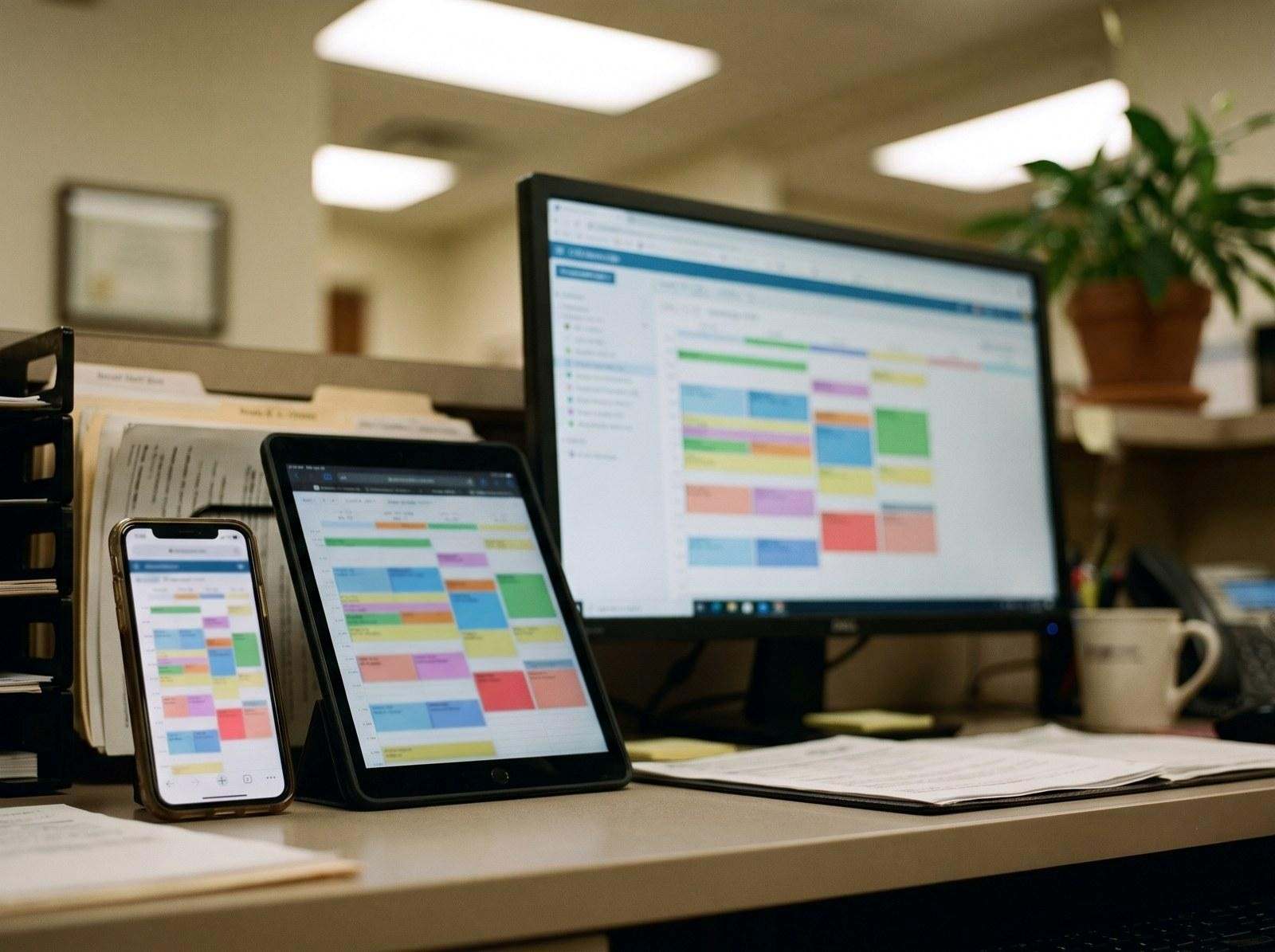
Reminders sit alongside scheduling, telehealth and portals in the digital patient engagement stack
Reminders rarely exist on their own. They sit alongside online booking, patient portals, telehealth links and intake forms, and they’re often the first of those tools a practice adopts because the cost and training burden are low.
The wider market data reflects that stack. NextMSC’s analysis of the patient engagement solutions market puts its value at USD 21.68 billion in 2023 and projects growth to USD 59.20 billion by 2030, a compound annual rate of 15.4%. Reminders are one of the more visible functions inside that figure, partly because patients encounter them directly.
Virtual care adds another reason to take the channel seriously. In the NextMSC briefing on telemedicine adoption, the telemedicine market is estimated at USD 123.39 billion in 2026, rising to USD 517.65 billion by 2035 at a 17.3% CAGR. The same analysis notes that 76% of US hospitals now offer telehealth and that 39% of US adults have used virtual consultations. A virtual visit has a particular weakness: nobody is physically walking through a door, so a patient who forgets simply stays on the sofa. Reminders that carry the join link directly are a practical fix.
Patient preference matters as well. Many patients prefer text messages to phone calls for routine notices, especially younger adults who rarely answer calls from unknown numbers. Preferences differ by age and region, though, so a good program offers a fallback for patients without a mobile phone or who simply favor a call.
There’s a capacity argument too. Many health systems are short of clinicians, and every unfilled slot is more expensive when supply is tight. Recovering even a small share of lost visits can be cheaper than recruiting. That logic is part of why reminders have shifted from nice-to-have to expected.
Compliance, Consent, And Privacy Considerations
Healthcare messaging carries obligations that a restaurant booking doesn’t. A few principles apply broadly, though exact requirements depend on the country and the type of organization, so legal review is wise before launch.
First, consent. Collecting phone numbers and messaging preferences at booking, with a clear explanation of what will be sent, avoids most disputes later. Patients should be able to opt out easily, and a reply such as STOP should be honored promptly.
Second, content. In the United States, the HHS Office for Civil Rights has generally treated appointment reminders as a form of treatment communication under HIPAA, but the minimum-necessary idea still applies. A text can be read on a lock screen, by a family member, or by whoever inherits a phone number. Messages should name the practice and the time, and leave out diagnoses, test results and the reason for the visit.
Third, carrier rules. Mobile networks in many countries require businesses to register their sending identities and campaign types, and unregistered traffic is increasingly filtered. A clinic that sends reminders without checking this may find that a fraction of messages never arrive, which quietly undermines the whole exercise.
Fourth, accessibility. Not every patient reads English comfortably, has a data plan, or sees well. Offering messages in the patient’s preferred language and keeping them plain text helps. It also shows up in outcomes: the patients most likely to miss visits are often the ones least served by a one-size-fits-all message.
Beyond Healthcare: Other Service Sectors
Although most research comes from clinics, the mechanics apply wherever a scheduled slot has value. Dental offices were early adopters and have a similar profile to primary care. Salons, barbershops and personal trainers lose income immediately when someone fails to appear. Auto service centers hold bays and technician hours for booked jobs. Legal and financial advisers book long consultations that are costly to leave empty.
Public services have started to pay attention too. Vehicle licensing offices, court systems and local government counters run on appointments, and missed slots lengthen queues for everyone else. Reminders with a simple reschedule option serve citizens and administrators alike.
The pattern is the same in each case. Lead time creates the opportunity to forget, a reminder narrows it, and a reply path lets the provider reclaim the slot. Waitlists make the mechanism stronger: when a cancellation arrives, the freed time can be offered to the next person automatically instead of sitting idle.
There is a caveat. Reminders are less effective where the underlying barrier isn’t memory. If a service is hard to reach, expensive or unwelcoming, a perfectly worded text won’t change that. Diagnose why people miss before assuming a message will help.
Measuring Results
A reminder program that isn’t measured tends to drift. Start with a baseline: the no-show rate for a few months before launch, broken down by clinic, specialty and appointment type. Without it, any later improvement is a guess.
Several indicators are worth tracking after launch.
-
No-show rate, the core figure, compared against the baseline and against similar practices where reliable benchmarks exist.
-
Confirmation rate, the share of patients who actively reply, which indicates whether messages are being read.
-
Cancellation and reschedule rate, ideally with the lead time attached, since a rise here can be a good sign when it replaces silent no-shows.
-
Slot-fill rate, the proportion of freed appointments that get rebooked.
-
Opt-out rate, which warns of message fatigue or poor timing.
Segment the numbers. A clinic-wide average can hide a pocket of failure, such as late-afternoon appointments or patients with a history of misses. This is where the Kaiser Permanente Washington approach points: target the group where the next unit of effort pays most, rather than averaging everyone together.
Run changes one at a time where possible. If wording and send time change in the same week, nobody will know which mattered.
Final Thoughts
Text reminders have earned their place in scheduling, and the evidence behind them is stronger than for many digital health tools. It’s also more modest than the headline claims. A pooled odds ratio of 1.62 is a real improvement, not a transformation.
The practical lesson is that reminders work best as one part of a scheduling system that also manages lead times, offers easy rescheduling, fills cancellations and addresses the reasons people struggle to attend. Practices that treat the message as the whole solution will be disappointed. Those that treat it as a dependable, low-cost link in a larger process will usually see steady gains in attendance and in the use of scarce clinical time.
About the Author
 Sanyukta Deb
— Sanyukta Deb is Digital Marketing Team Lead at Next Move Strategy Consulting, where she has led content strategy and technical SEO for the firm's B2B market research publications for over 2 years. Her editorial process translates NextMSC's primary and secondary research — spanning technology, industrial, and consumer sectors — into commercial narratives, backed by search-intent, keyword, and competitive analysis. She brings 5 years of overall experience in digital marketing and content strategy.
Sanyukta Deb
— Sanyukta Deb is Digital Marketing Team Lead at Next Move Strategy Consulting, where she has led content strategy and technical SEO for the firm's B2B market research publications for over 2 years. Her editorial process translates NextMSC's primary and secondary research — spanning technology, industrial, and consumer sectors — into commercial narratives, backed by search-intent, keyword, and competitive analysis. She brings 5 years of overall experience in digital marketing and content strategy.
About the Reviewer
 Debashree Dey
— Debashree Dey is Assistant Manager at Next Move Strategy Consulting, where she supports cross-vertical market content and communications across diverse industries for 6 years. Her professional background includes senior content writing, communications, and published manuscript authorship, with experience developing audience-focused business narratives and maintaining clear, consistent messaging. Her role supports research-led content development and editorial quality across NextMSC publications.
Debashree Dey
— Debashree Dey is Assistant Manager at Next Move Strategy Consulting, where she supports cross-vertical market content and communications across diverse industries for 6 years. Her professional background includes senior content writing, communications, and published manuscript authorship, with experience developing audience-focused business narratives and maintaining clear, consistent messaging. Her role supports research-led content development and editorial quality across NextMSC publications.

















Add Comment