Entering the Pet Care Market as a Solo Founder: From LLC Registration to First Sale
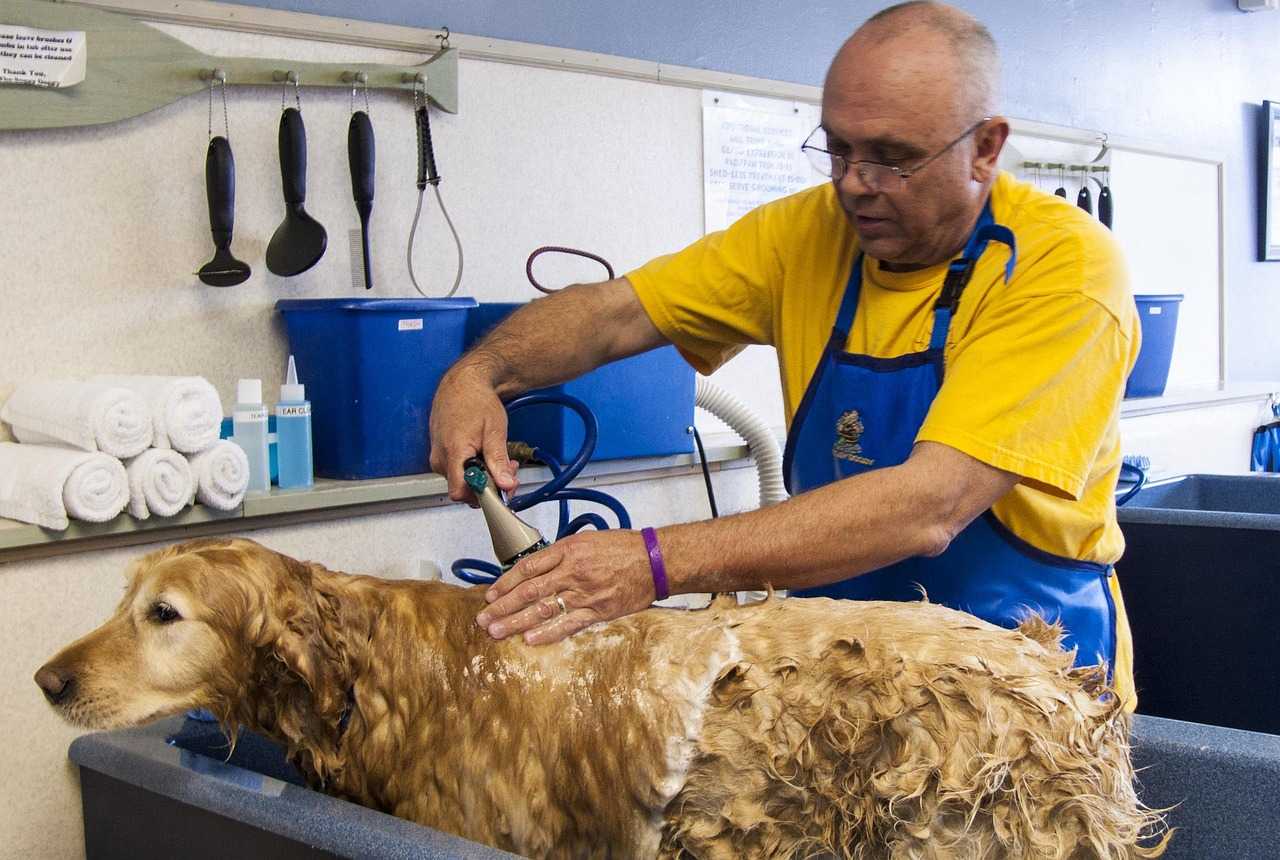
A decade ago, a dog walker or a boarding kennel was almost always a local, single-owner operation. That is changing fast. Private equity, franchise platforms, and global consumer-goods companies are consolidating what used to be one of the most fragmented corners of consumer services. According to Next Move Strategy Consulting's Pet Service Market analysis, the global pet service market was valued at USD 25.1 billion in 2023 and is projected to reach USD 41.8 billion by 2030, growing at a CAGR of 7.6% from 2024 to 2030.
That growth still leaves room for solo operators. Grooming, dog walking, and boarding remain some of the easiest service businesses to start in the U.S., where roughly 90.5 million households about 60% of the population own at least one pet, according to the American Pet Products Association's National Pet Owners Survey. But the platforms, franchises, and pet-food conglomerates absorbing the most investment are reshaping what “competing” in pet services now requires: trust infrastructure, recurring-revenue systems, and increasingly a veterinary or insurance attachment that a single founder cannot easily replicate alone.
Pet Service Market: Report Scope and Segmentation
|
Parameter |
Detail |
|
Market Size in 2023 |
USD 25.1 billion |
|
Revenue Forecast in 2030 |
USD 41.8 billion |
|
Growth Rate |
CAGR of 7.6% from 2024 to 2030 |
|
Analysis Period |
2023–2030 |
|
Base Year Considered |
2023 |
|
Countries Covered |
28 |
|
Companies Profiled |
15 |
|
Growth Factors |
Rising global pet adoption; growing awareness of pet health and grooming; advancement in pet services |
A Fragmented Market Is Consolidating Fast
The clearest trend in pet services right now is roll-up activity. Rover the online pet-sitting marketplace taken private by Blackstone in a $2.3 billion deal completed in February 2024 continues to acquire smaller marketplaces rather than grow organically alone: it bought Australia's Mad Paws in November 2025 and the cat-sitting marketplace Meowtel in January 2026, adding to earlier acquisitions of Cat in a Flat and Gudog. Each deal folds another country's fragmented, single-app supply into one ownership structure.
Brick-and-mortar service centers are consolidating the same way. Village Pet Care, a platform that aggregates boarding, daycare, and grooming centers under experienced pet-care operators, was built specifically to buy up independent, multi-location providers rather than compete against them one franchise at a time. The same logic is now pulling in retailers from outside the pet industry: Tractor Supply Company completed a $133.8 million acquisition of VIP Petcare, the veterinary-services business of PetIQ, in May 2026, according to its SEC filings a farm-and-ranch retailer buying directly into affordable veterinary-care delivery rather than just selling pet supplies.
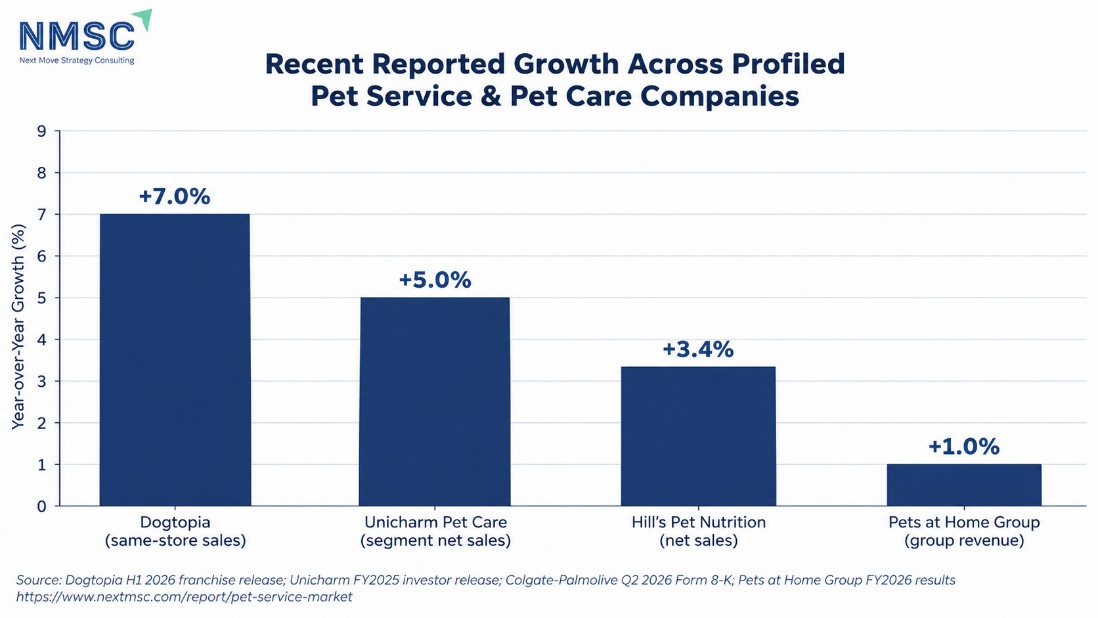
Veterinary care is also where the UK's Pets at Home Group is finding its growth. In results reported May 27, 2026, the company posted group revenue of nearly £2 billion, up 1%, with its veterinary division outperforming a weaker retail segment; management has since flagged plans to launch a branded pet insurance product aimed at the roughly £2 billion UK pet insurance market, leveraging the retailer's existing customer base rather than building distribution from scratch.
Content key takeaways
In short: scale is being bought, not grown organically, across nearly every layer of the pet service market from sitting marketplaces to brick-and-mortar boarding centers to veterinary care itself.
-
Rover (Blackstone) is rolling up international pet-sitting marketplaces (Mad Paws, Meowtel) rather than expanding organically
-
Platform aggregators like Village Pet Care are doing the same for physical boarding, daycare, and grooming centers
-
Retailers outside the traditional pet industry (Tractor Supply) are now acquiring veterinary-service assets directly
-
Veterinary care and insurance, not retail, are the fastest-growing lines for diversified pet service companies like Pets at Home
Industry Leader Moves: Vet Care, Franchising, and Pet Food Converge
Next Move Strategy Consulting's Pet Service Market report tracks fifteen key players, and the last two quarters show real momentum concentrated among a handful of them.
Mars, Inc. signed a definitive agreement, announced in August 14, 2024, to acquire Canadian premium pet food maker Champion Petfoods from an investor group led by Bedford Capital and the Healthcare of Ontario Pension Plan, bringing roughly 800 employees into the Mars Petcare family. The deal extends a long-running Mars strategy of pairing pet-food ownership with services and veterinary assets rather than treating food and care as separate businesses.
Dogtopia Enterprises, the largest pet-services franchise by unit count, reported a record first half of 2026: nearly 7% year-to-date same-store sales growth, an all-time-high Net Promoter Score of 90, more than five million dog visits across its network, a 98% customer retention rate, and 66% of revenue now coming from recurring, enrolled daycare memberships as the brand approaches 300 units.
Unicharm Corporation entered Brazil's pet care market in May 2026 by acquiring a 75% stake in pet food manufacturer Nutrire, then announced a full-scale entry into India's pet care market in July 2026. The company's pet care segment posted ¥156.1 billion (approximately $963 million) in fiscal 2025 sales, up 5% year-on-year, and has been designated a “key growth driver” under Unicharm's newest medium-term management plan.
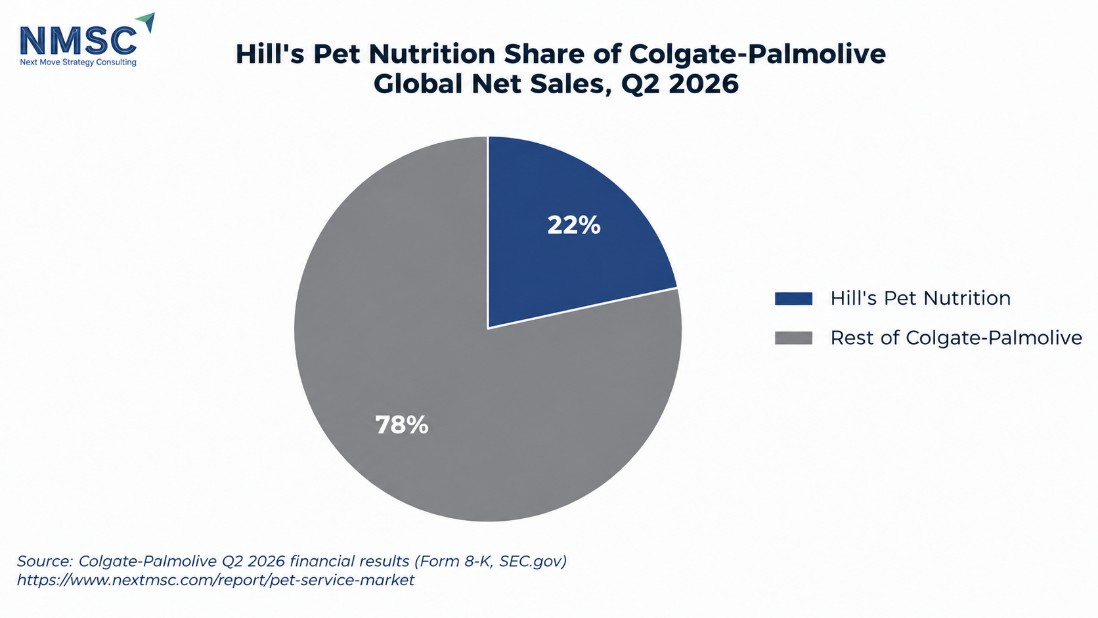
Hill's Pet Nutrition, Colgate-Palmolive's pet food division, posted $1.2 billion in net sales for the second quarter of 2026, up 3.4% year-on-year, helped by its acquisition of Australian fresh-pet-food maker Prime100 and a phased U.S. rollout of fresh pet food; Hill's now represents 22% of Colgate-Palmolive's entire company sales, illustrated below.
Industry Leader Moves at a Glance
|
Company |
Recent Move |
When |
Source |
|
Mars, Inc. |
Definitive agreement to acquire Champion Petfoods from Bedford Capital / HOOPP investor group |
Feb 2026 |
PowderBulkSolids / Tracxn (company release) |
|
Dogtopia Enterprises |
Record H1 2026: ~7% YTD same-store sales growth, 90 NPS, ~300 units |
H1 2026 |
Dogtopia franchise press release |
|
Unicharm Corporation |
Acquired 100% of Brazil's Nutrire; announced full-scale India market entry |
May & Jul 2026 |
Unicharm investor relations |
|
Hill's Pet Nutrition |
Q2 2026 net sales $1.2B (+3.4%); Prime100 (Australia) acquisition; fresh-food U.S. rollout |
Q2 2026 |
Colgate-Palmolive Form 8-K (SEC) |
|
The J.M. Smucker Company |
Mixed Q3 FY26: Milk-Bone/cat food grew; Pup-Peroni and dog snacks declined |
Q3 FY26 |
Company earnings coverage |
|
Pets at Home, Inc. |
FY2026 revenue ~£2B (+1%); vet segment outperforming retail; planned pet insurance launch |
May 2026 |
Pets at Home Group FY2026 results |
|
A Place for Rover, Inc. |
Acquired Meowtel (Jan 2026), following Mad Paws (Nov 2025) under Blackstone ownership |
Jan 2026 |
Company acquisition disclosures |
|
Village Pet Care |
General Atlantic–backed platform continues aggregating independent boarding/daycare/grooming centers |
Ongoing |
Company launch release |
The J.M. Smucker Company's pet food segment posted a mixed third quarter of fiscal 2026: Milk-Bone showed sequential improvement and cat food grew, while Pup-Peroni and broader dog-snack volumes declined a reminder that even large, diversified pet-food owners are not immune to category softness.
Read together with Rover's and Pets at Home's moves above, a pattern emerges: veterinary care, insurance, and premium or fresh pet food are consistently the fastest-growing lines for every diversified leader, while discretionary retail and some legacy treat categories are flatter. The chart below compares recently reported growth rates across four of the profiled companies.
No material, publicly disclosed developments in the past six months were identified for several of the smaller and regional operators NMSC profiles Highland Canine Training, Pooch Dog SPA, American Pet Resort, Pawz and Company, and AirPets International. That is itself informative: these single- and multi-location operators represent exactly the fragmented layer of the market that consolidators like Rover and Village Pet Care are actively acquiring, rather than a segment generating its own headline news.
Industry Impact key takeaways
In short: the biggest disclosed moves of the past two quarters all point toward the same three areas veterinary/insurance attachment, franchised recurring-revenue models, and premium or fresh pet food M&A.
-
Mars is buying premium pet-food brands (Champion Petfoods) to pair with its existing veterinary and service assets
-
Franchise models built on recurring membership revenue (Dogtopia) are outgrowing single-visit service models
-
Unicharm and Hill's/Colgate-Palmolive are both using M&A (Nutrire, Prime100) to enter premium and emerging-market pet food rather than building organically
-
Smaller, independent operators remain acquisition targets rather than headline-generating competitors in their own right
Where the Solo Founder Still Fits
None of this consolidation closes the door on a one-person pet business it just narrows where the door is. A narrow service lane still beats a broad menu: dog walking and drop-in visits require almost no capital and can be running within weeks, while grooming and boarding demand equipment, space, and often a facility inspection before opening. Products face a different rulebook entirely the FDA regulates pet food and treats, and most states require registration under AAFCO's model labeling rules which is one reason Mars, Smucker, and Hill's are acquiring premium and fresh-food brands such as Champion Petfoods and Prime100 rather than competing against them from a standing start.
Legal setup remains inexpensive: state filing fees typically run $50 to a few hundred dollars, an EIN is free directly from the IRS, and local animal-care ordinances or kennel permits are worth checking before opening. Insurance is not optional, since a standard general liability policy typically excludes the animals-in-care exposure that is central to this business; a policy written specifically for pet businesses, alongside the kind of veterinary and wellness infrastructure covered in NMSC's Animal Health Market analysis, is the more relevant category to understand as the market professionalizes around exactly this kind of risk coverage.
Brand credibility still closes deals in a business built on trust. A consistent domain, professional email, and social presence do more work here than in almost any other business, and bundled kits such as Namecheap's business starter kit cover the domain, email, and logo side in one place saving a solo founder several days of assembling the same pieces separately. Pairing that with a verified Google Business Profile still outperforms an expensive website nobody can find, since local search is where most pet-care buying decisions happen.
The first sale still tends to come from people who already have a reason to trust the founder neighbors, coworkers, and especially the staff at nearby veterinary clinics and groomers, who field these questions constantly. Platforms like Rover and Wag remain useful for building early reviews, but it is worth remembering both now operate as pieces of larger, consolidated networks (Rover under Blackstone; Wag alongside other franchised and platform models) rather than as scrappy startups so a new operator should treat them as a launchpad for reviews and discovery, not a long-term substitute for direct client relationships.
Future Outlook
Four forces look set to define the next few years of the pet service market. First, roll-up activity should continue: Rover, Village Pet Care, Unicharm, and Mars have all shown they would rather acquire an established operator or brand than build one from zero, which will keep compressing the number of independent, multi-location providers. Second, veterinary care and insurance attachment not food or discretionary retail are becoming the primary growth and margin driver for diversified players, as Pets at Home's results and its planned insurance launch illustrate. Third, premiumization and “fresh” pet food, evidenced by the Prime100 and Champion Petfoods acquisitions, are pulling M&A dollars toward pet nutrition brands rather than relying on organic category growth, which Smucker's mixed results suggest is otherwise fairly flat. Fourth, for solo founders, competing on breadth against this consolidation is a losing strategy; the more durable niche is hyper-local trust and service quality in categories walking, sitting, small-scale training and grooming that do not scale efficiently for a national platform.
Future Outlook key takeaways
In short: scale is consolidating around vet care, insurance, and premium food, while hyper-local trust remains the defensible ground for independent operators.
-
Expect continued acquisition-led growth from Rover, Village Pet Care, Unicharm, and Mars rather than organic expansion
-
Expect veterinary care and insurance attachment to outgrow discretionary pet retail across diversified companies
-
Expect premium and fresh pet food M&A (Champion Petfoods, Prime100, Nutrire) to keep outpacing organic category growth
-
Expect solo founders to compete most successfully in hyper-local, low-capital service niches rather than broad service menus
Conclusion
The pet service market's growth to a projected USD 41.8 billion by 2030 is not simply a story of more dog walkers and groomers opening shop. It is a story about which companies are buying their way into trust, recurring revenue, and veterinary infrastructure and which independent operators can still find room by staying narrow, insured, and locally trusted rather than trying to out-scale a consolidating market.
Curious how these figures break down by service type, pet type, and region? Download Free Sample of NMSC's full Pet Service Market report.
About the Author
 Sanyukta Deb
— Sanyukta Deb is Digital Marketing Team Lead at Next Move Strategy Consulting, where she has led content strategy and technical SEO for the firm's B2B market research publications for over 2 years. Her editorial process translates NextMSC's primary and secondary research — spanning technology, industrial, and consumer sectors — into commercial narratives, backed by search-intent, keyword, and competitive analysis. She brings 5 years of overall experience in digital marketing and content strategy.
Sanyukta Deb
— Sanyukta Deb is Digital Marketing Team Lead at Next Move Strategy Consulting, where she has led content strategy and technical SEO for the firm's B2B market research publications for over 2 years. Her editorial process translates NextMSC's primary and secondary research — spanning technology, industrial, and consumer sectors — into commercial narratives, backed by search-intent, keyword, and competitive analysis. She brings 5 years of overall experience in digital marketing and content strategy.
About the Reviewer
 Debashree Dey
— Debashree Dey is Assistant Manager at Next Move Strategy Consulting, where she supports cross-vertical market content and communications across diverse industries for 6 years. Her professional background includes senior content writing, communications, and published manuscript authorship, with experience developing audience-focused business narratives and maintaining clear, consistent messaging. Her role supports research-led content development and editorial quality across NextMSC publications.
Debashree Dey
— Debashree Dey is Assistant Manager at Next Move Strategy Consulting, where she supports cross-vertical market content and communications across diverse industries for 6 years. Her professional background includes senior content writing, communications, and published manuscript authorship, with experience developing audience-focused business narratives and maintaining clear, consistent messaging. Her role supports research-led content development and editorial quality across NextMSC publications.
















Add Comment