How Can Drone Countermeasaures Protect Your Assets in 2025?
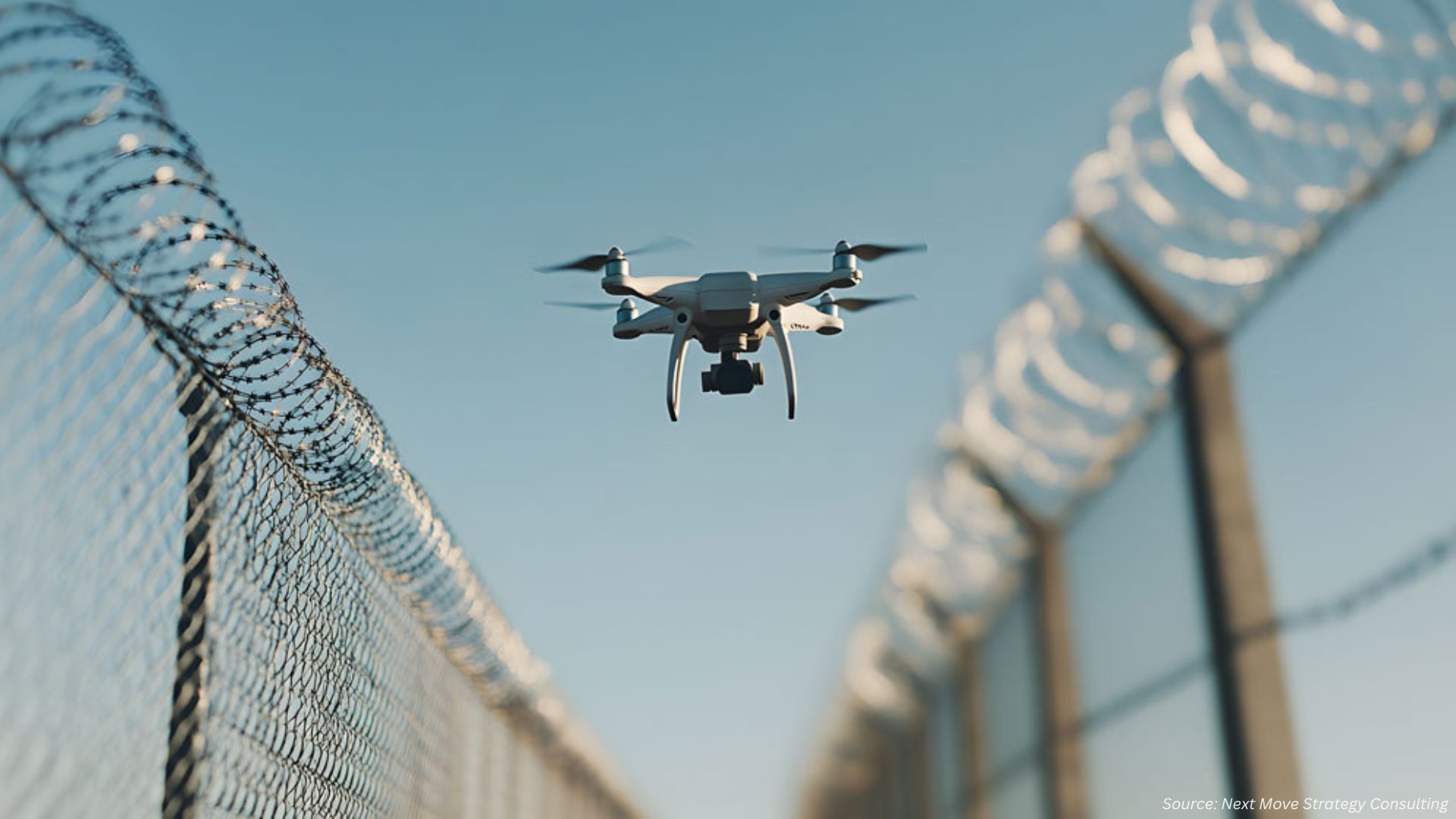
In an era where unmanned aerial systems, or drones, are reshaping modern conflicts and security landscapes, the Drone Countermeasures Market has emerged as a critical frontier. Imagine a world where small, agile drones could disrupt critical infrastructure or military operations—how do organizations respond?
This blog delves into the evolving dynamics of drone countermeasures, drawing on fresh insights from global expos and technology comparisons. What makes 2025 a pivotal year for this market? Recent events, such as the Egypt Arms Expo (EDEX) 2025, highlight a surge in counter-drone technology investments. This comes amid growing regional instabilities.
Let's unpack the essentials.
Why is the Drone Countermeasures Market Expanding Rapidly in 2025?
The drone countermeasures industry encompasses technologies designed to detect, disrupt, and neutralize unauthorized drones, addressing threats from surveillance to explosive payloads. But what fuels this expansion? Innovations from ongoing conflicts, like those in Ukraine, have accelerated drone adoption, prompting a parallel boom in countermeasures.
Consider the global spending surge: Nations are allocating billions to drone-related technologies, including defenses against swarms and precision strikes. At EDEX 2025 in Cairo, over 450 exhibitors showcased solutions, underscoring Africa's emerging role as a defense hub. Egyptian firms like Amstone International Group displayed kamikaze drones, while international players introduced anti-drone systems—reflecting a market projected to capitalize on these integrations.
Key drivers include:
-
Regional Conflicts: Drones have transformed battles in Ethiopia, Sudan, Libya, and Yemen, increasing demand for reliable countermeasures.
-
Technological Proliferation: Affordable first-person view (FPV) quadcopters evade traditional electronic warfare, necessitating physical interception tools.
-
Market Accessibility: Expos like EDEX facilitate partnerships, with Egypt leveraging $1.3 billion in annual U.S. aid to position itself as a manufacturing center.
This growth is not abstract; it manifests in tangible deals, such as Egypt's memorandum of understanding with China's Norinco for rocket-equipped drones. In summary, the market's expansion stems from geopolitical pressures and innovation, positioning 2025 as a launchpad for scalable solutions.
-
Rapid adoption in defense sectors worldwide.
-
Focus on multi-layered systems for comprehensive protection.
What Innovations are Shaping Drone Countermeasures in 2025?
Innovation defines the Drone Countermeasures Market, with 2025 bringing diverse tools from jammers to kinetic interceptors. How do these technologies stack up? At EDEX 2025, exhibitors unveiled systems tailored for real-world threats, emphasizing adaptability against jamming and swarm attacks.
Prominent examples include:
-
Electromagnetic Pulse Rifles: South Korea's Shinan introduced handheld devices that disable drones via targeted pulses, ideal for quick-response scenarios.
-
Net-Equipped Capture Systems: India-based Kommlabs demonstrated a drone-mounted net with optical sensors and lasers, enabling non-destructive captures.
-
High-Powered Jammers: Turkish and Chinese firms offered devices to disrupt drone communications, countering the pervasive use of repurposed commercial models.
-
AI-Powered Navigation Aids: Azerbaijan's Synapline showcased systems allowing drones to bypass GPS jamming—ironically boosting countermeasure needs for adversaries.
These innovations address vulnerabilities exposed in Ukraine, where battlefields served as testing grounds for rapid advancements. ParaZero Technologies, a leader in this space, highlights kinetic options as essential last-layer defenses.
In analytical terms, the market benefits from such diversification. Exhibitors from the United States, Russia, India, Pakistan, South Korea, Turkey, and the United Arab Emirates targeted markets in Kenya, Zimbabwe, Rwanda, Azerbaijan, and Saudi Arabia, fostering cross-border collaborations. This influx of products enhances market resilience, with kinetic methods gaining traction for their immediacy.
To illustrate, here's a comparison table of select 2025 innovations:
|
Innovation |
Developer/Origin |
Key Feature |
Application Focus |
|
Sky Dome Anti-Drone System |
China Electronics Technology Group |
Multi-layer fire network (missiles, microwaves, lasers) |
Swarm and precision strike defense |
|
Handheld EMP Rifles |
Shinan (South Korea) |
Electromagnetic pulse disruption |
Portable, on-foot security |
|
Drone Capture Net System |
Kommlabs (India) |
Optical sensors with pulsed laser |
Aerial interception and recovery |
|
High-Powered Jammers |
Turkish/Chinese firms |
Communication signal blockage |
Perimeter protection |
Ultimately, these advancements signal a maturing market, where integration of AI and kinetics ensures broader efficacy.
-
Emphasis on non-lethal, recoverable methods.
-
Expo-driven partnerships accelerate deployment.
How Do Kinetic Countermeasures Compare for Small Drone Threats?
When electronic jamming fails, kinetic countermeasures—physical methods to intercept drones—become indispensable. But which option reigns supreme for small unmanned aerial systems (UAS)? ParaZero's 2025 analysis compares traditional shotguns against net-launchers, revealing trade-offs in safety and effectiveness.
Shotguns provide familiar, short-range engagement but carry risks: Fragmentation from downed drones can create shrapnel hazards, especially in urban settings. They demand precise marksmanship and offer no forensic recovery, limiting intelligence gains.
In contrast, net-launchers like ParaZero's DefendAir entangle rotors at up to 35 meters, preserving the drone intact for analysis. This non-lethal approach minimizes collateral damage and requires minimal training—its modular pods integrate with handheld or airborne platforms.
Effectiveness data underscores the shift: DefendAir achieved 100% interception in Israeli defense sector trials for critical infrastructure. Recent orders affirm market traction, including a significant European purchase in November 2025 and deals with global defense firms in October 2025.
From an analytical viewpoint, the Drone Countermeasures Market favors net-launchers for their adaptability in military, homeland security, and public safety contexts. The Russia-Ukraine conflict exemplifies this: FPV quadcopters' evasion tactics highlight kinetics' role when non-GPS navigation prevails.
Conclusively, kinetic comparisons favor safer, intelligence-preserving options, driving adoption in layered defense strategies.
-
Net-launchers reduce urban risks by 100% in shrapnel avoidance.
-
Forensic recovery enhances post-incident analysis.
How is the Egypt Arms Expo 2025 Impacting the Drone Countermeasures Industry?
The EDEX 2025 expo, held over four days in December in Cairo, spotlights Africa's drone ambitions—but how does it ripple through the Drone Countermeasures Market? With over 450 exhibitors, the event mirrors South Africa's aerospace expo yet amplifies Egypt's hub aspirations, fueled by billions in regional defense spending.
Key impacts include heightened visibility for countermeasures: China's "Sky Dome" system and jammers drew crowds, while Latvia's Eraser quadcopters and U.S. firm Red Cat's surveillance drones underscored dual-use tech. Partnerships proliferated, like Amstone's contracts with African ministries, signaling export booms.
Africa's instabilities— from Sudan to Yemen—amplify demand for affordable, jam-resistant solutions, potentially increasing countermeasure revenues by integrating with local manufacturing. Unlike static reports, this expo reveals dynamic ecosystems: Startups like Synapline's AI navigation indirectly boosts counter-tech needs, while deals with France's Dassault hint at hybrid aviation-drone defenses.
This event does not merely showcase; it accelerates supply chains, with Egypt's $1.3 billion U.S. aid enabling scalable production. For stakeholders, it means diversified sourcing and faster innovation cycles.
Key Companies in the Drone Countermeasures Sector
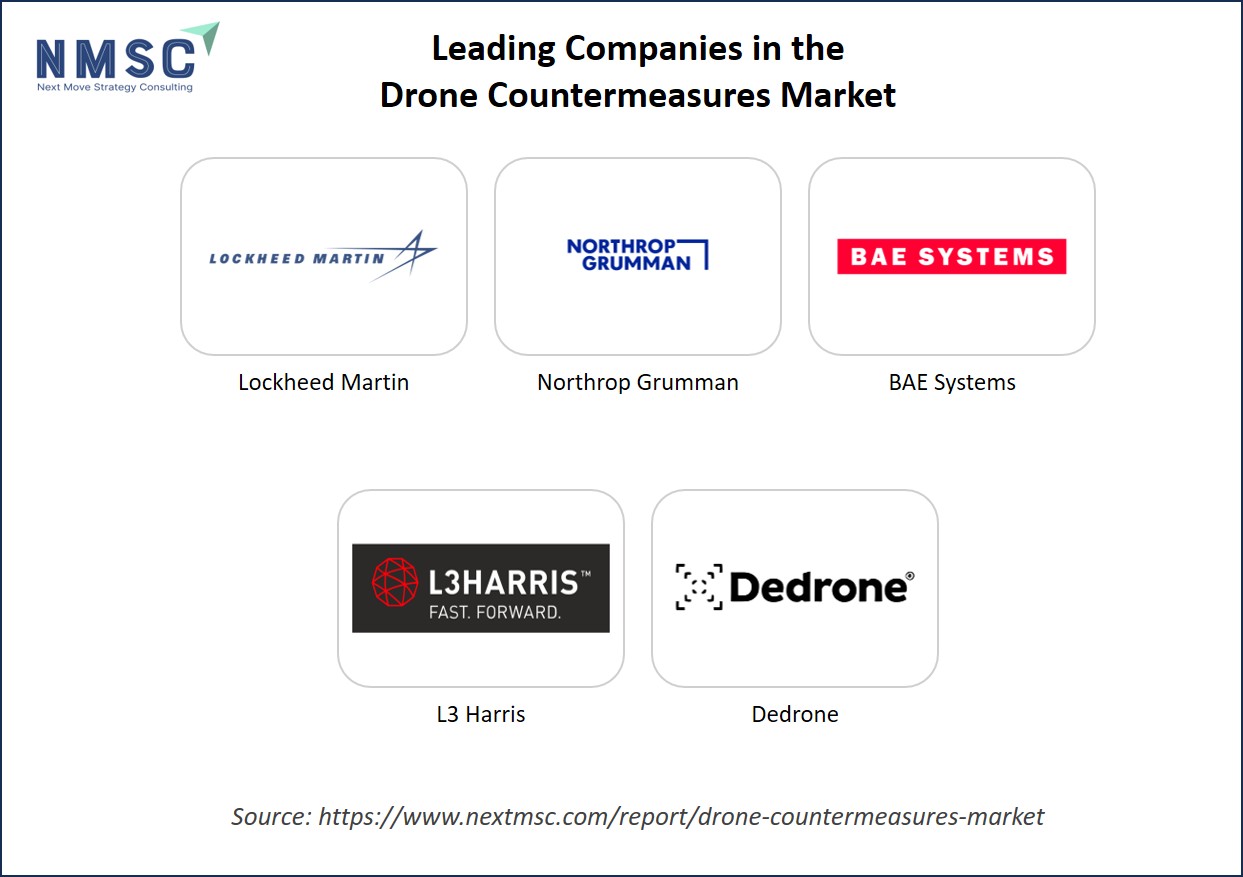
Various market players operating in the market include Lockheed Martin, Northrop Grumman, BAE Systems, Thales, LeonardS.p.A., Rafael Advanced Defense Systems, Elbit Systems, Airbus Defence & Space, Hensoldt, Kratos Defense & Security Solutions, Epirus, Battelle, DroneShield Ltd, Dedrone, Liteye Systems, Black Sage, Boeing, Saab, L3Harris, QinetiQ Group plc, Rohde & Schwarz, RADA Electronic Industries, Blighter Surveillance Systems, IAI (Israel Aerospace Industries), ASELSAN A.S., Moog Inc., DeTect, Inc., ApolloShield LLC, and others. These market players are adopting various strategies such as product launches to remain dominant in the drone countermeasures market.
Next Steps: Actionable Takeaways for Drone Countermeasures Strategies
As the drone countermeasures market evolves, proactive steps ensure competitive edges. Here are 3-5 recommendations:
-
Assess Layered Defenses: Integrate kinetic options like net-launchers with jammers; conduct trials to match threats, prioritizing non-lethal recovery for intelligence.
-
Monitor Regional Expos: Attend events like EDEX for partnerships—target African markets for cost-effective scaling.
-
Invest in Modular Tech: Adopt ParaZero-style systems for flexibility across urban and military uses, budgeting for 2025 European expansions.
-
Forensic-Ready Protocols: Train teams on intact captures to extract threat data, enhancing long-term security ROI.
-
Collaborate Globally: Engage U.S., Chinese, or Indian vendors via expos to diversify suppliers and mitigate supply risks.
About the Author
 Sanyukta Deb
— Sanyukta Deb is Digital Marketing Team Lead at Next Move Strategy Consulting, where she has led content strategy and technical SEO for the firm's B2B market research publications for over 2 years. Her editorial process translates NextMSC's primary and secondary research — spanning technology, industrial, and consumer sectors — into commercial narratives, backed by search-intent, keyword, and competitive analysis. She brings 5 years of overall experience in digital marketing and content strategy.
Sanyukta Deb
— Sanyukta Deb is Digital Marketing Team Lead at Next Move Strategy Consulting, where she has led content strategy and technical SEO for the firm's B2B market research publications for over 2 years. Her editorial process translates NextMSC's primary and secondary research — spanning technology, industrial, and consumer sectors — into commercial narratives, backed by search-intent, keyword, and competitive analysis. She brings 5 years of overall experience in digital marketing and content strategy.
About the Reviewer
 Debashree Dey
— Debashree Dey is Assistant Manager at Next Move Strategy Consulting, where she supports cross-vertical market content and communications across diverse industries for 6 years. Her professional background includes senior content writing, communications, and published manuscript authorship, with experience developing audience-focused business narratives and maintaining clear, consistent messaging. Her role supports research-led content development and editorial quality across NextMSC publications.
Debashree Dey
— Debashree Dey is Assistant Manager at Next Move Strategy Consulting, where she supports cross-vertical market content and communications across diverse industries for 6 years. Her professional background includes senior content writing, communications, and published manuscript authorship, with experience developing audience-focused business narratives and maintaining clear, consistent messaging. Her role supports research-led content development and editorial quality across NextMSC publications.















Add Comment