How Climate Volatility, Electrification, and Digital Intelligence Are Redefining the HVAC Industry
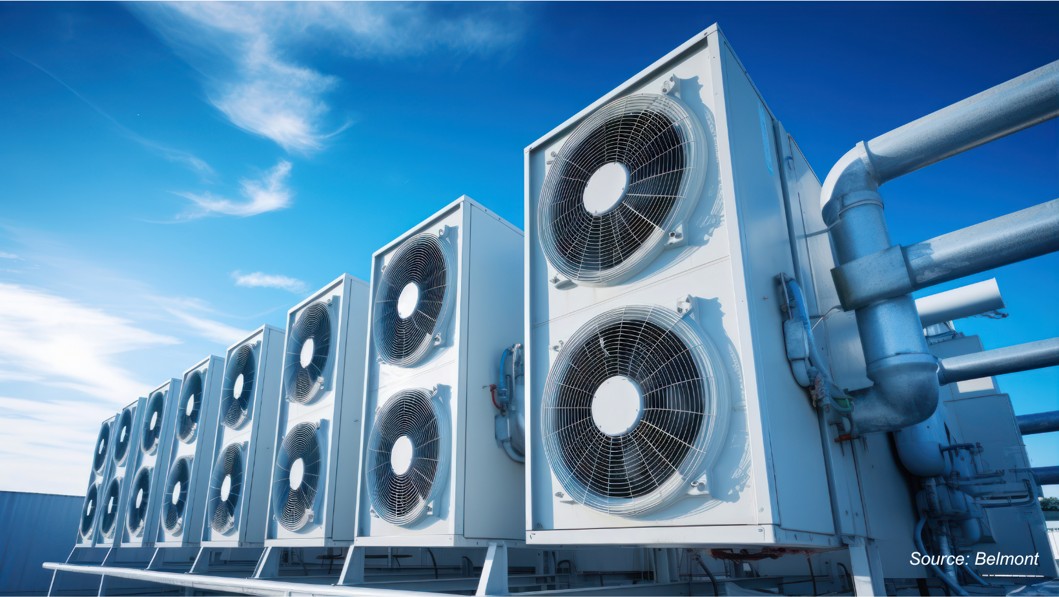
The global HVAC market is undergoing a structural transformation that extends well beyond traditional heating and cooling equipment demand. Increasing climate volatility, electrification mandates, energy security concerns, and digital building modernization initiatives are collectively repositioning HVAC systems as strategic infrastructure assets. HVAC solutions are no longer evaluated solely on thermal comfort performance; instead, they are increasingly assessed on resilience, carbon alignment, lifecycle efficiency, grid interaction capability, and real-time performance intelligence.
According to Next Move Strategy Consulting, the HVAC Market was valued at USD 236.14 billion in 2025 and is expected to reach USD 250.78 billion by 2026. Looking ahead, the industry is projected to expand significantly, reaching USD 430.93 billion by 2035, registering a CAGR of 6.20% from 2026 to 2035.
Based on our cross-regional engagements with facility planners and real estate asset managers, we observed that the market is increasingly transitioning from component-based procurement toward system-level performance optimisation. Manufacturers are responding by integrating smart controls, inverter-driven compressors, high-efficiency heat pumps, and AI-enabled building management compatibility into modular HVAC architectures. In our experience, these innovations are enabling operators to reduce peak-load stress, improve energy visibility, manage carbon exposure, and enhance asset resilience thereby accelerating adoption across commercial, residential, and industrial environments.
Want Insights on the HVAC Market? Access a FREE Sample Instantly

How Urbanization, Extreme Heat Events, and Infrastructure Modernization Are Reshaping HVAC Demand Patterns
From our direct market observations, rapid urban expansion and intensifying heat patterns are materially altering HVAC deployment priorities. As metropolitan regions become denser and high-rise developments increase, cooling demand profiles are shifting toward higher peak-load intensities and extended operating durations. Consequently, developers are prioritizing high-capacity chillers, VRF systems, and district cooling integration to maintain occupant comfort and operational stability in space-constrained urban environments.
Simultaneously, infrastructure modernization initiatives across emerging and mature economies are reinforcing HVAC retrofitting cycles. Ageing commercial buildings, hospitals, and public infrastructure assets are increasingly undergoing efficiency upgrades to meet evolving building codes and emissions standards. Our engagements indicate that retrofit-driven demand is particularly strong in regions implementing building performance mandates and decarbonization roadmaps.
In parallel, data center expansion and healthcare infrastructure growth are further amplifying precision cooling requirements. These segments require redundancy-backed, high-efficiency climate systems capable of maintaining strict environmental controls. In our assessment, the convergence of urban density, climate intensity, and infrastructure renewal is structurally embedding HVAC expansion into long-term urban resilience planning.
Electrification, Heat Pump Acceleration, and Regulatory Mandates Are Transforming Heating Infrastructure
Through structured discussions with energy policy advisors and retrofit consultants, we observed that electrification is fundamentally reframing heating systems within the HVAC market. Historically, heating investments were guided primarily by fuel cost dynamics; however, lifecycle carbon accounting and regulatory alignment now exert stronger influence over procurement strategies.
Air-source and air-to-water heat pumps are increasingly positioned as central components of decarbonization pathways, particularly across Europe, North America, and parts of Asia-Pacific. Our evaluation of modernization programs shows that property owners are proactively transitioning from fossil-fuel-based boilers toward electrified heating systems to align with emissions reduction targets and long-term regulatory certainty.
Although electrical capacity upgrades and grid-readiness considerations occasionally extend implementation timelines, these factors are increasingly incorporated into broader asset modernization strategies rather than treated as structural barriers. As policy clarity strengthens and financial incentives expand, electrified heating solutions are evolving from niche alternatives into mainstream infrastructure investments. Consequently, heating systems within the global HVAC market are transitioning from operational utilities to long-duration environmental compliance assets.

Capital Structuring, Technical Integration, and Skilled Labor Gaps Are Influencing Deployment Velocity
Our evaluation of global HVAC procurement cycles indicates that advanced, high-efficiency systems often require coordinated electrical recalibration, smart controls integration, refrigerant transition compliance, and certified technical expertise. Particularly in retrofit-heavy environments, multi-layered installation planning and contractor availability can influence project sequencing and short-term deployment velocity.
Stakeholders frequently highlight that capital budgeting complexity and payback visibility affect investment timing, especially for large-scale commercial or industrial upgrades. However, our lifecycle cost assessments consistently demonstrate that energy savings, regulatory alignment, and maintenance optimization offset initial structuring requirements over the asset horizon.
Moreover, as green financing instruments, ESG-linked funding frameworks, and performance-based contracting models become more prevalent, capital alignment is steadily improving. Therefore, while integration complexity may moderate pacing in certain regions, structural demand fundamentals remain intact, and execution strategy is increasingly shaped by long-term efficiency economics rather than short-term capital constraints.
Predictive Analytics, Smart Controls, and Connected Ecosystems Are Repositioning HVAC as Performance Infrastructure
From our field-level analysis of digitally integrated commercial buildings, we observed that predictive diagnostics and cloud-connected controls are redefining HVAC’s economic and operational model. Traditionally, HVAC systems operated on fixed maintenance schedules and reactive service cycles. However, as AI-enabled building management platforms and IoT-connected sensors become embedded within facilities, operators gain continuous visibility into load variability, equipment health, and energy consumption patterns.
This transition supports earlier anomaly detection, dynamic load balancing, optimized maintenance scheduling, and measurable carbon tracking. While interoperability alignment may be required when integrating legacy systems, digital overlays are progressively standardizing asset-level transparency across property portfolios.
As a result, HVAC providers are increasingly advancing toward performance-linked service agreements centered on uptime assurance, efficiency benchmarking, and lifecycle optimization. In our experience, this evolution is converting HVAC from a transactional equipment category into a managed performance ecosystem characterized by recurring value realization, data-driven decision-making, and enhanced infrastructure resilience.
Energy Transition, Grid Modernization, and Intelligent Climate Control Are Reshaping the Global HVAC Market
The global HVAC market is entering a new phase of structural evolution, shaped by the intersection of energy transition policies, grid modernization initiatives, and rising expectations for intelligent building performance. Heating, ventilation, and air conditioning systems are no longer confined to temperature regulation functions; instead, they are increasingly positioned as integrated energy management assets within broader decarbonization frameworks. This transformation reflects a growing recognition among commercial landlords, industrial operators, healthcare administrators, and infrastructure planners that climate control systems directly influence carbon exposure, operating expenditure, and long-term asset resilience.
According to our cross-regional market assessments, demand dynamics are shifting from volume-driven equipment sales toward performance-oriented system optimization. As energy efficiency benchmarks tighten and building codes become more stringent, HVAC investments are progressively aligned with lifecycle emissions reduction, peak-load stability, and digital performance transparency. Consequently, manufacturers are embedding inverter-driven technologies, advanced refrigerant management, smart zoning systems, and cloud-compatible controls into next-generation platforms. In our experience, these enhancements are strengthening HVAC’s strategic positioning within energy transition roadmaps across developed and emerging economies.
Collectively, the convergence of climate volatility, electrification mandates, capital realignment, and digital intelligence is reshaping the global HVAC market into an interconnected, compliance-driven, and performance-optimized infrastructure domain. Rather than serving solely as mechanical support systems, HVAC platforms are emerging as strategic enablers of resilient, energy-efficient, and future-ready built environments worldwide.
Beyond these advancements, leading HVAC manufacturers such as Lennox International, Panasonic Corporation, Gree Electric Appliances, Mitsubishi Electric, Johnson Controls, and Trane Technologies continued enhancing their portfolios through inverter-based systems, heat pump expansion, smart building integration, and low-GWP refrigerant adoption. From our observations, these collective efforts accelerated the shift toward digitally connected, energy-efficient, and electrification-aligned climate solutions. As AI-enabled controls and predictive service platforms became more embedded, building operators gained improved energy optimization, compliance readiness, and lifecycle performance management, strengthening operational resilience across global commercial, residential, and industrial infrastructure.
Future Outlook
The global HVAC market is projected to witness sustained growth as electrification programs, energy efficiency regulations, and building decarbonization initiatives increasingly influence infrastructure investment priorities worldwide. Rising adoption of heat pumps, inverter-based systems, and low-GWP refrigerants will accelerate the shift toward environmentally responsible climate control technologies. At the same time, integration of AI-enabled controls, IoT-connected sensors, and cloud-based building management systems will improve operational transparency, enable predictive maintenance, and optimise lifecycle performance. Leading manufacturers, including Daikin Industries, Carrier Global, Trane Technologies, and Mitsubishi Electric, are expected to intensify their focus on electrified, digitally connected, and high-efficiency solutions to meet evolving regulatory standards and customer expectations. Supported by continued urbanisation, expanding data centre capacity, healthcare infrastructure development, and large-scale retrofit modernisation, HVAC systems will play an increasingly vital role in advancing energy-efficient, resilient, and intelligent built environments globally through 2035.
About the Author
 Saista Faiyaz is Research Associate at Next Move Strategy Consulting, where she has covered consumer markets and healthcare technologies for 3 years. Her work includes primary interview review, secondary-source validation, market sizing, and structured analysis of company and industry data. She supports research by comparing evidence across sources, organizing findings into market narratives, and documenting assumptions used in analysis. Her scope includes cross-market benchmarking, and reports.
About the Reviewer
 Supradip Baul is an accomplished business consultant and strategist with over a decade of rich experience in market intelligence, strategy, technology, and business transformation. His work has included rigorous qualitative and quantitative analysis across multiple industries, helping clients shape investment decisions and long-term roadmaps. Earlier in his career, he was associated with Gartner, where he contributed to industry-leading reports and market share analyses. He has worked with leading global companies and holds an MBA with a dual specialization in Marketing and Finance.
















Add Comment