Smart Air Handling Units and AI-Driven Building Intelligence Are Redefining the India Air Handling Unit (AHU) Market
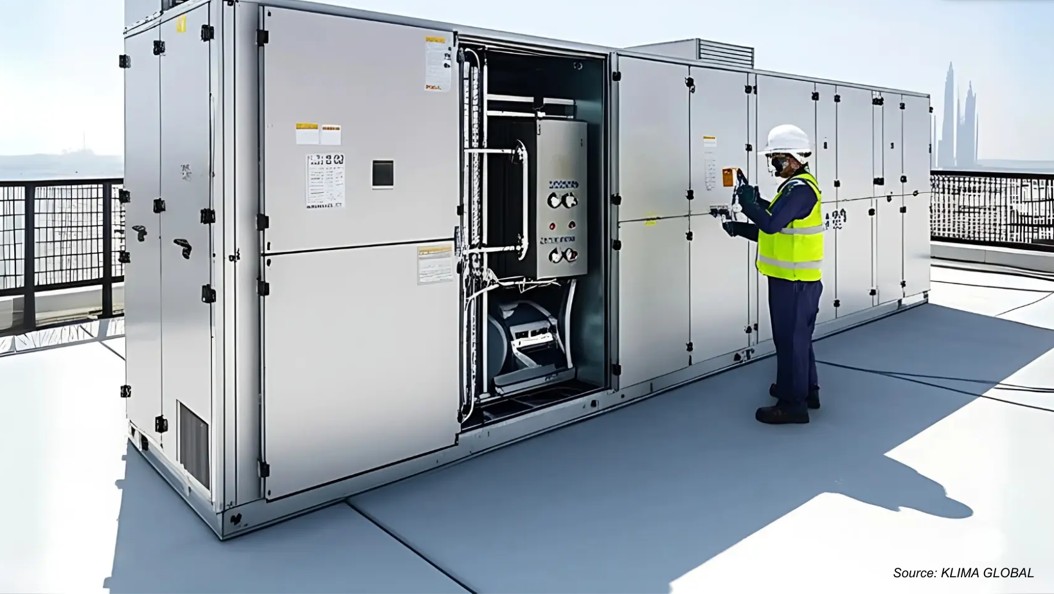
Why Smart Air Handling Units Are Becoming the New Competitive Advantage in Modern Buildings?
The India Air Handling Unit (AHU) Market is undergoing a significant technological transformation as intelligent HVAC systems become central to the country's expanding commercial, industrial, and institutional infrastructure. Traditionally, Air Handling Units were designed to regulate airflow, temperature, humidity, and ventilation within buildings. Today, however, these systems are evolving into digitally connected assets capable of continuously monitoring indoor environmental conditions, optimizing energy consumption, and communicating with Building Management Systems (BMS). This shift is being driven by rapid advancements in Artificial Intelligence (AI), the Internet of Things (IoT), cloud-based analytics, and smart automation technologies that are redefining how buildings operate.
According to Next Move Strategy Consulting, the India Air Handling Unit (AHU) Market size was valued at USD 986 million in 2025, and is expected to be valued at USD 1228 million by the end of 2026. The industry is projected to grow, hitting USD 2944.6 million by 2035, with a CAGR of 10.21% between 2026 and 2035.
For an In-depth Analysis of the (Market Name) Market, Try a FREE Sample.
The Industry Shift from Conventional Air Handling Units to Intelligent HVAC Systems
For many years, Air Handling Units primarily operated through fixed control sequences that maintained predefined airflow and temperature settings. Although this approach ensured acceptable indoor comfort, it often resulted in excessive energy consumption, inefficient ventilation, and reactive maintenance practices. As building operations become increasingly complex, conventional AHUs are proving insufficient for meeting modern performance expectations.
We observed that facility owners are now prioritizing intelligent HVAC systems capable of continuously adapting to changing occupancy levels, weather conditions, indoor air quality, and operational requirements. Modern AHUs increasingly integrate with Building Management Systems, enabling centralized monitoring and automated optimization across multiple building services.
Unlike traditional systems, smart AHUs collect and analyse operational data in real time through connected sensors that monitor airflow, humidity, carbon dioxide concentration, particulate matter, static pressure, filter condition, and equipment health. This continuous flow of information enables HVAC systems to dynamically adjust ventilation rates, fan speeds, and fresh air intake based on actual building demand rather than predetermined schedules.
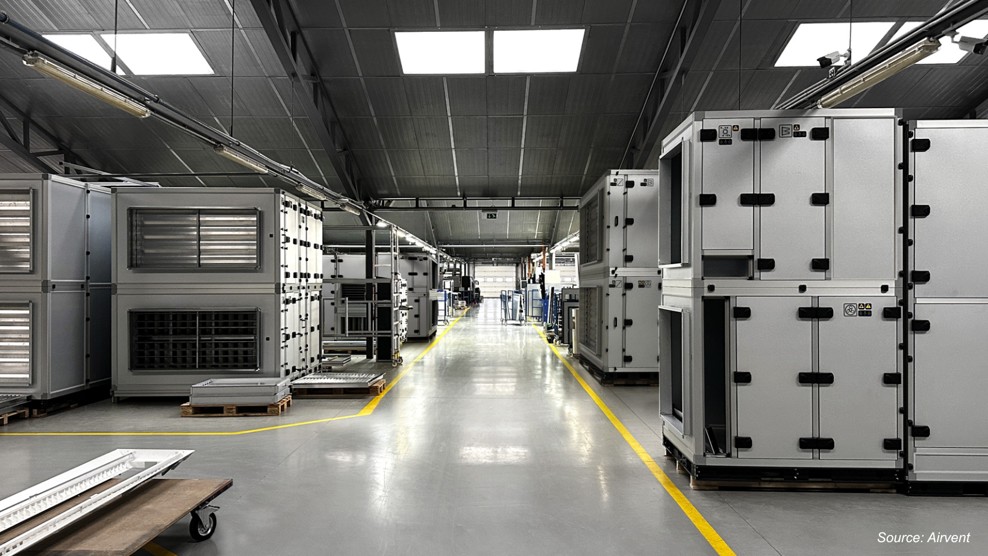
How AI, IoT, and Predictive Maintenance Are Transforming Air Handling Unit Performance
Artificial Intelligence and IoT connectivity are fundamentally changing how Air Handling Units operate and are maintained. Rather than responding only after predefined thresholds are exceeded, AI-enabled HVAC platforms continuously evaluate real-time operational data to optimize performance while predicting potential equipment failures before they occur.
Modern smart AHUs increasingly monitor critical operating parameters such as:
-
Motor performance
-
Fan efficiency
-
Airflow consistency
-
Filter pressure differential
-
Temperature and humidity
-
Carbon dioxide (CO₂) concentration
-
Particulate matter (PM2.5)
-
Energy consumption
-
Equipment vibration
By analysing these parameters simultaneously, AI algorithms identify abnormal operating patterns that may indicate bearing wear, airflow restrictions, filter clogging, or declining motor performance. Maintenance teams can therefore schedule repairs proactively instead of reacting to unexpected equipment failures.
Smart Buildings, Data Centres, and Healthcare Are Accelerating Next-Generation AHU Adoption
The growing adoption of intelligent Air Handling Units is closely linked to India's expanding investment in smart infrastructure. Commercial office buildings, hospitals, airports, pharmaceutical facilities, biotechnology laboratories, semiconductor manufacturing plants, and hyperscale data centres all require highly reliable environmental control systems capable of maintaining consistent airflow, temperature, humidity, and indoor air quality.
Industry investments further demonstrate this technological transition. In April 2025, Daikin Airconditioning India Pvt. Ltd. inaugurated its third Research and Development Centre in Neemrana, Rajasthan. The new facility houses advanced testing laboratories focused on developing climate-specific, energy-efficient HVAC technologies and intelligent building solutions, reinforcing the company's commitment to innovation within India's rapidly evolving commercial HVAC market.
Similarly, in May 2026, FläktGroup announced Project GAGAN, a new manufacturing facility in Pune capable of producing approximately 6,500 HVAC units annually, including Air Handling Units, Fan Wall Units, CRAH/CRAC systems, CDUs, and heating and cooling coils. The investment reflects growing confidence in India's long-term demand for intelligent HVAC infrastructure across commercial, industrial, and mission-critical applications.
These developments indicate that manufacturers are increasingly investing in digital capabilities, localized engineering, and advanced manufacturing to support the growing adoption of smart Air Handling Units throughout India's commercial building ecosystem.
Leading Manufacturers Are Accelerating the Shift Toward Intelligent Air Handling Technologies
Our analysis indicates that leading HVAC manufacturers are increasingly investing in localized manufacturing, advanced engineering capabilities, smart controls, and digital technologies to meet the evolving requirements of commercial infrastructure, healthcare facilities, industrial plants, and data centres. These strategic investments demonstrate how the competitive landscape is shifting toward intelligent, energy-efficient, and connected air handling solutions.
For example, Carrier Airconditioning & Refrigeration Ltd. strengthened its domestic manufacturing strategy by expanding its Made-in-India commercial HVAC portfolio to include locally manufactured Air Handling Units (AHUs) and Fan Coil Units (FCUs). This initiative reflects the growing emphasis on localized production, shorter project lead times, and customized HVAC solutions for India's rapidly expanding commercial infrastructure. As demand continues to increase across airports, hospitals, office complexes, and industrial facilities, localized manufacturing is expected to improve supply chain resilience while enabling faster adoption of advanced AHU technologies.
Similarly, Blue Star Limited continues to strengthen its position through investments in manufacturing automation and energy-efficient commercial HVAC solutions. The company has expanded its portfolio of Eurovent-certified Air Handling Units designed for hospitals, pharmaceutical facilities, cleanrooms, commercial buildings, and industrial applications where precise airflow management and indoor air quality are critical. This reflects a broader industry trend in which manufacturers are increasingly differentiating themselves through engineering expertise, product reliability, and compliance with international performance standards rather than competing solely on equipment capacity.
Taken together, these developments demonstrate that manufacturers are preparing for the next phase of India's HVAC industry by combining advanced engineering, intelligent controls, and localized production capabilities. Consequently, innovation is becoming one of the strongest competitive advantages within the India Air Handling Unit (AHU) Market.
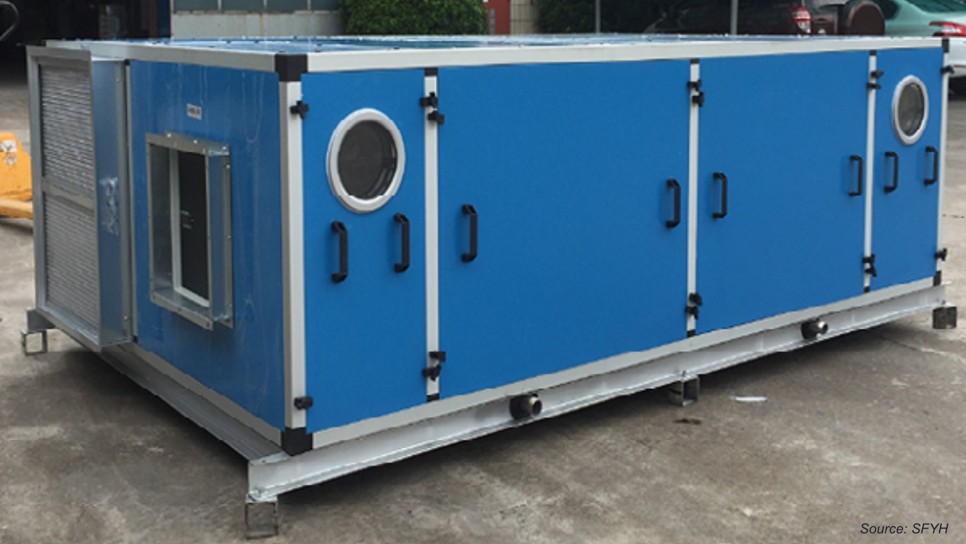
The Road Ahead for Smart Air Handling Units in India
Based on NMSC's research, we observed that the India Air Handling Unit (AHU) Market is entering a technology-led growth phase where digital intelligence is becoming just as important as mechanical engineering. Artificial Intelligence, IoT-enabled monitoring, predictive maintenance, advanced automation, and cloud-connected building platforms are transforming Air Handling Units into intelligent systems capable of delivering superior energy efficiency, operational reliability, and indoor air quality.
Furthermore, recent investments by manufacturers such as Daikin, FläktGroup, Carrier, and Blue Star illustrate how the industry is actively investing in research, localized manufacturing, and advanced engineering to support the next generation of intelligent HVAC solutions. Rather than focusing solely on increasing production capacity, manufacturers are increasingly prioritizing smart controls, digital monitoring capabilities, and energy-efficient system designs that align with India's expanding smart building ecosystem.
As commercial construction, healthcare infrastructure, pharmaceutical manufacturing, hyperscale data centres, and industrial development continue to expand across the country, intelligent Air Handling Units are expected to play an increasingly strategic role in ensuring sustainable, efficient, and resilient building operations. Consequently, the convergence of AI, IoT, predictive analytics, and intelligent building management is expected to remain one of the strongest technology trends shaping the India Air Handling Unit (AHU) Market throughout the next decade.
About the Author
 Mayurima Roy
— Mayurima Roy is Research Analyst at Next Move Strategy Consulting, where she has spent 4 years working across the firm's full industry coverage rather than a single fixed vertical. Her work centers on structured research, ongoing trend tracking, competitive assessment, and insight-led content development, translating complex market data into clear, decision-ready narratives that support informed client decision-making across diverse global industries, market sectors, and world regions every day.
Mayurima Roy
— Mayurima Roy is Research Analyst at Next Move Strategy Consulting, where she has spent 4 years working across the firm's full industry coverage rather than a single fixed vertical. Her work centers on structured research, ongoing trend tracking, competitive assessment, and insight-led content development, translating complex market data into clear, decision-ready narratives that support informed client decision-making across diverse global industries, market sectors, and world regions every day.
About the Reviewer
 Supradip Baul
— Supradip Baul is an accomplished business consultant and strategist with over a decade of rich experience in market intelligence, strategy, technology, and business transformation. His work has included rigorous qualitative and quantitative analysis across multiple industries, helping clients shape investment decisions and long-term roadmaps. Earlier in his career, he was associated with Gartner, where he contributed to industry-leading reports and market share analyses. He has worked with leading global companies and holds an MBA with a dual specialization in Marketing and Finance.
Supradip Baul
— Supradip Baul is an accomplished business consultant and strategist with over a decade of rich experience in market intelligence, strategy, technology, and business transformation. His work has included rigorous qualitative and quantitative analysis across multiple industries, helping clients shape investment decisions and long-term roadmaps. Earlier in his career, he was associated with Gartner, where he contributed to industry-leading reports and market share analyses. He has worked with leading global companies and holds an MBA with a dual specialization in Marketing and Finance.
















Add Comment