How Global Supply Shocks Are Redefining Agricultural Strategy in 2026
Introduction
The global Liquid Fertilizers Market is confronting a period of extraordinary disruption. A convergence of geopolitical crises, trade policy realignments, and structural supply constraints has fundamentally altered the cost, availability, and strategic importance of liquid fertilizers for farmers, agribusinesses, and policymakers worldwide. For institutional investors and C-level executives operating across the agricultural value chain, the ability to interpret and respond to these forces is no longer a strategic advantage — it is a baseline requirement for operational continuity.
At the center of this disruption is a cascade of events that unfolded in rapid succession: the closure of the Strait of Hormuz in February 2026, the European Commission's landmark Fertiliser Action Plan adopted in May 2026, and the sustained tightening of global nitrogen supply driven by China's export restrictions. These developments have pushed nitrogen fertilizer prices in Europe to levels 71% above the 2024 average as of April 2026, triggering emergency policy responses and accelerating the structural shift toward precision agriculture, bio-based inputs, and liquid fertilizer formulations that maximize nutrient efficiency. Against this backdrop, the liquid fertilizers market is emerging as a critical focal point for agricultural investment and innovation.
For More Information: Download FREE Sample on Liquid Fertilizers Market Report
Supply Shocks, Policy Responses, and the New Fertilizer Landscape
The Strait of Hormuz Crisis: A Systemic Shock to Global Fertilizer Supply
The closure of the Strait of Hormuz in February 2026 delivered an immediate and severe shock to global fertilizer supply chains. The Middle East accounts for approximately 35% of global nitrogen fertilizer exports, and while the European Union's direct dependence on the region is limited — approximately 3% of ammonia imports and 1–2% of nitrogen fertilizer imports — the global commodity nature of fertilizers means that regional supply disruptions propagate rapidly into worldwide price increases and sourcing competition.
The consequences were immediate. By April 2026, overall nitrogen fertilizer prices in Europe had risen 71% above the 2024 average, and fertilizer affordability — measured as the ratio of fertilizer prices to cereal prices — had fallen to its lowest level since 2022. For liquid fertilizer producers and distributors, this price environment has created a dual dynamic: elevated revenue per unit sold, but sharply compressed demand from cost-sensitive smallholder and mid-scale farming operations.
The crisis has also exposed the structural vulnerability of the EU's fertilizer supply chain. The bloc imports approximately 30% of its nitrogen fertilizers, 70% of its phosphatic fertilizers, and approximately 40% of its potassium requirements — a dependency profile that leaves European agriculture acutely exposed to geopolitical disruptions in key producing regions.
China's Export Restrictions: Compounding the Nitrogen Supply Squeeze
The Strait of Hormuz crisis did not emerge in isolation. It compounded an already tightened global nitrogen market shaped by China's sustained export restrictions. According to the World Bank's October 2025 Commodity Markets Outlook, China's urea exports dropped more than 90% year-on-year in 2024 as the country prioritized domestic price stability and supply security. These measures continued through the first half of 2025, sustaining global market tightness, though urea exports partially recovered later in the year.
Phosphate exports from China have also been constrained as the country secures phosphoric acid inputs for lithium-iron-phosphate batteries used in electric vehicles — a structural diversion of agricultural raw materials toward the energy transition that is expected to persist over the medium term. For liquid fertilizer manufacturers reliant on phosphate-based formulations, this represents a sustained input cost headwind that is reshaping procurement strategies and product development priorities.
The World Bank projects that urea prices will jump 30% in 2025 before declining 7% in 2026 and 9% in 2027 as new capacity comes online in East Asia and the Middle East. DAP prices are expected to rise 26% in 2025 before easing in subsequent years, while MOP prices are projected to increase 19% in 2025 on firm demand.
The EU Fertiliser Action Plan: A Policy Watershed for the Sector
On May 19, 2026, the European Commission adopted the Fertiliser Action Plan — a comprehensive policy initiative designed to secure Europe's fertilizer supply, support farmers facing rising input costs, and reduce the EU's structural dependency on imported fertilizers and raw materials. The Plan operates across three strategic pillars: establishing an EU fertilizer value chain partnership, improving farmers' access to affordable fertilizers through targeted financial relief, and reinforcing EU open strategic autonomy through domestic production investment and supply diversification.
On July 17, 2026, EU member states approved the Commission's proposal to allocate €540 million in financial relief to farmers impacted by the Middle East crisis due to increased fertilizer and energy costs — one of the largest emergency agricultural support packages in recent EU history. The Plan also explicitly prioritizes the development and uptake of bio-based fertilizers, organic liquid formulations, and precision nutrient delivery systems — a policy signal that directly accelerates demand for advanced liquid fertilizer products across the European market.
Critically, the Plan acknowledges that natural gas availability determines approximately 70% of nitrogen fertilizer production costs in Europe, underscoring the deep interdependence between energy markets and fertilizer affordability.
NMSC Strategic Perspective: Liquid Fertilizers as the Precision Agriculture Imperative
From Next Move Strategy Consulting's analytical standpoint, the current supply shock environment is not merely a crisis to be managed — it is an accelerant for the structural transition toward precision, high-efficiency liquid fertilizer formulations. As conventional granular fertilizer supply chains face geopolitical disruption and price volatility, liquid fertilizers — with their superior nutrient absorption rates, compatibility with fertigation and foliar application systems, and adaptability to variable-rate precision agriculture technologies — are increasingly positioned as the agronomic solution of choice for farmers seeking to maximize yield per unit of nutrient input.
NMSC's assessment is that the EU Fertiliser Action Plan's explicit support for bio-based and organic liquid fertilizers, combined with the structural price pressure on conventional nitrogen inputs, will accelerate the adoption of liquid fertilizer formulations across European and North American markets over the 2026–2030 forecast period. Simultaneously, the sustained growth of precision agriculture infrastructure in Asia-Pacific — the dominant regional market — will continue to drive demand for liquid fertilizers compatible with IoT-enabled irrigation and fertigation systems. Suppliers that invest in advanced formulation capabilities, sustainable production processes, and digital application compatibility will be best positioned to capture the value created by this transition.
Section Summary: The liquid fertilizers market is being reshaped by an unprecedented convergence of geopolitical supply disruptions, trade policy interventions, and accelerating precision agriculture adoption.
Key Takeaways:
-
The Strait of Hormuz closure in February 2026 triggered a 71% surge in European nitrogen fertilizer prices above 2024 average levels, exposing critical supply chain vulnerabilities.
-
China's urea exports dropped more than 90% year-on-year in 2024, sustaining global nitrogen market tightness well into 2025.
-
The EU's €540 million emergency agricultural support package and the Fertiliser Action Plan (May 2026) represent a structural policy shift toward supply resilience and bio-based fertilizer adoption.
-
Liquid fertilizers' compatibility with precision agriculture and fertigation systems positions them as the preferred solution in a high-price, efficiency-driven input environment.
Industry Impact Analysis
Record Global Fertilizer Consumption Signals Structural Demand Resilience
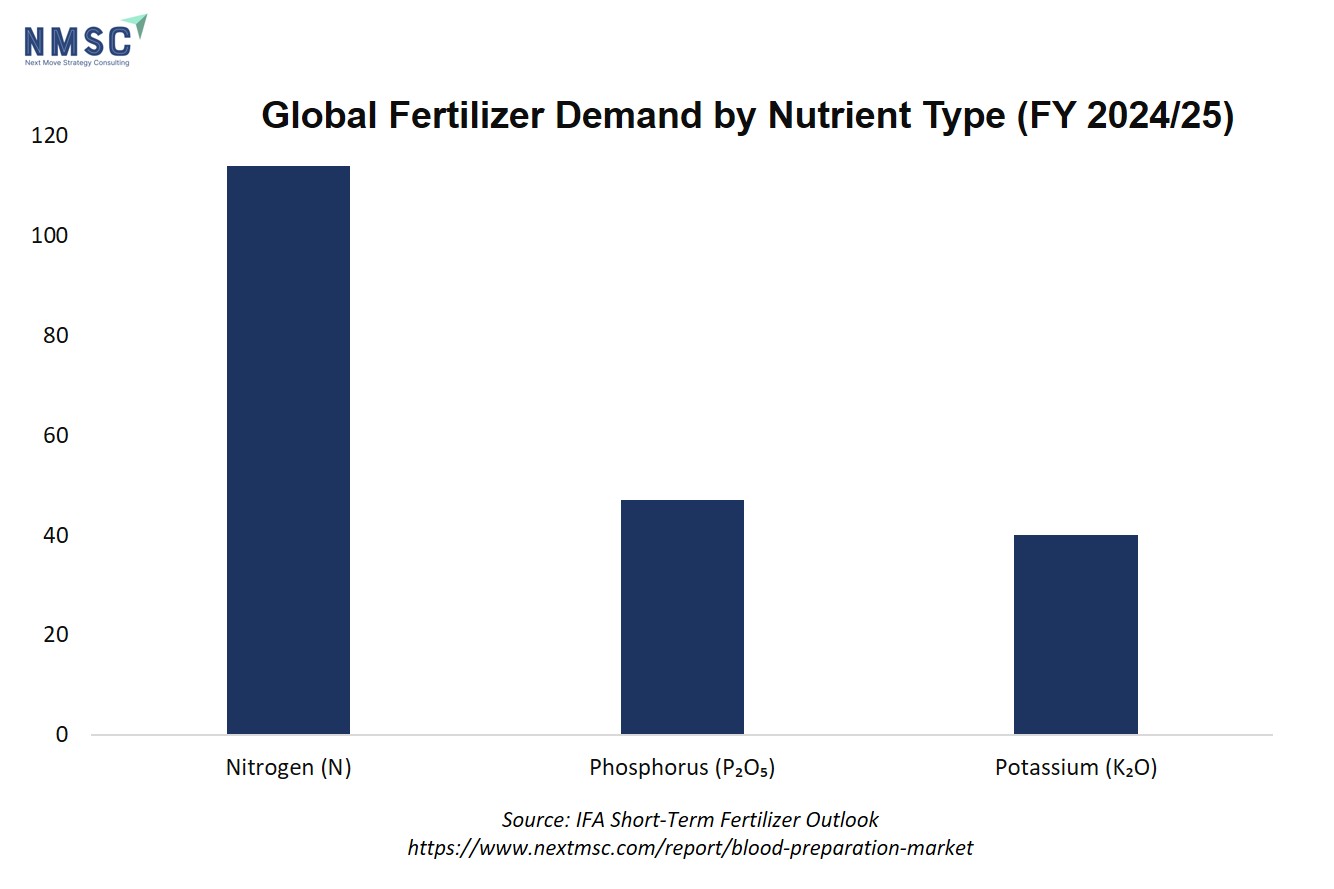
Despite price volatility and supply disruptions, global fertilizer demand has demonstrated remarkable structural resilience. According to the International Fertilizer Association (IFA), global nitrogen use reached a new record of 118 million tonnes (Mt) of nutrients in fertilizer year (FY) 2024, while potassium use also hit a record 41 Mt K₂O in FY 2024. Phosphorus use reached 47 Mt P₂O₅ in FY 2024, though this remains approximately 4% below the FY 2020 record.
The FAO's July 2025 FAOSTAT data release confirms the long-term trajectory: global agricultural use of inorganic fertilizers rose from 142 Mt in 2002 to 190 Mt in 2023, a 34% increase over two decades. Nitrogen fertilizer use increased 32% to 112 Mt in 2023, phosphorus use rose 20% to 41 Mt, and potassium use showed the highest proportional increase at 62%, reaching 38 Mt.
Asia-Pacific: The Engine of Global Fertilizer Demand Growth
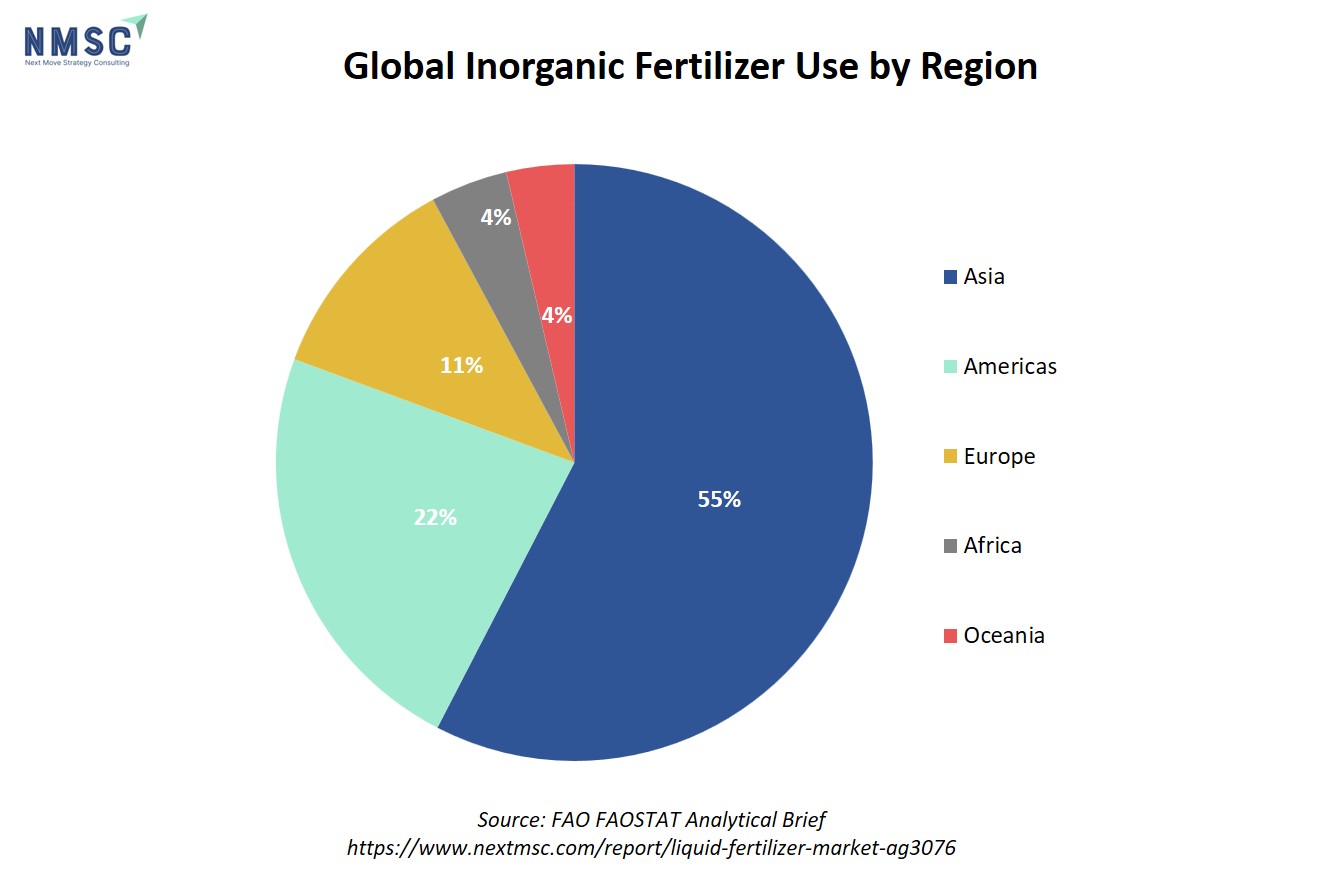
Asia's dominance in global fertilizer consumption is both established and expanding. FAO data confirms that Asia's agricultural use of inorganic fertilizers rose 38% between 2002 and 2023, from 77.5 Mt to 107.3 Mt — representing more than 56% of total global consumption in 2023. China and India together accounted for 40% of global nitrogen use in FY 2023, with India's consumption supported by a generous urea subsidy program and China's driven by renewed food security priorities and government-encouraged corn production.
For the liquid fertilizers market specifically, Asia-Pacific's expanding organic food sector is a critical demand driver. China is the fourth-largest organic food market globally, with a turnover of USD 11.1 million, holding an 8% share of the global organic food market, with organic products accounting for 7% of total retail food sales. This consumer preference for sustainably grown produce is directly translating into demand for bio-based and organic liquid fertilizer formulations across the region.
North America: Precision Agriculture Driving Liquid Fertilizer Adoption
North America is the fastest-growing regional market for liquid fertilizers, driven by the widespread adoption of precision farming technologies, GPS-guided application equipment, and fertigation systems that are specifically optimized for liquid nutrient delivery. India's agrochemical exports — a key input supply chain for the broader liquid fertilizer ecosystem — grew at a 14% CAGR from FY19 to FY23, reaching USD 5.4 billion in FY23, confirming the region's growing competitiveness in the global agrochemical market.
The U.S. government's commitment to agricultural support remains a structural demand enabler. The USDA subsidized farms through direct payments on farm programs with approximately USD 15.6 billion in 2023, reflecting the government's sustained commitment to agricultural sector development and the financial accessibility of modern farming inputs including liquid fertilizers.
The Precision Agriculture Convergence: IoT, AI, and Liquid Fertilizer Efficiency
The integration of IoT-enabled sensors, AI-driven data analytics, and automated irrigation systems is fundamentally transforming how liquid fertilizers are applied, monitored, and optimized. These technologies enable farmers to achieve optimal fertilizer application with minimal waste and maximum crop yield — a capability that is particularly well-suited to liquid fertilizer formulations, which can be precisely metered and delivered through fertigation and foliar application systems. The global horticulture and floriculture sector, which requires high-quality, sustainable inputs for premium crop yield, is a key beneficiary of this technological convergence, with ornamental plant exports growing at 3.9% annually over the past five years.
Section Summary: The liquid fertilizers market is underpinned by structurally resilient global fertilizer demand, accelerating precision agriculture adoption, and a decisive policy shift toward bio-based and high-efficiency nutrient solutions.
Key Takeaways:
-
Global nitrogen fertilizer use reached a record 118 Mt in FY 2024, confirming the structural resilience of fertilizer demand despite price volatility.
-
Asia accounts for more than 56% of global inorganic fertilizer consumption, with China and India alone representing 40% of global nitrogen use.
-
North America is the fastest-growing liquid fertilizer market, driven by precision agriculture technology adoption and strong government agricultural support.
-
The EU Fertiliser Action Plan's explicit support for bio-based and organic liquid fertilizers creates a significant near-term demand catalyst for advanced liquid fertilizer formulations.
Pros and Cons of Recent Market Developments
|
Recent Development |
Pros |
Cons |
|
EU Fertiliser Action Plan (May 2026) |
Creates a structured policy framework supporting bio-based and liquid fertilizer adoption; €540 million emergency relief stabilizes near-term farmer demand; accelerates investment in domestic EU fertilizer production |
Implementation complexity across 27 member states; short-term relief may not address structural import dependency; compliance costs for producers adapting to new regulatory frameworks |
|
Strait of Hormuz Closure & Supply Disruption (Feb 2026) |
Accelerates diversification of supply chains away from single-region dependency; creates investment opportunities in alternative production hubs; drives adoption of precision liquid fertilizers to maximize efficiency of constrained supply |
Immediate price spikes reduce fertilizer affordability for smallholder farmers; supply uncertainty disrupts seasonal planting schedules; disproportionate impact on developing economies with limited import alternatives |
|
China's Nitrogen Export Restrictions |
Incentivizes investment in domestic nitrogen production capacity in other regions; creates market opportunities for alternative suppliers in the Middle East, North America, and Africa |
Sustained global nitrogen supply tightness; upward pressure on urea and ammonia prices; constrains liquid nitrogen fertilizer production for manufacturers reliant on Chinese feedstocks |
|
Rising Adoption of Precision Agriculture & Fertigation |
Directly increases demand for liquid fertilizer formulations compatible with drip and sprinkler irrigation systems; improves nutrient use efficiency and reduces environmental impact; supports premium pricing for advanced liquid formulations |
High upfront capital cost of precision agriculture infrastructure limits adoption among smallholder farmers; requires technical expertise and digital connectivity not universally available |
|
EU Tariffs on Russian & Belarusian Nitrogen Fertilizers |
Reduces EU dependence on geopolitically sensitive supply sources; incentivizes domestic production investment |
Redirects Russian and Belarusian exports to Asia and Americas, increasing competition in those markets; raises fertilizer costs for EU farmers in the near term |
|
Growing Bio-Based & Organic Liquid Fertilizer Demand |
Aligns with regulatory trends and consumer preferences for sustainable agriculture; commands premium pricing; supports long-term soil health and reduced chemical input dependency |
Higher production costs relative to conventional synthetic fertilizers; limited scalability of bio-based feedstocks; regulatory approval timelines for new formulations can be lengthy |
Future Outlook & Forecast
NMSC Market Forecast: Steady Growth Toward USD 3.71 Billion by 2030
According to Next Move Strategy Consulting's proprietary research, the global liquid fertilizers market was valued at USD 2.86 billion in 2024 and is projected to reach USD 3.71 billion by 2030, advancing at a compound annual growth rate of 5.4% from 2025 to 2030. This trajectory reflects the sustained expansion of precision agriculture infrastructure, the growing emphasis on sustainable and high-efficiency nutrient delivery, and the accelerating adoption of fertigation and foliar application systems across both developed and emerging agricultural markets.
Asia-Pacific will maintain its position as the dominant regional market, driven by the expanding organic food sector, intensive farming practices, and government initiatives promoting modern irrigation and fertilization techniques. North America is expected to sustain the fastest regional growth rate, supported by the widespread adoption of precision farming, GPS-based application tools, and strong demand for high-efficiency fertilizers across large-scale commercial farming operations.
IFA Medium-Term Outlook: Sustained Global Demand Growth Through 2029
The IFA's Medium-Term Fertilizer Outlook 2025–2029 projects global fertilizer use to grow at 1–2% annually, reaching 224 million tonnes of nutrients by 2029. South Asia and Latin America are expected to be the primary engines of global fertilizer demand growth, each contributing an additional 4–5 Mt of nutrient demand over the forecast period. Eastern Europe and Central Asia (EECA) is forecast to grow dynamically by 27% over the medium term, driven by continued expansion in Russian agricultural production and a gradual recovery in Ukraine. Africa is projected to add 1.5 Mt (+19%) and West Asia 0.8 Mt (+15%) between FY 2025 and FY 2029.
The Bio-Based Transition: A Long-Term Structural Shift
Over the longer term, nitrogen fertilizers face structural supply challenges due to their high carbon footprint, which is expected to accelerate a shift toward lower-emission alternatives including biofertilizers, organic liquid amendments, and regenerative farming technologies. The World Bank's Commodity Markets Outlook explicitly identifies this transition as a structural risk to conventional nitrogen fertilizer demand, while simultaneously creating significant growth opportunities for bio-based liquid fertilizer producers. The EU Fertiliser Action Plan's support for nutrient recycling, phosphorus and nitrogen recovery, biomethane and biogas pathways, digestate valorisation, and microbial solutions further reinforces this transition trajectory.
New Capacity Coming Online: Price Relief on the Horizon
The World Bank projects that new nitrogen and phosphate production capacity coming online in East Asia and the Middle East will begin to ease price pressures from 2026 onward. IFA data confirms that global ammonia capacity is projected to grow by 10.5% from 195 Mt N in 2024 to 216 Mt N by 2029, while phosphoric acid capacity is forecast to grow by 14% between 2024 and 2029. This capacity expansion will gradually improve the affordability of liquid fertilizer inputs, supporting volume growth in price-sensitive markets across South Asia, Africa, and Latin America.
Section Summary: The liquid fertilizers market is on a clear growth trajectory toward USD 3.71 billion by 2030, supported by structural demand resilience, precision agriculture adoption, and a decisive policy shift toward bio-based and high-efficiency nutrient solutions.
Key Takeaways:
-
NMSC projects the global liquid fertilizers market to reach USD 3.71 billion by 2030, growing at a 5.4% CAGR from 2025 to 2030.
-
IFA projects global fertilizer use to reach 224 Mt of nutrients by 2029, with South Asia and Latin America as the primary growth engines.
-
New nitrogen and phosphate production capacity coming online from 2026 onward will gradually ease input cost pressures, supporting volume growth in price-sensitive markets.
-
The EU Fertiliser Action Plan's explicit support for bio-based and organic liquid fertilizers creates a significant structural demand catalyst for advanced formulations over the 2026–2030 period.
Next Steps for Stakeholders
For C-Level Executives and Senior Leadership:
1. Diversify raw material sourcing immediately. The Strait of Hormuz crisis and China's export restrictions have demonstrated that single-region dependency for nitrogen and phosphate inputs is an unacceptable operational risk. Executives should conduct immediate supply chain audits and establish dual-sourcing arrangements across geographically diversified production hubs including North America, the Middle East (where accessible), Morocco, and Russia (where sanctions permit).
2. Accelerate investment in bio-based and organic liquid fertilizer formulations. The EU Fertiliser Action Plan's explicit policy support for bio-based fertilizers, combined with the structural price pressure on conventional nitrogen inputs, creates a compelling commercial case for product portfolio diversification. Companies that establish bio-based liquid fertilizer capabilities now will be positioned to capture the regulatory tailwind and premium pricing that this segment commands.
3. Align product development with precision agriculture infrastructure. The fastest-growing application segment for liquid fertilizers is fertigation — the delivery of nutrients through drip and sprinkler irrigation systems. Executives should prioritize the development of liquid fertilizer formulations specifically optimized for fertigation compatibility, variable-rate application, and IoT-enabled monitoring systems.
4. Engage proactively with the EU Fertiliser Action Plan framework. The Plan's value chain partnership pillar explicitly seeks to bring together fertilizer producers, farmers, and EU member states. Companies with European operations or export ambitions should engage with this framework to shape regulatory outcomes, access financial support mechanisms, and position themselves as preferred suppliers within the EU's strategic autonomy agenda.
5. Monitor IFA capacity addition timelines for pricing strategy. New nitrogen and phosphate capacity coming online from 2026 onward will progressively ease input cost pressures. Pricing strategies, long-term supply contracts, and inventory management decisions should be calibrated against IFA's capacity addition forecasts to avoid margin compression as the market rebalances.
For Institutional Investors:
-
Favor liquid fertilizer producers with diversified product portfolios spanning synthetic, bio-based, and micronutrient formulations, and with manufacturing footprints in multiple geographies.
-
Monitor EU Fertiliser Action Plan implementation closely, as the €540 million emergency package and subsequent policy measures will create near-term demand stabilization and longer-term structural growth in bio-based liquid fertilizer segments.
-
Evaluate investment opportunities in precision agriculture technology companies whose platforms drive liquid fertilizer adoption through fertigation and variable-rate application systems.
Conclusion
The global liquid fertilizers market is navigating a period of structural transformation driven by geopolitical supply disruptions, decisive policy interventions, and the accelerating adoption of precision agriculture technologies. The Strait of Hormuz crisis, China's sustained export restrictions, and the EU's landmark Fertiliser Action Plan have collectively redefined the cost, availability, and strategic importance of liquid fertilizers for every participant in the global agricultural value chain.
Yet the long-term fundamentals of the liquid fertilizers market remain compelling. NMSC's research projects the market to reach USD 3.71 billion by 2030, advancing at a 5.4% CAGR, driven by rising demand for high-efficiency nutrient delivery, the structural shift toward precision and sustainable agriculture, and the growing adoption of fertigation systems across both developed and emerging markets. The IFA's projection of global fertilizer use reaching 224 Mt of nutrients by 2029 confirms that the underlying demand for plant nutrition solutions is structurally intact, even as the composition of that demand evolves toward more efficient, targeted, and environmentally responsible formulations.
The organizations that will define the next era of the liquid fertilizers market are those that treat the current disruption not as a temporary setback, but as a strategic inflection point — an opportunity to build more resilient supply chains, develop more advanced product portfolios, and align more closely with the precision agriculture and sustainability imperatives that are reshaping global food production.
About the Author
 Sanyukta Deb
— Sanyukta Deb is Digital Marketing Team Lead at Next Move Strategy Consulting, where she has led content strategy and technical SEO for the firm's B2B market research publications for over 2 years. Her editorial process translates NextMSC's primary and secondary research — spanning technology, industrial, and consumer sectors — into commercial narratives, backed by search-intent, keyword, and competitive analysis. She brings 5 years of overall experience in digital marketing and content strategy.
Sanyukta Deb
— Sanyukta Deb is Digital Marketing Team Lead at Next Move Strategy Consulting, where she has led content strategy and technical SEO for the firm's B2B market research publications for over 2 years. Her editorial process translates NextMSC's primary and secondary research — spanning technology, industrial, and consumer sectors — into commercial narratives, backed by search-intent, keyword, and competitive analysis. She brings 5 years of overall experience in digital marketing and content strategy.
About the Reviewer
 Debashree Dey
— Debashree Dey is Assistant Manager at Next Move Strategy Consulting, where she supports cross-vertical market content and communications across diverse industries for 6 years. Her professional background includes senior content writing, communications, and published manuscript authorship, with experience developing audience-focused business narratives and maintaining clear, consistent messaging. Her role supports research-led content development and editorial quality across NextMSC publications.
Debashree Dey
— Debashree Dey is Assistant Manager at Next Move Strategy Consulting, where she supports cross-vertical market content and communications across diverse industries for 6 years. Her professional background includes senior content writing, communications, and published manuscript authorship, with experience developing audience-focused business narratives and maintaining clear, consistent messaging. Her role supports research-led content development and editorial quality across NextMSC publications.

















Add Comment