Why Are Organic Fertilizers Gaining Global Attention?

Organic Fertilizers Market is steadily moving into the mainstream as agriculture faces environmental pressure and supply instability. Traditionally viewed as a niche alternative, they are now being considered a practical solution to improve soil health while reducing dependency on volatile global supply chains.
Recent global developments highlight how both innovation and geopolitical disruptions are accelerating this shift. Organic fertilizers are increasingly positioned as a reliable and sustainable input for modern farming systems.
How Is Innovation Improving Organic Fertilizer Performance?
A major development in this space comes from Nitricity, which has introduced a new approach to organic nitrogen fertilizers.
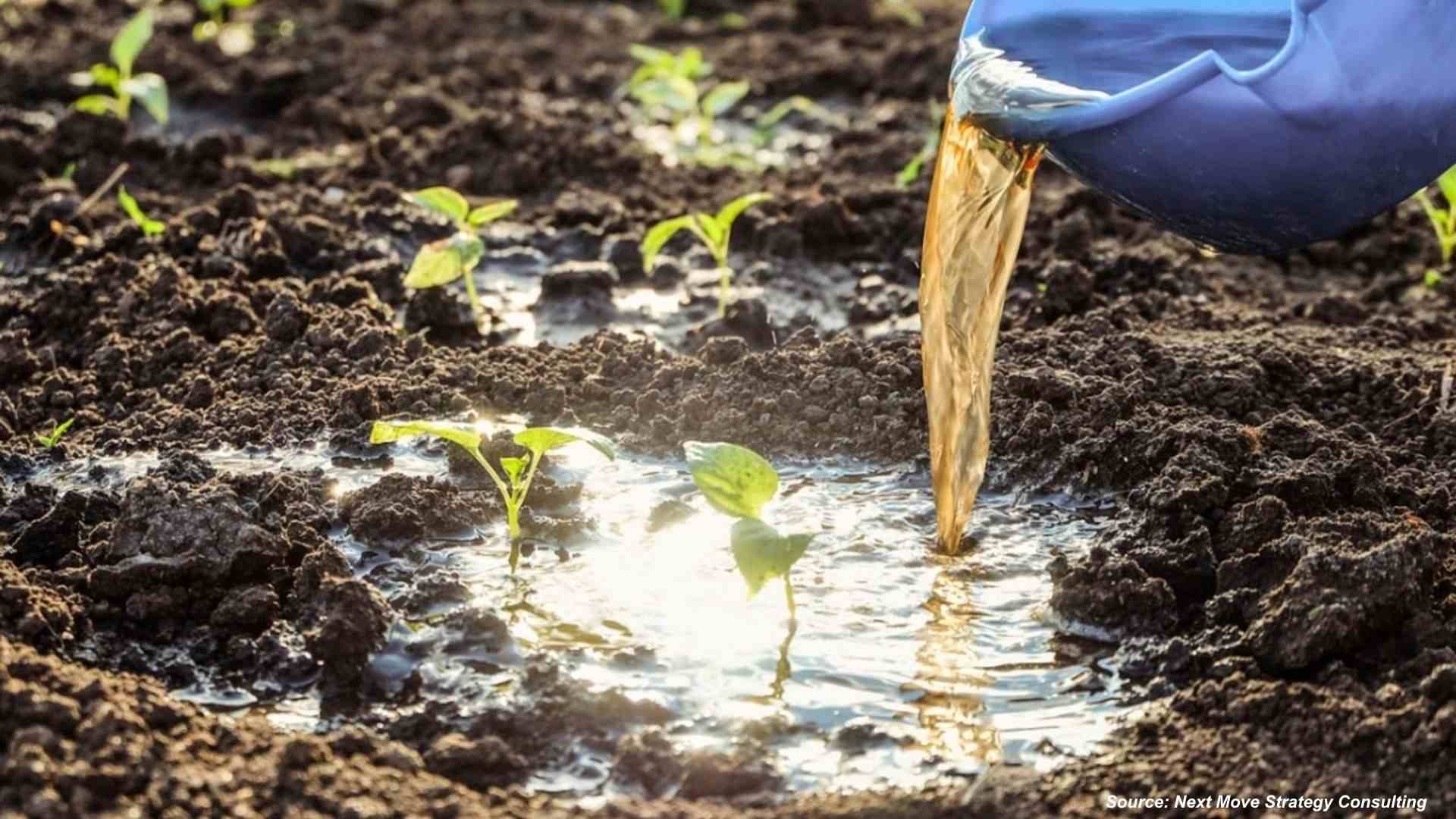
Nitricity has raised US$50 million in Series B funding to scale its production capabilities and expand its technology. Its flagship product, Ash Tea, is a liquid organic fertilizer made from recycled almond shells, air, water, and renewable energy. This composition reflects a shift toward circular production systems where waste materials are reused effectively.
Field trials have demonstrated up to 30% yield increase, along with improved early plant growth. At the same time, traditional fertilizer production through the Haber-Bosch process contributes approximately 5% of global greenhouse gas emissions, making alternatives increasingly necessary.
How Are Global Supply Disruptions Driving Adoption?
The global fertilizer market is currently experiencing significant disruption due to geopolitical tensions. The conflict involving Iran has severely impacted fertilizer trade routes, particularly through the Strait of Hormuz.
This region handles nearly 20% of global oil trade and about 30% of global fertilizer trade, making it a critical supply corridor. As shipments slow down and natural gas prices rise, fertilizer costs are increasing globally.
Farmers, especially in developing regions, are facing shortages and delays in accessing essential inputs. In response, many traders and farmers are turning to organic fertilizers as a more affordable and accessible alternative.

Why Are Organic Fertilizers Becoming Strategically Important?
Organic fertilizers are no longer just an environmentally friendly choice; they are becoming strategically important for long-term agricultural stability. Unlike synthetic fertilizers, which depend heavily on global energy markets, organic fertilizers can often be produced locally using agricultural waste.
The broader fertilizer market is valued at approximately US$150 billion, while the organic nitrogen fertilizer segment alone could exceed US$11 billion. This shift reflects a growing recognition that sustainable inputs are critical for maintaining productivity without compromising environmental health.
Global Supply Disruption and Its Impact on Fertilizers
|
Factor |
Impact on Agriculture |
|
Strait of Hormuz Disruption |
Affects ~30% of global fertilizer trade |
|
Oil Trade Dependency |
~20% of global oil passes through the region |
|
Rising Natural Gas Prices |
Increases fertilizer production costs |
|
Supply Shortages |
Delays and limited access for farmers |
|
Farmer Response |
Shift toward organic fertilizers |
|
Regional Impact |
Developing countries face higher risk |
How Does Sustainability Influence Organic Fertilizer Growth?
Sustainability is a central factor driving the adoption of organic fertilizers. Conventional fertilizers have long been associated with environmental issues such as soil degradation, water pollution, and biodiversity loss.
Organic fertilizers, on the other hand, contribute to improved soil microbiome health and reduce the risk of contamination. The use of agricultural waste, such as almond shells, demonstrates how circular agriculture can transform waste into valuable inputs.
What Challenges Still Limit Adoption?
Despite strong momentum, organic fertilizers still face challenges. Scaling production to meet global demand remains a key issue, especially as adoption increases rapidly. Additionally, some farmers are hesitant to transition due to lack of awareness or concerns about consistency and cost.
However, ongoing investments and expansion plans, particularly in the United States and Europe, indicate that these barriers are gradually being addressed.
What Does the Pie Chart Reveal About Organic Fertilizer Adoption?
The pie chart highlights the key factors driving the growing adoption of organic fertilizers in 2025, showing how multiple forces contribute almost evenly to this transition.
Innovation (25%) holds the largest share, indicating that advancements in organic fertilizer technology such as improved formulations and efficient application methods are the primary growth drivers. This reflects how new solutions are making organic fertilizers more practical and scalable for farmers.
Supply Disruptions (20%) represent a significant portion, driven by global trade challenges and rising input costs. These disruptions are pushing farmers to explore more reliable and locally available alternatives like organic fertilizers.
Sustainability (20%) plays an equally strong role. Increasing environmental concerns, including soil degradation and emissions from conventional fertilizers, are encouraging a shift toward eco-friendly solutions.
Soil Health (20%) emphasizes the long-term agricultural benefits of organic fertilizers. Farmers are recognizing the importance of improving soil microbiome and fertility rather than focusing only on short-term yield gains.
Cost Efficiency (15%), while slightly lower, still remains a critical factor. Organic fertilizers are becoming more cost-effective over time, especially as innovations reduce application quantities and improve nutrient efficiency.

Leading Companies in the Organic & Specialty Fertilizers Market
The organic and specialty fertilizers market is supported by a diverse group of global and regional players, including Darling Ingredients Inc., The Scotts Miracle-Gro Company, Yara International ASA, and Coromandel International Limited. Other notable contributors such as Fertikal N.V., California Organic Fertilizers, Inc., and Sustane Natural Fertilizer, Inc. play a significant role in advancing sustainable agricultural inputs. Companies like Biolchim S.p.A., BioAg, Sikko Industries Ltd., and KRIBHCO further strengthen the market with innovative bio-based solutions. Additionally, ILSA S.p.A., T. Stanes & Company Limited, Madras Fertilizers Limited, and Gujarat State Fertilizers & Chemicals Ltd. contribute to the industry’s growth through their extensive product portfolios and regional presence.

What Trends Are Shaping the Present Landscape?
The current landscape of organic fertilizers is defined by a combination of technological progress and market necessity. Localized production is gaining traction as companies explore ways to reduce dependence on imports. Liquid fertilizers are becoming more popular due to ease of application and efficiency.
At the same time, increasing investment in climate-focused technologies is accelerating innovation, while supply chain disruptions are encouraging diversification.
What Should Be the Next Steps for Stakeholders?
Stakeholders in agriculture need to take a balanced and forward-looking approach. Adopting a mix of organic and conventional fertilizers can help manage risk while maintaining productivity. Investing in local production systems will reduce reliance on global supply chains and improve resilience.
There is also a need to focus more on soil health and long-term sustainability rather than short-term yield gains. Collaboration with innovative companies can further accelerate the transition.
-
Adopt a balanced fertilizer strategy by integrating organic inputs alongside conventional options
-
Invest in localized production using agricultural waste to reduce supply dependency
-
Monitor global supply chain risks and diversify sourcing strategies
-
Prioritize long-term soil health over short-term yield gains
-
Collaborate with innovative and climate-focused companies to accelerate adoption
Final Thoughts
Organic fertilizers are becoming a cornerstone of modern agriculture. Driven by innovation, environmental necessity, and global supply challenges, their role is expanding rapidly.
As the agricultural sector adapts to a changing world, organic fertilizers offer a pathway toward a more resilient and sustainable future.
About the Author
 Tania Dey is a content writer specializing in transformation-led, insight-driven storytelling. She develops research-backed, high-impact content aligned with evolving business priorities, digital behavior, and audience expectations. Her work helps organizations sharpen value propositions, strengthen visibility, and communicate strategic intent with clarity and precision. Grounded in data-informed storytelling, she brings a strong focus on relevance, consistency, and measurable digital impact across platforms.
About the Reviewer
 Debashree Dey is Assistant Manager at Next Move Strategy Consulting, where she supports cross-vertical market content and communications across diverse industries for 6 years. Her professional background includes senior content writing, communications, and published manuscript authorship, with experience developing audience-focused business narratives and maintaining clear, consistent messaging. Her role supports research-led content development and editorial quality across NextMSC publications.
















Add Comment