How Is Global Collaboration Reshaping Connectivity Beyond Earth?

The future of connectivity is no longer limited to towers, cables, and terrestrial infrastructure. It is increasingly shaped by satellites, international cooperation, and orbital governance. Recent developments in 2025–2026 show that connectivity growth now depends on two critical forces: cross-border collaboration and space sustainability.
This creates a strong foundation for the Space Connects Market, where communication networks, research alliances, and responsible space operations intersect.
Why Is International Cooperation Becoming Essential?
In January 2026, the United Nations University Institute for Water, Environment and Health joined a new International Science Diplomacy Research Chair for Arctic and Space Cooperation led by Polytechnique Montréal. The initiative focuses on peaceful, sustainable, and knowledge-based cooperation in two strategic frontiers: the Arctic and outer space.
This signals an important market shift. Future connectivity systems will require more than advanced satellites. They will need shared governance models, international research partnerships, climate-resilient infrastructure, fair access frameworks, and long-term sustainability standards.
Key Forces Powering Future Connectivity
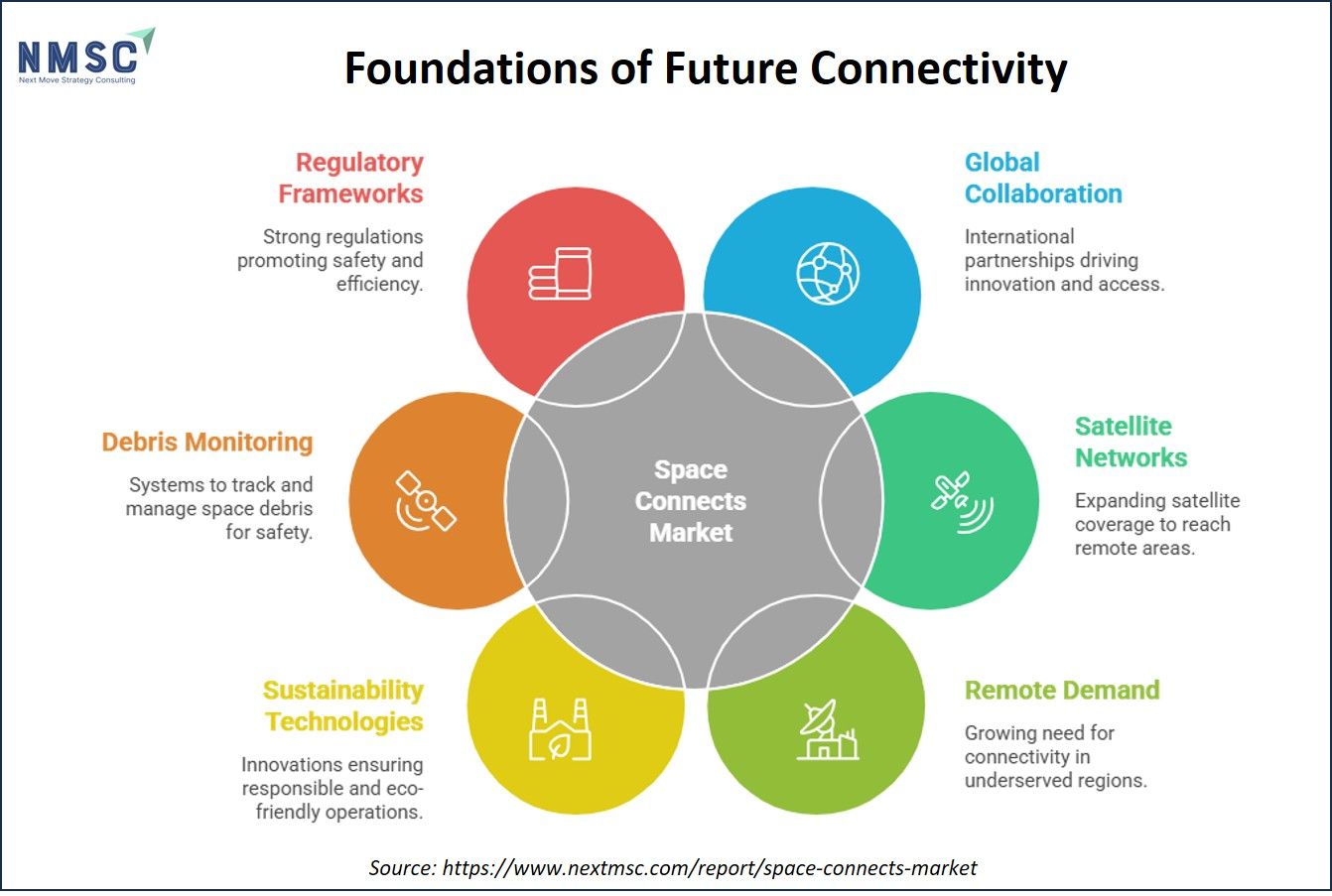
Global collaboration, expanding satellite networks, and rising demand from remote regions are accelerating the evolution of the Space Connects Market. At the same time, sustainability technologies, debris monitoring systems, and stronger regulatory frameworks are shaping a safer and more efficient operating environment. As innovation and responsible growth move together, the market is creating new opportunities for governments, enterprises, and connectivity providers worldwide.
What Does Science Diplomacy Mean for Future Networks?
The newly launched chair brings together expertise from Canada, France, and the United States. Its work highlights how research partnerships can improve infrastructure resilience, support cleaner energy systems, create predictable operating rules, protect environmental systems, and build future talent pipelines.
|
Priority Area |
Why It Matters for Connectivity |
|
Infrastructure resilience |
Supports dependable service in remote regions |
|
Energy transition pathways |
Reduces operating costs and emissions |
|
Governance frameworks |
Creates predictable rules for operators |
|
Environmental stewardship |
Protects orbital and Earth systems |
|
Capacity building |
Develops future talent pipelines |
How is Orbital Safety Influencing Commercial Growth?
While demand for satellite-based services is rising, sustainability concerns are also accelerating. In September 2025, debris from a Starlink satellite re-entry was seen over Saskatchewan. Experts noted that such re-entries are becoming more common, showing how orbital traffic management is becoming increasingly important.
Astronomers also reported that thousands of Starlink satellites were active in orbit, reflecting the rapid scale of low-Earth-orbit deployment worldwide.
As satellite volumes increase, market participants must invest in collision avoidance systems, re-entry tracking, debris mitigation tools, insurance planning, and real-time monitoring platforms.
What is Driving Market Growth?
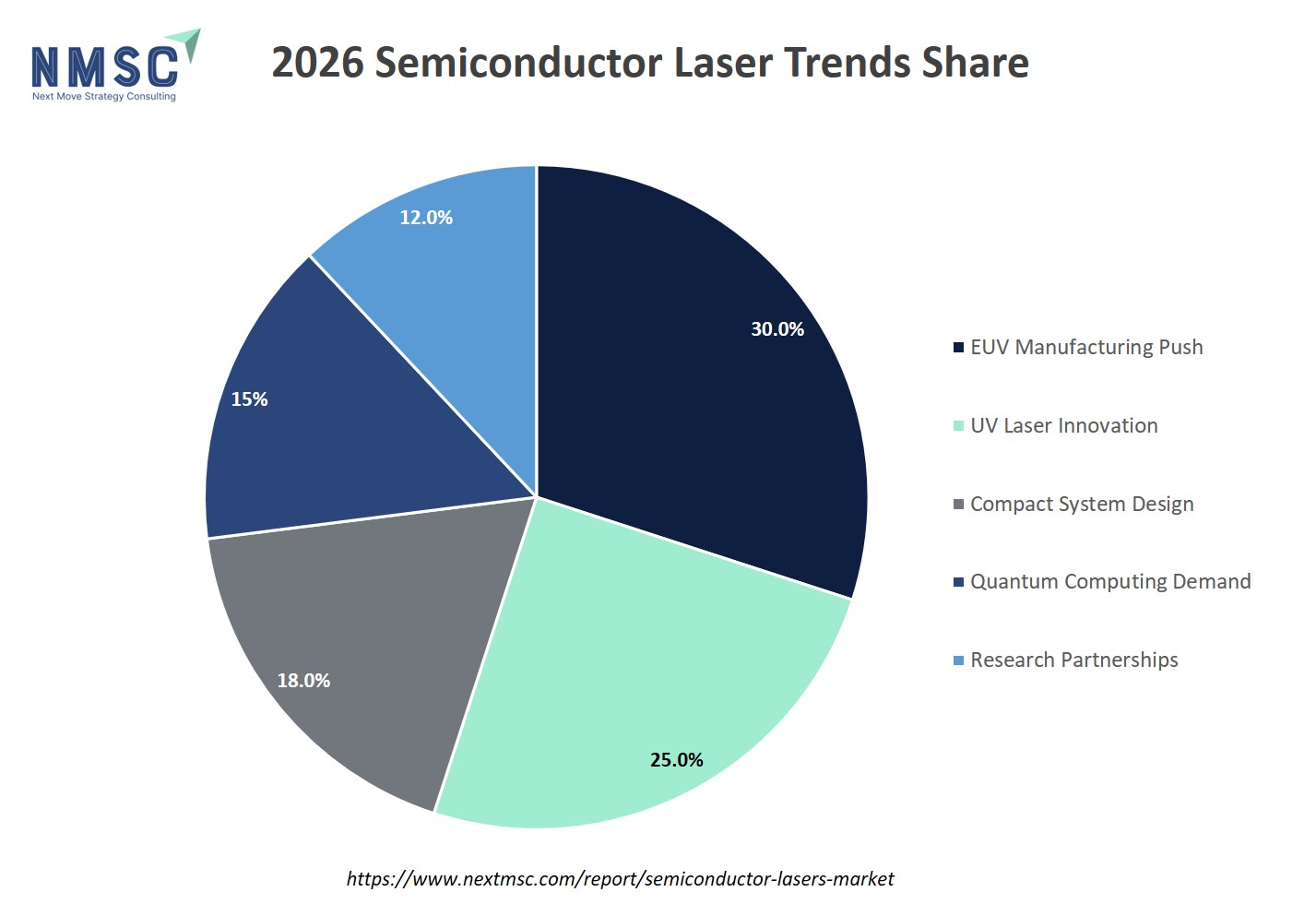
The pie chart shows that Satellite Expansion holds the largest share at 30%, highlighting how growing satellite deployments are the main force behind market development. Global Collaboration follows with 25%, reflecting the importance of partnerships between governments, institutions, and private players. Remote Demand accounts for 20%, driven by the need for reliable connectivity in underserved and hard-to-reach regions. Sustainability Tech contributes 15%, showing the rising focus on debris management, efficient systems, and long-term orbital safety. The remaining 10% comes from Regulatory Support, emphasizing how favorable policies and governance frameworks help create a stable environment for future expansion.
What Risks Could Slow Growth?
Every growing industry faces constraints. For space-enabled connectivity, the main risks include debris congestion, regulatory delays, public safety concerns, and infrastructure gaps.
Higher satellite density can increase collision probabilities. Different national rules may slow launches and operations. Re-entry events raise awareness about liability and risk management. Ground stations and remote-area support systems still require additional investment.
Emerging Drivers of the Next Connectivity Era
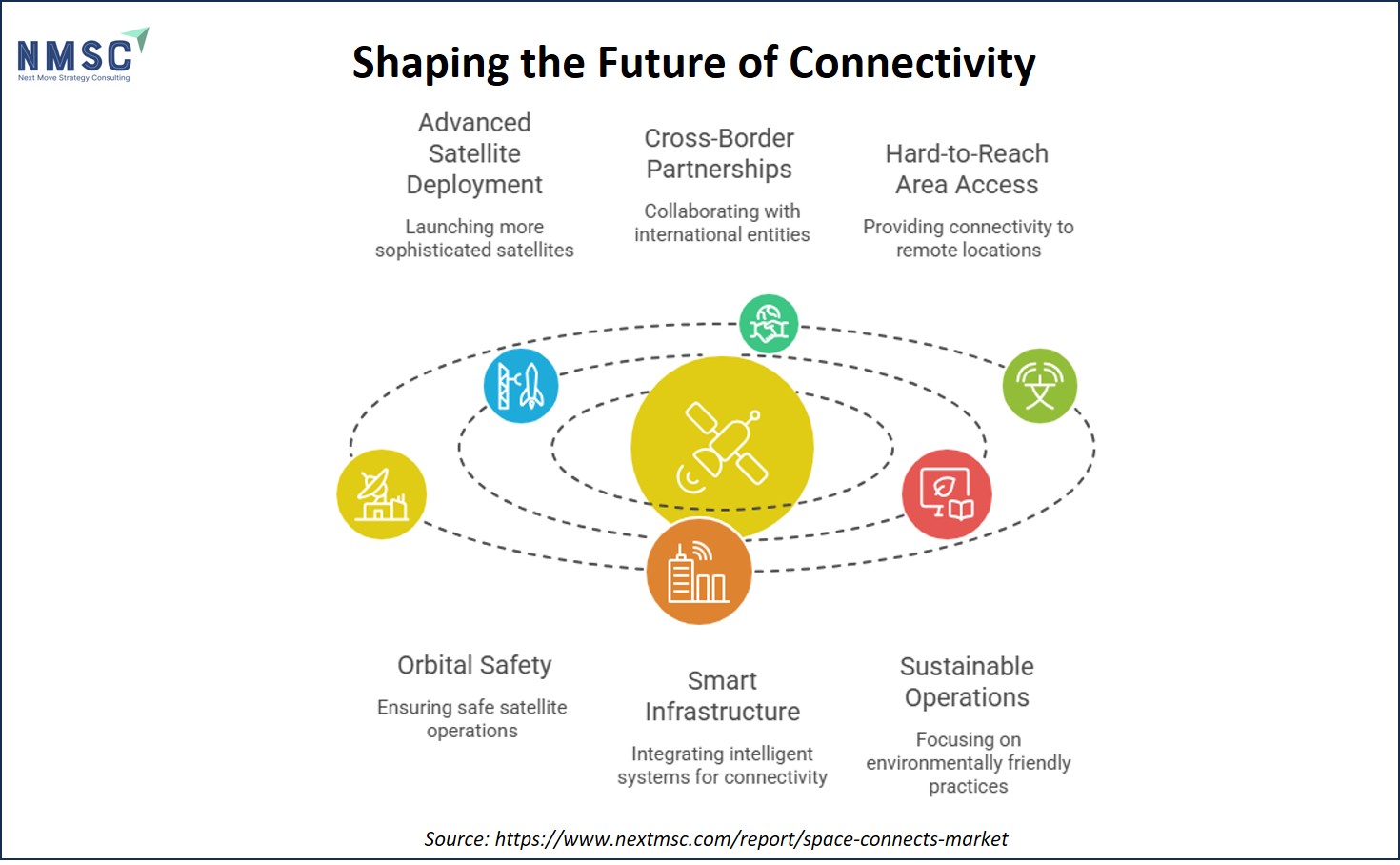
The Space Connects Market is being reshaped by the convergence of advanced satellite deployment, cross-border partnerships, and the need for seamless communication in hard-to-reach areas. Increasing focus on orbital safety, smart infrastructure, and sustainable operations is strengthening market confidence and long-term viability. This shift is opening the door for scalable digital access, stronger global networks, and future-ready connectivity solutions.
Leading Companies Driving Industry Innovation
The space connects industry is shaped by major players including Iridium Communications Inc., Lacuna Space Ltd., Myriota, Space Exploration Technologies Corporation (SpaceX), Eutelsat OneWeb, Amazon.com, Inc., Telesat, Orbcomm, Inmarsat Global Limited, SES S.A., and others. These companies are actively strengthening their market position through strategic initiatives such as product launches, partnerships, technological advancements, and service expansion across global markets.
Major Trends Shaping the Present
Smarter global alliances are helping institutions and governments cooperate more effectively. Sustainable satellite operations are becoming essential as operators manage end-of-life systems responsibly. Expansion into remote regions is creating new demand across underserved geographies. Governance is emerging as a competitive advantage for companies that adapt quickly. Knowledge-based innovation is accelerating next-generation capabilities through research collaboration.
Next Steps
Organizations should invest in debris-monitoring and safety technologies to reduce long-term risk. Building partnerships with research institutions and governments can strengthen innovation capacity. Companies should prioritize underserved markets that need reliable connectivity solutions. Multi-country compliance strategies will become increasingly important as regulations evolve. Long-term success will depend on resilient and sustainable infrastructure models.
-
Invest in debris-monitoring and orbital safety technologies to reduce long-term operational risks.
-
Build partnerships with research institutions, governments, and industry stakeholders to accelerate innovation.
-
Prioritize underserved and remote markets that need reliable connectivity solutions.
-
Develop multi-country compliance strategies to navigate evolving regulatory frameworks.
-
Focus on resilient, scalable, and sustainable infrastructure for future growth.
Final Takeaway
The Space Connects Market is evolving into far more than a communications opportunity. It now sits at the intersection of diplomacy, sustainability, and infrastructure modernization. The organizations that combine technological reach with responsible operations are likely to lead the next era of global connectivity. The Space Connects Market is entering a transformative phase driven by global collaboration, satellite expansion, and growing demand for reliable connectivity across remote and underserved regions. At the same time, orbital safety, sustainability, and governance are becoming essential to long-term success. Organizations that balance innovation with responsible operations, strategic partnerships, and resilient infrastructure will be best positioned to lead the future of global connectivity.
About the Author
 Sanyukta Deb
— Sanyukta Deb is Digital Marketing Team Lead at Next Move Strategy Consulting, where she has led content strategy and technical SEO for the firm's B2B market research publications for over 2 years. Her editorial process translates NextMSC's primary and secondary research — spanning technology, industrial, and consumer sectors — into commercial narratives, backed by search-intent, keyword, and competitive analysis. She brings 5 years of overall experience in digital marketing and content strategy.
Sanyukta Deb
— Sanyukta Deb is Digital Marketing Team Lead at Next Move Strategy Consulting, where she has led content strategy and technical SEO for the firm's B2B market research publications for over 2 years. Her editorial process translates NextMSC's primary and secondary research — spanning technology, industrial, and consumer sectors — into commercial narratives, backed by search-intent, keyword, and competitive analysis. She brings 5 years of overall experience in digital marketing and content strategy.
About the Reviewer
 Debashree Dey
— Debashree Dey is Assistant Manager at Next Move Strategy Consulting, where she supports cross-vertical market content and communications across diverse industries for 6 years. Her professional background includes senior content writing, communications, and published manuscript authorship, with experience developing audience-focused business narratives and maintaining clear, consistent messaging. Her role supports research-led content development and editorial quality across NextMSC publications.
Debashree Dey
— Debashree Dey is Assistant Manager at Next Move Strategy Consulting, where she supports cross-vertical market content and communications across diverse industries for 6 years. Her professional background includes senior content writing, communications, and published manuscript authorship, with experience developing audience-focused business narratives and maintaining clear, consistent messaging. Her role supports research-led content development and editorial quality across NextMSC publications.


















Add Comment