How Key Players Are Scaling TinyML Adoption Through Ultra-Low-Power Hardware and Edge AI Integration
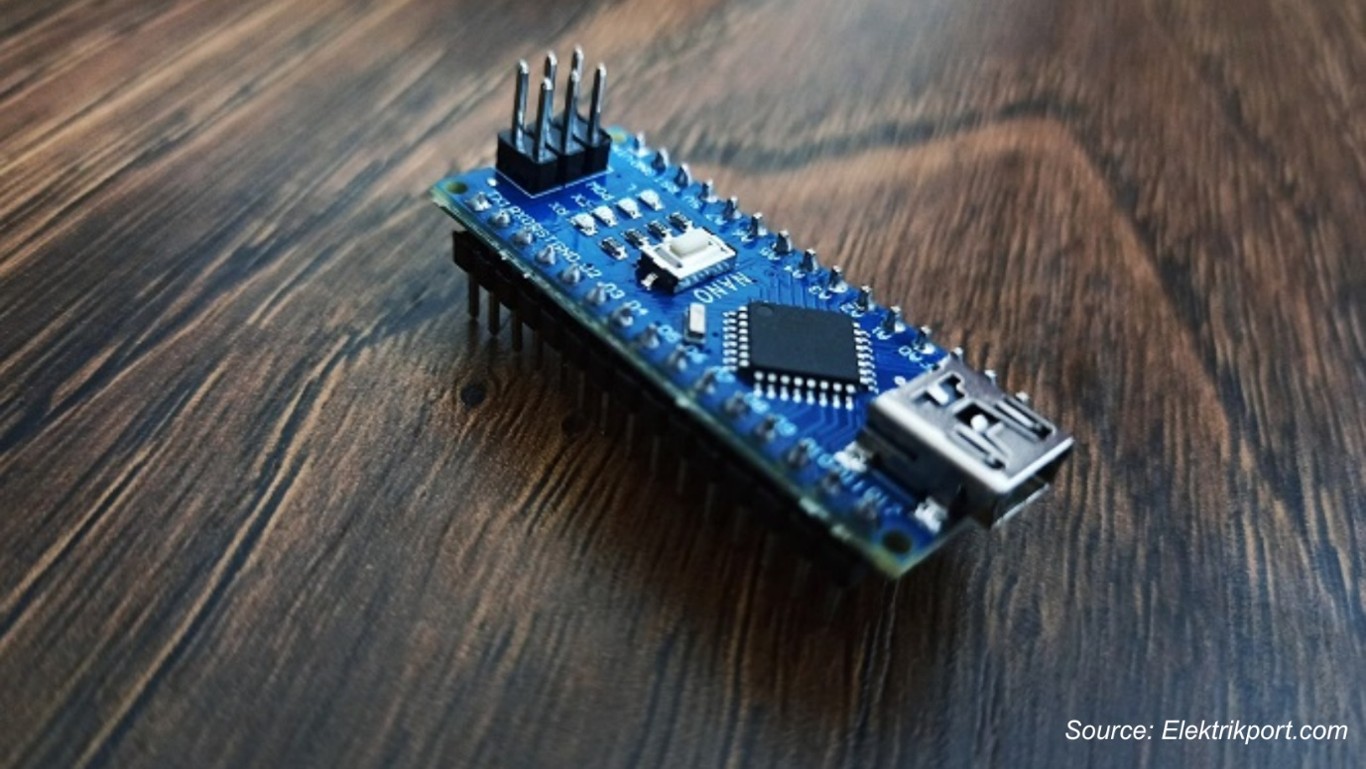
As per NMSC analysis, The TinyML Market size was valued at USD 1.76 billion in 2025 and is expected to be valued at USD 2.49 billion by the end of 2026. The industry is projected to grow, hitting USD 18.20 billion by 2035, with a CAGR of 24.73% between 2026 and 2035.
Based on our analysis of industry deployments, and edge AI implementation trends, we observed that the TinyML market is undergoing a structural shift driven by the convergence of ultra-low-power hardware and embedded intelligence. As edge devices proliferate across consumer, industrial, and infrastructure environments, the demand for real-time, on-device inference continues to accelerate. In particular, TinyML enables continuous sensing and decision-making directly on microcontrollers, eliminating latency associated with cloud processing while significantly reducing energy consumption. Furthermore, interactions with embedded engineers and solution providers indicate that advancements in model optimization techniques, such as quantization and pruning, are making it increasingly feasible to deploy intelligent workloads within highly constrained compute and memory environments. Consequently, TinyML is emerging as a foundational layer for scalable, efficient, and autonomous edge intelligence..
TinyML Market Overview
Based on our evaluation of regulatory developments and enterprise AI strategies, we identified that data privacy and security considerations are reinforcing the adoption of TinyML architectures. As data protection frameworks become more stringent across regions, organizations are prioritizing localized data processing to minimize exposure risks and ensure compliance. From a system design perspective, TinyML enables inference directly on devices, thereby reducing dependence on continuous cloud connectivity and limiting data transmission. Moreover, discussions with enterprise architects highlight that on-device intelligence enhances system resilience and reliability, particularly in mission-critical applications such as healthcare monitoring and industrial automation. As a result, TinyML is increasingly positioned as a compliance-aligned and secure approach to deploying AI in distributed environments.
However, memory and compute restrictions remain a critical barrier to the scalability of TinyML solutions. Microcontroller-based systems inherently operate within tight resource limits, which directly constrain model complexity, feature integration, and multi-modal capabilities. Through our review of developer workflows and real-world implementations, we found that these limitations necessitate significant model simplification, often impacting accuracy and functional depth. Additionally, the inability to support large-parameter or continuously learning models restricts the applicability of TinyML in more advanced use cases. Therefore, hardware constraints continue to act as a structural bottleneck, influencing model design decisions and narrowing the scope of deployable applications.
the TinyML market is being actively shaped by leading chip manufacturers focused on ultra-low-power processing and on-device intelligence. Companies such as Texas Instruments, STMicroelectronics N.V., and Analog Devices, Inc. are leveraging their strong portfolios in microcontrollers, analog processing, and signal chain technologies to enable efficient edge inference. In particular, these players are integrating AI accelerators and optimizing processing architectures to support real-time analytics within strict power and memory constraints. Consequently, their innovations are forming the backbone of scalable TinyML deployments across industrial automation, healthcare devices, and smart consumer electronics.
In addition, the competitive landscape reflects a clear strategic shift toward platform-based differentiation, where semiconductor companies are moving beyond component supply to deliver comprehensive TinyML solutions. Investments in AI-enabled microcontrollers, edge analytics frameworks, and developer ecosystems are enabling faster deployment cycles and improved accessibility for embedded engineers. Therefore, these top companies are playing a critical role in transforming the TinyML market by bridging hardware limitations with intelligent software capabilities, ultimately driving the evolution of low-power, autonomous edge computing systems.

Curious about the TinyML Market? Download Your FREE Sample Report Now
Highlights of Texas Instruments

Texas Instruments, headquartered in Dallas, is a global leader in analog semiconductors and embedded processing, playing a critical role in enabling ultra-low-power intelligence within the TinyML ecosystem. Our analysis indicates the company maintains a strong portfolio of microcontrollers, processors, and analog components that are widely deployed across industrial automation, automotive systems, consumer electronics, and IoT edge devices. Its MSP430 and ARM-based MCU families are specifically designed for energy-efficient, real-time processing, making them highly suitable for always-on sensing and inference workloads. In addition, Texas Instruments has built a robust software and developer ecosystem, including AI-focused toolchains and edge analytics frameworks, which support rapid prototyping and scalable deployment of embedded machine learning models. Through continuous investment in low-power architectures and integrated processing capabilities, the company is positioning itself as a foundational enabler of scalable, on-device intelligence across next-generation edge environments..
In March 2026, Texas Instruments expanded its embedded portfolio to support edge AI through enhanced microcontroller capabilities and software ecosystem improvements. This development reflects the growing shift toward integrating AI directly into low-power embedded systems. By enabling efficient on-device inference, Texas Instruments strengthens its leadership in scalable TinyML deployments across industrial sensing, automotive systems, and always-on IoT devices.
Highlights of STMicroelectronics N.V.

Based on our analysis of embedded AI deployments and developer ecosystem evolution, we observed that STMicroelectronics is strengthening its position as a full-stack enabler within the TinyML market. Headquartered in Switzerland, the company has built a strong presence in microcontrollers, sensors, and edge AI solutions, with its STM32 portfolio widely adopted across industrial automation, smart consumer devices, healthcare wearables, and automotive systems. Further, STMicroelectronics is actively integrating hardware capabilities with AI-focused development tools, enabling efficient deployment of machine learning models on constrained devices. Additionally, we identified that its continuous investment in low-power architectures and intelligent sensing technologies supports scalable and real-time edge intelligence, reinforcing its role in advancing TinyML adoption.
In 2026, STMicroelectronics introduced STM32Cube.AI Studio, a dedicated environment for optimizing and deploying AI models on STM32 microcontrollers. This development reflects the growing importance of software-driven enablement in the TinyML market. By simplifying model optimization and deployment, STMicroelectronics enhances developer accessibility and reduces implementation complexity. As a result, our assessment indicates that the company is strengthening its competitive positioning through an integrated hardware-software approach to edge AI.
Highlights of Analog Devices, Inc.

Based on our analysis of edge sensing architectures and real-time data processing requirements, we observed that Analog Devices plays a critical role in enabling context-aware intelligence within the TinyML ecosystem. Headquartered in Massachusetts, the company specializes in high-performance analog and mixed-signal technologies that are essential for accurate data acquisition in edge environments. Our evaluation indicates that its solutions are widely deployed across healthcare monitoring, industrial automation, and condition-based maintenance systems, where precision and reliability are critical. Furthermore, Analog Devices is increasingly integrating intelligent processing capabilities with its sensing platforms, enabling real-time analytics directly at the source of data generation. This combination of sensing and embedded intelligence positions the company as a key enabler of high-value TinyML applications.
This strategic direction reflects the increasing importance of high-quality data processing in TinyML deployments. Based on our assessment, the integration of sensing with embedded intelligence enhances decision accuracy and system efficiency. Consequently, Analog Devices is strengthening its position in advanced TinyML use cases such as predictive maintenance, healthcare diagnostics, and industrial monitoring.
Highlights of Renesas Electronics Corporation

Based on our evaluation of embedded AI ecosystems and microcontroller innovation strategies, we observed that Renesas Electronics Corporation is positioning itself as a key enabler of scalable TinyML deployments. Headquartered in Japan, the company offers a comprehensive portfolio of microcontrollers and embedded solutions with strong adoption across automotive, industrial, and IoT applications. In addition, Renesas is increasingly focusing on integrating AI capabilities directly into its processing platforms, supported by robust software toolchains and development environments. In addition, we identified that its ecosystem-driven approach combining hardware, AI tools, and reference designs reduces development complexity and accelerates time-to-market for embedded AI applications. This integrated strategy enhances developer accessibility and supports broader adoption of TinyML solutions across edge environments.
In July 2025, Renesas Electronics introduced the RZ/G3E 64-bit MPU, specifically engineered for high-performance Human-Machine Interface (HMI) systems, supporting high-speed AI acceleration and edge computing while maintaining low power consumption. This development reflects the increasing convergence of high-performance edge computing and energy-efficient design within the TinyML market. Based on our assessment, the introduction of AI-capable MPUs optimized for HMI applications enables more responsive, intelligent, and visually rich edge systems, particularly in industrial and automotive environments. Consequently, Renesas is strengthening its position in advanced edge AI use cases, where real-time processing, user interaction, and power efficiency are critical.
Highlights of Infineon Technologies AG

Based on our analysis of secure ege computing and low-power semiconductor innovation, we observed that Infineon Technologies is playing a significant role in advancing TinyML adoption, particularly in safety-critical and energy-sensitive applications. Headquartered in Germany, the company offers a diverse portfolio of microcontrollers and embedded solutions, including its PSOC and AURIX families, which are widely used across automotive, industrial, and IoT environments. Our evaluation indicates that Infineon’s emphasis on integrating energy efficiency with hardware-level security addresses key requirements of TinyML deployments. Furthermore, we identified that the company is increasingly incorporating AI capabilities into its microcontroller platforms, enabling real-time and secure on-device intelligence. This positions Infineon as a key enabler of reliable and scalable edge AI systems.
In 2025, Infineon expanded its edge AI capabilities through its PSOC Edge platform, designed for machine learning and AI applications on microcontrollers. BThis development aligns with the growing demand for secure and energy-efficient TinyML solutions. The integration of AI processing with low-power architectures and embedded security enhances system reliability and scalability. Therefore, Infineon is strengthening its position in automotive safety, industrial automation, and smart infrastructure applications within the TinyML market.
Summary Of TinyML Market
Based on our analysis of edge AI deployments and embedded system advancements, we observed that the TinyML market is rapidly transforming how intelligence is implemented across resource-constrained devices. By enabling ultra-low-power, on-device inference, TinyML reduces latency, minimizes cloud dependency, and enhances real-time decision-making across applications such as industrial monitoring, healthcare wearables, and smart consumer devices. Furthermore, advancements in low-power semiconductor architectures, model optimization techniques, and integrated development ecosystems are accelerating adoption. Leading companies are increasingly focusing on AI-enabled microcontrollers and platform-based strategies to simplify deployment and improve scalability. As a result, TinyML is emerging as a critical enabler of efficient, secure, and distributed edge intelligence, positioning the market for sustained growth driven by the expansion of IoT and demand for energy-efficient computing.
About the Author
 Saista Faiyaz
— Saista Faiyaz is Research Associate at Next Move Strategy Consulting, where she has covered consumer markets and healthcare technologies for 3 years. Her work includes primary interview review, secondary-source validation, market sizing, and structured analysis of company and industry data. She supports research by comparing evidence across sources, organizing findings into market narratives, and documenting assumptions used in analysis. Her scope includes cross-market benchmarking, and reports.
Saista Faiyaz
— Saista Faiyaz is Research Associate at Next Move Strategy Consulting, where she has covered consumer markets and healthcare technologies for 3 years. Her work includes primary interview review, secondary-source validation, market sizing, and structured analysis of company and industry data. She supports research by comparing evidence across sources, organizing findings into market narratives, and documenting assumptions used in analysis. Her scope includes cross-market benchmarking, and reports.
About the Reviewer
 Supradip Baul
— Supradip Baul is an accomplished business consultant and strategist with over a decade of rich experience in market intelligence, strategy, technology, and business transformation. His work has included rigorous qualitative and quantitative analysis across multiple industries, helping clients shape investment decisions and long-term roadmaps. Earlier in his career, he was associated with Gartner, where he contributed to industry-leading reports and market share analyses. He has worked with leading global companies and holds an MBA with a dual specialization in Marketing and Finance.
Supradip Baul
— Supradip Baul is an accomplished business consultant and strategist with over a decade of rich experience in market intelligence, strategy, technology, and business transformation. His work has included rigorous qualitative and quantitative analysis across multiple industries, helping clients shape investment decisions and long-term roadmaps. Earlier in his career, he was associated with Gartner, where he contributed to industry-leading reports and market share analyses. He has worked with leading global companies and holds an MBA with a dual specialization in Marketing and Finance.


















Add Comment