How Smart Technology Is Rebuilding India's Vertical Mobility
In This Article
-
IoT Connectivity Is Turning Elevators Into Continuously Reporting Assets
-
AI and Building Data Platforms Are Extending the Contract Beyond Installation
-
High-Speed and Destination-Control Systems Are Where Premium Projects Are Won
-
Machine-Room-Less Traction Is Quietly Redrawing Building Economics
-
Compact Home Elevator Technology Is Opening a Segment That Barely Existed
-
Modernization Technology Is the Margin Story Hiding in Plain Sight
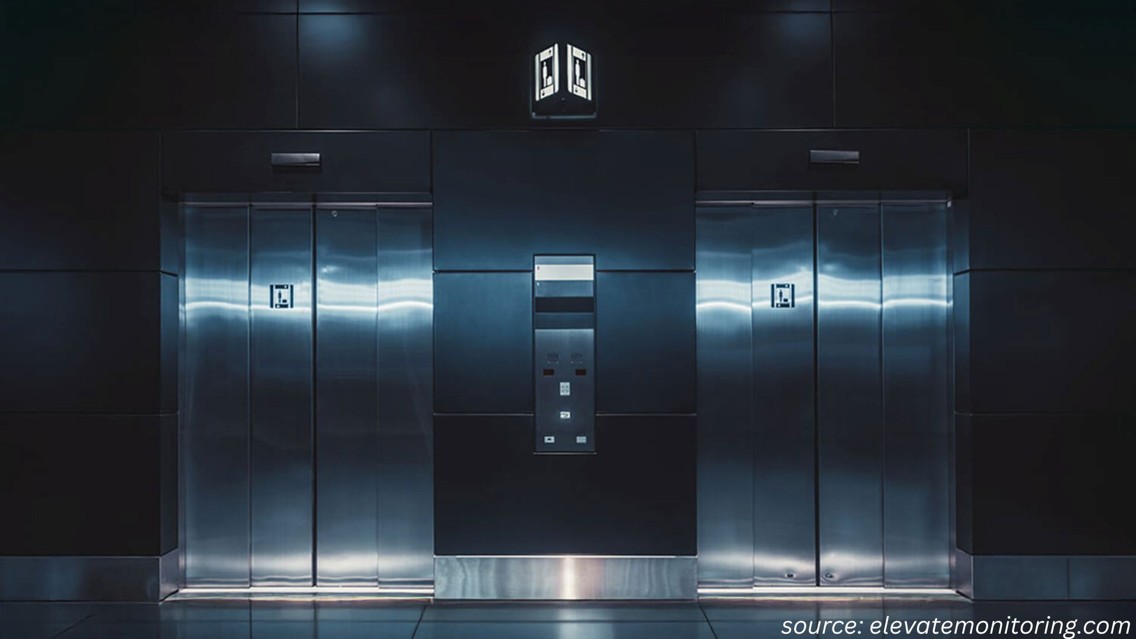
The India Elevator and Escalator Market was valued at USD 3.35 billion in 2025 and is projected to reach USD 7.80 billion by 2035, growing at an 8.62% CAGR from 2026 to 2035. Connected platforms, AI-enabled diagnostics, and destination-control systems are increasingly influencing elevator specifications, shifting competition beyond core hoistway hardware toward digital services and lifecycle performance.
Developers and public agencies are increasingly considering connected monitoring and predictive maintenance during project planning, creating opportunities for manufacturers that combine equipment with digital service capabilities.
This article examines six technology shifts shaping the market, supported by verified company developments and examples from India. It also examines how technology is influencing modernization, building traffic management, residential applications, and competitive positioning.
For an In-depth Analysis of the India Elevator & Escalator Market, Try a FREE Sample.
IoT Connectivity Is Turning Elevators into Continuously Reporting Assets
Our analysis indicates that connected elevator platforms are moving beyond pilot deployments and gaining adoption in metropolitan projects. Rather than waiting for a fault call, cloud-linked units stream operating and equipment-performance data to cloud platforms, allowing service teams to monitor equipment condition and identify issues. Otis has positioned its Gen3 elevator platform around connected monitoring capabilities, illustrating how digital services are becoming an increasingly important part of elevator offerings.
The technical mechanism is worth unpacking, because it explains the commercial consequence. A conventional elevator reveals a developing fault only when performance degrades enough for a passenger or technician to notice. A connected unit compares live operating data against expected performance curves, flagging drift in door timing or motor current long before a failure occurs. That turns an unplanned callout into a scheduled visit.
The commercial consequence is a revenue-mix change. Modernization and connected maintenance services can provide manufacturers with additional recurring revenue opportunities beyond new-equipment sales. This reflects why modernization is the fastest-growing revenue stream in the market at a 12.24% CAGR through 2035, outpacing new equipment despite the latter's 67% share of 2025 revenue.
For building owners, the calculation changes too. Downtime in a high-rise residential tower carries reputational cost with tenants that is difficult to price but easy to feel, and connected monitoring gives facility teams a defensible answer when residents ask why a unit failed.
Key takeaway: Competition in India's vertical transportation market is shifting from equipment price toward lifecycle service capability. Manufacturers that combine connectivity, analytics, and maintenance services can strengthen recurring revenue opportunities as building owners place greater emphasis on equipment uptime and predictive maintenance.
AI and Building Data Platforms Are Extending the Contract Beyond Installation
Industry evidence indicates that the more consequential development is not connectivity itself but what sits on top of it. Elevators are becoming one input into building-wide intelligence platforms, where lift traffic data informs HVAC scheduling, security, and occupancy planning. In July 2026, Hitachi, Hitachi Lift India, and GlobalLogic launched the BuilMirai Experience Center in Noida, centered on the HMAX for Buildings platform, a hub combining building data, domain expertise, and AI to demonstrate connected building management.
The company positions India as a strategic building-solutions hub rather than solely a manufacturing base, which is the more telling signal. The investment also signals a broader focus on digital building-service architecture alongside conventional equipment.
Consider what elevator data reveals about a building. Elevator traffic data can potentially help operators identify peak demand periods, floor-level traffic patterns, and lobby bottlenecks. Historically, this level of consolidated elevator data was less accessible to facility managers, but its potential value extends well beyond the lift shaft.
For facility managers running mixed-brand portfolios, that creates an opening for vendor-agnostic predictive maintenance platforms, one of the clearer whitespace opportunities in the market through 2035. A large commercial landlord may operate Otis units in one tower, Schindler in another, and a domestic brand in a third. Centralized visibility across that mixed fleet is a genuine unmet need, and the vendor that solves it captures a relationship that outlasts any single equipment contract.
High-Speed and Destination-Control Systems Are Where Premium Projects Are Won
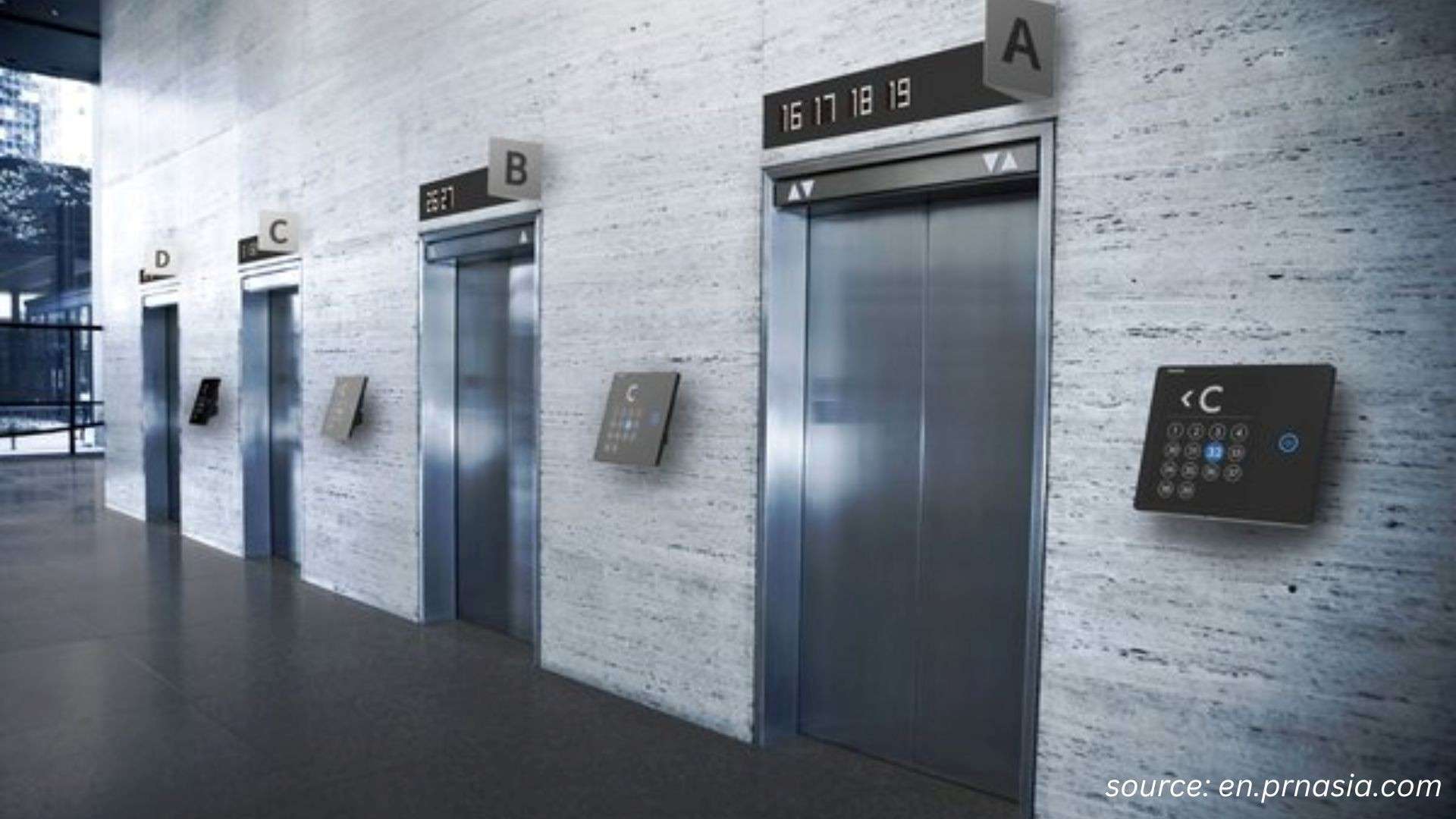
We observed that India's tallest residential and commercial projects are now specifying traffic-management technology alongside raw speed. Destination-control systems group passengers by floor before they board, cutting intermediate stops and improving handling capacity without adding shafts, a meaningful economic argument in land-constrained metropolitan sites. Schindler India offers destination-control technology designed to improve elevator traffic handling and passenger flow.
The economics here are unusually direct. Every additional elevator shaft consumes floor plate across every storey of a building, and in premium metropolitan locations that floor area carries a substantial opportunity cost. In some projects, improved traffic handling can reduce the number of cars or shafts required to meet a given service target, subject to project-specific traffic analysis. In such cases, the technology's value can come from improved space utilization rather than energy savings alone.
KONE's Sriperumbudur facility includes high-speed elevator testing and elevator and escalator component testing, supporting the company's high-rise technology and India-specific product development capabilities. Otis India illustrates where that capability converts to revenue: in October 2025, it secured a contract with My Home Group to supply 169 high-speed elevators across three luxury residential developments in Hyderabad, including the 234-meter My Home 99.
Such orders demonstrate that high-rise developers now treat ride performance as a saleable amenity rather than a building service. A 234-meter tower requires elevator systems designed around its height, travel requirements, and passenger-traffic demand, with key specifications typically established during the building design stage.
The rated-capacity data makes the pattern explicit:
India Elevator and Escalator Market by Rated Capacity, 2025–2035 (USD Million)
|
Rated Capacity |
2025 |
2035 |
CAGR (2026–2035) |
|
Low Capacity Systems |
602.42 |
1,047.00 |
5.45% |
|
Medium Capacity Systems |
1,367.77 |
3,063.37 |
8.20% |
|
High Capacity Systems |
940.46 |
2,638.46 |
10.65% |
|
Ultra-High Capacity Systems |
442.72 |
1,054.21 |
8.87% |
|
Total |
3,353.37 |
7,803.04 |
8.62% |
Medium capacity remains the volume core, but growth concentrates in high-capacity systems, the configuration specified for high-rise commercial towers, hospitals, and transit facilities managing peak passenger loads. The gap between medium-capacity growth at 8.20% and high-capacity growth at 10.65% is where premium vendors compete most intensely.
Transit procurement shows the same technical escalation at scale. In February 2026, Fujitec announced that it had received an order for 451 escalators and moving walks for Chennai Metro Corridors 3 and 5, covering 54 stations, including 34 underground and 20 elevated stations. Transit escalators face duty cycles and throughput requirements that building escalators do not, which is a central reason Escalator Systems is the fastest-growing product type at a 12.68% CAGR through 2035.
Machine-Room-Less Traction Is Quietly Redrawing Building Economics
Our findings suggest that machine-room-less traction systems represent the least discussed but most structurally significant technology shift in the market. By housing the drive unit within the hoistway rather than in a dedicated overhead machine room, these systems eliminate a construction requirement that has shaped building design for decades.
The practical effect compounds across a project. Removing the machine room frees rooftop area for amenities or plant equipment, reduces structural loading at the top of the building, and simplifies the approvals process where height restrictions apply. For developers working within strict floor-area-ratio limits, that is not a marginal convenience.
Energy performance reinforces the case. Gearless permanent-magnet traction machines used in these configurations typically consume less power than older geared systems and regenerate energy during descent, feeding it back into the building supply. As energy efficiency moves up the specification hierarchy for green-certified commercial stock, that regeneration capability increasingly appears as a tender requirement rather than a vendor talking point.
This reflects a broader pattern across the market: the technologies gaining share are those that change a developer's economics rather than simply improving the passenger experience. Machine-room-less traction alters buildable area and operating cost simultaneously, which is why it has migrated from premium projects into mainstream mid-rise residential specification.
Compact Home Elevator Technology Is Opening a Segment That Barely Existed
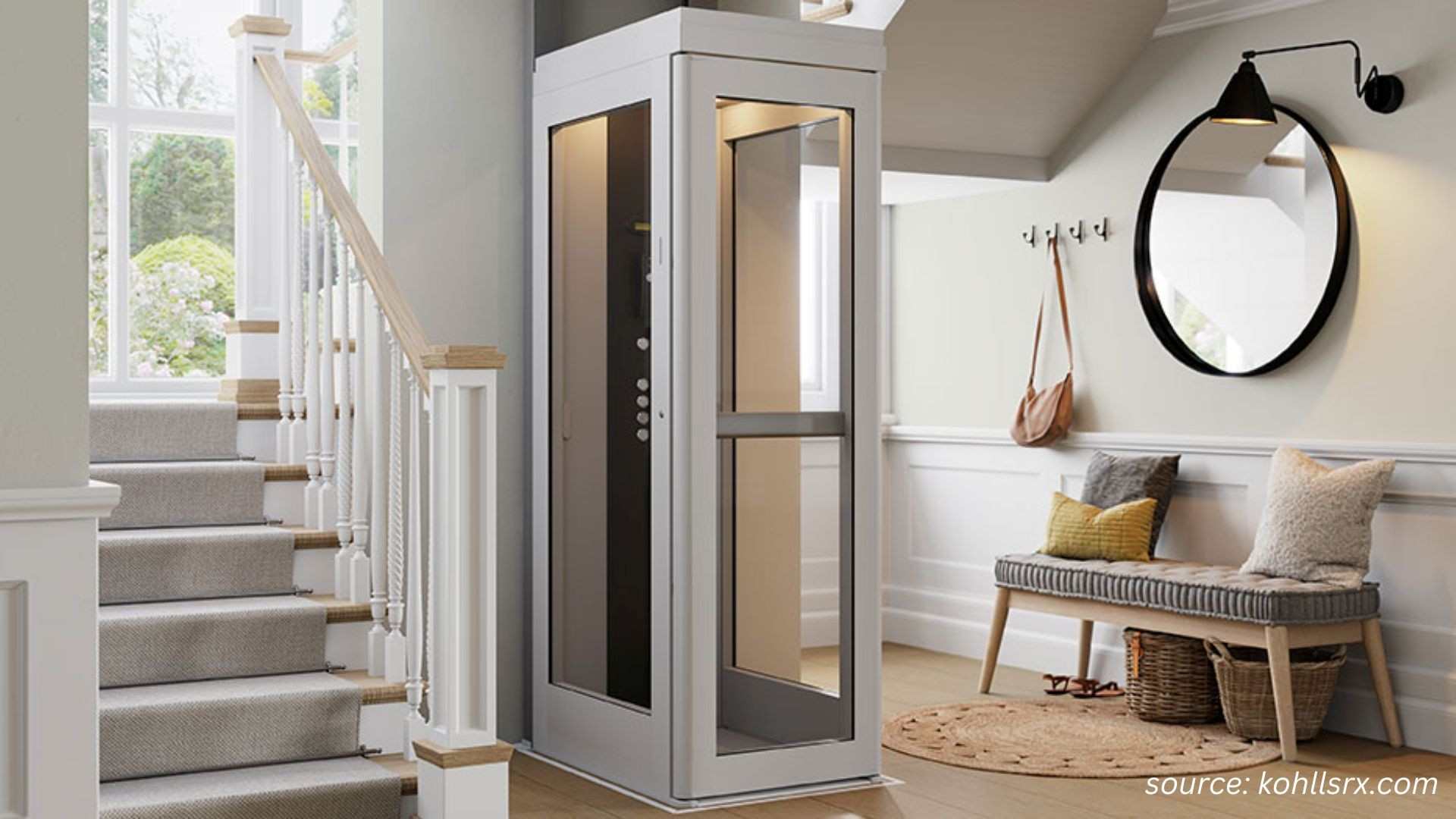
The company highlights a quieter technical shift worth naming: pneumatic and compact drive systems have removed the structural preconditions that historically kept elevators out of individual homes. Pneumatic home elevators can eliminate the need for a conventional pit and machine room while reducing the extent of structural and civil work required for installation. In July 2025, Nibav Lifts launched its Series V pneumatic home elevator in India, featuring automated doors, illuminated interiors, personalized design elements, and a screwless construction.
The retrofit dimension is what makes this commercially distinct. Some conventional home-elevator configurations require a pit and structural modifications, which can make installation more complex in existing homes. By contrast, self-supporting and pneumatic systems can reduce structural requirements and expand retrofit opportunities. A self-supporting pneumatic unit can therefore make a wider range of existing homes suitable for elevator installation.
Established manufacturers are also serving this segment. TK Elevator India offers the enta villa home elevator for multi-storey houses and villas, extending elevator applications beyond traditional high-rise buildings. Residential remains the largest end use at USD 1,266.40 million in 2025, and low-rise penetration is the most plausible route to growing it without depending solely on apartment-tower completions.
Demographics reinforce the trend. Rising life expectancy and multi-generational households in metropolitan India are making vertical accessibility a functional requirement in homes that were designed without it. This is demand driven by ageing in place rather than by luxury positioning, which typically makes it more durable across construction cycles.
Localized supply is what makes the segment defensible. In November 2025, Fujitec received its largest-ever India order, comprising 698 elevators for a Signature Global residential development in Gurgaon. The company also said it was advancing a capital investment plan to more than double its local production capacity by FY2026. Domestic manufacturing depth increasingly determines who can convert demand into delivered units on a developer's schedule.
Modernization Technology Is the Margin Story Hiding in Plain Sight
Based on research conducted by NMSC, we found that modernization is where technology adoption and revenue quality intersect most favorably for manufacturers. India's installed base includes a substantial cohort of elevators commissioned during earlier construction cycles that are now approaching end-of-life for their control systems, even where the mechanical structure remains sound.
Modernization packages rarely replace the whole installation. Instead, they swap control boards, drive systems, and door operators while retaining the guide rails and car frame, which cuts both cost and building downtime. Retrofitting connectivity during that upgrade converts a legacy unit into a monitored asset without a full replacement.
The revenue characteristics are attractive. Modernization carries higher margins than competitively tendered new-equipment sales, and it typically extends the service contract by another cycle. This is a central reason modernization grows at 12.24% CAGR through 2035, faster than the 8.62% market average and faster than new equipment.
Regulatory pressure adds further momentum. India's framework combines Bureau of Indian Standards requirements with state-specific lift and escalator legislation covering licensing, inspection, and maintenance, and applicable requirements vary by jurisdiction and installation type. As inspection requirements, safety expectations, and energy-efficiency considerations evolve, owners of ageing equipment may face modernization or corrective-action requirements where existing systems no longer meet applicable standards or operating requirements.
|
Inside the India Elevator and Escalator Market Report Six segmentation axes, 15 company profiles, and 2026–2035 forecasts in one model. |
What Technology Adoption Means for Competitive Positioning
NMSC's analysis indicates that the market is consolidating around two competitive archetypes rather than fragmenting further. Multinational manufacturers including Otis, KONE, Schindler, and Hitachi compete on globally standardized, technology-forward platforms backed by extensive service networks and digital ecosystems. Domestic manufacturers such as Johnson Lifts and City Lift compete on cost-competitive products tailored to Indian construction budgets, supported by broad service coverage.
What separates the two is less the hardware than the software layer and the service infrastructure required to support it. Building a connected platform demands sustained investment in cloud infrastructure, data engineering, and field technicians trained to act on predictive alerts, and that investment is difficult to justify at the price points prevailing in Tier-II and Tier-III projects.
Expansion activity confirms the pattern. Growth is concentrated in organic local manufacturing investment rather than acquisition, with KONE strengthening Sriperumbudur testing capability and Hybon Elevators announcing investment to expand research and production capacity. This suggests incumbents view manufacturing depth and technical capability, not consolidation, as the route to defending position.
High upfront capital costs remain a constraint on faster technology diffusion, particularly in Tier-II and Tier-III cities where construction budgets are tighter. Price competition from regional manufacturers can further limit the adoption of connected platforms in smaller markets, slowing their spread beyond major metropolitan centers.
Outlook: What Changes Through 2035
Taken together, these six shifts converge on a single conclusion: India's vertical mobility sector is no longer competing primarily on hardware. Connectivity, AI-enabled building platforms, traffic-management systems, machine-room-less traction, compact residential drives, and modernization retrofits are folding into one requirement, equipment that reports on itself and improves across its service life.
Three developments look most probable over the forecast window. First, connected capability will likely become table stakes in metropolitan tenders rather than a differentiator, pushing competition toward the quality of the analytics layer. Second, modernization should continue outpacing new equipment as the installed base ages and compliance expectations tighten. Third, the home elevator segment may grow faster than headline residential figures suggest, because it draws on completed housing stock rather than new completions alone.
Manufacturers slow to add that data layer will likely cede ground in premium high-rise, transit, and institutional segments even where their base hardware remains competitive. Against an expanding construction and metro pipeline, the market's 8.62% CAGR reads less like an equipment growth curve and more like a technology-adoption curve running across an entire national installed base.
About the Author
 Mayurima Roy
— Mayurima Roy is Research Analyst at Next Move Strategy Consulting, where she has spent 4 years working across the firm's full industry coverage rather than a single fixed vertical. Her work centers on structured research, ongoing trend tracking, competitive assessment, and insight-led content development, translating complex market data into clear, decision-ready narratives that support informed client decision-making across diverse global industries, market sectors, and world regions every day.
Mayurima Roy
— Mayurima Roy is Research Analyst at Next Move Strategy Consulting, where she has spent 4 years working across the firm's full industry coverage rather than a single fixed vertical. Her work centers on structured research, ongoing trend tracking, competitive assessment, and insight-led content development, translating complex market data into clear, decision-ready narratives that support informed client decision-making across diverse global industries, market sectors, and world regions every day.
About the Reviewer
 Supradip Baul
— Supradip Baul is an accomplished business consultant and strategist with over a decade of rich experience in market intelligence, strategy, technology, and business transformation. His work has included rigorous qualitative and quantitative analysis across multiple industries, helping clients shape investment decisions and long-term roadmaps. Earlier in his career, he was associated with Gartner, where he contributed to industry-leading reports and market share analyses. He has worked with leading global companies and holds an MBA with a dual specialization in Marketing and Finance.
Supradip Baul
— Supradip Baul is an accomplished business consultant and strategist with over a decade of rich experience in market intelligence, strategy, technology, and business transformation. His work has included rigorous qualitative and quantitative analysis across multiple industries, helping clients shape investment decisions and long-term roadmaps. Earlier in his career, he was associated with Gartner, where he contributed to industry-leading reports and market share analyses. He has worked with leading global companies and holds an MBA with a dual specialization in Marketing and Finance.















Add Comment