How to Choose Currency Pairs to Trade: Majors, Crosses, and Exotics Compared
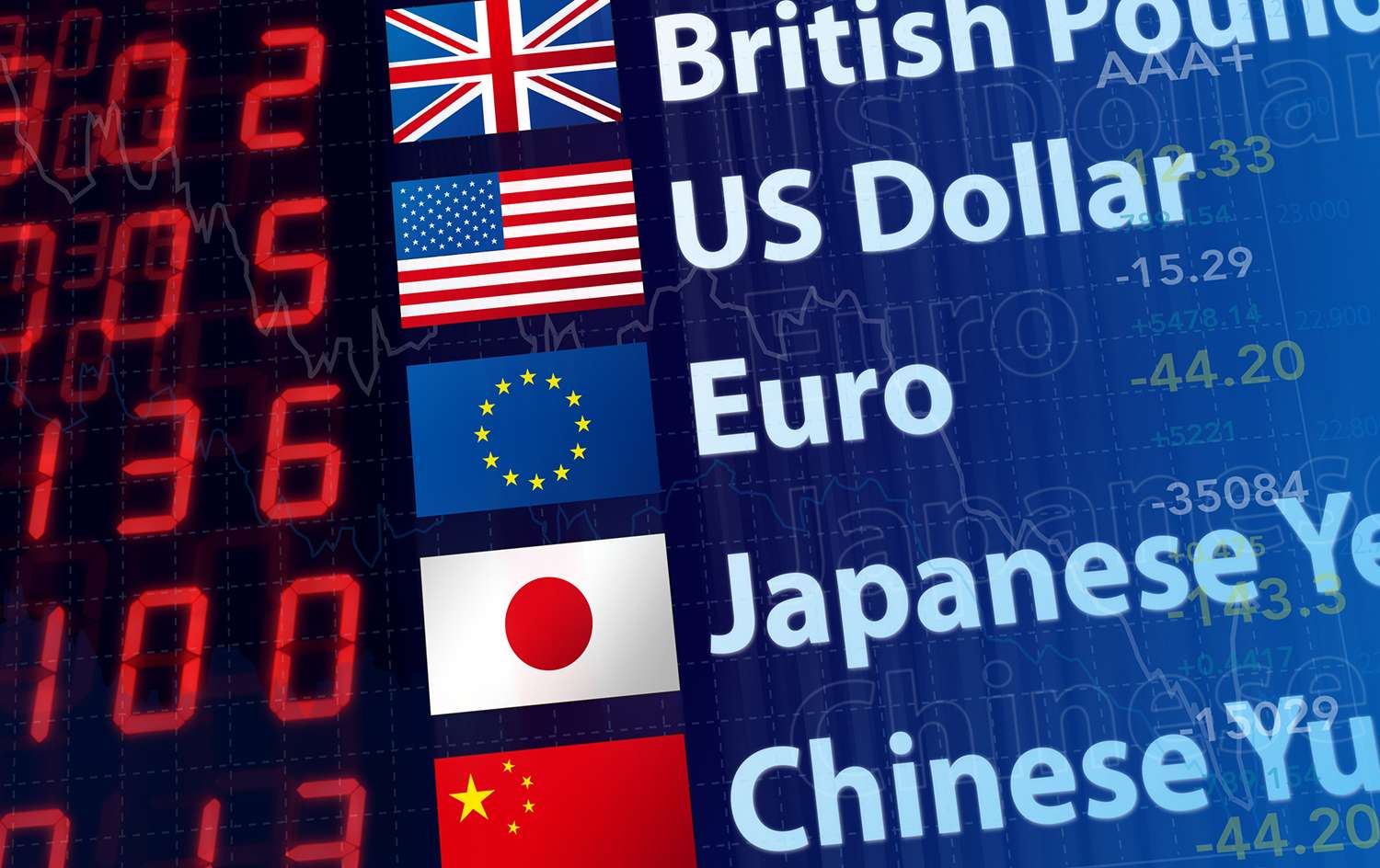
Open up any forex platform for the first time, and you will see a huge list of currency pairs staring back at you. Each one looks like just a random pair of letters, but honestly, each one behaves in its own way. Some barely move, inching along quietly. Others jump around like crazy the moment one piece of news drops. A few are cheap to trade, and some will cost you a lot more than you would expect.
This is usually where beginners get stuck. Staring at that long list, where do you even begin? This is probably why so many traders end up searching for how to choose a currency pair to trade before investing any real money. The truth is that there is no single right answer here; pairs differ by cost, how fast they move, liquidity, trading hours, and the economy sitting behind each currency.
What actually helps is having a simple way to compare them. In this piece, we will break down the three major groups: majors, crosses, and exotics. We will do this using six practical factors. The goal is not to crown a "best" pair but to help you figure out how to choose currency pairs in forex trading based on what actually fits your style.
Currency Pairs Made Simple: The Three Groups You Need to Know
A currency pair just tells you the value of one currency against another. Take EUR/USD; the euro is the base, while the dollar is the quote. If it is trading at 1.10, that one euro will cost you 1.10 dollars.
Pairs usually fall into three groups. Majors pair the US dollar with another big currency; think EUR/USD, GBP/USD, USD/JPY, USD/CHF. Crosses (sometimes called minors) leave the dollar out completely, like EUR/GBP, EUR/JPY, GBP/JPY. Then there are exotics, which mix a major currency with one from a smaller or emerging economy. USD/ZAR, USD/TRY, and USD/MXN are good examples.
The Bank for International Settlements runs a triennial survey that tracks forex turnover worldwide, and the numbers show trading is heavily concentrated around a handful of currencies, with the dollar leading by far. This is why these three groups act so differently.
If you are trying to figure out how to choose a currency pair to trade, you will notice each group behaves differently in regard to nearly every factor that matters. Knowing what those factors are is really where it starts, so let's go through them one by one.
Factor 1: Spreads and Trading Costs
The spread is the difference between a currency pair's buying and selling prices. It is one of the first costs you encounter when trading.
Majors usually have the tightest spreads because they have high trading volume and liquidity. EUR/USD is a common example.
Crosses can have wider spreads because they are generally less liquid than major pairs.
Exotics tend to be the most expensive. Lower trading activity and greater uncertainty can result in significantly wider spreads.
Other costs can also affect your choice:
-
Commissions: A fixed fee charged on trades.
-
Swap or rollover: A charge or credit for holding a position overnight, influenced by interest-rate differences.
-
Slippage: The difference between the expected execution price and the actual price received.
When deciding how to choose a currency pair to trade, consider the total trading cost rather than the spread alone.
Factor 2: Price Swings and Daily Volatility
Volatility measures how much a currency pair moves over a specific period. A pair that normally moves 40 pips per day behaves very differently from one that moves 150 pips.
Majors generally have more moderate price movements, although major economic announcements can still cause sharp moves.
Crosses can be more volatile. GBP/JPY, for example, is known for potentially covering relatively large daily ranges.
Exotics can experience even sharper movements. Political developments, inflation surprises, or unexpected central-bank decisions can cause substantial price changes in a short period. Gaps can also occur more frequently.
Higher volatility creates both opportunity and risk. A stop-loss that works for one pair may be too tight for another. Traders can use tools such as the Average True Range (ATR) to compare typical price movement between pairs.
Factor 3: Timing and Liquidity
Liquidity refers to how easily an asset can be bought or sold without significantly affecting its price.
Majors generally offer the deepest liquidity, meaning orders can often be executed close to the displayed price. Crosses usually have somewhat less liquidity, while exotics can become less liquid, particularly during quieter market periods.
Forex operates across several sessions during the trading week:
-
Sydney: Approximately 21:00–06:00 UTC
-
Tokyo: Approximately 00:00–09:00 UTC
-
London: Approximately 07:00–16:00 UTC
-
New York: Approximately 12:00–21:00 UTC
Times can shift slightly because of daylight saving changes.
The London–New York overlap is generally one of the busiest periods, with significant activity in USD, EUR, and GBP pairs. Exotics are often most active when their domestic markets are open.
Therefore, when learning how to choose a currency pair to trade, consider whether its most active trading hours fit your schedule.
Factor 4: What Moves Currencies?
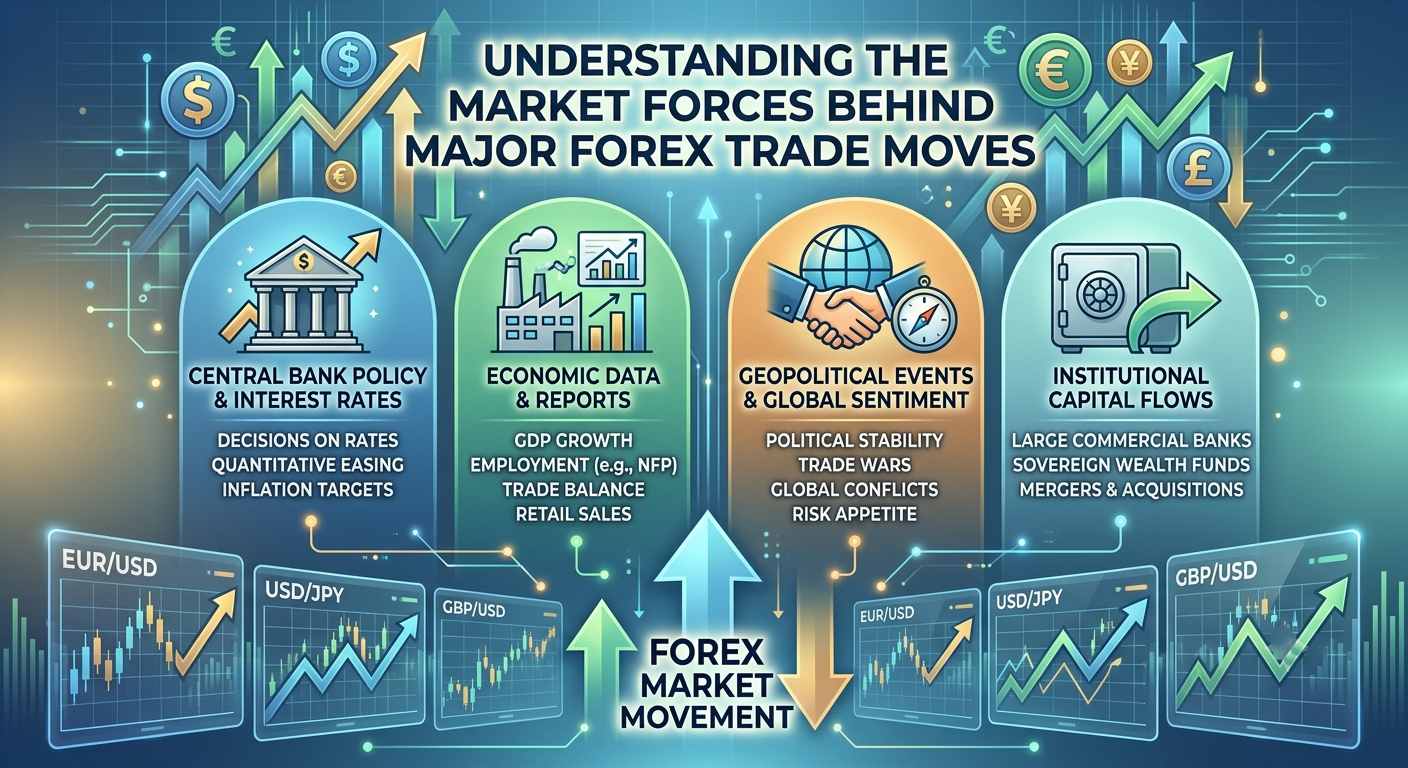
Currency prices are influenced by economic and political conditions in the countries or regions behind them.
Majors often respond to major economic releases, including:
-
Interest-rate decisions
-
Inflation data
-
Employment figures
-
GDP reports
Central banks such as the Federal Reserve and European Central Bank publish schedules for their meetings, allowing traders to prepare for major events.
Crosses are influenced by the relative economic performance of two non-dollar economies. For example, EUR/GBP reflects the relationship between the eurozone and the UK. Commodity-linked currencies can also react to changes in raw-material prices.
Exotics face additional risks, including political instability, capital controls, high inflation, reserve changes, and unexpected central-bank intervention.
An economic calendar can help traders identify important events before entering a position.
Factor 5: Pricing and Trade Execution
The price shown on a trading platform comes from a larger system involving several participants and technologies.
-
Liquidity providers: Banks and financial institutions that supply prices.
-
Price aggregators: Systems that combine quotes from multiple providers.
-
Execution engines: Process and execute trading orders.
-
Connectivity systems: Technologies such as APIs and FIX protocol that transfer trading data.
-
Trading terminals: The charts and order interfaces used by traders.
Major pairs usually sit in deep, well-linked liquidity pools, meaning aggregators have lots of quotes to work with. Exotic pairs tend to rely on fewer providers, which is partly why spreads widen and delays show up more during volatile periods.
A few popular forex trading platforms, such as MT4 and MT5, operate at this front end, each built a bit differently. Traders usually reach them through brokers such as Weltrade, Exness, XM, IC Markets, Pepperstone, and FXTM. These forex brokers decide which platforms, account types, and pairs they make available.
None of these platforms pick the pair for you. But the pairs available, spreads quoted, and data quality can shift depending on the broker and platform, something worth remembering when figuring out how to choose a currency pair to trade.
Factor 6: Currency Correlation
Currency pairs do not always move independently. Some tend to move in the same direction, while others often move in opposite directions. This relationship is called correlation and ranges from -1 to +1.
-
A correlation close to +1 means two pairs tend to move in the same direction.
-
A correlation close to -1 means they tend to move in opposite directions.
-
A correlation near 0 indicates little consistent relationship.
EUR/USD and GBP/USD, for example, have often moved in similar directions because both involve the US dollar. EUR/USD and USD/CHF have historically shown a tendency toward opposite movements.
Correlation matters because holding multiple highly correlated positions can increase your overall exposure without you realizing it. Correlations can also change as market conditions change.
When learning how to select a currency pair to trade, consider position sizing, stop losses, leverage, and overall exposure—not just the individual pair.
Comparing the Three Groups
Looking at the six factors together reveals some general differences.
Majors usually offer tight spreads, strong liquidity, and relatively low slippage during active trading hours. Their volatility is often moderate, and major economic releases are among their biggest catalysts. Because many involve the US dollar, some majors can also be correlated.
Crosses generally sit between majors and exotics. They can offer reasonable liquidity and costs while sometimes producing larger price movements. Their behavior depends on the two currencies involved, and some are also influenced by commodity prices.
Exotics generally have wider spreads and lower liquidity. Slippage can become more significant, particularly outside active market hours. They may experience sharp price movements and are often more sensitive to local political and economic developments. Overnight swap costs can also be higher.
There is therefore no universal winner. A pair that performs well on one factor may be less attractive on another. The better question is which pair fits your schedule, risk tolerance, and trading goals.
Checking Regulation Before You Trade
One factor traders sometimes overlook is the broker providing access to the market.
Choosing a currency pair and choosing a broker are separate decisions, but both matter. Before depositing money, check whether the broker is properly licensed and whether the relevant financial regulator lists it as an authorized intermediary.
Many countries maintain public registers of licensed brokers and publish investor warnings about potentially fraudulent firms. Checking these resources can help you avoid unnecessary risks.
Knowing how to choose currency pairs in forex trading is important, but it is only part of the process. A suitable trading strategy cannot compensate for an untrustworthy broker.
Conclusion
No currency pair is perfect. Majors generally offer lower costs and greater liquidity, crosses can provide different trading opportunities and potentially larger movements, while exotics tend to involve higher costs and greater volatility.
The right choice depends on your schedule, risk tolerance, trading goals, and understanding of the market.
If you are learning how to choose a currency pair to trade, start by comparing a few pairs, review their spreads and typical volatility, check an economic calendar, and practice on a demo account before risking real money. Most importantly, verify that your broker is properly licensed.
The goal is not to find the perfect currency pair. It is to find a pair whose characteristics match the way you trade.
About the Author
 Sanyukta Deb
— Sanyukta Deb is Digital Marketing Team Lead at Next Move Strategy Consulting, where she has led content strategy and technical SEO for the firm's B2B market research publications for over 2 years. Her editorial process translates NextMSC's primary and secondary research — spanning technology, industrial, and consumer sectors — into commercial narratives, backed by search-intent, keyword, and competitive analysis. She brings 5 years of overall experience in digital marketing and content strategy.
About the Reviewer
 Debashree Dey
— Debashree Dey is Assistant Manager at Next Move Strategy Consulting, where she supports cross-vertical market content and communications across diverse industries for 6 years. Her professional background includes senior content writing, communications, and published manuscript authorship, with experience developing audience-focused business narratives and maintaining clear, consistent messaging. Her role supports research-led content development and editorial quality across NextMSC publications.
















Add Comment