How Top Companies Are Shaping the HVAC Market Toward USD 430 Billion Growth by 2035
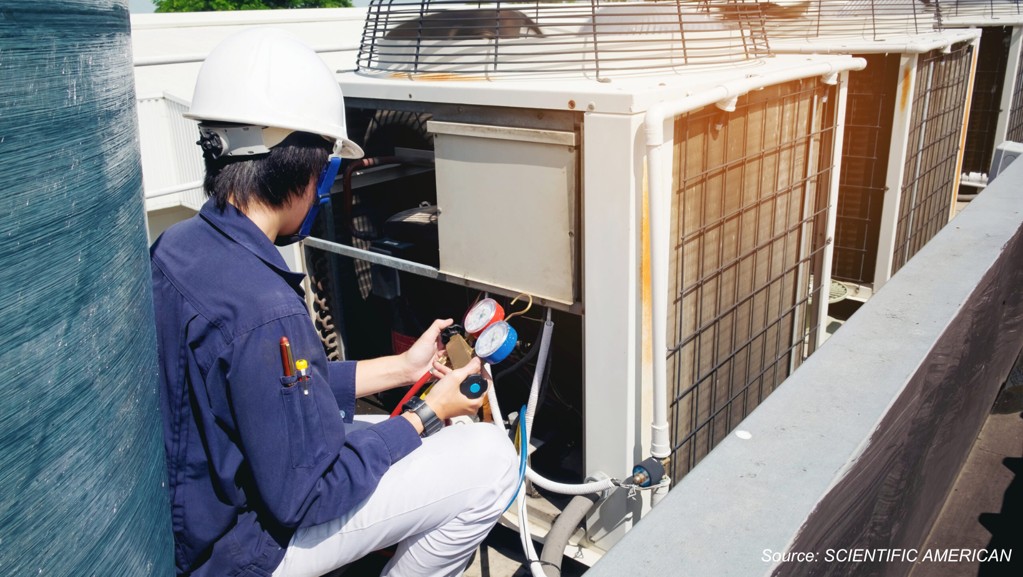
As per NMSC analysis, the HVAC Market size was valued at USD 236.14 billion in 2025 and is expected to reach USD 250.78 billion by 2026. Looking ahead, the industry is projected to expand significantly, reaching USD 430.93 billion by 2035, registering a CAGR of 6.20% from 2026 to 2035.
Based on our direct engagements with OEMs, and facility managers, owners across North America, Europe, Asia-Pacific, and the Middle East, we observed that the global HVAC market is expanding beyond conventional equipment deployment toward digitally integrated, energy-transition-aligned climate solutions. Increasing adoption of high-efficiency chillers, VRF systems, inverter-driven heat pumps, and cloud-connected building management platforms is accelerating the industry’s shift from standalone thermal systems to intelligent, performance-oriented infrastructure.
Want Insights on the HVAC Market? Access a FREE Sample Instantly
From our analysis, we observed that modular HVAC architectures and performance-based service models are enabling enterprises to optimise lifecycle energy consumption, improve indoor air quality compliance, and reduce peak-load exposure. In parallel, electrification strategies and low-GWP refrigerant transitions are reshaping procurement priorities, particularly among commercial real estate developers, healthcare networks, and data center operators. We also observed rising investments in predictive diagnostics, AI-enabled energy optimization, and smart zoning technologies, which are positioning HVAC vendors to deliver measurable efficiency gains and regulatory alignment. This convergence of electrification, digital intelligence, and sustainability-driven engineering is strengthening infrastructure resilience and reinforcing long-term market expansion.
Hvac Market Overview
From our structured engagements with building consultants and infrastructure planners worldwide, we observed that the global HVAC market is undergoing a structural transformation driven by decarbonization mandates, rising climate volatility, and accelerated digital building modernization. Growing demand for intelligent, scalable, and energy-efficient climate systems is encouraging adoption across commercial offices, healthcare facilities, manufacturing plants, residential complexes, and mission-critical infrastructure.
We observed that the shift toward data-driven building ecosystems has broadened market accessibility and investment appetite. Smart thermostats, IoT-connected air handling units, advanced chiller plants, and AI-powered building management systems are enabling organizations to monitor energy intensity in real time, optimize airflow distribution, and improve operational transparency. At the same time, retrofit modernization cycles are expanding as aging infrastructure is upgraded to comply with energy codes and emissions regulations. Performance contracting models and ESG-linked financing are further supporting deployment across both large enterprises and mid-sized property portfolios.
Key global players shaping the global HVAC market include Daikin Industries Ltd., Carrier Global Corporation, Trane Technologies plc, Mitsubishi Electric Corporation, LG Electronics Inc., Samsung Electronics Co., Ltd., Panasonic Corporation, Lennox International Inc., Gree Electric Appliances Inc., and Midea Group Co., Ltd.
From our engagements, we observed these companies’ driving innovation through inverter-based compressor technologies, low-carbon heat pump expansion, integrated digital control platforms, refrigerant innovation, and region-specific product customization. By investing in AI-enabled building analytics, modular system design, district cooling integration, and scalable retrofit solutions, they are addressing energy efficiency mandates, grid stability considerations, and operational cost optimization.

Highlights of Daikin Industries

Daikin Industries Ltd., headquartered in Osaka, Japan, is a leading global player in the HVAC market, offering a comprehensive portfolio that includes air conditioners, VRV/VRF systems, chillers, heat pumps, air purification solutions, and advanced building management integrations. Through continuous innovation in inverter technology, low-GWP refrigerants, and intelligent climate control platforms, Daikin has transformed HVAC systems from standalone thermal units into energy-efficient, digitally connected climate ecosystems. Its extensive global footprint, supported by regional manufacturing hubs and strong distribution networks across North America, Europe, Asia-Pacific, and the Middle East, enables Daikin to serve residential, commercial, and industrial customers at scale.
From our observations, Daikin’s leadership is reinforced by significant investments in R&D, refrigerant innovation, and heat pump electrification technologies, enabling energy optimization, carbon reduction, and compliance with evolving environmental regulations. The company emphasizes sustainability-driven engineering, indoor air quality enhancement, and lifecycle performance efficiency, helping enterprises reduce emissions exposure and improve operational resilience. These capabilities position Daikin competitively alongside peers such as Carrier Global, Trane Technologies, and Mitsubishi Electric. By combining deep technical expertise, vertically integrated manufacturing, and a customer-centric innovation approach, Daikin continues to shape the evolution of intelligent, energy-efficient, and environmentally aligned HVAC infrastructure globally.
Highlights of Carrier Global

Carrier Global Corporation, headquartered in Palm Beach Gardens, Florida, USA, is a prominent global provider of HVAC and intelligent climate solutions, delivering advanced chillers, rooftop units, air handling systems, transport refrigeration, and digitally enabled building automation platforms. Through sustained innovation in high-efficiency cooling technologies, smart thermostats, and cloud-connected service solutions, Carrier has helped transform traditional HVAC operations into integrated, performance-driven building ecosystems. Its strong global presence, supported by service networks and channel partnerships across developed and emerging markets, allows Carrier to address diverse climate and infrastructure requirements.
Based on our observations, we found that Carrier’s competitive strength is anchored in investments in electrification, digital service platforms, predictive maintenance analytics, and sustainable refrigerant transitions. The company places strong emphasis on energy efficiency, regulatory compliance, and lifecycle service optimization, enabling customers to improve operational uptime while reducing total cost of ownership. Carrier’s digital platforms enhance real-time monitoring, asset diagnostics, and performance benchmarking across property portfolios. Positioned alongside industry leaders such as Daikin, Trane Technologies, and Johnson Controls, Carrier continues to advance HVAC modernization through intelligent system integration, sustainability alignment, and scalable global deployment capabilities.
Highlights of Samsung Electronics

Samsung Electronics Co., Ltd., headquartered in South Korea, is a significant global participant in the HVAC market, offering residential and commercial air conditioning systems, VRF solutions, ductless units, smart climate platforms, and integrated building connectivity solutions. By leveraging its strengths in electronics, IoT integration, and AI-enabled controls, Samsung has advanced HVAC systems into digitally synchronized and user-responsive climate management ecosystems. Its extensive global distribution channels and regional partnerships enable deployment across Asia-Pacific, North America, Europe, and emerging markets.
From our observations, Samsung’s leadership in HVAC is strengthened by continuous innovation in smart connectivity, energy-efficient compressor technologies, and app-based system controls that enhance user convenience and operational transparency. The company integrates HVAC solutions with broader smart building and smart home platforms, enabling seamless interoperability and real-time monitoring. With growing focus on energy optimization, indoor air quality, and sustainability-conscious product development, Samsung is positioning itself competitively alongside global peers such as LG Electronics, Daikin, and Midea Group. Through its digital-first approach and scalable manufacturing capabilities, Samsung is contributing to the evolution of connected, intelligent, and energy-aware HVAC ecosystems worldwide.
Highlights of Midea Group

Midea Group Co., Ltd., headquartered in Foshan, China, is a leading global HVAC manufacturer offering a wide range of residential air conditioners, commercial VRF systems, chillers, heat pumps, and intelligent building solutions. Through continuous advancements in inverter technology, smart controls, and cost-optimized manufacturing processes, Midea has transformed HVAC accessibility across both developed and emerging economies. Its expansive global supply chain, localized production facilities, and strategic acquisitions have enabled strong penetration across Asia-Pacific, Europe, Latin America, and North America.
In our observation, Midea’s market leadership is reinforced by significant investments in R&D, compressor innovation, AI-driven controls, and energy-efficient product development. The company emphasizes scalable and modular HVAC architectures that support flexible deployment in residential complexes, commercial buildings, and industrial facilities. Additionally, Midea focuses on sustainability initiatives and electrification trends, aligning its product roadmap with global decarbonization objectives. Positioned alongside peers such as Daikin, LG Electronics, and Gree Electric Appliances, Midea continues to expand its global influence by combining competitive pricing strategies, technological advancement, and broad product customization capabilities.
Highlights of Lg Electronics

LG Electronics Inc., headquartered in South Korea, is a key global player in the HVAC market, delivering advanced air conditioning systems, multi-split and VRF platforms, heat pumps, chillers, and integrated smart building solutions. By integrating AI-based climate control, IoT-enabled connectivity, and energy-efficient inverter technologies, LG has advanced HVAC systems into intelligent, user-adaptive, and digitally managed environments. Its global operations and regional partnerships allow the company to serve residential, commercial, and industrial sectors across major international markets.
From our observations, we noticed that LG’s competitive positioning is supported by sustained investments in R&D, compressor innovation, heat pump expansion, and smart building integration capabilities. The company prioritizes energy performance optimization, indoor air quality improvement, and low-carbon product development, helping customers align with sustainability and regulatory requirements. LG’s digital platforms enhance predictive diagnostics, remote monitoring, and real-time efficiency tracking, strengthening lifecycle asset performance. Competing alongside Daikin, Samsung, Carrier, and Midea Group, LG continues to guide the HVAC industry toward intelligent electrification, digital transformation, and environmentally responsible climate management solutions worldwide.
Summary of The Hvac Market
Based on our assessment, we observed that the global HVAC market is undergoing a structural transformation as energy transition mandates, electrification strategies, and performance accountability reshape demand patterns. Growth is increasingly anchored in regulatory-driven efficiency standards, decarbonization targets, and lifecycle optimization priorities rather than purely cyclical construction activity. Electrified heating solutions, high-efficiency cooling systems, and digitally integrated controls are redefining procurement frameworks across residential, commercial, and industrial segments. Retrofit modernization of ageing building stock is emerging as a sustained growth pillar, while climate intensity and urban density continue to structurally expand cooling requirements across both developed and emerging economies.
At the same time, our analysis showed that capital structuring complexity and integration requirements are influencing deployment pacing, particularly for advanced, digitally enabled systems. However, expanding green financing mechanisms, performance-linked service models, and long-term energy cost considerations are reinforcing investment momentum. Competitive differentiation is increasingly determined by system efficiency, transparency, smart infrastructure compatibility, and localised service capabilities. Overall, the HVAC market is transitioning from a transactional equipment industry toward a policy-aligned, performance-centric infrastructure ecosystem with durable medium- to long-term growth visibility.
About the Author
 Saista Faiyaz is Research Associate at Next Move Strategy Consulting, where she has covered consumer markets and healthcare technologies for 3 years. Her work includes primary interview review, secondary-source validation, market sizing, and structured analysis of company and industry data. She supports research by comparing evidence across sources, organizing findings into market narratives, and documenting assumptions used in analysis. Her scope includes cross-market benchmarking, and reports.
About the Reviewer
 Supradip Baul is an accomplished business consultant and strategist with over a decade of rich experience in market intelligence, strategy, technology, and business transformation. His work has included rigorous qualitative and quantitative analysis across multiple industries, helping clients shape investment decisions and long-term roadmaps. Earlier in his career, he was associated with Gartner, where he contributed to industry-leading reports and market share analyses. He has worked with leading global companies and holds an MBA with a dual specialization in Marketing and Finance.
















Add Comment