Is the Adhesives and Sealants Market Entering Its Most Transformative Era Yet?
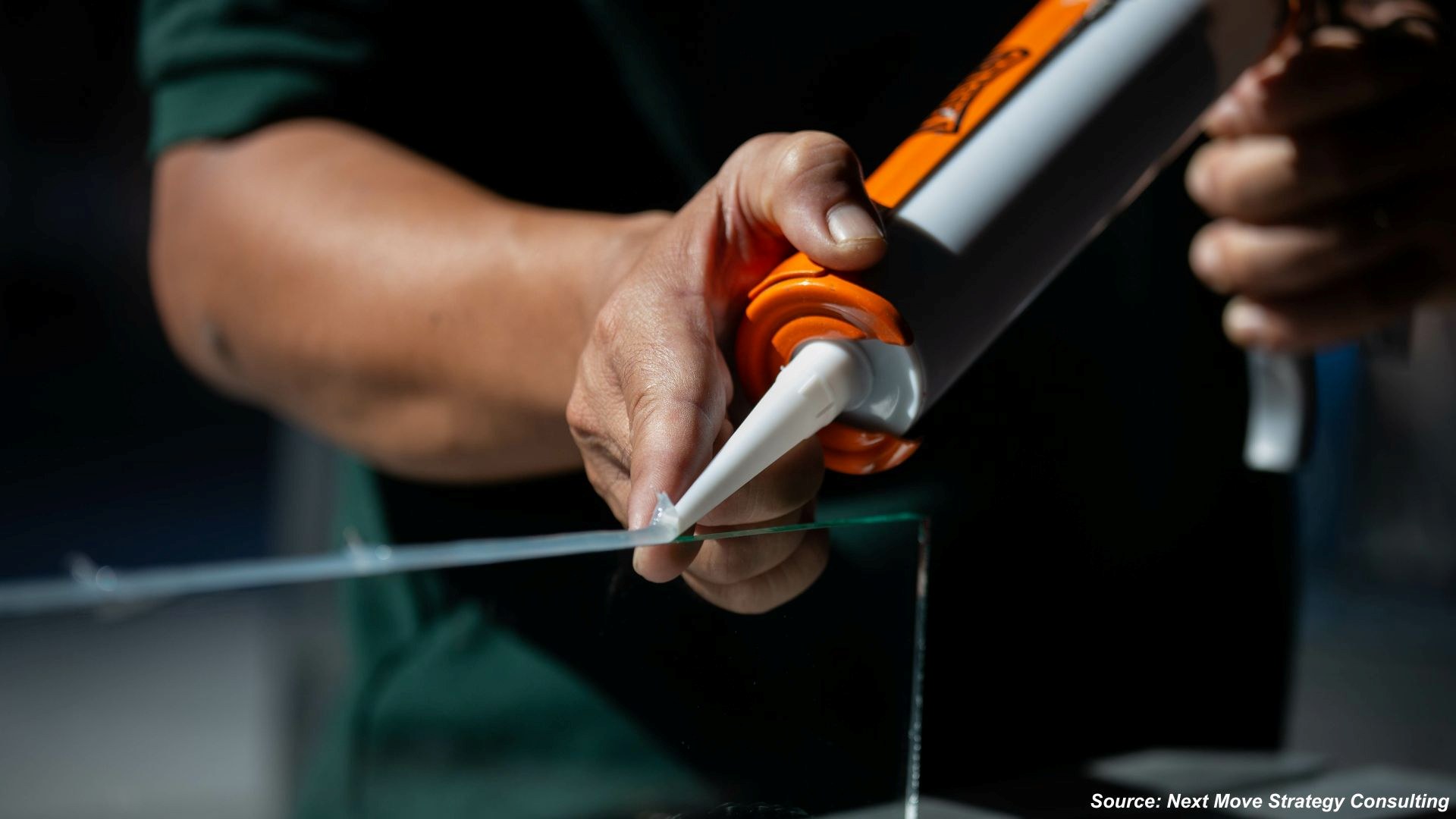
The Adhesives and Sealants Market is undergoing a quiet but significant transformation within one of the world’s most essential industrial material sectors. Adhesives and sealants the chemical substances used to bond aircraft fuselages, seal EV battery packs, support modular construction panels, and secure pharmaceutical packaging are being reshaped by a convergence of forces that remain largely overlooked outside the industry. Tightening chemical regulations across major economies are driving manufacturers to reformulate long-established product lines, while green building standards and infrastructure investments continue to influence construction-sector demand. At the same time, the accelerating electrification of transportation is generating entirely new application opportunities that did not exist a generation ago.
Sustainability, Regulation, and Innovation: The Three Forces Reshaping the Adhesives and Sealants Market
The FEICA Conference Sets the Strategic Agenda for Europe's Industry
The adhesives and sealants industry convened at one of its most consequential gatherings in recent memory. The FEICA European Adhesive and Sealant Conference and Expo, at the Kursaal Congress Centre in San Sebastian, Spain, brought together the full spectrum of the European adhesives and sealants value chain from raw material producers and formulators to brand owners and equipment suppliers under a single, defining theme: "Boosting a Competitive Industry: Innovation and Sustainability for a Stronger Europe."
The choice of theme was not incidental. It reflected the industry's recognition that in an era of rapid technological progress, intensified global competitive pressures, and increasing sustainability demands, the adhesive and sealant sector is positioned as a key enabler of Europe's industrial competitiveness from lightweighting in automobiles to supporting packaging recyclability and enhancing renewable energy technologies. The conference served as the industry's clearest public signal that sustainability and innovation are no longer aspirational goals they are operational imperatives that are actively reshaping product development, regulatory strategy, and investment priorities across the European market.

Arkema's Annual Report: Sustainability as a Structural Growth Driver
Arkema one of the world's leading specialty materials and adhesives groups published its INNOVATIVE 2025 Annual and Sustainability Report, offering one of the most authoritative corporate perspectives on the state of the adhesives industry in 2025. The report documents the resilience of Arkema's business model in a 2025 economic environment marked by uncertainty, highlighting that innovation guided by sustainability has become a key driver of growth not merely a compliance obligation. The report also documents significant progress in Arkema's climate plan, accelerating the decarbonization of both its own operations and those of its customers a commitment that is directly shaping its adhesives product development strategy through its Bostik brand.
NMSC Strategic Perspective: Decoding the Adhesives and Sealants Market Shift
According to Next Move Strategy Consulting's proprietary market intelligence, the global adhesives and sealants market was valued at USD 68.12 billion in 2021 and is projected to reach USD 96.12 billion by 2030, representing a CAGR of 3.9% over the 2022 to 2030 forecast period.
NMSC's analysis identifies increasing population and urbanization, coupled with government investments in construction and infrastructure, as primary demand drivers. The accelerating R&D activity around water-based, bio-based, and hot melt adhesives particularly in the woodworking industry alongside the emergence of eco-friendly organic solvents that provide enhanced bonding strength, are further propelling market growth. The preference for adhesives and sealants over traditional mechanical fastening methods such as screws, fasteners, welds, and rivets due to ease and speed of application is an additional structural tailwind.
Industry Impact Analysis
The EU REACH Restrictions of June 2025: A Direct Formulation Challenge for the Industry
On June 3, 2025, the European Union issued Commission Regulation (EU) 2025/1090, adding two hazardous substances to the list of restricted chemicals under Annex XVII of REACH. The regulation entered into force on June 23, 2025, and carries direct, material implications for adhesive and sealant manufacturers operating in the European market.
The two restricted substances are:
N,N-dimethylacetamide (DMAC) a solvent used in paints and coatings, man-made fiber and film manufacture, and critically, in adhesives and automotive care products. DMAC has been on the ECHA Candidate List of substances of very high concern since December 2011. Under the new regulation, DMAC is prohibited as a substance on its own or as a constituent of other substances after December 23, 2026, with a concentration limit of less than 0.3% in mixtures unless specific derived no-effect levels are documented in chemical safety reports and safety data sheets.
1-ethylpyrrolidine-2-one (NEP) a solvent used directly in the manufacture of adhesives and sealants, as well as paints, coatings, and plastic and rubber materials. NEP is similarly prohibited after December 23, 2026, with the same 0.3% concentration limit in mixtures.
For adhesive and sealant manufacturers, these restrictions represent a concrete, time-bound reformulation mandate. Companies that currently use NEP or DMAC in their formulations must identify and validate alternative solvents, update their chemical safety reports and safety data sheets, and ensure supply chain compliance all within an 18-month window from the regulation's entry into force. The compliance burden falls disproportionately on smaller manufacturers, given that approximately 90% of Europe's roughly 800 adhesive and sealant manufacturers are SMEs.

FEICA's REACH Simplification Position: Advocating for a Balanced Regulatory Framework
In response to the ongoing REACH revision process, FEICA has published a comprehensive position paper advocating for a balanced regulatory approach that supports both innovation and safety. FEICA's six core recommendations include: rejecting the introduction of a non-scientific Mixture Assessment Factor; avoiding purely hazard-based restrictions that do not consider real-world use and exposure; rejecting blanket new requirements for polymers; establishing a comprehensive regulatory roadmap to prevent overload; mandating standardized electronic formats for safety data sheets; and advocating for harmonized enforcement practices across EU member states.

The PFAS Compliance Wave: A Growing Complexity Layer for US and Global Manufacturers
In the United States, the regulatory landscape for adhesive and sealant manufacturers is becoming increasingly complex as PFAS (per- and polyfluoroalkyl substances) legislation intensifies at both the federal and state levels. According to Adhesives and Sealants Industry magazine's April 2026 PFAS Update, state-level bans and federal mandates are creating a more complex compliance landscape for adhesive and sealant manufacturers, with greater regulatory focus specifically on adhesives and sealants as a product category.
Pros and Cons of Recent Market Developments
|
Recent Development |
Pros |
Cons |
|
EU REACH Restriction of DMAC and NEP (June 2025, effective December 2026) |
Drives innovation toward safer, bio-based and water-based solvent alternatives; improves worker and consumer safety; aligns with circular economy and sustainability goals |
Imposes an 18-month reformulation deadline that creates significant cost and engineering pressure, particularly for SMEs; may reduce performance options in specialty high-temperature adhesive applications |
|
FEICA 2025 Conference — Innovation and Sustainability Theme (September 2025) |
Elevates sustainability and circular economy integration as industry-wide strategic priorities; creates a platform for cross-sector collaboration and regulatory dialogue |
Translating conference-level commitments into operational product reformulation and supply chain changes requires sustained investment that not all manufacturers can absorb simultaneously |
|
Arkema 2025 Annual Report — Sustainability as Growth Driver (May 2026) |
Demonstrates that sustainability-guided innovation is commercially viable and resilient even in uncertain economic environments |
Sustainability-led R&D investment cycles are long; benefits may not materialize in near-term financial performance for companies in earlier stages of the transition |

Key Industry Participants and Competitive Environment
The global adhesives and sealants market remains highly competitive, with leading companies emphasizing innovation, strategic collaborations, capacity expansion, and product portfolio enhancement to strengthen their market presence. Prominent participants in the industry include Henkel AG & Co. KGaA, 3M Company, Sika AG, Arkema S.A. (Bostik), H.B. Fuller Company, Dow Inc., Avery Dennison Corporation, Nitto Denko Corporation, RPM International Inc., Wacker Chemie AG, MAPEI S.p.A., Lintec Corporation, Illinois Tool Works Inc. (ITW), Soudal N.V., Pidilite Industries Limited, Huntsman Corporation, Aica Kogyo Co., Ltd., tesa SE, DuPont de Nemours, Inc., and Nan Pao Resins, among others. These companies continue to focus on technological advancements, sustainable solutions, and regional expansion initiatives to maintain competitive advantage and capture emerging growth opportunities across end-use sectors.
Structural Tailwinds Supporting Long-Term Growth
Several structural forces are expected to sustain growth in the adhesives and sealants market through 2030. In Europe, FEICA's forecast of 5.3 million tonnes of volume demand by 2028 growing at a CAGR of 1.3% reflects a market that is maturing in volume terms but accelerating in value terms, as higher-performance, higher-margin specialty formulations displace commodity products across key end-use sectors. Sealants, while holding a smaller share of the European market, are forecast to grow at a slightly faster rate in volume than adhesives between 2023 and 2028 a trend driven by construction weatherproofing, thermal insulation, and green building applications.
Next Steps for Stakeholders
For C-Level Executives at Adhesive and Sealant Manufacturers: Treat the December 2026 REACH prohibition of DMAC and NEP as a strategic reformulation deadline, not merely a compliance exercise.
For Supply Chain and Procurement Leaders: Audit your current adhesive and sealant supplier base for REACH compliance readiness, particularly with respect to DMAC and NEP content in formulations used across your European operations.
For Institutional Investors and Corporate Strategists: The adhesives and sealants market's 3.9% CAGR through 2030, combined with the structural tailwinds of regulatory-driven formulation innovation and the emergence of high-value EV battery and electronics application segments, presents a compelling long-term investment thesis.
For Regulatory and Policy Bodies: Engage constructively with FEICA's REACH simplification recommendations particularly the call for risk-based rather than purely hazard-based restrictions to ensure that regulatory reform supports rather than impedes innovation in high-performance adhesive formulations.
Conclusion
The adhesives and sealants market is entering what may be its most consequential period of transformation since the introduction of synthetic polymer chemistry in the mid-twentieth century. The convergence of tightening EU REACH restrictions including the June 2025 prohibition of DMAC and NEP effective December 2026 accelerating US PFAS and TSCA regulatory actions, and the industry's own strategic pivot toward sustainability-guided innovation is fundamentally reshaping the competitive landscape for manufacturers, suppliers, and investors alike.
About the Author
 Tania Dey is a content writer specializing in transformation-led, insight-driven storytelling. She develops research-backed, high-impact content aligned with evolving business priorities, digital behavior, and audience expectations. Her work helps organizations sharpen value propositions, strengthen visibility, and communicate strategic intent with clarity and precision. Grounded in data-informed storytelling, she brings a strong focus on relevance, consistency, and measurable digital impact across platforms.
About the Reviewer
 Sanyukta Deb is a senior content writer and content analyst with expertise in content strategy, audience engagement, and research-driven storytelling. With a strong leadership approach and strategic mindset, she drives content initiatives that strengthen brand communication and audience connection. She combines creativity with analytical insight to develop impactful, value-led content while mentoring collaborative efforts across teams to ensure consistent, meaningful engagement and long-term brand growth across digital platforms.













Add Comment