What Is a Data Integration Platform?
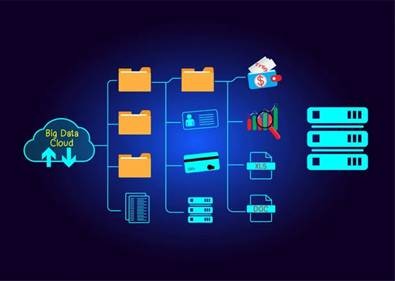
A company may have customer information in a database, sales data in a CRM, ad metrics in platform dashboards, and financial records in an accounting system. The problem arises when these datasets exist in isolation. An analyst spends time exporting files, converting fields to a common format, and verifying whether the metrics belong to the same time period. Here is where the need for a data integration platform arises. It helps connect data from various sources, transform it into a usable format, and deliver it where it’s needed for reporting, analytics, or further processing. In a mature architecture, integration covers the entire data journey. That is, from ingestion to cleansing, consolidation, storage, and utilization.
How a Data Integration Platform Works
It connects various sources.
Data rarely comes from a single source. A business may simultaneously work with CRM, ERP, and advertising services, as well as databases, spreadsheets, websites, and internal apps. The integration platform like Coupler.io establishes connections with these sources and transfers the necessary data between systems. This process can operate according to various models. Data can be transferred in near real-time, in batches at specific intervals, or on an event-driven basis. The choice depends on how quickly the info needs to be updated and how many resources its processing requires.
It cleans and harmonizes information.
The transfer alone is not enough. In two different systems, the same metric may have different names, use different date formats, or follow a different structure. If such records are simply merged, the report may contain errors.
Therefore, integration platforms often perform transformations. They:
-
Filter out unnecessary records,
-
Change the structure of fields,
-
Merge tables,
-
Calculate derived metrics,
-
Standardize values to a single format.
This makes the data more consistent before it is transferred to the analytics environment. Data prepared in this way can be used not only for reports and dashboards but also for AI analytics. The combination of data integration and AI analytics brings together business data integration with the ability to work with that data using AI tools and natural-language queries. This approach allows you to use pre-prepared info to identify metrics and compare results, while also helping you uncover patterns without having to manually transfer data each time. Still, this does not change the fundamental principle of integration. Before data can be analyzed, it must be properly collected, harmonized, and transferred to the appropriate environment.
Where does the integrated data go?
After processing, the information can be sent to a data warehouse, a database, a spreadsheet, a BI system, or another application environment. The choice depends on the volume of data, the frequency of updates, and the team’s tasks.
For example, a small team may only need a regularly updated spreadsheet for operational reporting. Companies with large amounts of data can centralize it in a data warehouse, where data from various systems becomes available for more complex analytics. A BI platform can then use the prepared datasets to build dashboards and reports.
What tasks does integration cover?
Sometimes, all that’s needed is to transfer data from one system to another. In other cases, it’s important to gather info from multiple sources, match records, and prepare a single dataset for analysis. A separate scenario involves synchronization, where changes in one environment must be regularly reflected in another.
It's also important to distinguish between data integration and app integration:
-
In the first case, the focus is on moving and reconciling information.
-
In the second, it's on the interaction between the systems themselves and the execution of business processes.
In practice, these approaches may overlap, but they address different architectural challenges.
The impact of a data integration platform on analytics
If data arrives late, is duplicated, or uses different definitions for the same metric, even a well-designed dashboard can be misleading. That's why the integration layer essentially lays the foundation for further work with the data. When data sources are aligned, analysts can spend less time on manual data preparation and more time identifying patterns, comparing metrics, and interpreting results.
How an Enterprise Data Integration Platform Differs
In a large organization, the following factors become important:
-
Dozens or hundreds of systems,
-
Various teams that own data,
-
Access requirements,
-
The need to ensure the stability of data flows.
An enterprise data integration platform must support:
-
Large-scale data flows,
-
Various types of sources and destinations,
-
Error handling,
-
Monitoring,
-
Access rules.
For large companies, it’s important to know where a specific metric comes from, when it was updated, and what happened if the data transfer was interrupted. Thus, integration is not a one-time setup. Systems change and APIs are updated. Field names are adjusted, and new sources emerge. A reliable process must consider these changes. Otherwise, the automated data flow will gradually cease to match the actual data structure.
Conclusion
Data integration platform is an infrastructure component that helps transform disparate data from various systems into a consistent flow of info. Its role encompasses connecting sources, transferring and cleansing data, as well as transforming, merging, and delivering data to an environment where it can be used. The difference between simple integration and a well-thought-out architecture lies in the stability of the entire process. Data must not only move between systems but also remain understandable, up-to-date, and suitable for the next stage of work. That's why an integration platform is now a vital part of how an organization works with its own data.




















Add Comment