3D Camera Market Gains Momentum at WoTS 2026
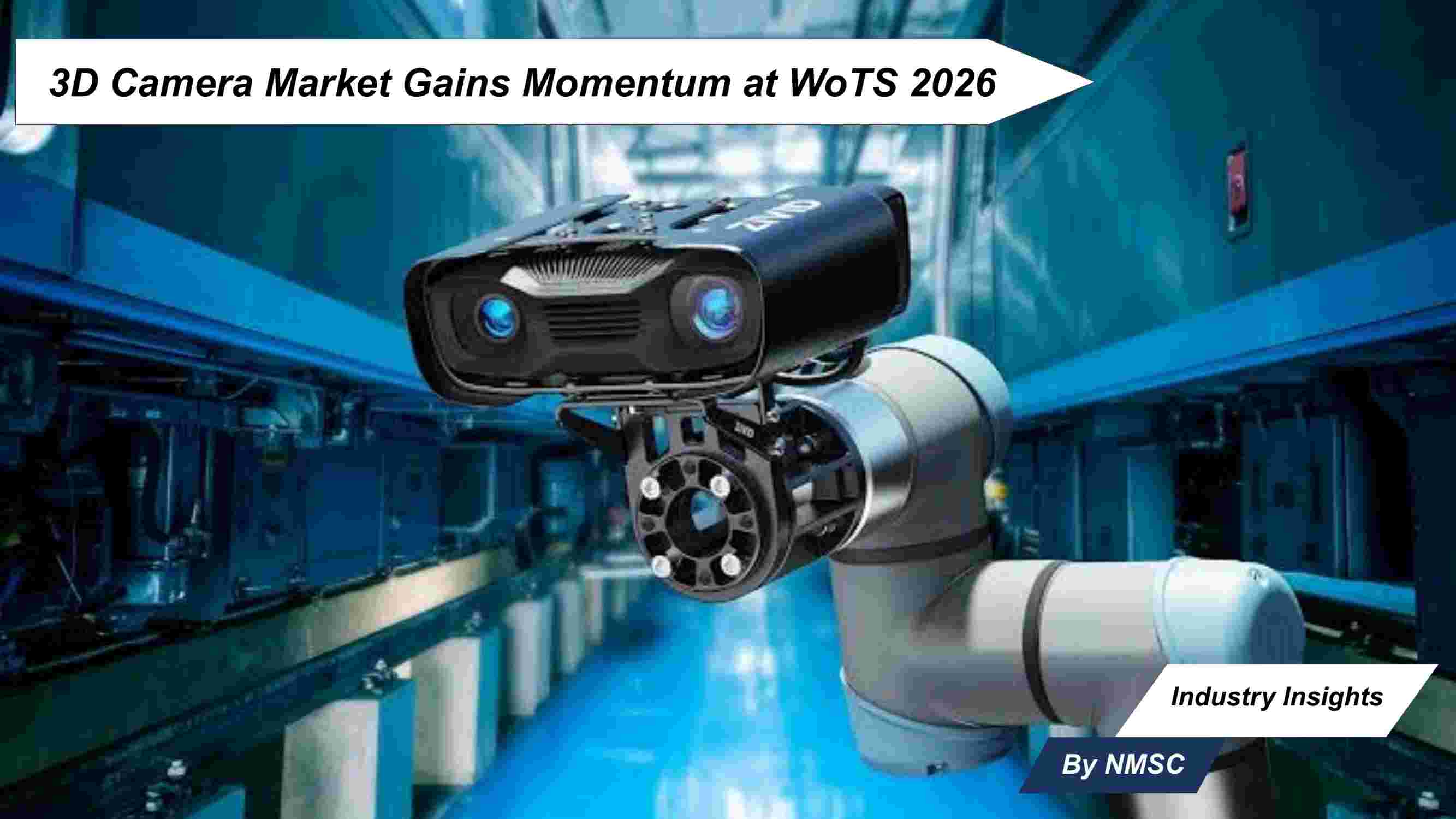
Leopard Imaging to Debut Stereo Vision and 3D Depth Camera Systems at WoTS 2026 in Netherlands
FREMONT, California September 17, 2026, the Leopard Imaging, a global provider of AI perception and spatial intelligence solutions, has announced it will co-exhibit with Future Electronics at the World of Technology & Science (WoTS) 2026 in the Netherlands, showcasing a portfolio of advanced stereo vision cameras, depth perception systems, and thermal imaging modules that underscore the accelerating adoption of the 3D Camera Market across robotics, industrial automation, and edge AI applications. The event is scheduled for September 22–25, 2026, at Booth 9A043.
The announcement highlights the growing commercial deployment of stereo vision and depth-sensing technologies in autonomous systems and collaborative robotics. Leopard Imaging's featured product, the Eagle 1 Stereo Camera (LI-VB1940-GM2C-137H), integrates dual 5.1MP BSI global shutter RGB-IR image sensors alongside an IR illuminator and dot-pattern projector, enabling robust depth perception and day/night vision performance across variable lighting conditions. The system is designed for robotics, autonomous machines, and intelligent navigation applications requiring accurate spatial awareness.
Alongside the Eagle 1, Leopard Imaging will demonstrate the DragonFire (LI-DragonFire-VGA-GM2B), a high-performance uncooled infrared camera module delivering 640×512 resolution at up to 60 FPS with a GMSL2 interface, targeting industrial inspection and autonomous systems. The company will also present its Hummingbird family of ultra-compact MIPI camera modules and a range of high-resolution imaging solutions, including 4K MIPI and 12MP CMOS camera modules with advanced ISP integration. According to Next Move Strategy Consulting, the global 3D camera market is projected to reach USD 54.44 billion by 2030, expanding at a CAGR of 33.3% from 2020 to 2030.
The WoTS 2026 showcase reflects a broader industry trend in which 3D camera and depth-sensing technologies are transitioning from specialized research applications to mainstream deployment in industrial automation, AIoT, and edge AI platforms. The integration of stereo vision with high-bandwidth interfaces such as GMSL2 is enabling more reliable and scalable multi-camera deployments in autonomous mobile robots (AMRs), collaborative robots, and smart manufacturing environments.
Key Highlights:
-
Leopard Imaging's Eagle 1 Stereo Camera features dual 5.1MP BSI global shutter RGB-IR sensors with an active stereo architecture, enabling accurate depth perception for robotics and autonomous navigation
-
The DragonFire thermal camera module delivers 640×512 resolution at 30/60 FPS with GMSL2 connectivity, supporting industrial inspection and autonomous systems in challenging environments
-
The Hummingbird ultra-compact MIPI camera family targets wearable devices, mobile robotics, and next-generation embedded AI systems where size and power efficiency are critical
-
The WoTS 2026 co-exhibition with Future Electronics signals deepening distribution partnerships for 3D vision technologies across European industrial and automation markets
Analyst Insight:
According to analysts at Next Move Strategy Consulting, the increasing integration of stereo vision and depth-sensing cameras into robotics and industrial automation platforms represents one of the most significant near-term growth drivers for the global 3D camera market. NMSC analysts note that the convergence of active stereo architectures, high-bandwidth GMSL2 interfaces, and edge AI compute platforms is enabling manufacturers to deploy multi-camera 3D perception systems at scale a development that is expected to accelerate adoption across autonomous mobile robots, collaborative robots, and smart factory environments through 2030. The European industrial automation sector, in particular, is emerging as a key demand center for embedded 3D vision solutions, as evidenced by the growing presence of 3D camera providers at major regional trade events such as WoTS 2026.
Industry Outlook:
The participation of specialized 3D camera and embedded vision providers at major industrial trade events such as WoTS 2026 reflects the maturation of the 3D camera market from a niche technology segment into a core component of modern automation infrastructure. As stereo vision, time-of-flight, and structured light technologies continue to advance in resolution, range, and environmental robustness, demand from robotics, autonomous systems, and industrial inspection applications is expected to sustain strong market growth through the end of the decade. The expansion of distribution partnerships between 3D camera manufacturers and global electronics distributors further signals that the market is entering a phase of broader commercial deployment, moving beyond early-adopter segments toward mainstream industrial integration.
Source: RoboticsTomorrow
For More Information: Download FREE Sample on 3D Camera Market Report
Prepared By: Sanyukta Deb
About the Author
 Sanyukta Deb
— Sanyukta Deb is Digital Marketing Team Lead at Next Move Strategy Consulting, where she has led content strategy and technical SEO for the firm's B2B market research publications for over 2 years. Her editorial process translates NextMSC's primary and secondary research — spanning technology, industrial, and consumer sectors — into commercial narratives, backed by search-intent, keyword, and competitive analysis. She brings 5 years of overall experience in digital marketing and content strategy.
Sanyukta Deb
— Sanyukta Deb is Digital Marketing Team Lead at Next Move Strategy Consulting, where she has led content strategy and technical SEO for the firm's B2B market research publications for over 2 years. Her editorial process translates NextMSC's primary and secondary research — spanning technology, industrial, and consumer sectors — into commercial narratives, backed by search-intent, keyword, and competitive analysis. She brings 5 years of overall experience in digital marketing and content strategy.
About the Reviewer
 Debashree Dey
— Debashree Dey is Assistant Manager at Next Move Strategy Consulting, where she supports cross-vertical market content and communications across diverse industries for 6 years. Her professional background includes senior content writing, communications, and published manuscript authorship, with experience developing audience-focused business narratives and maintaining clear, consistent messaging. Her role supports research-led content development and editorial quality across NextMSC publications.
Debashree Dey
— Debashree Dey is Assistant Manager at Next Move Strategy Consulting, where she supports cross-vertical market content and communications across diverse industries for 6 years. Her professional background includes senior content writing, communications, and published manuscript authorship, with experience developing audience-focused business narratives and maintaining clear, consistent messaging. Her role supports research-led content development and editorial quality across NextMSC publications.

















Add Comment