Acrylic Acid Market: Supply Tightness and Strategic Expansion
Lede
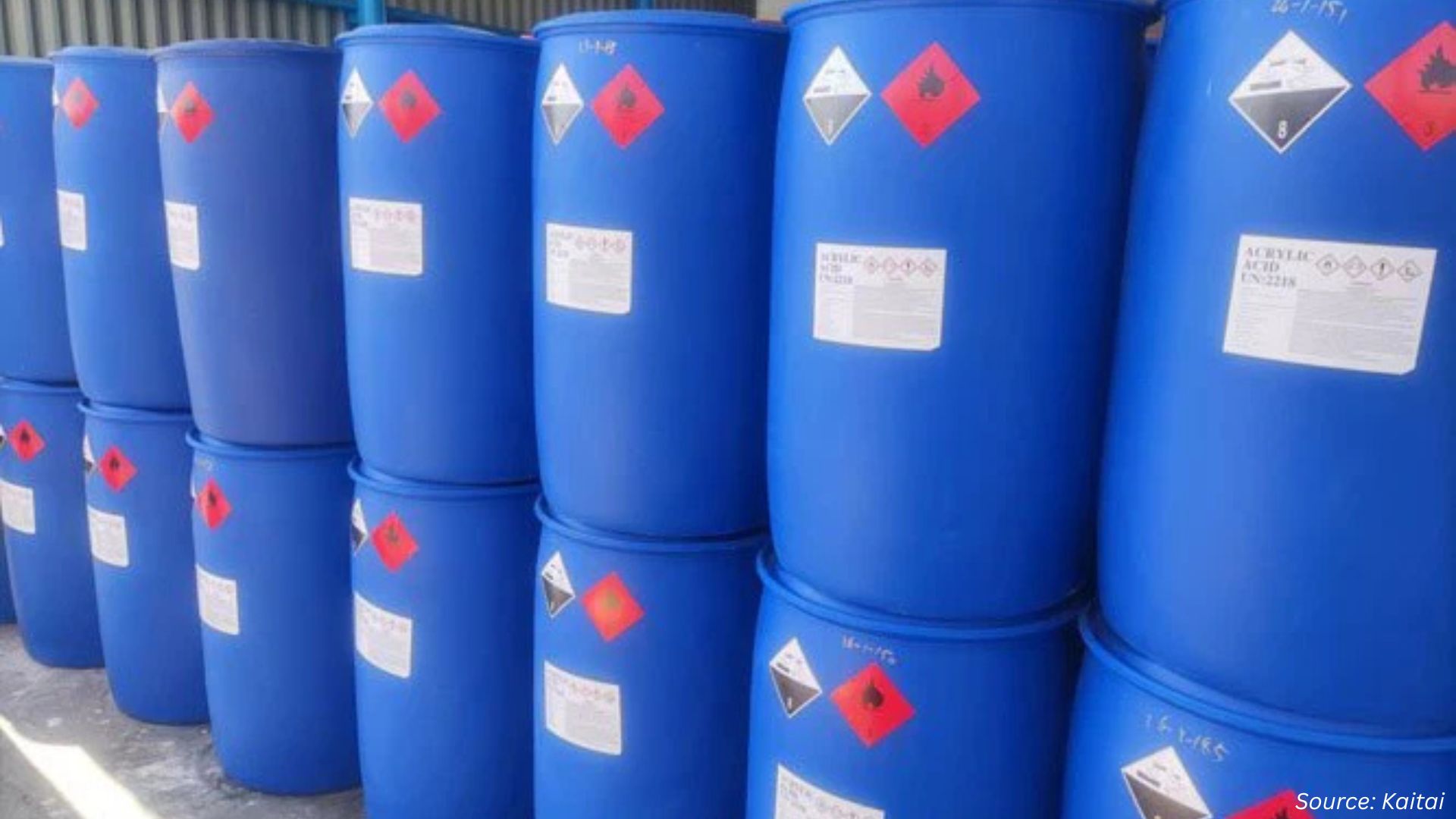
Three recent developments — China’s acrylic acid market defying a post-holiday slowdown amid tight supply, BASF completing its first acrylics units at the Zhanjiang Verbund site, and a new technology licensing partnership between Synthomer and Lummus — together illustrate a market entering a more strategic phase. Collectively, these signals point to an Acrylic Acid Market increasingly shaped by supply discipline, technology-led differentiation, and long-term capacity planning rather than short-term price cycles alone.
1. China’s Acrylic Acid Market Defies Seasonal Weakness
China’s acrylic acid market recently surprised participants by posting a price increase despite expectations of a post-holiday lull. Historically, demand softens after national holidays as downstream buyers pause procurement and inventories build. This time, however, reduced operating rates, planned maintenance shutdowns, and cautious output strategies tightened availability, shifting the market balance in favour of producers.
Downstream demand from superabsorbent polymers, acrylic emulsions, and coatings remained steady enough to absorb limited supply, prompting buyers to secure volumes earlier than usual. As a result, spot prices strengthened and sellers showed little willingness to discount.
This episode underscores a broader trend: acrylic acid markets are becoming less predictable by seasonality alone, with supply-side discipline playing a larger role in near-term pricing behaviour.
2. BASF Advances Acrylic Acid Integration at Zhanjiang Verbund Site
In parallel, BASF has completed the first acrylics production units at its Zhanjiang Verbund site in China, including facilities for glacial acrylic acid and key derivatives such as butyl acrylate. This milestone represents more than just added capacity — it reinforces BASF’s integrated Verbund strategy, where feedstock efficiency, logistics optimisation, and downstream proximity are central to competitiveness.
The Zhanjiang complex strengthens BASF’s ability to serve hygiene, adhesives, coatings, and construction markets across Asia with shorter lead times and greater supply reliability. Once fully operational, the site is expected to reduce exposure to regional supply disruptions and provide BASF with greater flexibility in responding to demand shifts.
From a market perspective, the development highlights Asia’s continued centrality to global acrylic acid production and consumption, even as supply discipline remains tight in the short term.
3. Synthomer–Lummus Partnership Signals Technology-Led Growth
Adding another strategic layer, Synthomer and Lummus have announced a partnership to license acrylic acid esters technology globally. Acrylic esters are critical derivatives used in pressure-sensitive adhesives, coatings, sealants, and performance polymers.
The collaboration combines Synthomer’s operational know-how with Lummus’ global process licensing reach, enabling producers to access proven technologies with greater feedstock flexibility and efficiency. Importantly, the licensed processes are positioned to support future transitions toward alternative or bio-based raw materials, aligning with evolving sustainability and regulatory expectations.
This partnership reflects a shift in the acrylic acid market toward technology access as a competitive lever, not just scale.

4. Next Move Strategy Consulting – Opinion, Impact, and Near-Term Prospects
Next Move Strategy Consulting views these developments as signs of a structural transition in the Acrylic Acid Market, where value is increasingly shaped by control, integration, and technological readiness.
-
Supply discipline is redefining price behaviour : Short-term price strength in China reflects a market where producers are prioritising margin stability over volume expansion. This dynamic is likely to persist, especially in regions facing higher energy and compliance costs.
-
Integrated capacity will outperform standalone assets : Investments such as BASF’s Zhanjiang site demonstrate that integrated acrylic acid and derivatives production offers superior resilience against feedstock volatility and logistics disruptions.
-
Technology access is becoming a strategic differentiator : Licensing partnerships like Synthomer–Lummus lower barriers to entry for advanced acrylic esters while raising the baseline expectations for efficiency and sustainability.
-
Sustainability will influence capital allocation : While not yet dominant, pressure to reduce emissions and improve feedstock efficiency will increasingly shape technology selection and capacity expansion decisions.
-
Market power is shifting downstream: Value creation is gradually moving toward specialty acrylic derivatives and application-specific formulations rather than commodity acrylic acid alone.
5. Practical Suggestions for Stakeholders
-
Producers should focus on operating rate optimisation and integration rather than aggressive capacity additions.
-
Technology providers should align licensing models with sustainability and feedstock flexibility requirements.
-
Downstream buyers should reassess procurement strategies, balancing spot exposure with long-term contracts.
-
Investors should prioritise assets with integrated value chains or proprietary acrylic derivative technologies.
-
Policymakers should support efficient, lower-emission chemical infrastructure to stabilise long-term supply.
Conclusion
Recent movements across China, strategic capacity expansions in Asia, and technology partnerships signal that the acrylic acid market is evolving beyond cyclical price swings. The market is entering a phase where supply control, integration, and process technology will determine competitiveness. Companies that align production efficiency with downstream demand and long-term sustainability considerations are best positioned to capture value as acrylic acid applications continue to expand across hygiene, construction, and performance materials.
About Next Move Strategy Consulting:
Next Move Strategy Consulting is a premier market research and management consulting firm that has been committed to providing strategically analysed well documented latest research reports to its clients. The research industry is flooded with many firms to choose from, what makes NMSC different from the rest is its top-quality research and the obsession of turning data into knowledge by dissecting every bit of it and providing fact-based research recommendation that is supported by information collected from over 500 million websites, paid databases, industry journals and one on one consultations with industry experts across a diverse range of industry sectors. The high-quality customized research reports with actionable insights and excellent end-to-end customer service help our clients to take critical business decisions that enables them to move beyond time and have competitive edge in the industry.
We have been servicing over 1000 customers globally that includes 90% of the Fortune 500 companies over a decade. Our analysts are constantly tracking various high growth markets and identifying hidden opportunities in each sector or the industry. We provide one of the industry’s best quality syndicate as well as custom research reports across 10 different industry verticals. We are committed to deliver high quality research solutions in accordance to your business needs. Our industry standard delivery solutions that ranges from the pre consultation to after-sales services, provide an excellent client experience and ensure right strategic decision making for businesses.
For more information please contact:
Next Move Strategy Consulting
5th Floor 867
Boylston St, STE 500,
Boston, MA 02116, U.S.
E-Mail: [email protected]
Direct: +1-857-758-5017
Website: www.nextmsc.com
About the Author
 Sanyukta Deb
— Sanyukta Deb is Digital Marketing Team Lead at Next Move Strategy Consulting, where she has led content strategy and technical SEO for the firm's B2B market research publications for over 2 years. Her editorial process translates NextMSC's primary and secondary research — spanning technology, industrial, and consumer sectors — into commercial narratives, backed by search-intent, keyword, and competitive analysis. She brings 5 years of overall experience in digital marketing and content strategy.
Sanyukta Deb
— Sanyukta Deb is Digital Marketing Team Lead at Next Move Strategy Consulting, where she has led content strategy and technical SEO for the firm's B2B market research publications for over 2 years. Her editorial process translates NextMSC's primary and secondary research — spanning technology, industrial, and consumer sectors — into commercial narratives, backed by search-intent, keyword, and competitive analysis. She brings 5 years of overall experience in digital marketing and content strategy.
About the Reviewer
 Debashree Dey
— Debashree Dey is Assistant Manager at Next Move Strategy Consulting, where she supports cross-vertical market content and communications across diverse industries for 6 years. Her professional background includes senior content writing, communications, and published manuscript authorship, with experience developing audience-focused business narratives and maintaining clear, consistent messaging. Her role supports research-led content development and editorial quality across NextMSC publications.
Debashree Dey
— Debashree Dey is Assistant Manager at Next Move Strategy Consulting, where she supports cross-vertical market content and communications across diverse industries for 6 years. Her professional background includes senior content writing, communications, and published manuscript authorship, with experience developing audience-focused business narratives and maintaining clear, consistent messaging. Her role supports research-led content development and editorial quality across NextMSC publications.
















Add Comment