Chemical Market: LOTTE Chemical Titan Q2 2026 Loss Widens
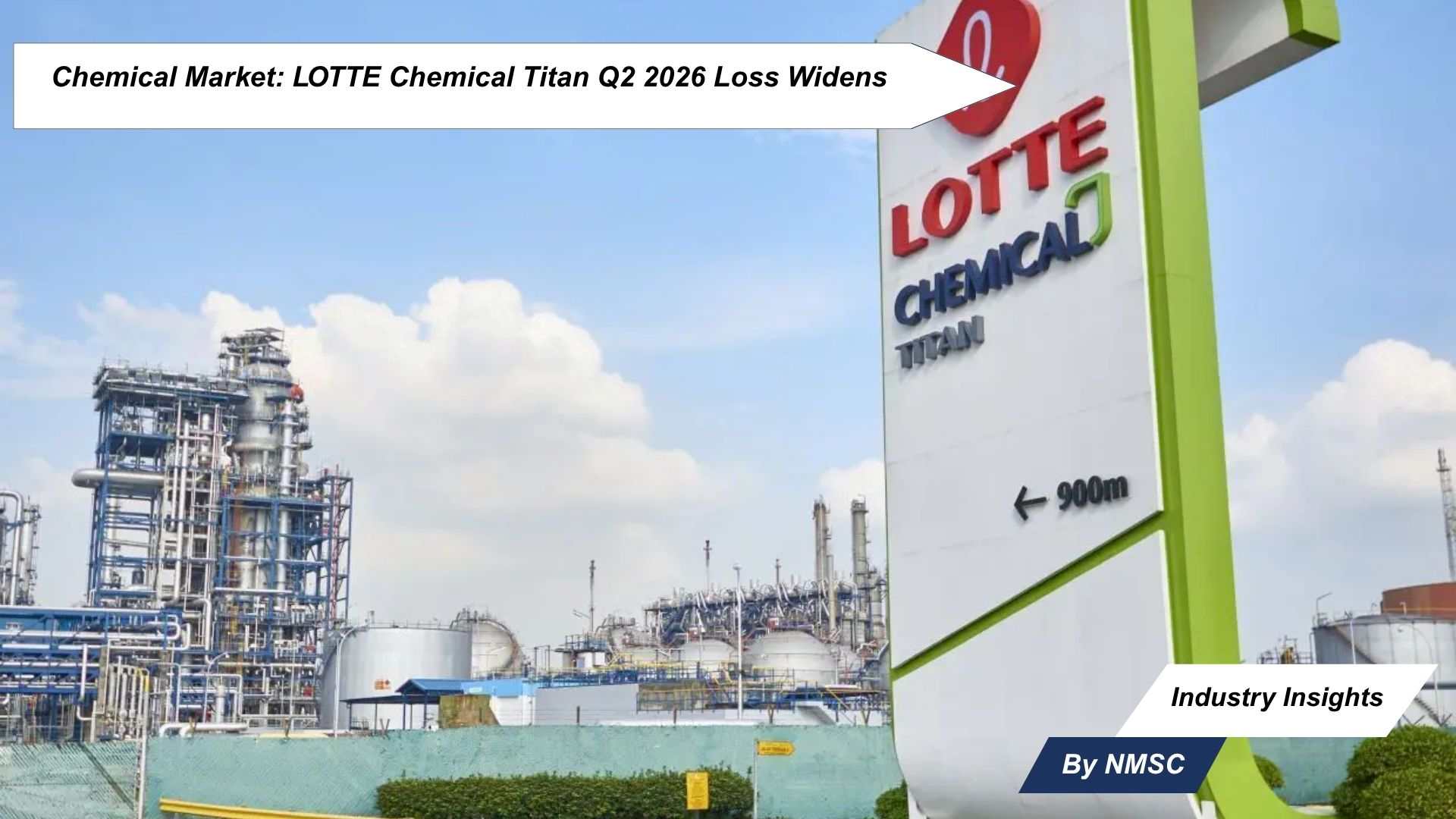
LOTTE Chemical Titan Q2 2026 Net Loss Widens to M$401.7M Amid Inventory Write-Downs and Geopolitical Headwinds
SINGAPORE, Singapore — August 7, 2026 — Malaysia-based petrochemical producer LOTTE Chemical Titan (LCT) reported a widened second-quarter net loss of Malaysian ringgit (M$) 401.7 million for Q2 2026, citing inventory write-downs and elevated costs associated with its Indonesia ethylene project — a development that underscores the intensifying margin pressures confronting producers across the global Chemical Market amid sustained geopolitical disruption and supply-demand imbalances.
Despite the widened loss, LCT's revenue more than doubled year-on-year, rising 116% to M$3.11 billion in Q2 2026 from M$1.44 billion in the corresponding period of 2025. The revenue surge was primarily driven by contributions from the LOTTE Chemical Indonesia New Ethylene (LINE) Project, which commenced commercial operations in October 2025, alongside higher average selling prices during the quarter.
The LINE Project — an integrated petrochemical complex in which LCT holds a 51% equity interest and its South Korea-headquartered parent firm LOTTE Chemical holds a 24% share — is capable of producing 1 million tonnes per year of ethylene (C2), 520,000 tonnes per year of propylene (C3), 400,000 tonnes per year of benzene-toluene-xylene (BTX), 250,000 tonnes per year of polypropylene (PP), and 140,000 tonnes per year of butadiene (BD). Despite the project's operational ramp-up, inventory write-downs and higher project-related costs weighed materially on the company's bottom line, with EBITDA loss widening to M$72.7 million from M$55.9 million in Q2 2025.
LCT's average plant utilization improved to 50% in Q2 2026 from 46% in the same period of 2025, reflecting the incremental contribution of the LINE Project. The company has set an operating rate guidance of 60–65% for the full financial year 2026, subject to unforeseen circumstances, as disclosed in a Bursa Malaysia regulatory filing on August 6, 2026.
Key Highlights:
-
LOTTE Chemical Titan's Q2 2026 net loss widened to M$401.7 million, attributed to inventory write-downs and elevated costs linked to the LINE Project in Indonesia, despite stronger product margins during the quarter.
-
Revenue surged 116% year-on-year to M$3.11 billion in Q2 2026, driven by the commercial ramp-up of the LINE Project, which began operations in October 2025 and adds significant integrated petrochemical capacity across ethylene, propylene, BTX, polypropylene, and butadiene.
-
Average plant utilization improved to 50% in Q2 2026 from 46% in Q2 2025, with the company targeting a full-year 2026 operating rate of 60–65%, signalling a gradual operational recovery trajectory.
-
LCT Chairman and CEO Jang Seon Pyo cited global geopolitical tensions — including disruptions to crude oil and naphtha supply chains stemming from the ongoing Middle East conflict — as key factors weighing on market sentiment and average selling prices across regional chemical markets.
Analyst Insight:
According to analysts at Next Move Strategy Consulting, LOTTE Chemical Titan's Q2 2026 results reflect a broader structural challenge facing Asia-Pacific petrochemical producers: the collision of large-scale capacity additions with persistently weak downstream demand and elevated feedstock costs driven by geopolitical disruption. NMSC analysts note that the Strait of Hormuz closure has materially constrained feedstock flows to northeast and southeast Asian producers, compressing margins across key chemical segments including polyolefins, BTX derivatives, and synthetic rubber. While the LINE Project's commercial ramp-up positions LCT for longer-term volume growth, the near-term operating environment — characterized by supply-demand imbalances, inventory overhang, and currency headwinds — is expected to continue pressuring profitability across the Asia-Pacific chemical sector through the remainder of 2026.
Industry Outlook:
LOTTE Chemical Titan's Q2 2026 results serve as a barometer for the broader challenges confronting the global chemical industry in the current macroeconomic and geopolitical environment. Regional markets across Asia-Pacific continue to face capacity additions that outpace demand growth, while the ongoing disruption to Strait of Hormuz transit — which historically channels a significant share of global petrochemical feedstock flows — is sustaining elevated input costs and logistics uncertainty for producers dependent on Middle Eastern supply. As chemical companies navigate this complex operating landscape, strategic priorities are expected to center on operational efficiency, utilization rate optimization, and diversification of feedstock sourcing. The advancement of green chemistry and sustainable chemical manufacturing — identified as a key long-term growth driver for the global chemical market — is also anticipated to gain further traction as producers seek to reduce exposure to fossil fuel-linked feedstock volatility and align with evolving regulatory frameworks across North America, Europe, and Asia-Pacific.
Source: ICIS – International Chemical Information Service
For More Information: Download FREE Sample on Chemical Market Report
Prepared By: Sanyukta Deb
About the Author
 Sanyukta Deb
— Sanyukta Deb is Digital Marketing Team Lead at Next Move Strategy Consulting, where she has led content strategy and technical SEO for the firm's B2B market research publications for over 2 years. Her editorial process translates NextMSC's primary and secondary research — spanning technology, industrial, and consumer sectors — into commercial narratives, backed by search-intent, keyword, and competitive analysis. She brings 5 years of overall experience in digital marketing and content strategy.
Sanyukta Deb
— Sanyukta Deb is Digital Marketing Team Lead at Next Move Strategy Consulting, where she has led content strategy and technical SEO for the firm's B2B market research publications for over 2 years. Her editorial process translates NextMSC's primary and secondary research — spanning technology, industrial, and consumer sectors — into commercial narratives, backed by search-intent, keyword, and competitive analysis. She brings 5 years of overall experience in digital marketing and content strategy.
About the Reviewer
 Debashree Dey
— Debashree Dey is Assistant Manager at Next Move Strategy Consulting, where she supports cross-vertical market content and communications across diverse industries for 6 years. Her professional background includes senior content writing, communications, and published manuscript authorship, with experience developing audience-focused business narratives and maintaining clear, consistent messaging. Her role supports research-led content development and editorial quality across NextMSC publications.
Debashree Dey
— Debashree Dey is Assistant Manager at Next Move Strategy Consulting, where she supports cross-vertical market content and communications across diverse industries for 6 years. Her professional background includes senior content writing, communications, and published manuscript authorship, with experience developing audience-focused business narratives and maintaining clear, consistent messaging. Her role supports research-led content development and editorial quality across NextMSC publications.

















Add Comment