AI-Based Security Operations Gain Ground, Manual Work Remains
Industry Insights from Next Move Strategy Consulting
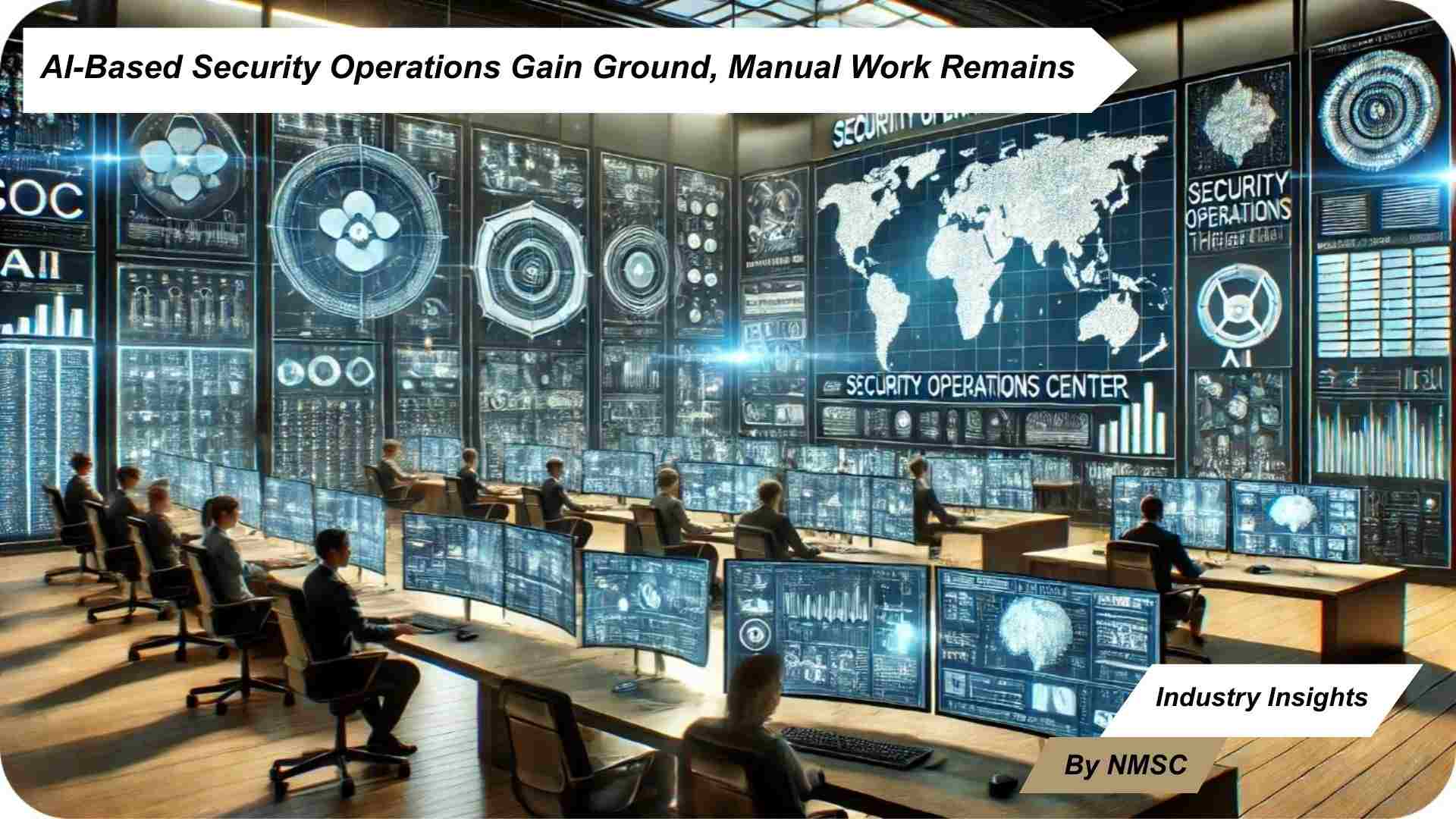
As organizations accelerate digital transformation, artificial intelligence market has become a foundational component of modern security operations. However, new findings from Tines’ Voice of Security 2026 report reveal that despite near-universal AI adoption, security teams continue to face operational inefficiencies driven by manual processes, governance concerns, and tool fragmentation.
AI Adoption Becomes the Norm in Security Operations
The fourth annual Voice of Security report, published by Tines, examines how AI and automation are influencing security teams worldwide. Based on a global survey of more than 1,800 security leaders and practitioners, the study shows that 99% of security operations centers now use AI, while 77% of teams regularly depend on AI, automation, or workflow tools. These technologies are widely viewed as essential to managing growing threat volumes and operational complexity.
Yet the report underscores a persistent challenge: manual and repetitive tasks still account for approximately 44% of security teams’ time. This imbalance is contributing to widespread fatigue, with 76% of respondents reporting emotional exhaustion linked to workload pressures.
Barriers to Scaling AI and Automation
While confidence in AI is high, the report identifies several constraints preventing organizations from achieving full operational benefits. Security and compliance concerns were cited by 35% of respondents as a key obstacle, followed by limited resources at 32% and integration gaps between tools at 31%. These challenges have slowed the transition from task-level automation to broader workflow transformation.
As a result, 92% of security professionals believe that intelligent workflows designed to connect AI, automation, and human decision-making would deliver meaningful value by enabling work to move seamlessly across systems and teams.
AI Effectiveness and Emerging Risks
Security teams report measurable gains from AI in specific operational areas, including threat detection, identity and access monitoring, and compliance and policy writing. However, these improvements have not yet translated into reduced workloads or end-to-end process change.
Looking ahead, optimism remains strong. The report notes that 86% of respondents expect AI to create new career opportunities, and 81% say their organizations are prepared to reskill or hire talent for AI-related roles. At the same time, AI is reshaping the risk landscape. Leading concerns for 2026 include data leakage through copilots and agents, third-party and supply chain exposure, evolving regulations, shadow AI usage, and prompt injection attacks many of which stem from internal adoption and governance gaps.
Governance, Workflows, and the Path Forward
The findings also highlight progress in governance readiness. Half of surveyed organizations have formal AI policies in place, while an additional 42% are actively developing frameworks to guide responsible use. Security teams anticipate that intelligent workflows will drive higher productivity, faster response times, and improved data accuracy, signaling a shift toward more structured and resilient operating models.
Next Move Strategy Consulting Viewpoint
According to Next Move Strategy Consulting, the Tines report reflects a broader market reality: AI has become deeply embedded in AI based security operations market, but its full value depends on how effectively it is governed and integrated into workflows. The firm notes that organizations moving beyond isolated automation toward intelligent, end-to-end workflows are better positioned to reduce manual effort, address emerging AI-driven risks, and sustain long-term operational resilience.
Redefining AI-Driven Security Operations
As AI continues to redefine cybersecurity practices, the Voice of Security 2026 report makes clear that adoption alone is not enough. The next phase of AI-based security operations will be shaped by governance, integration, and workflow design factors that determine whether AI serves as a force multiplier or remains limited to incremental gains.
Source: TINES SECURITY SERVICES LIMITED (PRNewswire)
Prepared by: Next Move Strategy Consulting
About the Author
 Tania Dey is a content writer specializing in transformation-led, insight-driven storytelling. She develops research-backed, high-impact content aligned with evolving business priorities, digital behavior, and audience expectations. Her work helps organizations sharpen value propositions, strengthen visibility, and communicate strategic intent with clarity and precision. Grounded in data-informed storytelling, she brings a strong focus on relevance, consistency, and measurable digital impact across platforms.
About the Reviewer
 Debashree Dey is Assistant Manager at Next Move Strategy Consulting, where she supports cross-vertical market content and communications across diverse industries for 6 years. Her professional background includes senior content writing, communications, and published manuscript authorship, with experience developing audience-focused business narratives and maintaining clear, consistent messaging. Her role supports research-led content development and editorial quality across NextMSC publications.

















Add Comment