AI-Powered Digital Twin in Healthcare Market Expands Following New Lung Simulation Breakthrough
Lede
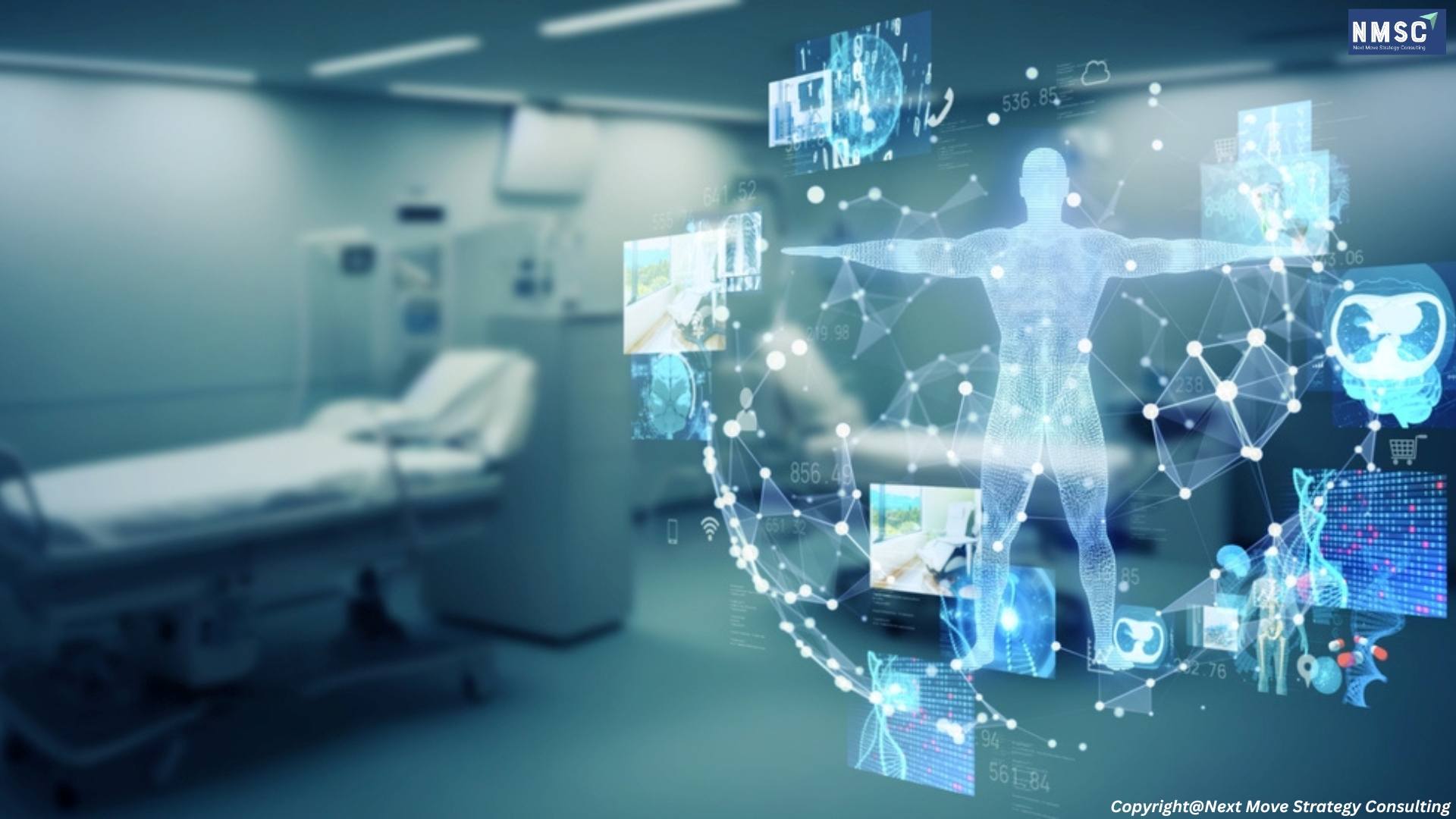
The Digital Twin in Healthcare Market is gaining significant momentum following recent advancements in artificial intelligence (AI)-driven simulation technologies. In March 2026, LT Technology announced the development of an AI-powered lung digital twin designed to simulate respiratory function with high precision, marking a notable breakthrough in patient-specific modeling. Simultaneously, Mantis Biotech revealed its application of AI-powered digital twins to enhance biomedical research and drug development processes. These developments highlight how digital twin technology is transitioning from experimental frameworks to real-world healthcare applications.
According to LT Technology’s announcement, the lung digital twin leverages AI algorithms to replicate lung behavior under varying physiological conditions, enabling clinicians to better understand disease progression and treatment responses. The innovation is particularly relevant for respiratory diseases, including chronic obstructive pulmonary disease (COPD) and acute respiratory distress syndrome (ARDS), where patient variability significantly impacts treatment outcomes.
At the same time, Mantis Biotech has integrated digital twin models into its research pipeline, using AI to simulate biological systems and predict drug responses more efficiently. The company reports that such simulations can reduce reliance on traditional laboratory experimentation, potentially shortening drug development cycles and lowering costs.
Background Context
Digital twins are virtual replicas of physical systems that use real-time data and advanced analytics to simulate behavior. In healthcare, this technology allows the creation of patient-specific models that can predict disease progression, optimize treatment plans, and improve clinical decision-making.
The concept has evolved rapidly with advancements in AI, cloud computing, and data integration. Healthcare providers are increasingly adopting digital twins to move toward precision medicine, where treatments are tailored to individual patients rather than generalized protocols.
Industry estimates suggest that the global digital twin market, including healthcare applications, is expected to grow at a compound annual growth rate (CAGR) exceeding 30% through the late 2020s, driven by increased adoption of AI technologies and rising demand for predictive healthcare solutions.
Industry Impact
The integration of digital twins into healthcare systems is influencing multiple layers of the industry:
-
Clinical Decision-Making: Physicians can simulate treatment outcomes before administering therapies, reducing trial-and-error approaches.
-
Pharmaceutical Development: Drug companies can test compounds on virtual patient models, accelerating research timelines.
-
Hospital Operations: Digital twins of healthcare facilities can optimize resource allocation and patient flow.
-
Medical Device Innovation: Manufacturers can test device performance in simulated environments before clinical trials.
From a procurement and B2B perspective, hospitals and research institutions are increasingly investing in AI platforms, cloud infrastructure, and data analytics tools to support digital twin deployment. This shift is also creating opportunities for software vendors and data service providers.
An industry expert noted, “This development signals a major shift in the industry, where simulation-driven healthcare is becoming central to both clinical and research ecosystems.”

Market Analysis
Latest Developments (2025–2026)
-
LT Technology’s AI-powered lung digital twin enables high-fidelity respiratory simulations (March 2026).
-
Mantis Biotech applies digital twins to biomedical research and drug discovery workflows (2025–2026).
-
Increased investment in AI healthcare platforms supporting digital twin integration.
-
Growing collaboration between healthcare providers and technology firms to scale deployment.
Applications Across Industries
-
Healthcare
-
Personalized treatment planning
-
Disease progression modeling
-
Surgical simulation
Manufacturing
-
Medical device prototyping
-
Predictive maintenance
Energy
- Infrastructure simulation for hospital energy systems
Logistics
-
Optimization of healthcare supply chains
Regional Analysis
North America (Dominating Region)
North America, particularly the United States, leads the digital twin in healthcare market due to strong investment in AI, advanced healthcare infrastructure, and active participation from technology companies. Government support for digital health initiatives further accelerates adoption.
Europe
Countries such as Germany and the United Kingdom are investing in digital health ecosystems, supported by regulatory frameworks that encourage innovation while maintaining patient data protection standards.
Asia-Pacific (Fastest-Growing Region)
Asia-Pacific, including China, India, and Japan, is expected to witness the fastest growth. Increasing healthcare digitization, rising patient populations, and government-backed AI initiatives are key drivers. India, for example, is expanding digital health infrastructure, creating opportunities for digital twin adoption in both public and private sectors.

Key Players & Strategies
Leading Companies
-
LT Technology
-
Strategy: Development of AI-powered organ-specific digital twins
-
Impact: Enhances clinical simulation capabilities, particularly in respiratory care
-
-
Mantis Biotech
-
Strategy: Integration of digital twins into drug discovery pipelines
-
Impact: Reduces experimental costs and accelerates research timelines
-

Emerging Companies
-
Startups focusing on AI-driven patient modeling platforms
-
Firms developing interoperable healthcare data ecosystems
-
Cloud providers offering digital twin infrastructure solutions
These players are increasingly focusing on partnerships, AI integration, and scalable platforms to strengthen their market positions.
Future Outlook
The Digital Twin in Healthcare Market is expected to witness sustained growth as healthcare systems transition toward predictive and personalized care models. The integration of AI, Internet of Things (IoT), and real-time data analytics will further enhance the accuracy and scalability of digital twins.
Real-world applications, such as LT Technology’s lung simulation and Mantis Biotech’s research models, demonstrate the technology’s potential to transform both clinical and research environments. As regulatory frameworks evolve and data interoperability improves, adoption is likely to accelerate across hospitals, pharmaceutical companies, and research institutions.
Market projections indicate that digital twins could become a standard component of healthcare delivery within the next decade, particularly in areas such as chronic disease management, oncology, and surgical planning.
About the Author
 Sanyukta Deb
— Sanyukta Deb is Digital Marketing Team Lead at Next Move Strategy Consulting, where she has led content strategy and technical SEO for the firm's B2B market research publications for over 2 years. Her editorial process translates NextMSC's primary and secondary research — spanning technology, industrial, and consumer sectors — into commercial narratives, backed by search-intent, keyword, and competitive analysis. She brings 5 years of overall experience in digital marketing and content strategy.
Sanyukta Deb
— Sanyukta Deb is Digital Marketing Team Lead at Next Move Strategy Consulting, where she has led content strategy and technical SEO for the firm's B2B market research publications for over 2 years. Her editorial process translates NextMSC's primary and secondary research — spanning technology, industrial, and consumer sectors — into commercial narratives, backed by search-intent, keyword, and competitive analysis. She brings 5 years of overall experience in digital marketing and content strategy.
About the Reviewer
 Debashree Dey
— Debashree Dey is Assistant Manager at Next Move Strategy Consulting, where she supports cross-vertical market content and communications across diverse industries for 6 years. Her professional background includes senior content writing, communications, and published manuscript authorship, with experience developing audience-focused business narratives and maintaining clear, consistent messaging. Her role supports research-led content development and editorial quality across NextMSC publications.
Debashree Dey
— Debashree Dey is Assistant Manager at Next Move Strategy Consulting, where she supports cross-vertical market content and communications across diverse industries for 6 years. Her professional background includes senior content writing, communications, and published manuscript authorship, with experience developing audience-focused business narratives and maintaining clear, consistent messaging. Her role supports research-led content development and editorial quality across NextMSC publications.

















Add Comment