Airports Turn to Artificial Intelligence to Manage Rising Traffic
Industry Insights from Next Move Strategy Consulting
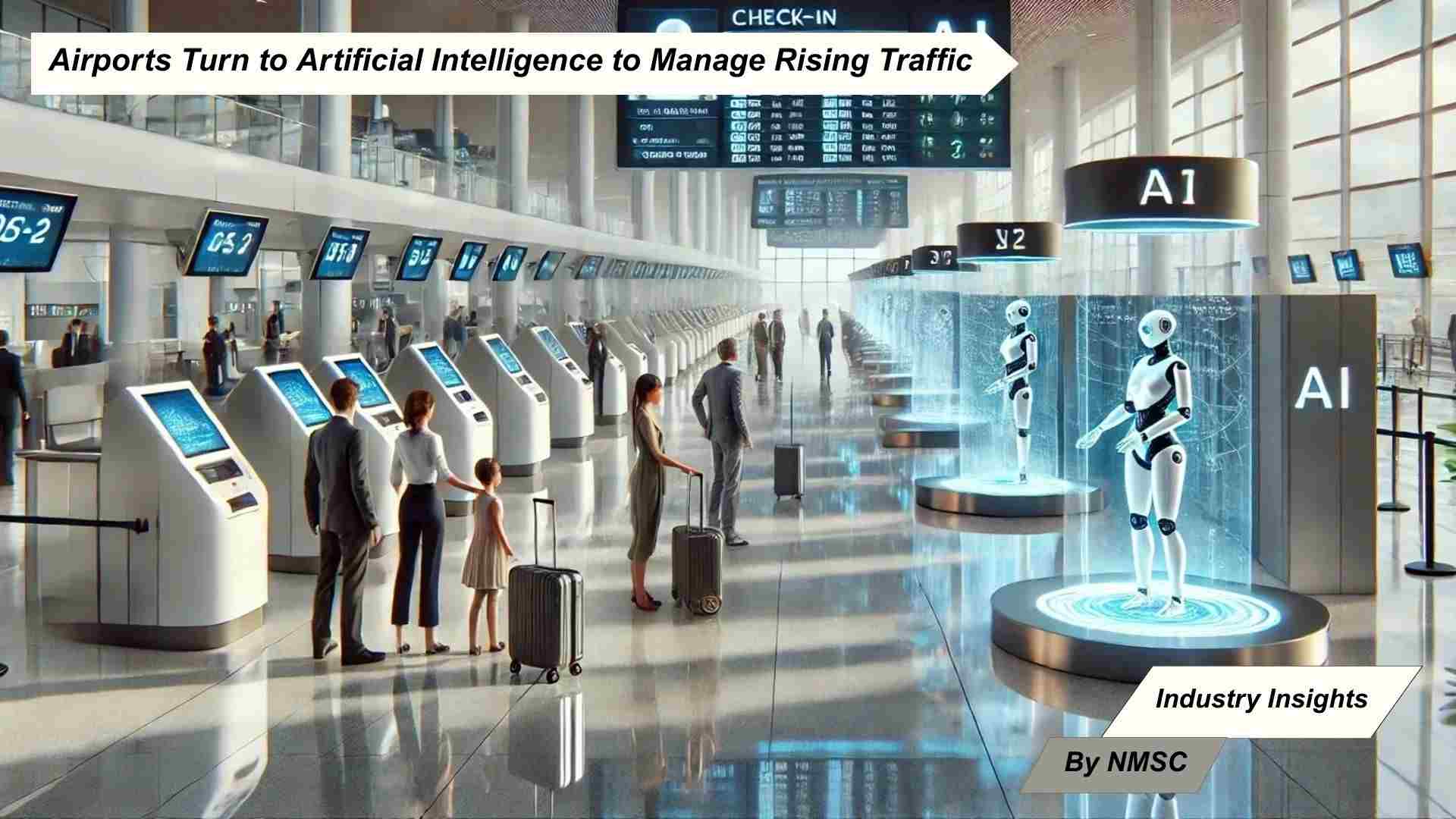
As global air travel demand continues its steady climb, airports worldwide are increasingly turning to artificial intelligence (AI) to manage growing passenger volumes and operational complexity. With global air passenger traffic projected to reach 10.2 billion in 2026, representing a 3.9 percent year-on-year increase, airport authorities are accelerating investments in digital infrastructure to enhance efficiency, reliability, and traveler experience.
Transitioning from Reactive to Predictive Airport Management
Drawing on data released by Airports Council International, airport operators are embedding AI into daily workflows to better anticipate demand surges and operational bottlenecks. AI-powered analytics are enabling airports to predict congestion at security checkpoints, immigration counters, and boarding gates, allowing resources to be allocated proactively rather than in response to delays after they occur.
This shift toward predictive operations marks a fundamental change in how airports manage passenger flow. By forecasting crowd density and operational stress points in advance, airports can reduce delays, optimize staffing, and improve overall throughput during peak travel periods.
Expanding AI Applications Across the Passenger Journey
According to discussions held at the Airport AI Exchange event, AI is now influencing a wide range of airport functions. These include automated check-ins and boarding processes, baggage handling and tracking, airside maintenance, cybersecurity, and both on-site and virtual customer service. AI-driven systems are also supporting predictive maintenance, helping airports identify potential equipment issues before they disrupt operations.
Biometric processing technologies are gaining momentum as well. These tools enable passengers to move through immigration without presenting physical passports, streamlining border control while maintaining security standards. In parallel, AI-powered baggage optimization tools are improving tracking accuracy and reducing incidents of lost luggage.
Enhancing Personalization and Passenger Experience
Beyond operational efficiency, AI is increasingly being used to personalize the passenger journey. AI-powered analytics can tailor services and assistance based on individual traveler preferences, creating a smoother and more efficient experience from check-in through boarding. This personalization is seen as a key differentiator as airports compete to improve service quality while managing higher traffic volumes.
Mahmood AlSeddiqi, former vice president of IT at Bahrain Airport Company, noted that AI enables airports to deliver more targeted services, improving both efficiency and passenger satisfaction across the travel lifecycle.
Rapid AI Progress Meets Aviation’s Cautious Adoption Curve
Experts at the Airport AI Exchange highlighted the rapid evolution of AI capabilities over recent years. Amad Malik, chief AI officer at Airport AI Exchange, emphasized that AI’s development has accelerated sharply, particularly over the past two years. However, he also pointed out that aviation’s adoption of AI remains limited compared to the technology’s overall pace of advancement.
This gap is largely attributed to the aviation sector’s dependence on legacy systems and its safety-critical operating environment. Many core technologies used in aviation date back decades, and innovation is often moderated by strict regulatory requirements. As Malik noted, when human lives are at stake, safety and compliance take precedence over rapid technological change.
Next Move Strategy Consulting’s Viewpoint
According to the Next Move Strategy Consulting, the growing use of Artificial Intelligence Market in airports reflects a broader shift toward data-driven infrastructure management. While adoption remains measured, AI is steadily transitioning from experimental deployments to operational necessity. As passenger volumes continue to rise, airports that effectively integrate predictive analytics, biometric processing, and AI-powered optimization tools are likely to gain long-term advantages in efficiency, resilience, and passenger satisfaction.
A Measured Path Toward Smarter Airports
As airports navigate the balance between innovation and safety, artificial intelligence is emerging as a critical enabler of scalable, efficient operations. While challenges related to legacy systems and regulation persist, the gradual integration of AI signals a clear direction for the future of airport management one defined by anticipation rather than reaction, and efficiency grounded in intelligent automation.
Source: Al Jazeera
Prepared by: Next Move Strategy Consulting
About the Author
 Sanyukta Deb
— Sanyukta Deb is Digital Marketing Team Lead at Next Move Strategy Consulting, where she has led content strategy and technical SEO for the firm's B2B market research publications for over 2 years. Her editorial process translates NextMSC's primary and secondary research — spanning technology, industrial, and consumer sectors — into commercial narratives, backed by search-intent, keyword, and competitive analysis. She brings 5 years of overall experience in digital marketing and content strategy.
Sanyukta Deb
— Sanyukta Deb is Digital Marketing Team Lead at Next Move Strategy Consulting, where she has led content strategy and technical SEO for the firm's B2B market research publications for over 2 years. Her editorial process translates NextMSC's primary and secondary research — spanning technology, industrial, and consumer sectors — into commercial narratives, backed by search-intent, keyword, and competitive analysis. She brings 5 years of overall experience in digital marketing and content strategy.
About the Reviewer
 Debashree Dey
— Debashree Dey is Assistant Manager at Next Move Strategy Consulting, where she supports cross-vertical market content and communications across diverse industries for 6 years. Her professional background includes senior content writing, communications, and published manuscript authorship, with experience developing audience-focused business narratives and maintaining clear, consistent messaging. Her role supports research-led content development and editorial quality across NextMSC publications.
Debashree Dey
— Debashree Dey is Assistant Manager at Next Move Strategy Consulting, where she supports cross-vertical market content and communications across diverse industries for 6 years. Her professional background includes senior content writing, communications, and published manuscript authorship, with experience developing audience-focused business narratives and maintaining clear, consistent messaging. Her role supports research-led content development and editorial quality across NextMSC publications.















Add Comment