Altair Spinout Signals Semiconductor Market Shift
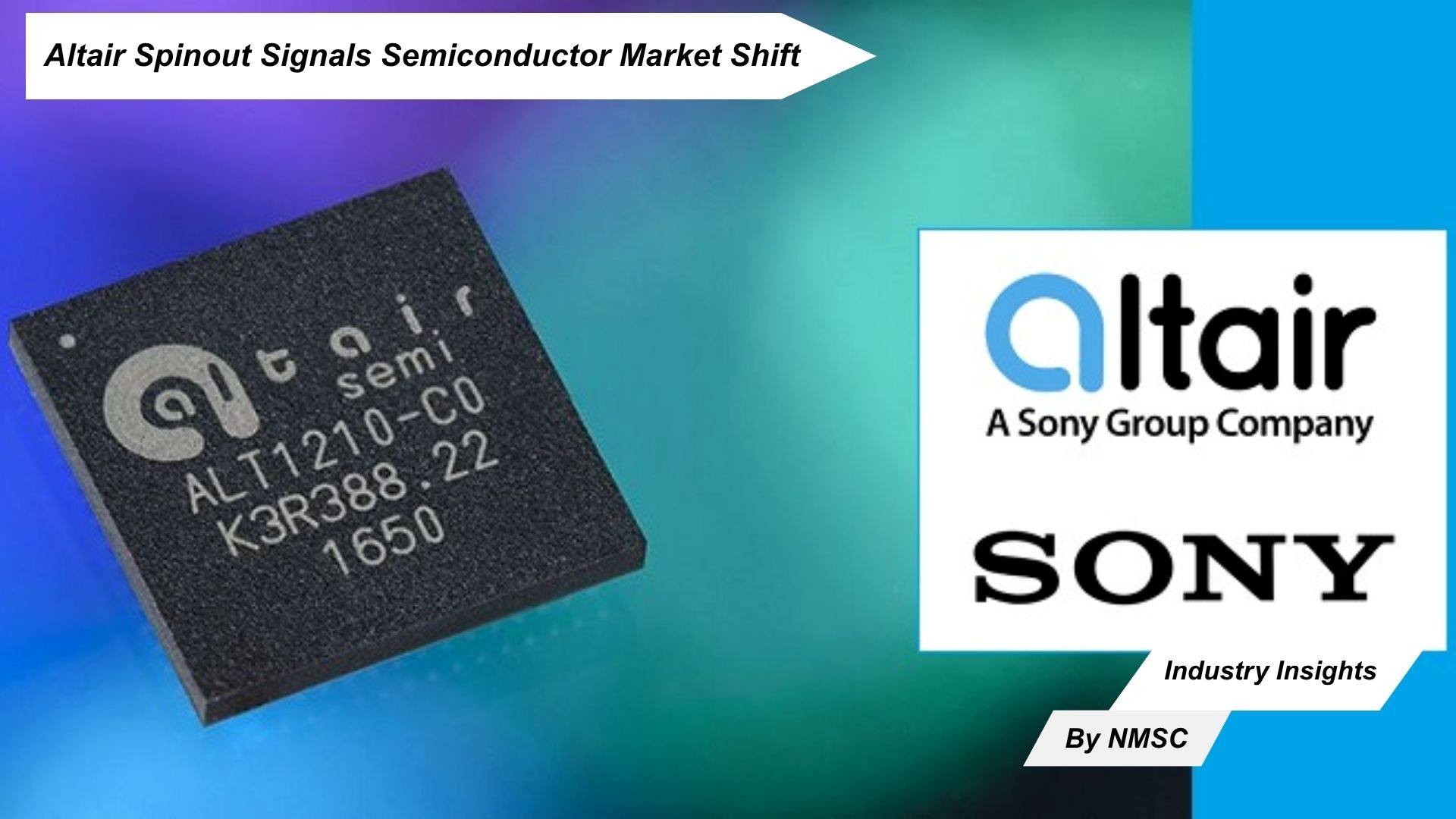
Altair’s Sony Spinoff Reshapes Semiconductor Market as Independent 5G IoT Push Gains Pace
HOD HASHARON, Israel — April 29, 2026 — Altair Semiconductor’s formal separation from Sony Semiconductor Solutions is emerging as one of the most strategically significant semiconductor restructurings of the quarter, signaling a sharper global pivot toward standalone low-power IoT silicon innovation. Backed by a newly closed USD 50 million financing round led by Pitango Group, the Israeli chip designer now enters the market as an independent force focused squarely on 5G eRedCap and Physical AI connectivity infrastructure.
The announcement, formally disclosed on April 27, confirms that Sony will retain a shareholder position even as Altair resumes autonomous operations after a decade under Sony ownership. The move follows Sony’s broader internal efforts to streamline non-core semiconductor assets while concentrating capital on higher-margin sensing technologies and entertainment-linked businesses.
A Strategic Break from Legacy Parent-Controlled Chip Operations
Altair’s re-emergence as an independent company is not merely a corporate restructuring—it reflects a widening industry realization that specialized IoT semiconductor firms require faster roadmap execution than diversified electronics conglomerates can often provide.
For nearly ten years, Altair functioned under Sony Semiconductor Israel after being acquired in 2016. During that period, the company built a strong installed base across:
-
Cellular smart meters
-
Smart city infrastructure
-
Energy grid modules
-
Vehicle telematics
-
Logistics asset trackers
-
Connected wearables
Its ALT1250 and ALT1350 LTE-M/NB-IoT platforms became deeply embedded in long-life, low-power machine communication environments.
Now, free from parent-level operational layering, Altair is expected to accelerate its transition into next-generation 5G Reduced Capability modem deployment.
“This spinout materially improves Altair’s ability to make faster silicon roadmap decisions in an increasingly fragmented IoT connectivity market,” notes Sikha Haritwal, Senior Research Analyst at Next Move Strategy Consulting. “The semiconductor industry is entering a phase where narrow-domain chipmakers focused on battery life, embedded AI communication, and low-bandwidth persistence are becoming disproportionately valuable.”
Why the Move Matters for the Semiconductor Market
According to NMSC analysts, the significance of this event extends well beyond one corporate divestiture.
The global semiconductor industry is currently seeing a capital migration away from generalized smartphone-dependent chip categories and toward:
-
industrial IoT processors,
-
ultra-low-power connectivity semiconductors,
-
edge intelligence modules,
-
machine-to-cloud communications silicon.
Altair sits precisely at this convergence.
Its newly emphasized 5G eRedCap roadmap, anchored by the ALT1550 modem now in advanced silicon testing, is designed for devices requiring:
-
always-on low-energy transmission,
-
lower complexity than full 5G broadband,
-
field life extending close to 20 years.
This architecture is increasingly viewed as foundational for what the company terms Physical AI—AI-powered machines, robots, industrial sensors, and autonomous field devices that require uninterrupted cellular awareness.
Funding Injection Signals Investor Confidence in Specialized Connectivity Silicon
The USD 50 million backing from Pitango Group adds another important layer to the story: institutional investors are once again showing willingness to fund highly specialized fabless semiconductor players despite broader global chip margin volatility.
Unlike consumer processor segments where competition remains brutally price-sensitive, low-power IoT modem providers benefit from:
-
long product qualification cycles,
-
sticky industrial contracts,
-
multi-year infrastructure deployments,
-
lower replacement frequency.
That creates recurring demand durability—an increasingly attractive trait in the present semiconductor financing environment.
“Capital is becoming more selective in semiconductors, and this deal tells us investors still see premium upside in communications silicon tied to industrial automation,” says Sanyukta Deb, Market Intelligence Lead at Next Move Strategy Consulting. “Altair’s independence gives it direct access to that investment narrative.”
Sony’s Minority Retention Suggests Confidence, Not Exit Anxiety
Importantly, Sony’s decision to remain a shareholder changes the market reading from a simple divestment story to a confidence-backed strategic release.
Rather than abandoning the business, Sony appears to be reducing managerial drag while preserving upside exposure should Altair’s 5G IoT thesis scale successfully.
This hybrid structure offers Altair:
-
independent commercial agility,
-
external financing flexibility,
-
retained strategic validation from a global semiconductor major.
Industry observers increasingly view such minority-retention spinoffs as a preferred restructuring model in semiconductors where innovation speed matters more than conglomerate control.
Semiconductor Industry Update: A New Breed of Focused IoT Chip Leaders Emerging
Altair Semiconductor’s Sony exit highlights a larger structural trend now taking shape across the semiconductor market: highly focused communications silicon firms are regaining relevance as AI expands beyond datacenters into physical infrastructure.
The future growth battlefield is no longer only about AI accelerators and GPUs—it is also about the low-power chips that keep billions of intelligent devices persistently connected.
With fresh funding, an independent operating mandate, and a commercially timed 5G eRedCap roadmap, Altair has positioned itself at the center of that next wave.
Source: IoT Now
Prepared By: Joydeep Dey
About the Author
 Sanyukta Deb
— Sanyukta Deb is Digital Marketing Team Lead at Next Move Strategy Consulting, where she has led content strategy and technical SEO for the firm's B2B market research publications for over 2 years. Her editorial process translates NextMSC's primary and secondary research — spanning technology, industrial, and consumer sectors — into commercial narratives, backed by search-intent, keyword, and competitive analysis. She brings 5 years of overall experience in digital marketing and content strategy.
Sanyukta Deb
— Sanyukta Deb is Digital Marketing Team Lead at Next Move Strategy Consulting, where she has led content strategy and technical SEO for the firm's B2B market research publications for over 2 years. Her editorial process translates NextMSC's primary and secondary research — spanning technology, industrial, and consumer sectors — into commercial narratives, backed by search-intent, keyword, and competitive analysis. She brings 5 years of overall experience in digital marketing and content strategy.
About the Reviewer
 Debashree Dey
— Debashree Dey is Assistant Manager at Next Move Strategy Consulting, where she supports cross-vertical market content and communications across diverse industries for 6 years. Her professional background includes senior content writing, communications, and published manuscript authorship, with experience developing audience-focused business narratives and maintaining clear, consistent messaging. Her role supports research-led content development and editorial quality across NextMSC publications.
Debashree Dey
— Debashree Dey is Assistant Manager at Next Move Strategy Consulting, where she supports cross-vertical market content and communications across diverse industries for 6 years. Her professional background includes senior content writing, communications, and published manuscript authorship, with experience developing audience-focused business narratives and maintaining clear, consistent messaging. Her role supports research-led content development and editorial quality across NextMSC publications.

















Add Comment