Ambulance Market Update: Kentucky City Restructures EMS Plan
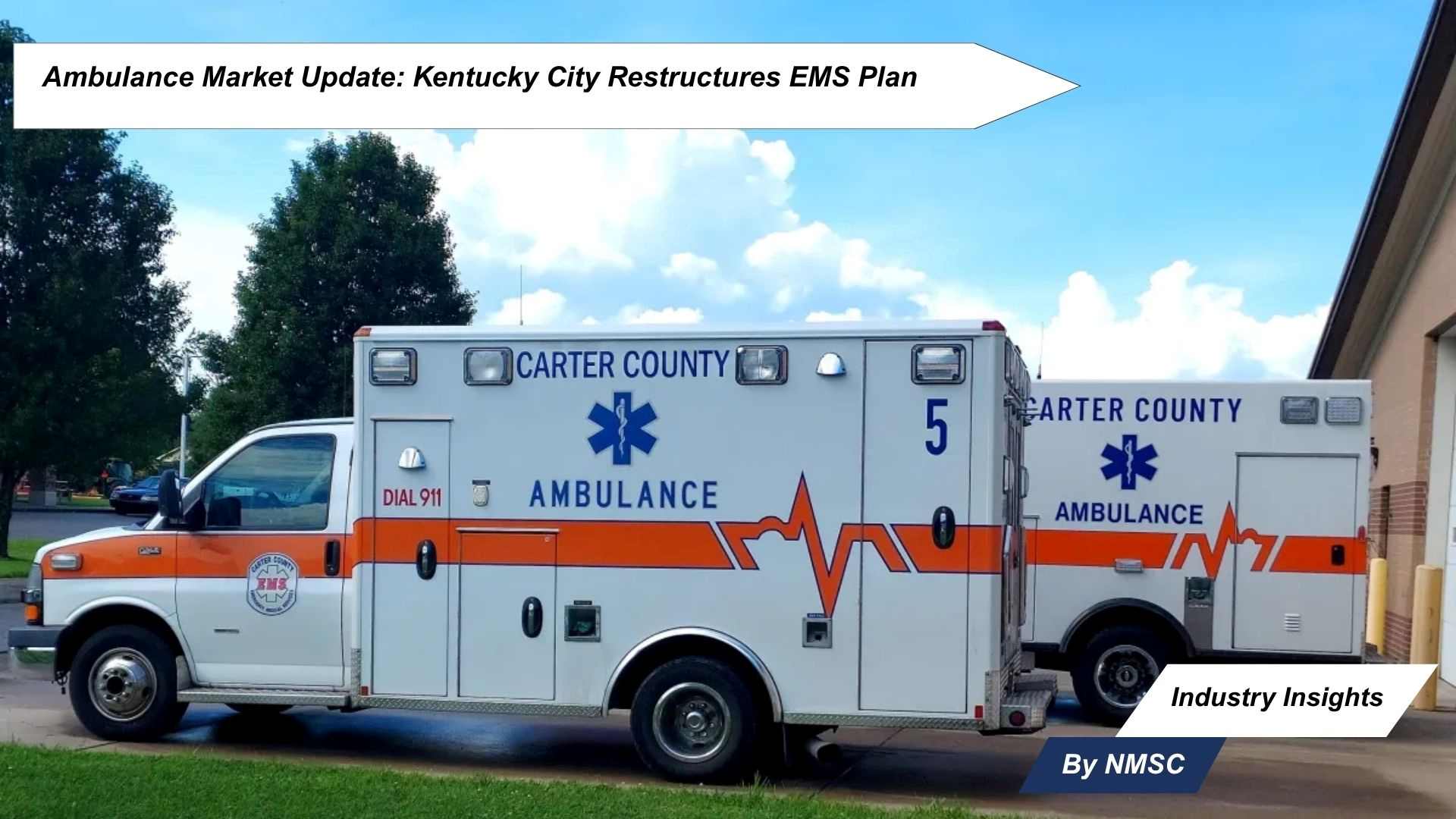
London, Ky. Surrenders Ambulance Certificate, Shifts Routine EMS Calls to Private Provider
LONDON, Kentucky — August 10, 2026 — The London City Council has unanimously approved a resolution authorizing the surrender of the city's ambulance certificate of need and entering into a formal interlocal agreement with Ambulance Inc. of Laurel County, marking a significant restructuring of emergency medical services in the region. The decision reflects a broader trend of municipalities reassessing public-private EMS delivery models — a development with direct implications for the global Ambulance Market, which was valued at USD 33.60 billion in 2024 and is projected to reach USD 56.43 billion by 2030, growing at a CAGR of 9.0%.
The London City Council voted unanimously to approve Resolution 2026-23, authorizing Mayor Tracie Handley to execute the interlocal agreement with Ambulance Inc. of Laurel County. Under the new arrangement, the London Fire Department will retain responsibility for major medical emergencies — including cardiac arrests, heart attacks, strokes, overdoses, seizures, severe bleeding, and gunshot wounds — while Ambulance Inc. will assume responsibility for routine medical calls and patient transports.
The restructuring follows concerns raised by Councilmember Judd Weaver, who stated that the city had previously been operating under its certificate of need in a manner that raised legal questions. Community members, including prospective council candidate Johnny Miller, voiced concerns over potential impacts on emergency response times and the operational clarity of the new dispatching framework. The council also approved Ordinance 2026-24, which extends deadlines related to the certificate surrender and notification to Laurel County 911, allowing additional time to finalize the mutual aid agreement.
Key Highlights:
-
Unanimous Council Vote: London City Council approved Resolution 2026-23, authorizing the interlocal agreement with Ambulance Inc. of Laurel County and the surrender of the fire department's ambulance certificate of need.
-
Dual-Agency Response Model: The London Fire Department will continue responding to life-threatening emergencies, while Ambulance Inc. will manage routine calls and non-emergency transports, with joint dispatch available when additional support is required.
-
Regulatory and Legal Context: Councilmember Weaver cited legal concerns surrounding the city's prior operation under the certificate of need, underscoring the regulatory complexities that increasingly shape municipal EMS governance.
-
Community and Operational Concerns: Residents and local stakeholders raised questions about response time impacts and dispatching clarity, reflecting the broader public scrutiny that accompanies EMS privatization decisions.
Analyst Insight:
According to analysts at Next Move Strategy Consulting, the London, Kentucky decision is emblematic of a wider structural shift occurring across the U.S. ambulance services landscape, where municipalities are increasingly turning to private ambulance operators to manage non-emergency transport demand while preserving public agency capacity for critical calls. NMSC analysts note that as the global ambulance market advances toward its projected USD 56.43 billion valuation by 2030, the delineation between emergency and non-emergency transport services is becoming a key operational and commercial differentiator — one that is reshaping fleet deployment strategies, contract structures, and service delivery models for both public agencies and private ambulance companies.
Industry Outlook:
The London, Kentucky EMS restructuring underscores a growing national conversation about the sustainability of municipal ambulance operations amid rising operational costs, staffing pressures, and increasing demand for non-emergency medical transport. As private ambulance providers expand their footprint in routine transport services, public agencies are being repositioned to focus resources on high-acuity emergency response. This bifurcation of service delivery is expected to accelerate investment in fleet specialization, dispatch technology, and interagency coordination frameworks — all of which are key growth drivers for the ambulance market through 2030. The outcome of agreements such as the one approved in London will likely serve as a reference point for other municipalities evaluating similar transitions.
Source: EMS1
For More Information: Download FREE Sample on Ambulance Market Report
Prepared By: Sanyukta Deb
About the Author
 Sanyukta Deb
— Sanyukta Deb is Digital Marketing Team Lead at Next Move Strategy Consulting, where she has led content strategy and technical SEO for the firm's B2B market research publications for over 2 years. Her editorial process translates NextMSC's primary and secondary research — spanning technology, industrial, and consumer sectors — into commercial narratives, backed by search-intent, keyword, and competitive analysis. She brings 5 years of overall experience in digital marketing and content strategy.
Sanyukta Deb
— Sanyukta Deb is Digital Marketing Team Lead at Next Move Strategy Consulting, where she has led content strategy and technical SEO for the firm's B2B market research publications for over 2 years. Her editorial process translates NextMSC's primary and secondary research — spanning technology, industrial, and consumer sectors — into commercial narratives, backed by search-intent, keyword, and competitive analysis. She brings 5 years of overall experience in digital marketing and content strategy.
About the Reviewer
 Debashree Dey
— Debashree Dey is Assistant Manager at Next Move Strategy Consulting, where she supports cross-vertical market content and communications across diverse industries for 6 years. Her professional background includes senior content writing, communications, and published manuscript authorship, with experience developing audience-focused business narratives and maintaining clear, consistent messaging. Her role supports research-led content development and editorial quality across NextMSC publications.
Debashree Dey
— Debashree Dey is Assistant Manager at Next Move Strategy Consulting, where she supports cross-vertical market content and communications across diverse industries for 6 years. Her professional background includes senior content writing, communications, and published manuscript authorship, with experience developing audience-focused business narratives and maintaining clear, consistent messaging. Her role supports research-led content development and editorial quality across NextMSC publications.


















Add Comment