Artificial Intelligence Drives Breakthroughs in TB Care
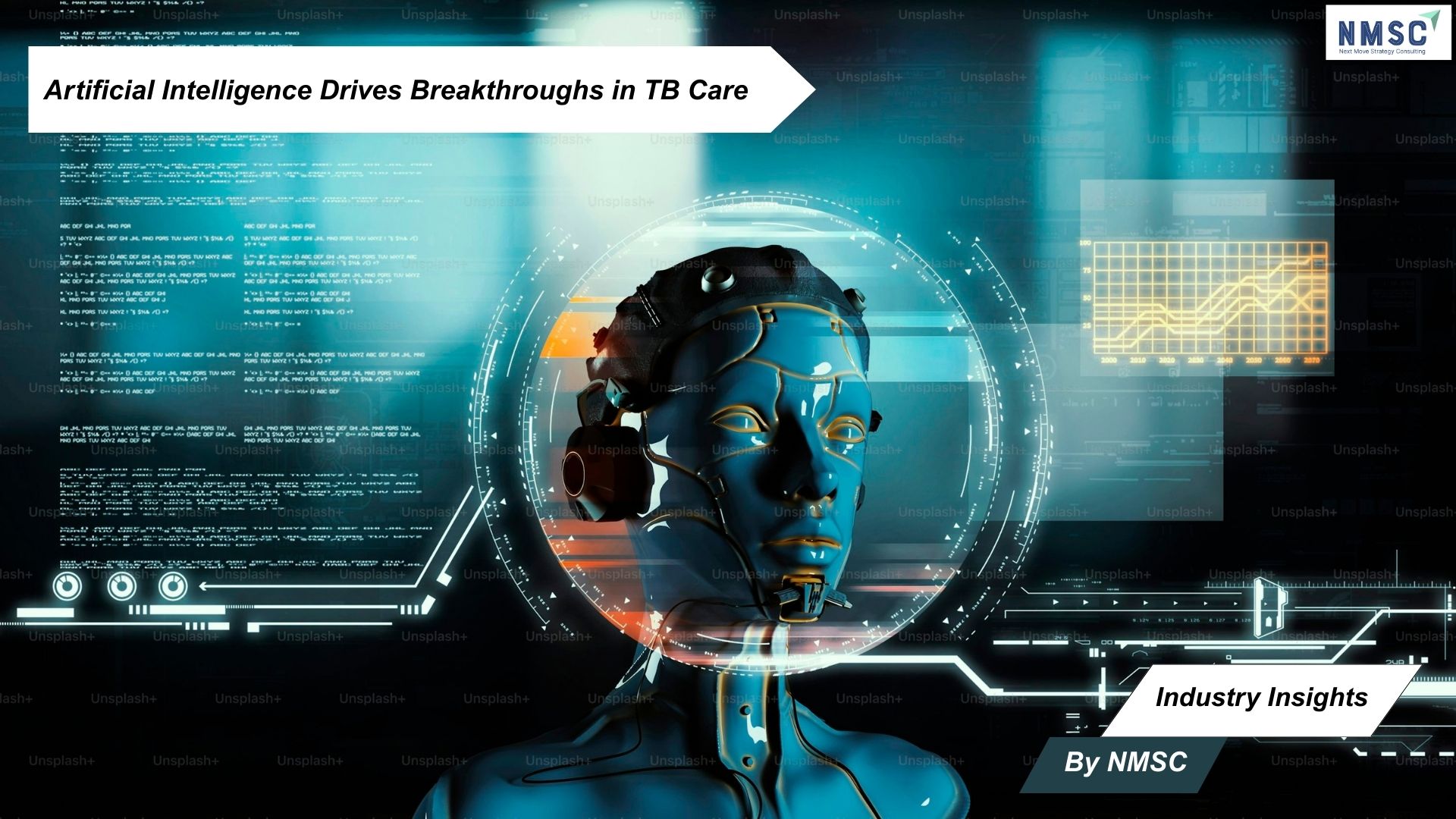
Industry Insights from Next Move Strategy Consulting
In a significant step toward strengthening global public health, researchers have introduced new Artificial Intelligence (AI)-powered tools designed to improve the detection, monitoring, and prevention of tuberculosis (TB). The innovations, presented at the Union World Conference on Lung Health in Copenhagen, aim to make TB diagnostics more accessible, especially in regions where traditional testing remains limited.
Transforming TB Detection and Monitoring
TB remains the world’s most lethal infectious disease, causing around 1.25 million deaths in 2024, according to the World Health Organization. With diagnostics often out of reach for vulnerable communities, the AI tools unveiled at the conference highlight a major advancement in expanding early detection.
Guy Marks, president of the International Union against Tuberculosis and Lung Disease, emphasized the significance of these developments, stating that they demonstrate “the extraordinary potential of artificial intelligence to transform the fight against TB and lung disease.” He added that ensuring these tools reach the health systems most in need is now the primary challenge.
AI-Powered Capabilities Driving Innovation
The newly presented AI solutions span several breakthrough applications:
Breath Analysis Using Machine Learning
Researchers from the Southern University of Science and Technology and Shenzhen Third People’s Hospital showcased an AI-enabled breath test capable of monitoring patient response to TB treatment. Using the AveloMask, breath samples from about 60 patients in South Africa were analyzed to identify chemical changes linked with recovery progress. Pulmonologist Liang Fu noted that this non-invasive method could help guide treatment adjustments, improve adherence, and reduce associated costs.
Smartphone-Based Cough Analysis
Teams from AIIMS, the Jawaharlal Institute of Postgraduate Medical Education and Research, and Salcit Technologies presented Swaasa, an AI-driven cough-analysis tool. By recording coughs using a smartphone, the platform accurately identified underlying conditions in 94% of cases and assessed respiratory disease risks with 87% accuracy among more than 350 participants. According to Rakesh Kumar of AIIMS, the tool enables faster and more inclusive screening, particularly in settings lacking X-ray or molecular testing facilities.
AI Vulnerability Mapping for Targeted Case-Finding
The Wadhwani Institute for AI introduced a predictive vulnerability mapping system designed to support India’s National Tuberculosis Elimination Programme. By combining open-source demographic, geographic, and economic datasets with anonymized TB case data, the model achieved 71% accuracy in identifying high-risk villages. Aparna Chaudhary explained that the system increases efficiency in locating undiagnosed TB cases and helps direct resources more strategically.
AI-Enabled Child Screening Technology
Qure.ai unveiled its AI-powered pediatric TB screening tool, qXR, which received European regulatory clearance for use among children from birth to 15 years. This marks the first AI-based chest X-ray tool approved for this age range. Shibu Vijayan of Qure.ai highlighted the importance of reaching young children, describing them as among the most vulnerable to missed diagnoses.
Ensuring Accuracy and Responsible Use
While the tools offer promising advancements, experts caution that validation and robust datasets are essential. Ketho Angami of the Access to Rights and Knowledge (ARK) Foundation stressed the need for trained personnel capable of interpreting AI outputs responsibly. He noted that while AI can deliver clear results when parameters are well-defined, reliance becomes risky when cases are complex or unclear.
Next Move Strategy Consulting’s View
Next Move Strategy Consulting observes that the rise of AI-driven TB diagnostics reflects a broader shift toward precision, accessibility, and data-enabled decision-making in global health. The firm notes that AI tools such as breathomics systems, cough-analysis platforms, vulnerability mapping models, and pediatric screening solutions are poised to influence the future trajectory of the Artificial Intelligence (AI) Market in healthcare. As health systems seek scalable tools that improve detection accuracy and reduce diagnostic barriers, these innovations are expected to shape next-generation technology adoption, resource planning, and clinical workflows across high-burden regions.
Redefining the Future of TB Care
The AI-powered solutions presented in Copenhagen represent a turning point in TB detection and monitoring. By integrating advanced technology with public health expertise, these tools set a new benchmark for speed, inclusiveness, and diagnostic precision. As validation studies advance and adoption expands, artificial intelligence is positioned to play a central role in strengthening global TB control efforts.
Source: SciDev.Net
Prepared by: Next Move Strategy Consulting
About the Author
 Tania Dey
— Tania Dey is a content writer specializing in transformation-led, insight-driven storytelling. She develops research-backed, high-impact content aligned with evolving business priorities, digital behavior, and audience expectations. Her work helps organizations sharpen value propositions, strengthen visibility, and communicate strategic intent with clarity and precision. Grounded in data-informed storytelling, she brings a strong focus on relevance, consistency, and measurable digital impact across platforms.
Tania Dey
— Tania Dey is a content writer specializing in transformation-led, insight-driven storytelling. She develops research-backed, high-impact content aligned with evolving business priorities, digital behavior, and audience expectations. Her work helps organizations sharpen value propositions, strengthen visibility, and communicate strategic intent with clarity and precision. Grounded in data-informed storytelling, she brings a strong focus on relevance, consistency, and measurable digital impact across platforms.
About the Reviewer
 Sanyukta Deb
— Sanyukta Deb is Digital Marketing Team Lead at Next Move Strategy Consulting, where she has led content strategy and technical SEO for the firm's B2B market research publications for over 2 years. Her editorial process translates NextMSC's primary and secondary research — spanning technology, industrial, and consumer sectors — into commercial narratives, backed by search-intent, keyword, and competitive analysis. She brings 5 years of overall experience in digital marketing and content strategy.
Sanyukta Deb
— Sanyukta Deb is Digital Marketing Team Lead at Next Move Strategy Consulting, where she has led content strategy and technical SEO for the firm's B2B market research publications for over 2 years. Her editorial process translates NextMSC's primary and secondary research — spanning technology, industrial, and consumer sectors — into commercial narratives, backed by search-intent, keyword, and competitive analysis. She brings 5 years of overall experience in digital marketing and content strategy.















Add Comment